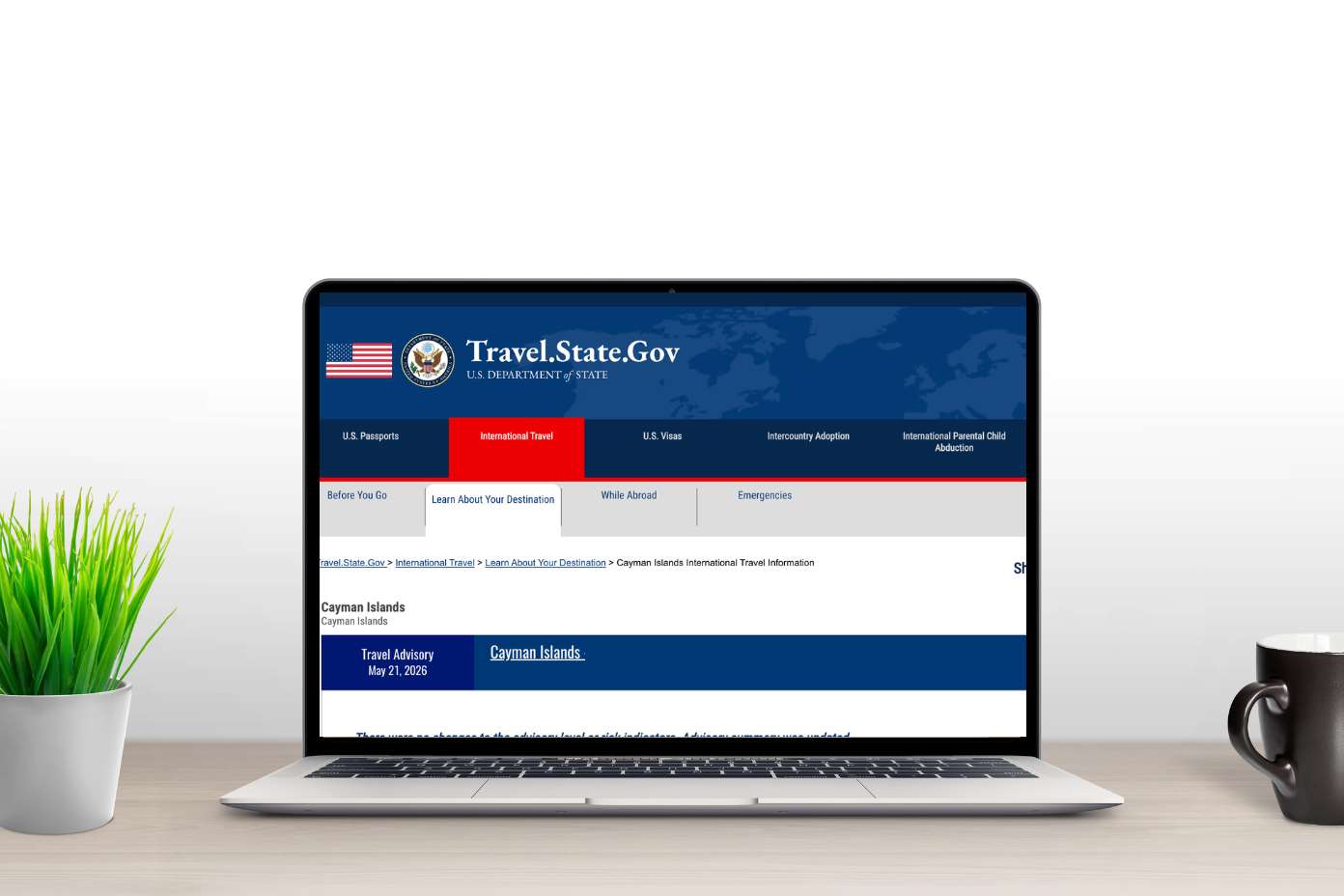
The US Department of State has reaffirmed its Level 1 travel advisory for Cayman, maintaining the territory’s status as a low-risk destination for American travellers while updating guidance on medical access, water safety and strict firearms laws.
In its updated advisory issued 21 May, the department said Cayman remains “generally a safe destination for travelers” and advised visitors to “exercise normal precautions,” the lowest advisory level issued by the US government.
While there were “no changes to the advisory level or risk indicators”, the department updated its advisory summary in a number of areas.
Firearms and ammunition
One aspect of the advisory pertained to firearms and ammunition.
“It is illegal to carry firearms or ammunition when arriving, departing, or traveling through the Cayman Islands,” the advisory stated.
Officials said that travellers have been “arrested, charged with a crime, and fined for having even one bullet, a previously discharged bullet casing, or spent ammunition used in items such as jewelry or keychains in their pockets or luggage at the airport.”

The advisory stressed that even travellers who unknowingly violate local firearms laws could face “deportation, fines or imprisonment”.
Accessibility of medical services
The US Department of State also updated its advisory summary to emphasise that “accessibility of medical services for routine and emergency procedures may be limited”.
The advisory noted that Grand Cayman is able to handle “most emergency medical needs”, but cautioned that medical care on Cayman Brac and Little Cayman is more restricted and that some serious cases may require evacuation to the United States.
Officials also said that “doctors and hospitals often expect immediate payment for health services”.
The department also highlighted Little Cayman’s limited healthcare infrastructure, noting that the island “has no hospital” and that its clinic operates only during weekday business hours.
American travellers were strongly encouraged to purchase supplemental insurance covering medical evacuation.
The advisory also stated that emergency response services may be difficult to access in some of Cayman’s most popular tourism areas, including “Stingray City (sandbar), West Bay, and other snorkeling areas”. Officials added that the same concerns apply to boat parties, “where there is an increased risk of drowning”.
The department further said that each year “U.S. citizens drown or suffer cardiac arrest while snorkeling or SCUBA diving in the Cayman Islands.”
Mosquito-borne illnesses including zika virus, chikungunya and dengue fever were also flagged in the health guidance section, with travellers advised to use insect repellents and stay up to date on vaccinations recommended by the US Centers for Disease Control and Prevention.
Crime affecting tourists was described as relatively low, though the guidance indicated that crimes of opportunity such as pickpocketing and purse snatchings “occasionally occur”.
Related Videos