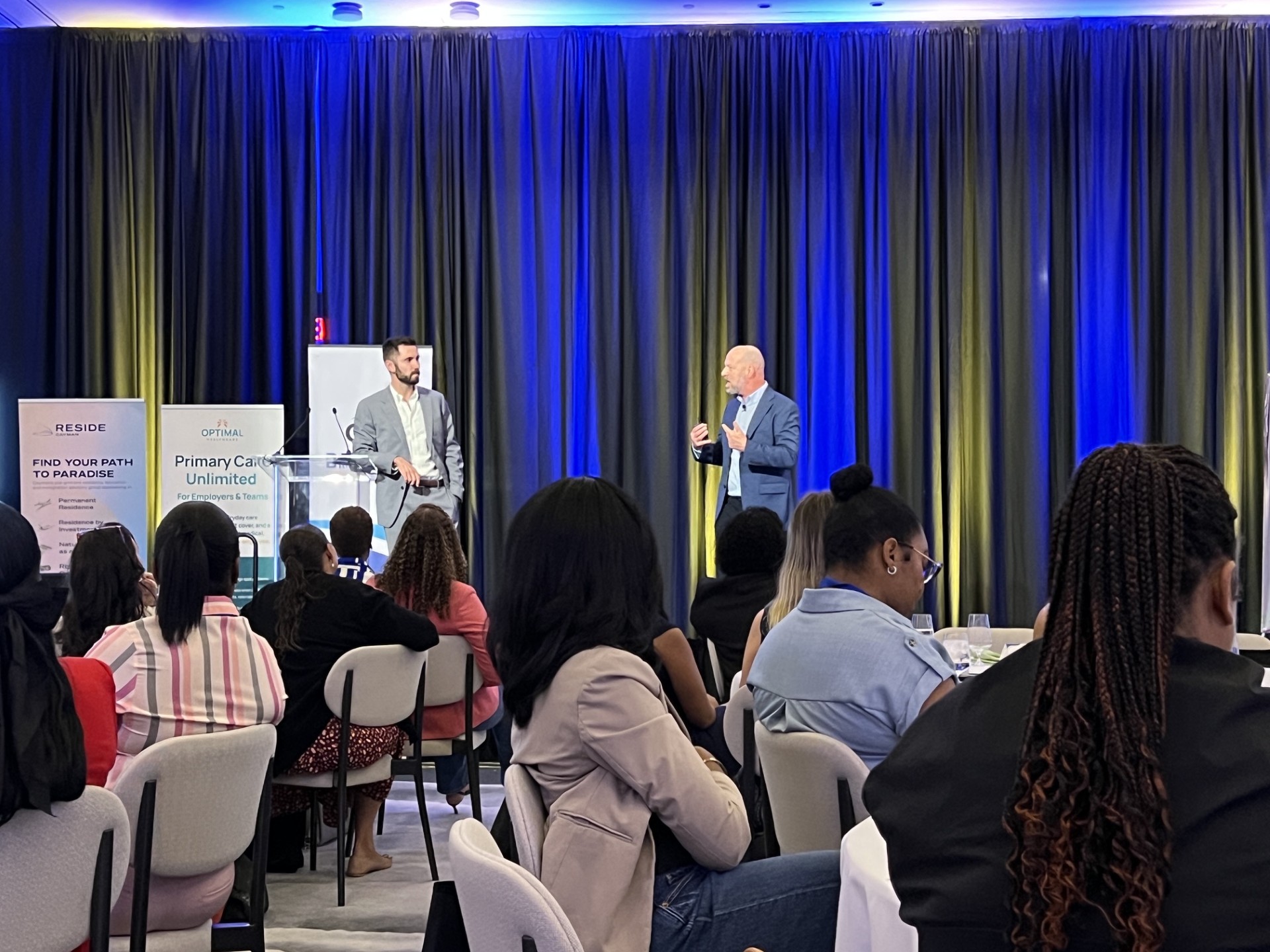
The ‘Paul & Jackson’s Declassified Gen Z Survival Guide’ presentation at the Cayman Islands Society of Human Resources Professionals’ annual conference on Friday, 29 May at Hotel Indigo offered powerful and unexpected insights into generational differences.
Paul Krismer and Jackson Kerchis of Happiness Means Business shared their expertise on positive psychology that enabled attendees to gain an understanding of the science of happiness and also take practical tools back to their workplaces to improve culture and communications between employees.
The duo also exemplifies two generations working together as Paul, a workplace culture expert, is Gen X (generally considered those born between 1965 and 1980) and Jackson, a happiness researcher and educator, is Gen Z (generally considered those born between 1997 and 2012). They said that it is typical for any generation to judge the previous one and view it in a negative light, even if that perception is not true.
They started by providing a clear picture of context for the audience as to why their two generations are different. Paul, who is 62, described growing up in the 1960s. “We never locked the door and rarely used the telephone,” he shared. “Importantly, there was a sense of freedom and fun that informed outer expectations of life.”
Jackson, on the other hand, who is 28 years old, said that his first intern job felt like it had no meaning. He shared an anecdote on how he was required to join a Zoom call with other interns and the CEO but ended up doing it while actually participating at a pre-planned social event with friends at Niagara Falls.
“I work to live; I don’t live to work,” he said. Jackson also said that it is about generational expectations. “Maybe I have a higher standard. I’m not lazy, I just want the work to matter,” he said.
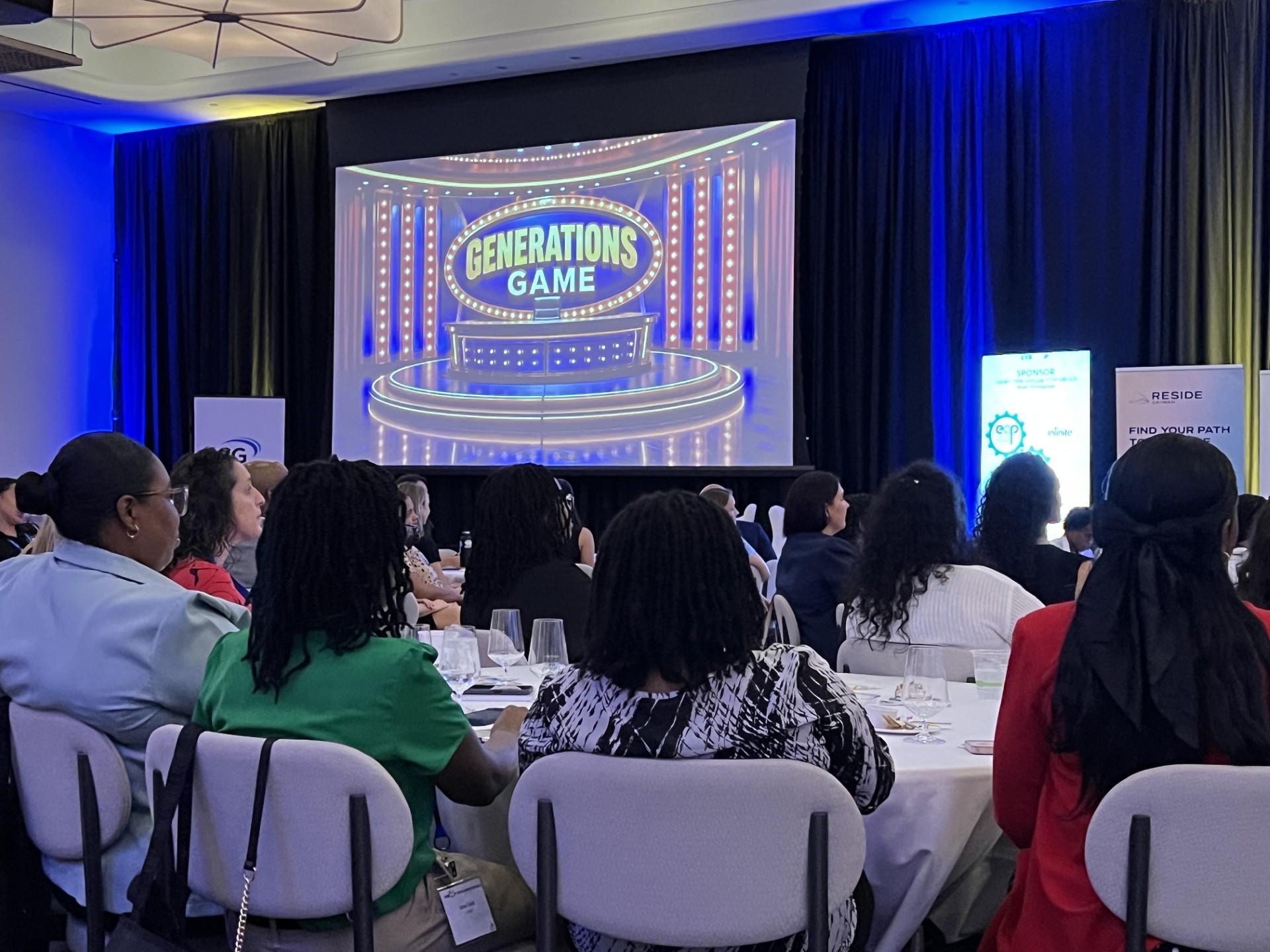
To bring the generational differences to life, Paul and Jackson took the audience through a game where the under 30s had to guess a question posed by Boomers and vice versa. Questions to Gen Zs included “If a boomer says someone has a lot of scratch, what do they have a lot of?” Boomers had to explain what this sentence meant: “My manager was being a jester at the team meeting, it was so cringe … “.
Paul and Jackson then discussed how happiness tracks over the course of a lifetime. The traditional U-curve is shaped like a smile – with a happy start, midlife low and then a renewed happiness later in life. The new reality, though, is that people in the workplace are starting at a much lower place on the curve, start to climb in midlife, and then have a hopeful recovery in their later years. This is the reality for Gen Zs.
They also shared that Gen Zs are more vulnerable to mental health issues, have excellent digital expertise, but have blunted interpersonal skills. They work in a world with less promise than other generations experience.
Paul provided historical context, saying that due to stagflation in the 1970s and the impact on housing prices and economic growth, Gen Zs and millennials do not have the same economic opportunities as previous generations – and this creates a sense of fear.
They shared that the issues that Gen Zs have in the workplace and require coaching on include: professionalism; using communications channels; response and turnaround time; accountability; work hours and availability norms; giving and receiving feedback; and dealing with conflict; assertiveness; and boundaries.
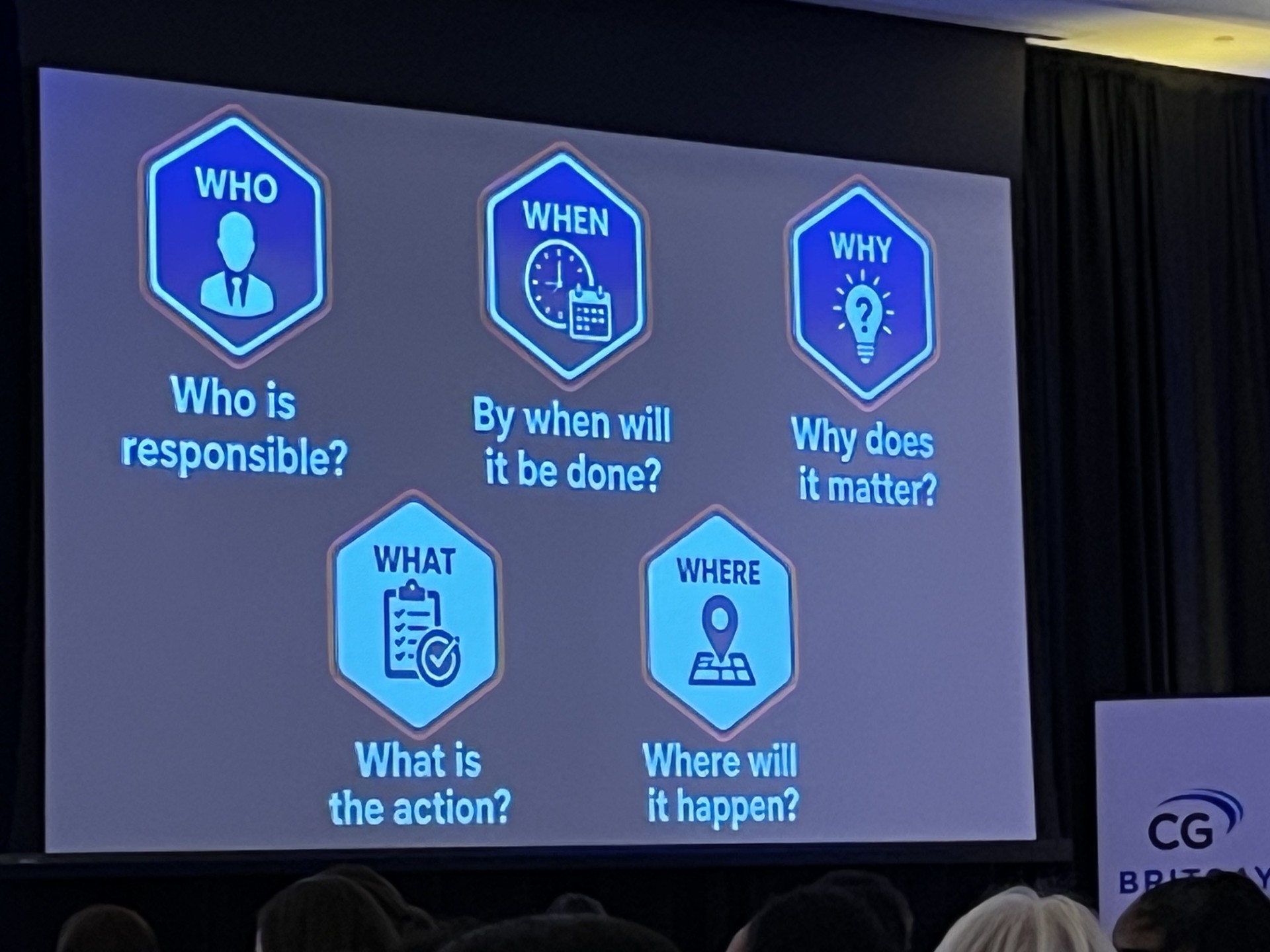
Tools that can help though are available. Paul and Jackson recommended using their ‘Who, What, Where, When, Why’ model to help frame out concerns or provide clarity to GenZs: Who is responsible? By when will it be done? Why does it matter? What is the action? Where will it happen? This will help GenZs, who want to live a life with meaning and one that is aligned to their personal values, see why the work is important and what it means for them – plus what is expected of them.
Other activities to consider include team activities and icebreakers, socials, a mentorship or peer programme, employee resource groups and learning circles such as a book club.
Paul and Jackson discussed what each generation brings to the table – their distinct strengths and shared opportunities. For instance, Gen X brings independence, pragmatism and a tolerance for ambiguity. Millennials bring collaboration, bridge-building and comfort with feedback and culture language. And Gen Zs being open about mental health, digital fluency and genuine values alignment are all strengths.
Jackson also shared more about his personal journey and had the audience write a note of gratitude to a person of a different generation to share with them the impact they had on their life – and then share it with them.
He said, “This can be a life-changing interaction. Why not do this more often?” He also encouraged the audience members to not lose focus and that people can be a centre of influence. “One person can influence the lives of so many people.”
The presentation wrapped up by sharing three tools that people could start using immediately when dealing with Gen Zs in the workplace, which included:
- Make the unwritten rules explicit. Clarify expectations, norms and how things really work.
- Coach from the coachee’s perspective – treat them as though they are the wisest person about their own life.
- Create real psychological safety – make work feel more like a playful learning experiment than drudgery in a coal mine.
Overall, the Paul and Jackson’s survival kit made one thing clear to the HR professionals at the conference: Gen Zs are well worth valuing and that all generations have something to bring to the table to enable their teams and companies succeed.
Related Videos