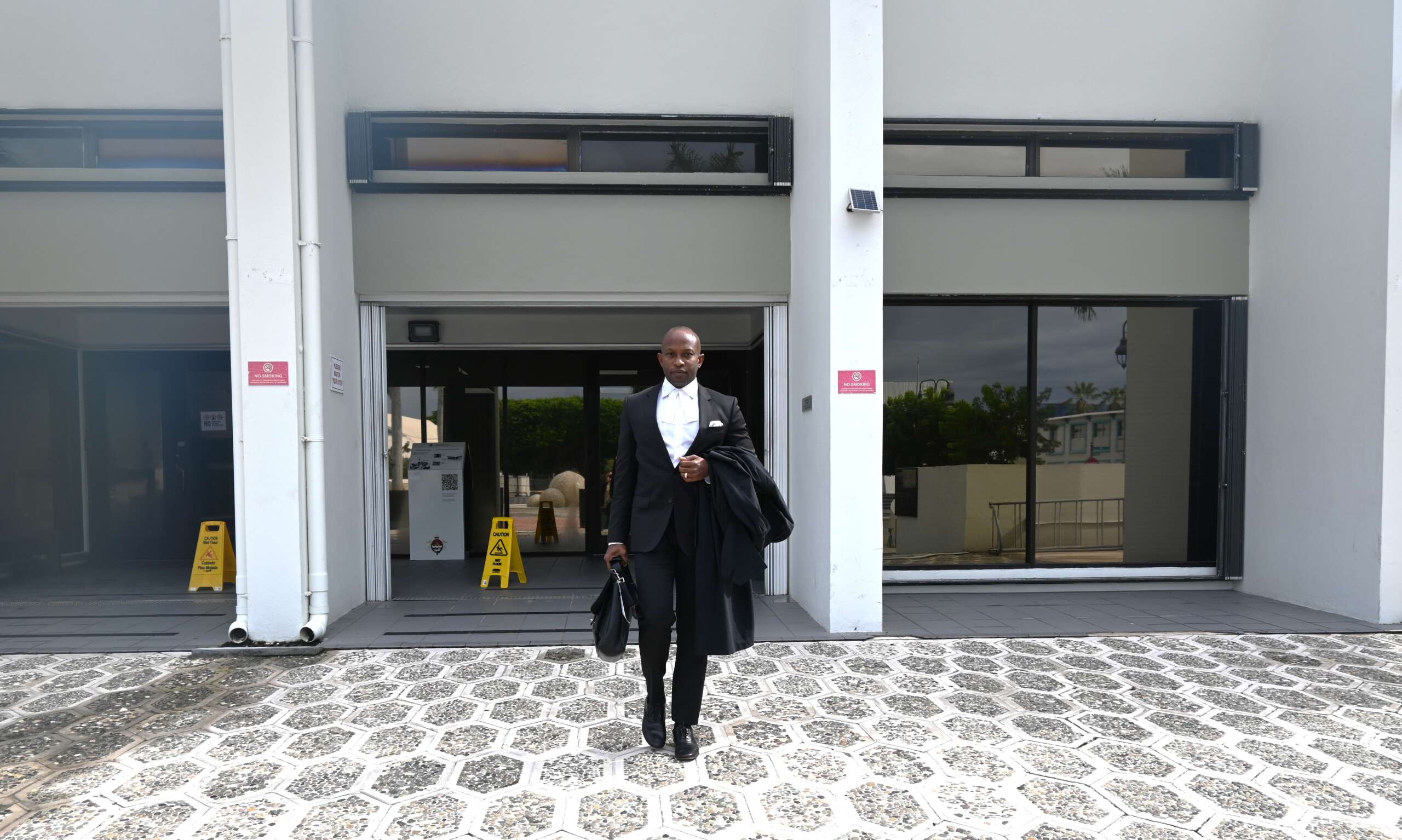
A Cayman lawyer has appealed to the government to implement last year’s referendum vote for the decriminalisation of cannabis.
Richard Barton highlighted that the National Coalition For Caymanians government had passed the one-year mark of its four-year term, but had yet to take action to loosen the law on ganja.
“The continued delay in implementing measures arising from the cannabis referendum is a matter of growing public concern,” Barton said.
“While there are undoubtedly legal, regulatory and social considerations that must be addressed, many would reasonably have expected greater progress by this stage, particularly given the clear expression of public opinion through a democratic process.”
Barton added, “Referenda are not merely consultative exercises; they serve as an important constitutional mechanism through which citizens communicate their collective will.”
Barton is the president of the Cayman Islands Legal Practitioners Association but emphasised he was speaking in the capacity as a practising barrister.
Visitors arrested
Barton was speaking after a 39-year-old woman from the US, who had travelled from Houston to Cayman on 17 May to attend a conference, was arrested after customs officials searched her suitcase and found a vitamin bottle in her toiletries bag that contained 21 gummies that she admitted may contain cannabidiol, or CBD.
They were later found to contain THC, the active ingredient in cannabis, and cannabidiol, or CBD.
The woman told officials she had brought the drugs with her by accident and did not realise they were illegal in Cayman.
Chief Magistrate Angelyn Hernandez said in Summary Court there were extenuating circumstances and that the harm caused was low, so gave the woman an absolute discharge – which meant no conviction was recorded – but ordered her to pay $1,000 in costs.
Barton said, “An equally important consideration is that, while implementation remains outstanding, individuals continue to face arrest, detention, prosecution and conviction under the current law.
“This creates uncertainty and risks sending mixed signals to the public, particularly where many perceive that a democratic mandate for reform has already been established.
“Prolonged delay may therefore cause more harm than benefit by undermining confidence in both the law and the policy-making process.”
Gummies sentence quashed on appeal
Barton represented Chicora Welborn, a Texan actress and philanthropist, last September, who appealed against a Summary Court four-month prison sentence, suspended for two years, after she admitted three charges of drug importation, including gummies.
The Grand Court, sitting as an appeal court, heard that Welborn had gummies weighed almost 11 ounces, a jar of cream that contained the drug and four joints, with a total of 1.41g of cannabis in them.
In that case, Justice Cheryll Richards accepted there were mitigating circumstances and quashed the sentence but ruled that fines and costs that totalled more than $10,400 to stand.
The decision set a precedent for the lower court.
Barton highlighted that the referenda required “significant” expenditure of taxpayers’ money.
“Respect for the outcome of the referendum is not only a matter of democratic principle, but also one of accountability to the public purse,” he said. “If left unimplemented for an extended period, there is a risk that that the public may perceive both squandered without practical effect.”
‘Clear indication’ of path needed
Barton warned that public opinion could also change over time and that the sentiment that drove the result in 2025 might change and frustrate the original intent.
He said, “Ultimately, it becomes more difficult for any government charged with giving effect to the will of the people and inaction should not become the means by which the will of the people is effectively set aside.”
He added that was not calling for “haste”, but for “clarity, transparency and a clear indication of the government’s intended path forward”.
Barton said, “Public confidence in democratic institutions is strengthened when citizens can see that the outcomes of constitutional processes are treated with the seriousness and respect they deserve.”
The government’s Portfolio of Legal Affairs has been asked for comment.
The three-question referendum, held alongside the general election, asked voters to decide if Cayman should develop cruise ship piers, if there should be a national lottery and if the “consumption and possession of small amounts of cannabis” should be decriminalised.
The poll showed 60.4% of those who voted either yes or no in the referendum – as opposed to those not voting on the issue at all on their ballot – backed less restrictive cannabis laws with 39.6 against.
Related Videos