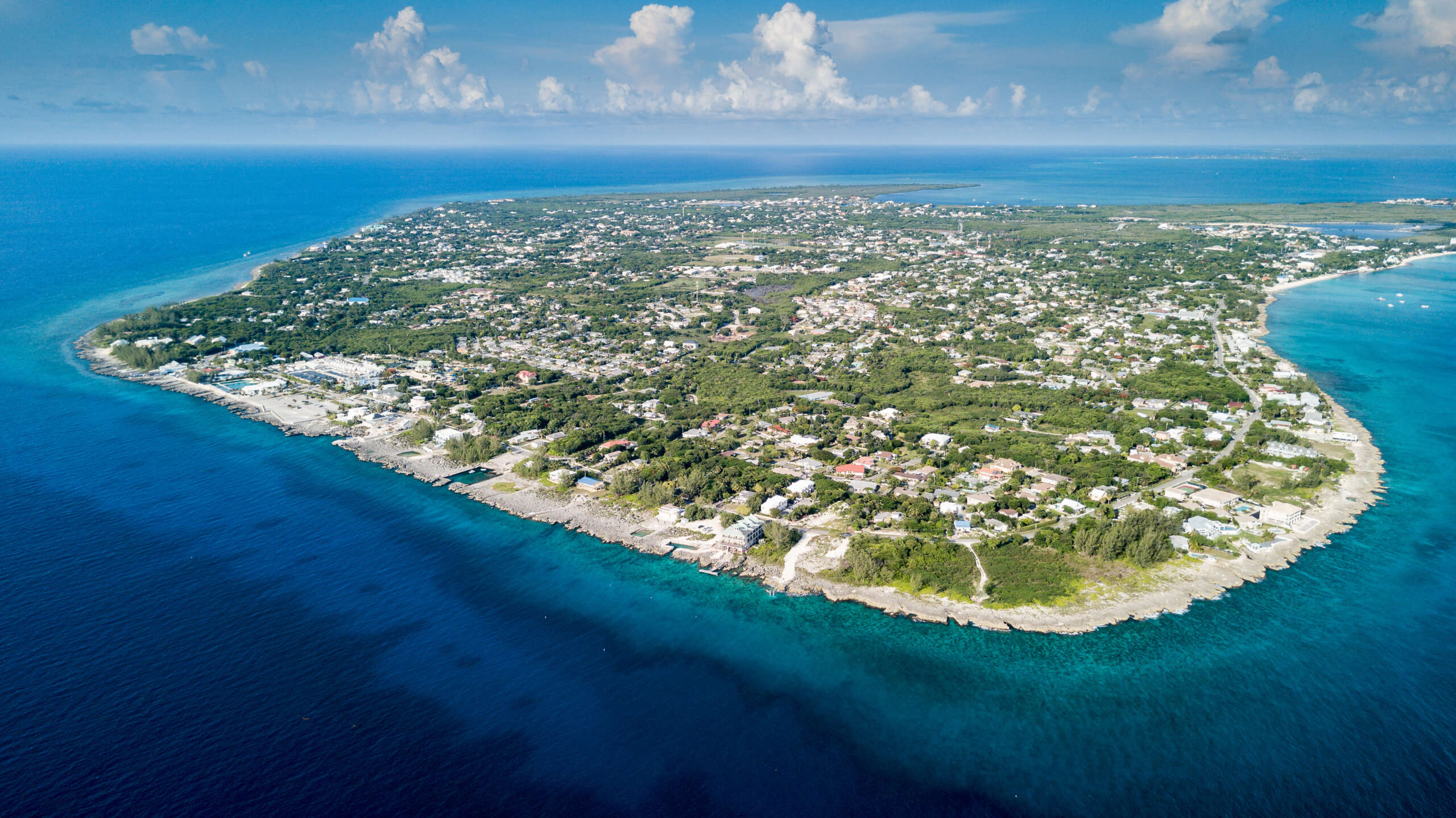
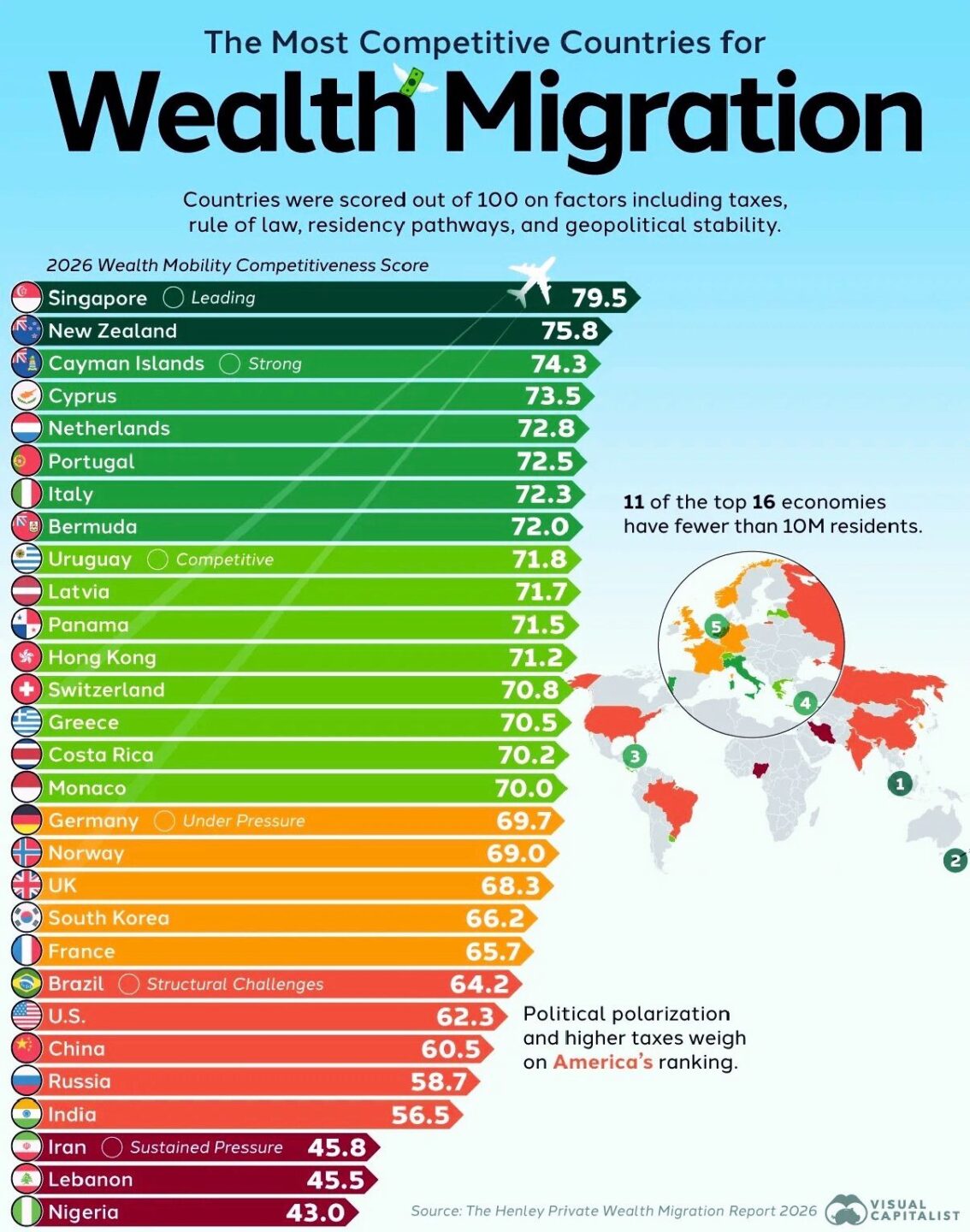
The Henley Private Wealth Migration Report 2026 ranked Cayman as the Western Hemisphere’s most competitive jurisdiction amid growing global uncertainty.
Once other Henley & Partners 2026 scores were added to the report’s findings, Cayman was in fourth position globally, behind the United Arab Emirates, Singapore and New Zealand. Bermuda was the next highest British Overseas Territory in ninth position, while Panama was in 12th place.
Traditional wealth hub Switzerland was ranked 14th while emerging Asian wealth centre Hong Kong was in 13th. The report blamed volatile domestic politics for the poor performance of the UK in 20th place and the US in 26th.
How Cayman competes
“The Cayman Islands continue to serve as a leading wealth-structuring jurisdiction, supported by a tax-neutral framework, legal certainty, and a sophisticated financial services ecosystem,” noted the report.
The UK-headquartered residency adviser used its Global Wealth Mobility Framework to assess jurisdictions on the structural factors that determine their attractiveness to international wealth. There are 12 factors in total, but Henley weighted each factor according to the importance given by its high-net-worth clients.
Looking at the weightings that Henley gave to each category, it becomes clear why Cayman performed well. The most important factor, with a weighting of 18%, is tax treatment, where Cayman’s well-established model of no direct taxation is clearly appealing.
The next most important factor is rule of law and quality of life, where again Cayman would be expected to outperform. The next two most important categories, accounting for 13% each, are investor and [high net-worth individuals] programmes, and naturalization and permanent residence. That suggests that, despite some changes to permanent residence requirements following the recent immigration reform, Cayman’s residency options remain globally competitive.
Geopolitical tensions fuelling demand for Cayman
One of the report’s main conclusions is that wealthy families and individuals no longer want to be fixed to just one jurisdiction. “High-net-worth individuals and their families are increasingly structuring their lives across a range of jurisdictions rather than remaining tied to a single country,” noted the report.
That trend is being fuelled by international tensions and volatile domestic politics. In particular, the report highlighted internal politics in the US and the ongoing conflict in the Middle East as “two wealth mobility flashpoints look set to reshape the geography of global wealth this year”.
It noted that while the US remains “the world’s largest private wealth market and creator of new wealth, [it] is also generating record demand for residence and citizenship optionality as affluent Americans seek international diversification in unprecedented numbers.”
Meanwhile in the Middle East the “conflict is testing the resilience of the region’s emerging wealth hubs, particularly the UAE – the leading destination for millionaire migration over the past two years – prompting a new phase of contingency planning among its internationally mobile residents.”
So, while the UAE remains highly ranked – perhaps because geopolitical stability only accounts for 9% of the weighting – its travails are encouraging some of its residents to add other jurisdictions to their portfolio of residency options.
Related Videos