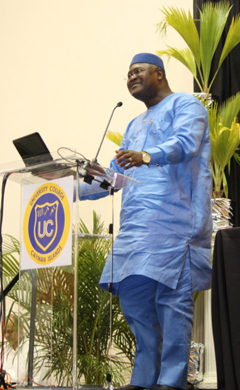
The small West African nation of Sierra Leone has given its anti-corruption commission all the powers of an independent prosecutor in attempts to stem the tide of massive government maladministration, that country’s Anti-Corruption Commissioner Joseph Kamara said Friday.
Mr. Kamara was among a panel of speakers at a University College of the Cayman Islands conference last week that included nations hardest hit by corrupt practices.
The Sierra Leone anti-corruption commissioner can refer criminal cases directly to the court without having to go through the offices of the attorney general, Mr. Kamara said. “The attorney general is also a minister of government in many cases,” he said. “Political cases do not get to court and little or no convictions [occur].”
Sierra Leone has taken a step in fighting corruption that the Cayman Islands did not.
Since the establishment of the Cayman Islands Anti-Corruption Law in early 2010, there has been only one conviction under the auspices of that legislation, according to a government report issued last year.
The individual who was convicted, Patricia Monique Webster, was a civilian employee with the Royal Cayman Islands Police Service. She was charged with misusing police data systems to solicit information from the Immigration Department records database for various purposes, other than in accordance with her authorized duties. In March, she pleaded guilty to two counts of misconduct in public office.
Other cases are not specified, but the commission reported that at least one other person – police officer Elvis Ebanks – has been charged in connection with alleged corruption offenses. The accusation against Ebanks involves him allegedly taking a bribe from a man in exchange for not arresting him.
In addition, the commission reported two cases before the Grand Court awaiting trial on corruption-related offenses and several other corruption-related investigations are in the pipeline, the report noted.
There are 19 “active cases,” meaning those that remain under investigation by police. Nine cases considered by the Anti-Corruption Unit have been concluded; four others are pending additional information.
Four reports to the commission were transferred elsewhere, according to the records.
A total of 31 anti-corruption complaints were received for the year, according to the report, leading to 82 interviews being conducted and 12 requests for production of documents in relation to cases under investigation.
The five-person Anti-Corruption Commission is chaired by the Royal Cayman Islands Police Service commissioner and includes the auditor general, the complaints commissioner and two civilian members. It has no dedicated investigators of its own and must rely on police investigators to do the legwork on cases.
That may change in the near future. The Cayman Islands Anti-Corruption Commission has been allocated its first dedicated budget in the government’s current 2013/14 fiscal year.
A total of $281,678 has been allocated specifically to the Anti-Corruption Commission as part of the secretariat’s $827,000 overall budget for the year.

Related Videos