Greater funding for the development of Cayman’s major roads could be acquired if the National Roads Authority partners with the private sector on road development, according to recommendations by Ernst & Young consultants.
The report suggests the NRA retain its function as a policy setter, and leaves road improvements up to private investors.
As a payback scheme for potential road investors, the report suggests, motorists could be asked to pay road tolls.
“The Cayman Islands has no user pays toll roads which are often part of a robust traffic management strategy and which facilitate Public Private Partnership frameworks to be implemented as they provide a revenue stream and financial return for road funders,” the report states.
Currently, the NRA relies on funding from a road fund, financed by duty collected on imported gasoline and diesel.
“Funding is limited by the amount of duty and coercive revenue collected and earmarked for the ‘Road Fund,’ and additional capital funds have to come from central government,” the report says.
Unruly motorists could be ticketed through a safety camera system as another way to collect revenue and improve safety, the report suggests.
“The Cayman Islands currently has no camera monitoring of speeding or other traffic infringements. The use of ticketing using cameras in other jurisdictions has greatly improved safety and increased revenues,” according to the report.
Forming a private-public partnership would also improve the “quality of roads due to the application of private sector expertise,” the report says. It also states there is a road construction market available for use locally.
Outsourcing road construction and maintenance work will also give the NRA added time to focus on regulations and policy, road standards and planning.
“Limited work currently being done on the capacity of roads, traffic issues, and analytical analysis of potential new road requirements or the impact on roads of potential property development. This should be the central focus going forward,” the report says.
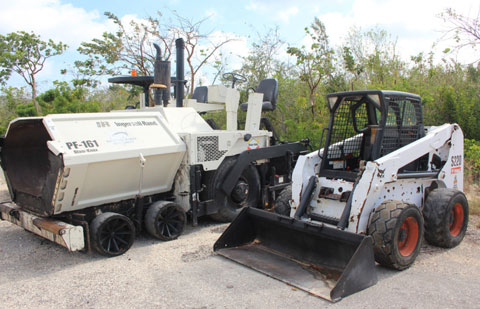
Another roadwork challenge the NRA faces is a lack of access to paving equipment. “All paving equipment has been transferred to the Brac,” the report says. “The NRA has limited ability to do paving activities without purchasing/leasing new equipment for Grand Cayman.”
The report also suggests that privatization of Cayman’s roadworks “may lead to increased investment by the private sector in Cayman Islands roads, leading to faster development of new roads.”
As of the end of June, 85 people were employed by the NRA. Since 2011, the organization has downsized by 24 employees.
The NRA was created in 2004 to administer, manage, control, develop and maintain Cayman’s public roads. It is governed by a board of directors who are responsible for policy and general administration.

Related Videos