After 27 virtual meetings over nearly two years, coral disease experts and environmental agencies from throughout the Caribbean finally found themselves in the same room together Tuesday morning to brainstorm and share information about stony coral tissue loss disease.
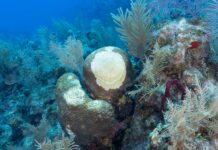
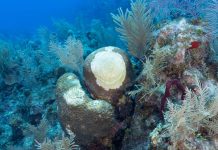
The disease is ravaging reefs in Florida and across the Caribbean, and teams of scientists, academics, and representatives of government environmental agencies – all part of the Coral Conservation in the Overseas Territories working group – have been striving to find ways to slow its spread and make surviving corals more resistant to the infection.
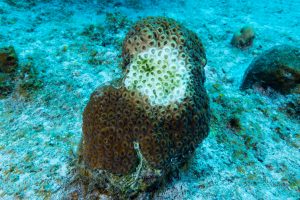
The group has been meeting remotely since November 2020 to find practical solutions to combat the deadly disease, which has been described by some as the “COVID of the seas”.
They gathered in Grand Cayman, at the Westin resort Tuesday, for the start of a four-day conference.
Jennifer Ahearn, chief officer in the Ministry of Sustainability and Climate Resiliency, delivered a welcome address, stepping in for Premier Wayne Panton, who was unable to attend.
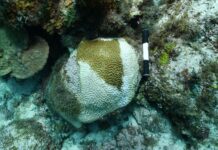
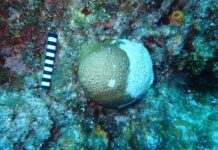
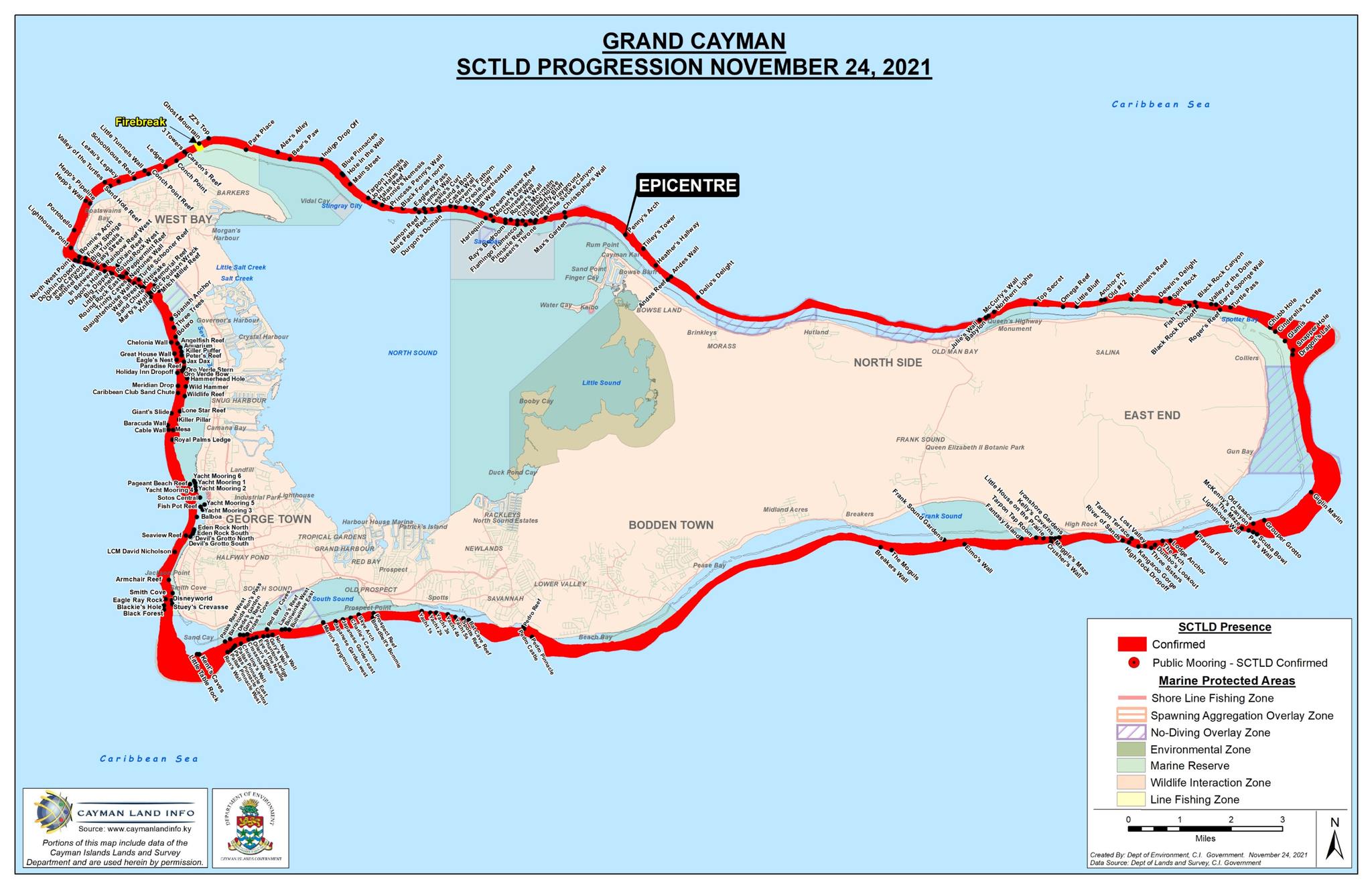
Ahearn told attendees that, from June 2020 when the coral disease was first spotted in Cayman, at Penny’s Arch, off Rum Point in North Side, it had been “heartbreaking” for the community to watch the red line – representing how far the disease had spread – on a Department of Environment-issued map grow over the following year.
By November 2021, it had encompassed the entirety of Grand Cayman – leaving “tens of thousands of infected, dead or dying corals” in its wake, Ahearn said.
The Department of Environment in Cayman set up teams to track the disease and to try to slow its progression, treating the coral with an antibiotic paste.
Unlike Florida, which was caught unawares when the disease was first reported there in 2014, Cayman – having the benefit of Florida’s experience – was quickly able to identify the type of disease and then begin administering an antibiotic paste to slow the spread.
Ahearn said collaboration between jurisdictions impacted by SCTLD, as well as other diseases, was a reason for hope, as the sharing of solutions and information was essential for regional coral conservation efforts.
Croy McCoy, senior research officer at the Cayman Islands Department of Environment echoed this sentiment, telling the attendees, “In my nearly three decades as a coral reef ecologist, I have never witnessed so many scientists across countries sharing information and working together. My only guess is that the COVID global pandemic of 2020 made us all realise that to resolve complex issues and problems, we need to do so.”
He added, “We are here today because we can make a difference. We’re probably the last group of people that can. By the next generation, it will probably be too late.”
42,000 Cayman corals treated with antibiotics
Describing how the DoE had tackled the outbreak, which began here while the islands’ borders were still closed and the community was just coming out of lockdown, McCoy said it had set up small teams to administer the antibiotic paste and monitor the spread of the disease.
Between April 2021 and April 2022, those teams treated more than 42,000 corals, he said.
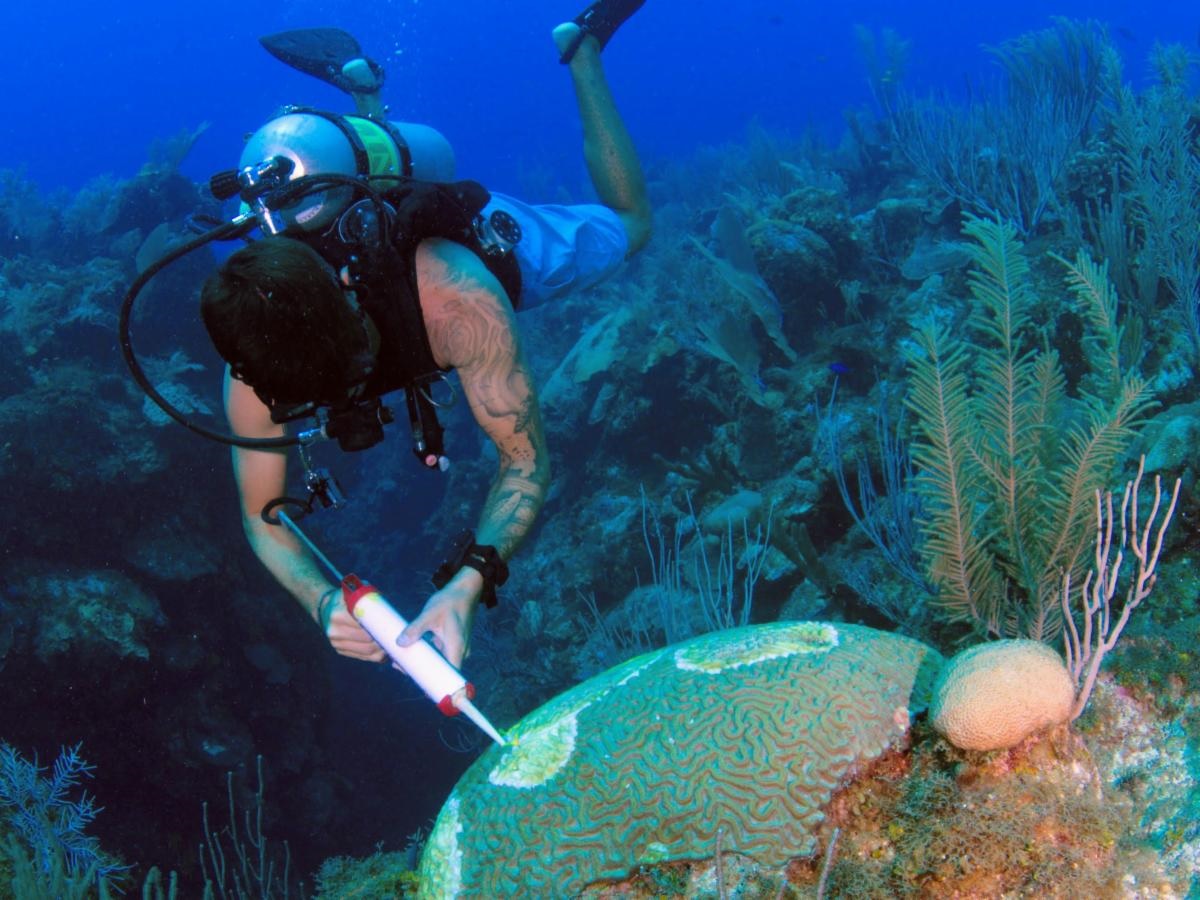
McCoy said the DoE built a team of 150 volunteer divers, who treated and surveyed the corals, and also took samples that were sent to overseas labs to help with the ongoing research into SCTLD.
“At times, we felt we were facing a losing battle,” McCoy said, “but we always reminded ourselves that, for every coral we treated, we were giving it a fighting chance to survive the disease … until a better option came along from the research that is going on into this novel disease.”
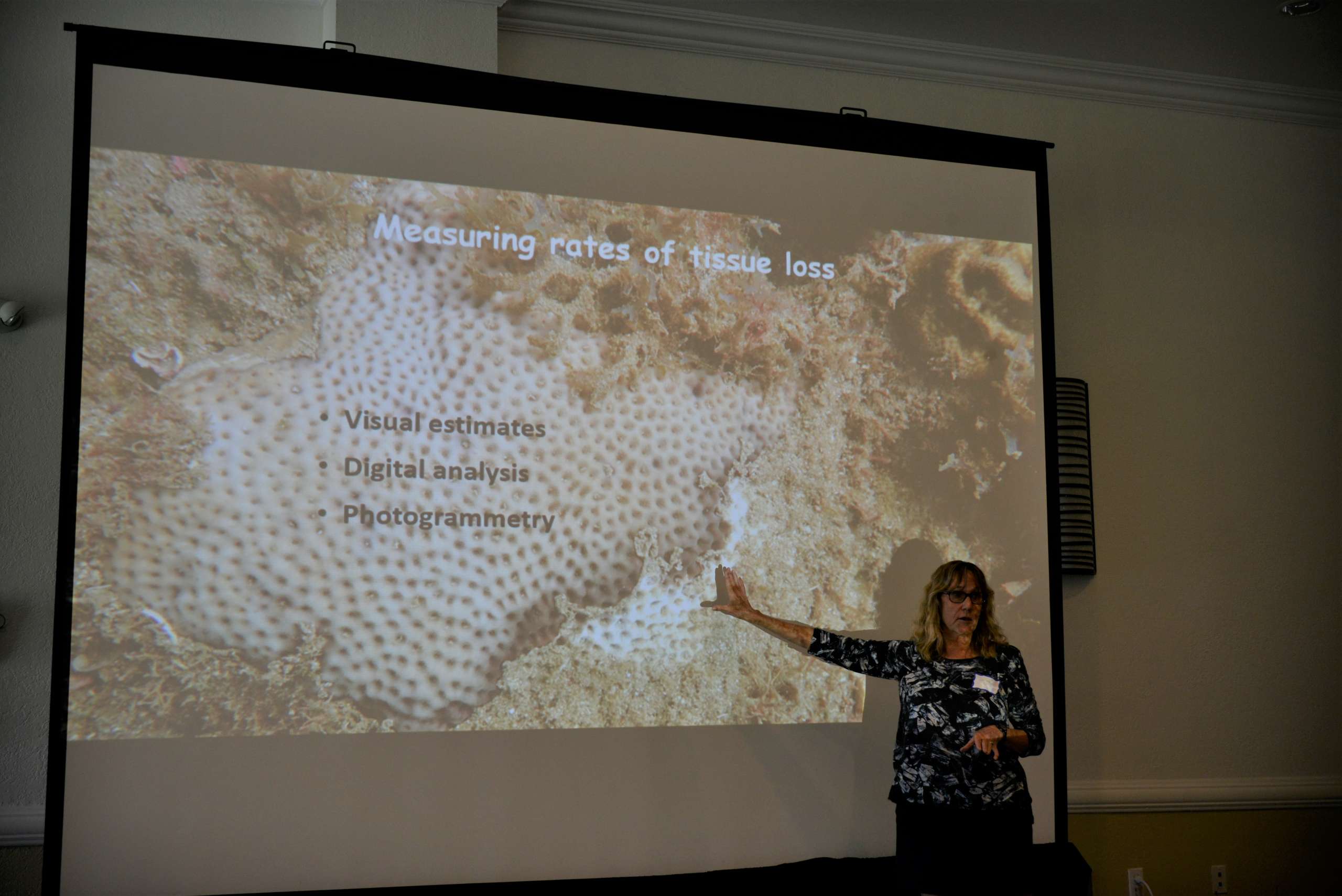
Coral disease ecologist Greta Aeby, who is leading technical sessions at the conference on how to survey, monitor and treat areas of infected coral, explained that when scientists first encountered SCTLD in Florida, they did not know initially what it was or how to combat it.
She is currently working in Hawaii, where the disease has not been seen. But, she said, the US National Oceanic and Atmospheric Administration has already proactively launched a series of meetings to prepare jurisdictions in the Pacific for a potential outbreak there, using information garnered from places like Florida, that have been dealing with the disease for years.
“I’ve heard from people in here, from the different islands, how much they appreciated the Florida people having done all this background research so that they’re not starting in the dark,” she said. “When we started, in 2017, the response in Florida, we were really in the dark.
“We didn’t know how it was transmitted, we didn’t know how virulent it was, we didn’t know if it’d infect all of the corals or just some of them – it really was stumbling in the dark to figure out what to do with this.”
Building reef resilience
She noted that it was not going to be possible to eradicate the disease.
“When we’re talking about disease treatment,” she said, “we’re not talking about stopping the disease, anymore than we’re not talking about stopping COVID.
“COVID eventually will turn into an endemic disease, but now we’re all vaccinated so now mortality is reduced. So, when we’re doing the in-situ disease treatment, we’re talking about preserving corals for reproduction, not about stopping the disease, because we’re not going to stop it, obviously, it’s all over.
“It’s about preserving the integrity of the reef, and hopefully helping the resilience of the reef – the ability of the coral reefs to bounce back.”
The Coral Conservation in the Overseas Territories working group is made up of representatives from six British Overseas Territories – Cayman, Anguilla, Montserrat, British Virgin Islands, Turks and Caicos Islands, and Bermuda – and funded by the UK government’s Darwin Plus programme.
The conference will continue until Friday, and will include field trips in which some of the attendees will dive local sites to see how the disease has impacted corals here, and to administer probiotics that scientists are currently working on which they hope will make certain corals more resistant to the disease.
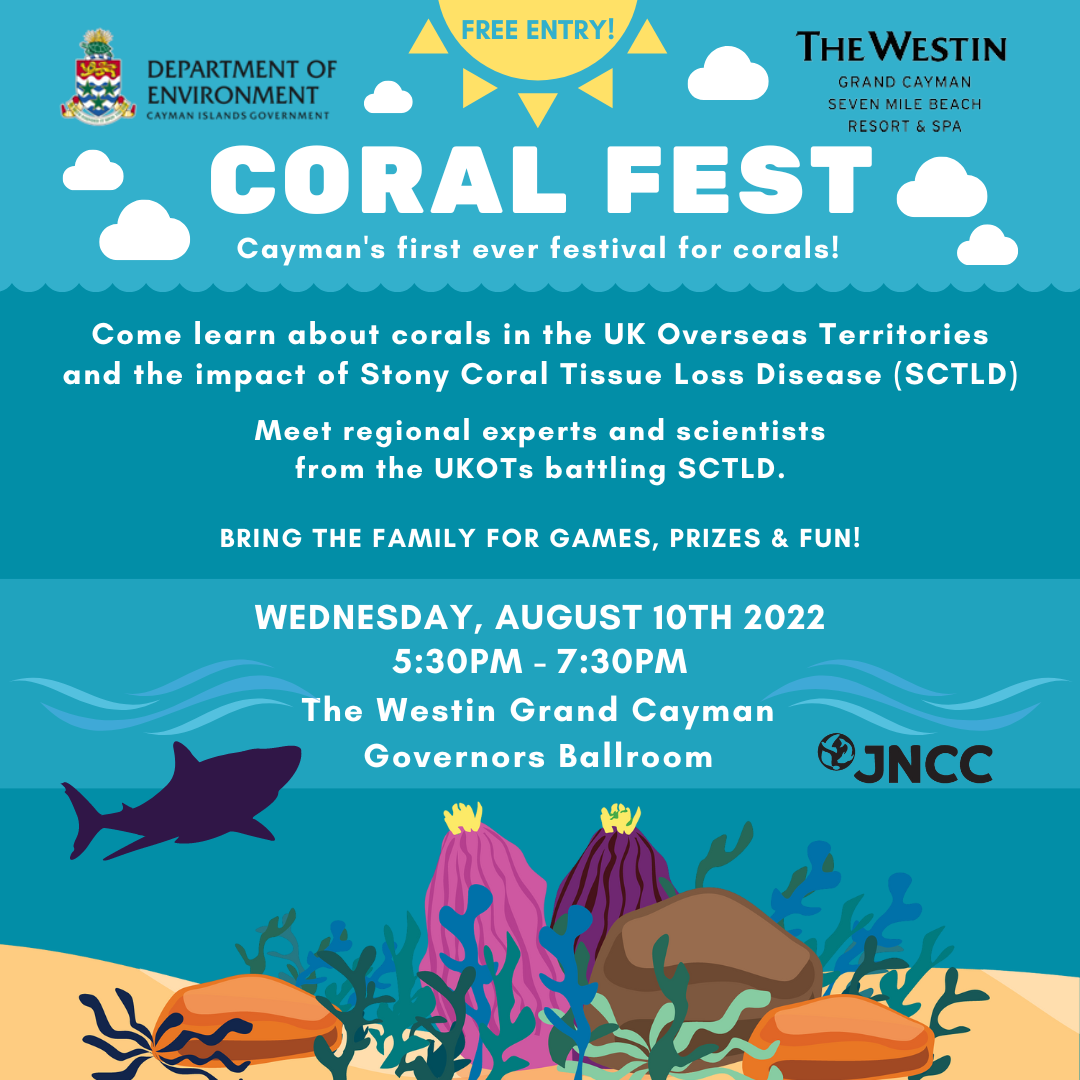
The delegates will also be attending the Department of Environment’s Coral Fest, which will be held at the Governor’s Ballroom at the Westin, from 5:30pm to 7:30pm on Wednesday, 10 Aug. All members of the public are invited to attend the festival.
Related Videos