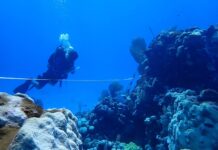
The annual coral-spawning phenomenon occurs on the reefs over two or three nights around the full moon in September, but in Grand Cayman last week a group of scientists gathered around glass tanks filled with relocated corals to watch it happen mid-afternoon.
In a first for the Caribbean, they had managed to recreate the kinds of conditions necessary to trigger coral spawning in a lab.
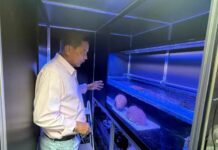
The Department of Environment has installed a new Coral Spawning Lab, containing 256 gallons of water, with the intention of growing coral in a laboratory that will eventually help to repopulate reefs.
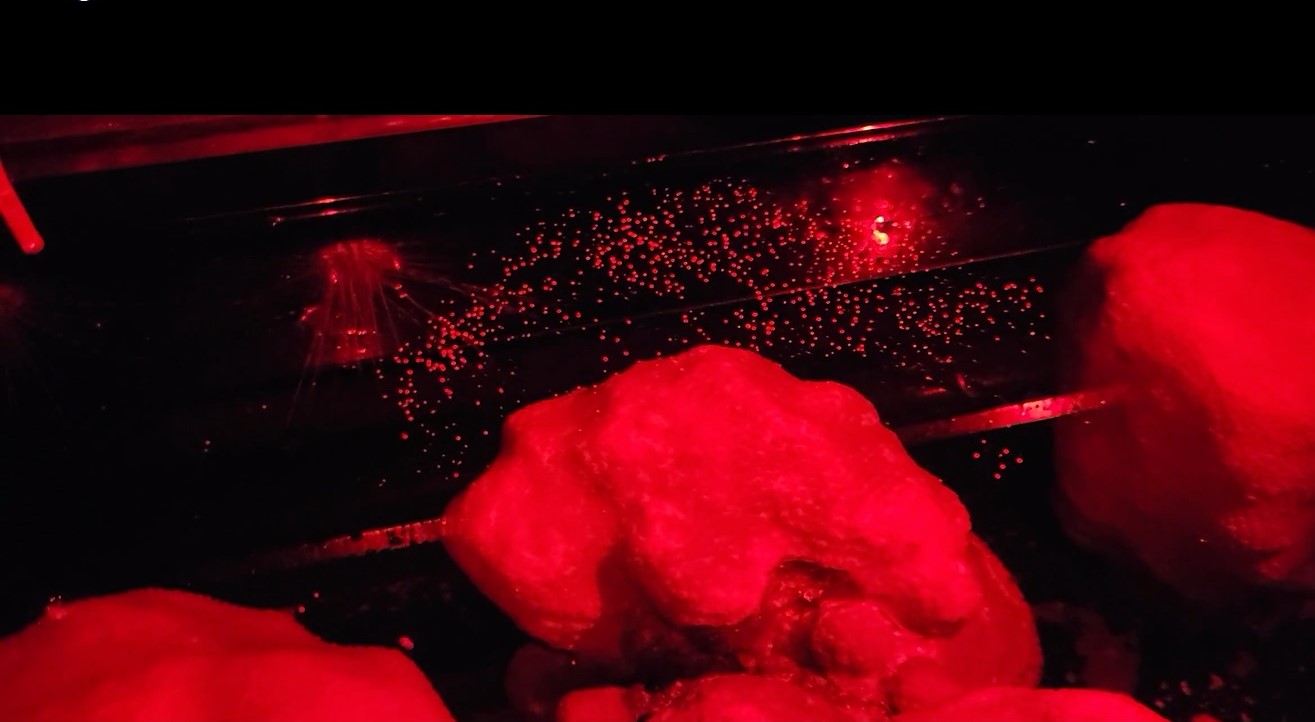
The corals spawned during daylight hours, responding to laboratory adjustments of temperature and solar cycles, as well as to the monthly lunar cycles telling them it was time to release their gametes – eggs and sperm.
The spawning lab is run by DoE marine biologists, led by Marine Research Unit manager Croy McCoy and marine research officer Cody Panton. Also on hand to witness the lab-based spawning last week were Professor Mike Sweet of the UK’s University of Derby and Jamie Craggs of London’s Horniman Museum and Gardens. Sweet and Craggs, along with Vincent Thomas of Aquarium Connections, set up the Coral Spawning Lab company and supplied the tanks, sponsored by the Foster’s Group, to the DoE.
Sweet, in an interview with the Compass, explained that two species of coral – Orbicella annularis and Orbicella faveolata, more commonly known as lobed star and mountainous star corals, respectively – had been chosen to undergo the artificial spawning process, as it corresponded with the times those species would have been spawning naturally on the reefs.
He said the DoE now has “hundreds of thousands of baby larvae swimming around in the tanks”.
Once they grow to a juvenile stage, they can be outplanted onto the reef, helping to replace some of the many corals lost to stony coral tissue loss disease in recent years.
As the parents of these particular larvae have survived the deadly disease, it is hoped that they will have inherited that resistance.
“The point behind the Coral Spawning Lab is to increase the genetic diversity on the reef,” Sweet explained.
9-5 spawning
Being able to recreate conditions in a lab for spawning to occur at any time of the day or night, or any time of the year, is a game changer, he said.
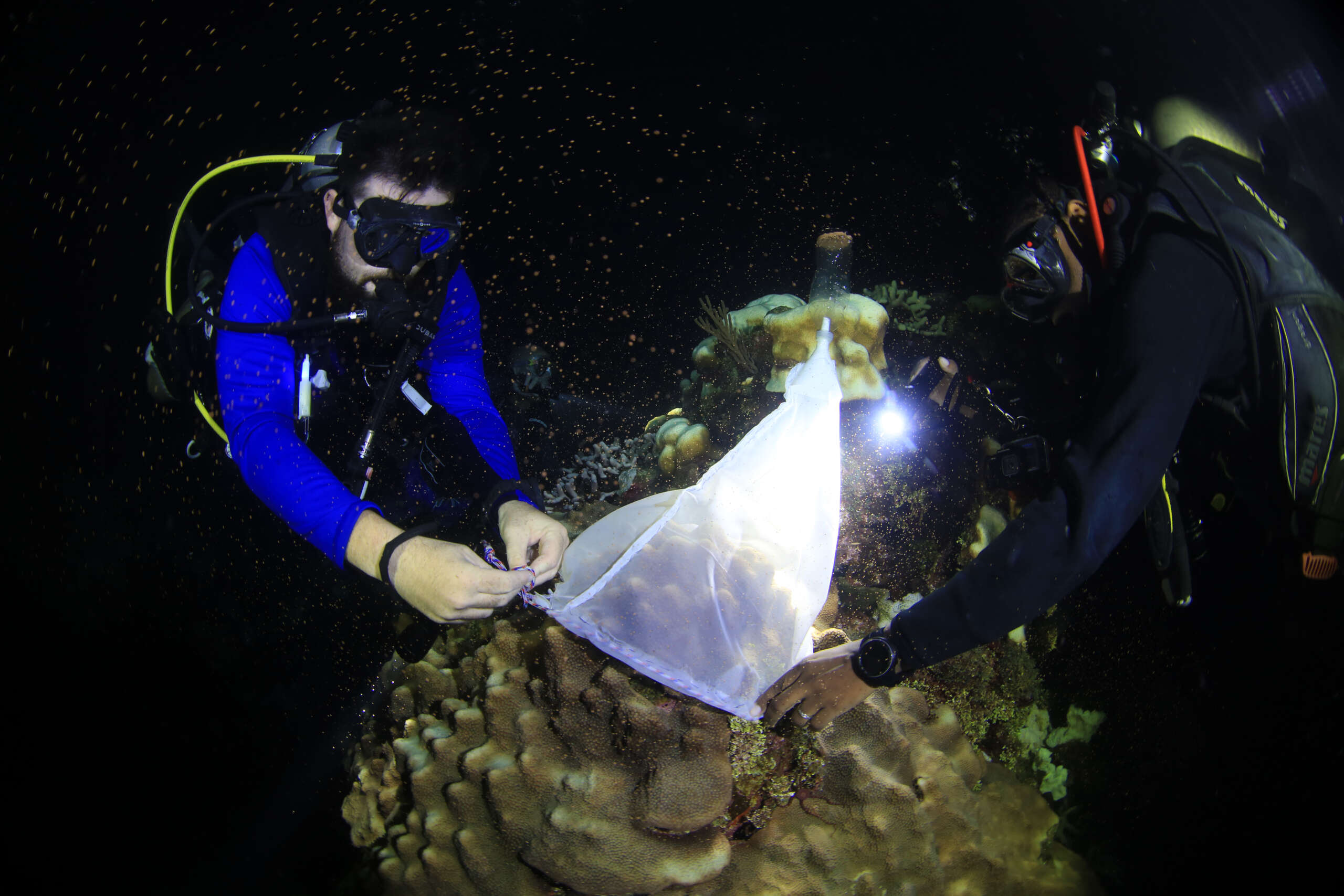
Before this was possible, the scientists had no other alternative than to dive late at night when the spawning typically occurs and collect gamete samples in nets, and then return to the lab with the samples, so often it would be 3am or 4am before they finished their work.
“Being able to work 9-5 makes life a lot easier,” he said.
Because the corals in the DoE lab had only been relocated recently, the scientists were unsure whether they would be healthy enough, or had had enough time to adjust to their new lab environment, to spawn successfully.
So, when the lab-based coral spawning occurred – for the first recorded time in the region using this technology – it came as quite a relief to the team.
“We were always hoping for the new lab corals to spawn because the lab was set up to maintain their annual cycle, which relies heavily on the moon, with a shift for them to spawn much earlier and in the day,” McCoy said in a DoE social media post. “But with relocation, there is always a risk of corals being stressed, and with two moons [last] month, we just weren’t sure if they were going to be established enough to spawn.
“So I was elated to learn it had happened, more or less when we expected it to. Nothing is more gratifying than seeing the spark of an idea be supported enough to move forward, overcoming challenges and uncertainty, into fruition. And in this case, that fruition is the beginning of new research, which we hope could be foundational for marine conservation and coral restoration for our Cayman Islands.”
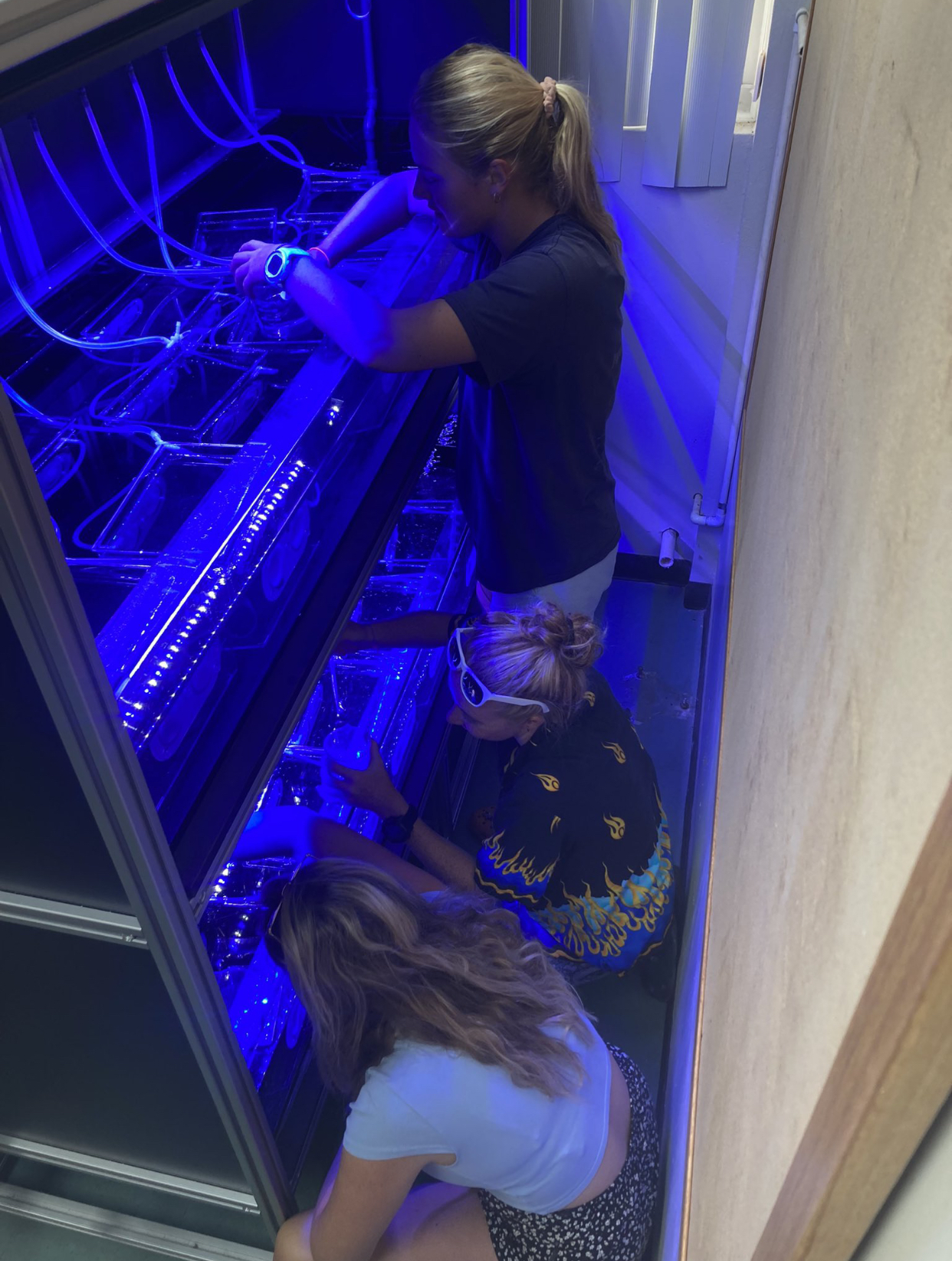
McCoy added that the two spawning labs are another tool in the DoE’s toolbox to tackle the current regional and global coral reef crisis.
Here in Cayman, bleaching due to record high ocean temperatures, and deadly stony coral tissue loss and other diseases are having a major impact on corals on the reefs.
McCoy says now that it is apparent that the corals can spawn multiple times a year in the lab, instead of just once a year in the wild, the scientists can help reseed the reefs with baby corals.
Meanwhile, on the reef
The visiting scientists and members of the DoE team weren’t just stuck in the lab, though. They also joined the divers around Grand Cayman who were in water on several nights during the week on the lookout for the coral spawning.
Spawning of species of certain hard corals occur each year following the full moon, usually in early September.
During a small window in time on each night during the spawning period, the stony or hard corals release their eggs and sperm in a perfectly timed symphony. For a few short seconds, the gametes float just above the releasing coral, before mixing in the water column and then wafting away in the current.
A tiny percentage will be fertilised, develop into coral larvae and settle on a reef. The majority are eaten by fish or will wash ashore or to the water’s surface and die.
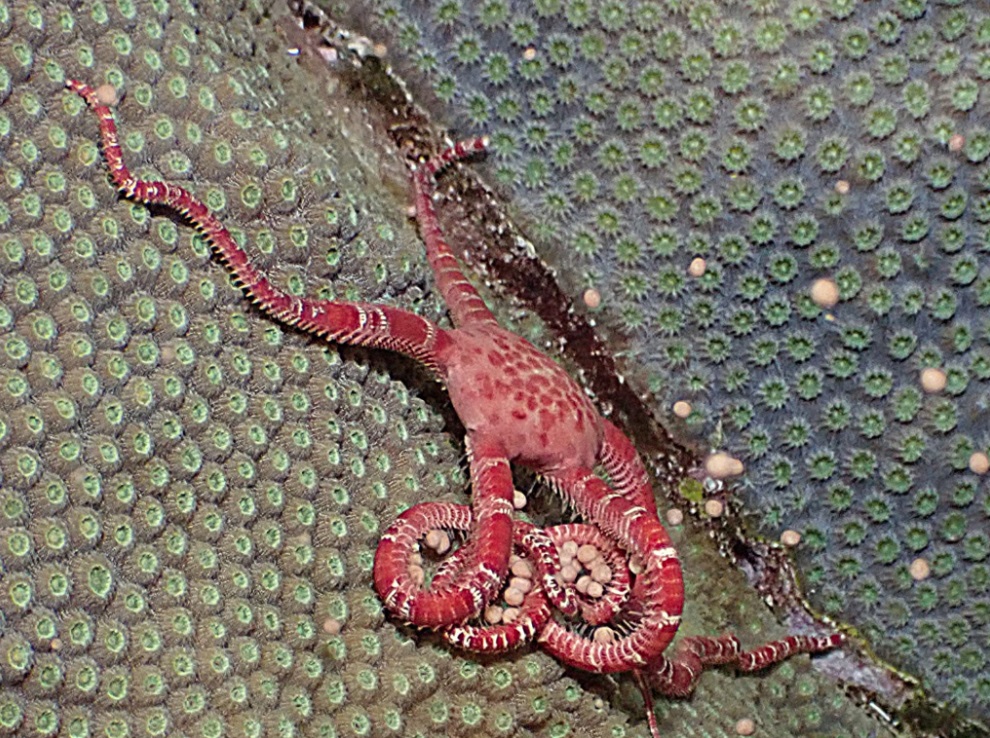
Their chance of survival is far higher when they’re released inside the lab, where there are none of the natural predators like the brittle stars on the reef that crawl over the corals moments before they release their gametes, primed for an easy feast.
Sweet said the team dived two nights off George Town and one night with Ocean Frontiers in East End to capture some of the released gametes, so they could fertilise them in the lab and grow them into corals.
This year’s spawning of the lobe star and mountainous star corals took place over three nights – 4, 5 and 6 Sept.
As it has over the last several years, Ocean Frontiers took out boats of divers to a handful of dive sites to witness the spectacle.
Over the last two decades, Ocean Frontiers’ Steve Broadbelt and his team, along with former marine biologist and underwater photographer Alex Mustard, have worked out, with precision, the formula to determine which corals will “go” and exactly when.
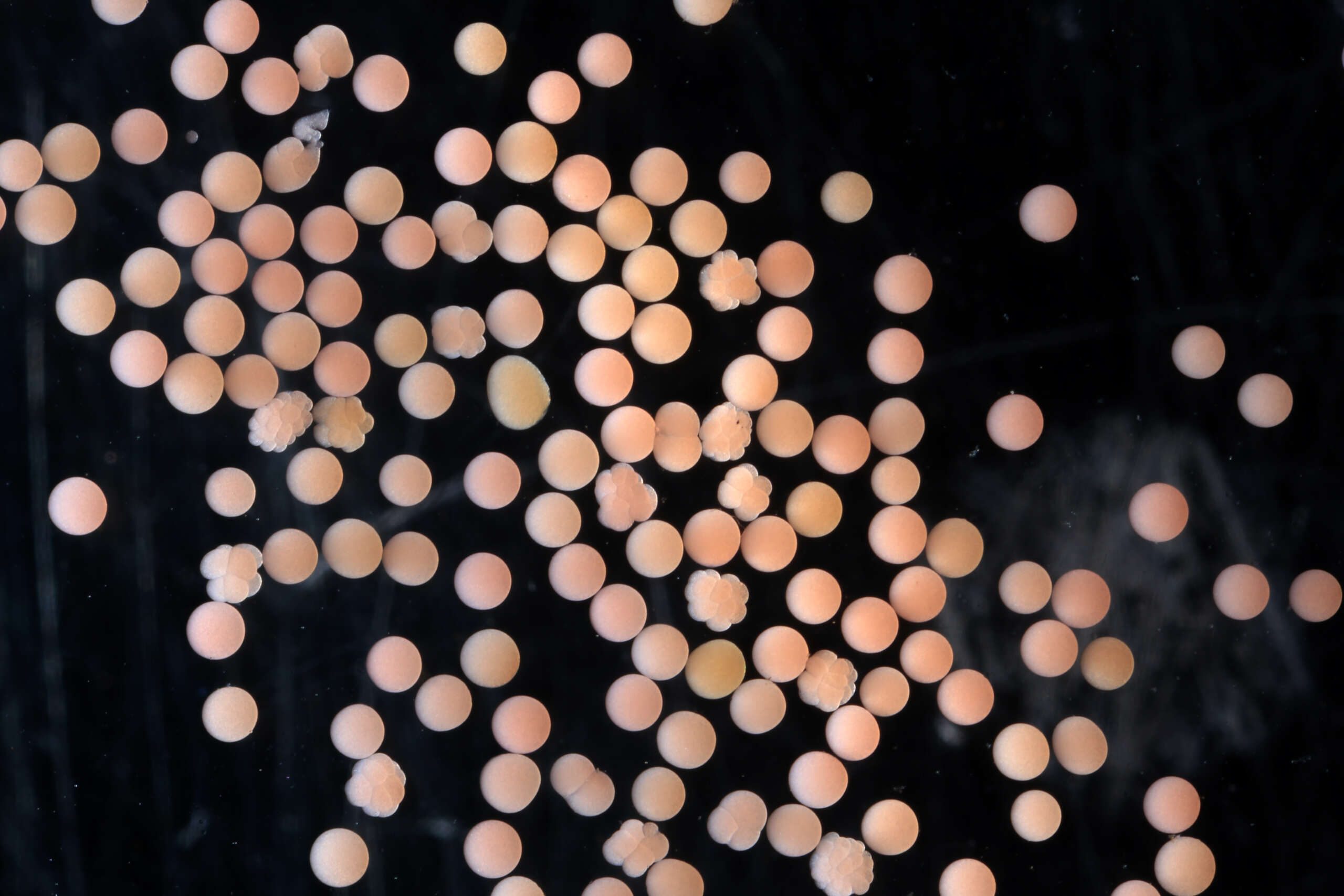
Often this is late at night, like this year, when many of the corals spawned after 10:30pm, meaning it was well past midnight before divers went home. But for those, like Meelin Vernon, who captured photos of the incredible, rarely seen sight, it was worth it.
“I’ve participated in the Ocean Frontiers coral spawning dives for several years now and never been disappointed,” she said.
“Living in West Bay, it’s a very late night, particularly this year as the coral spawned a bit later than usual. This was the middle night of three and was spectacular. I got home at 1am, but it was absolutely worth it and I will be back to do it again next year.”
This year, Broadbelt and his team put on three boats each night to transport divers to witness the spectacle.
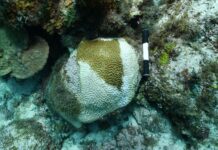
The mass bleaching of corals islandwide, due to record high sea temperatures this summer, impacted the amount of spawning this year, especially for the lobed star corals, he said.
Of those, he said, “less than 20% spawned”.
However, he did witness bleached lobed star corals, and Broadbelt says he’s hopeful the corals will recover once the water temperatures drop.
Another reason for the small percentage of those types of corals spawning could be because many of them had spawned last month, as the calculations for when the spawning would occur were complicated by the fact that there were two full moons in August.
“So, it’s possible some of them spawned after the second full moon, which was also a blue moon,” he said.
Related Videos