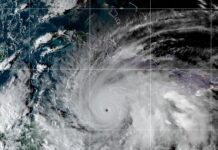
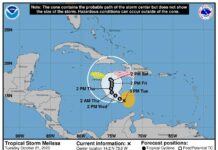
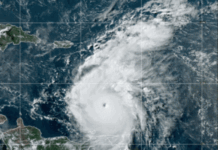
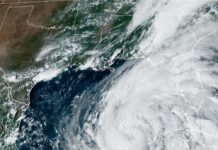
Hurricane Ian may have brushed Cayman – but that does not mean the threat is over for the year.
With little more than 60 days to go until the official end of the 2022 Atlantic hurricane season, which runs through the end of November, forecasters say the next two weeks have the highest chances of generating the most storms.
In its short-term forecast, issued on Thursday, 29 Sept., experts at the Colorado State University’s Tropical Meteorology Project wrote, “We believe that the most likely category for Atlantic hurricane activity in the next two weeks is above-normal (55%), with normal (40%) and below-normal (5%) being less likely.”
That prediction is based on a 55-year climatological mean of recorded storm data spanning from 1966 to 2021. During that time, CSU forecasters say the data revealed that the peak of the Atlantic hurricane season is often between the first and third week of September each year.
CSU has issued 2-week Atlantic #hurricane forecast (Sep. 29-Oct. 12) and gives highest odds for above-normal activity (55%) with lower odds for normal (35%) & below-normal (5%). #Ian should generate enough ACE by itself to approach near-normal level.https://t.co/hFO7AJxkuz pic.twitter.com/UNqhyLVRsH
— Philip Klotzbach (@philklotzbach) September 29, 2022
Although the US-based National Hurricane Center is not calling for any additional storm development within the next five days, CSU forecasters say other systems point to potential activity.
“Global models have become quite aggressive this morning, with development of a system coming off of Africa in the next couple of days,” the forecast from the CSU states.
Since the 1 June start to the hurricane season, there have been nine named storms, four hurricanes and two major hurricanes – leaving the season under-performing in all categories when compared to the forecasts by CSU and the National Hurricane Center.
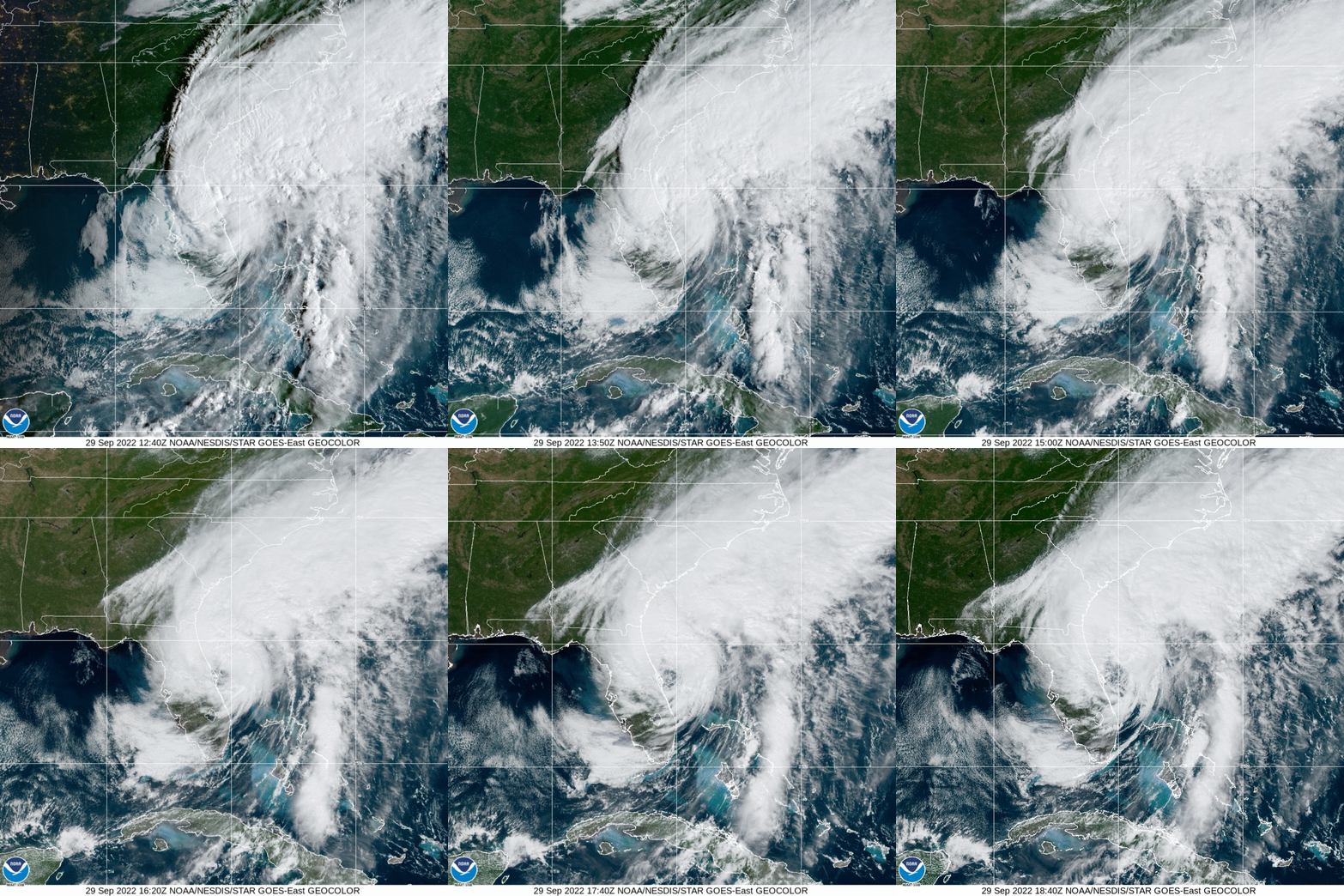
Initial forecasts, issued on 24 May by the NHC called for between 14 and 20 named storms, of which six to 10 were expected to strengthen into hurricanes. Of those storms, forecasters said three to five could develop into major hurricanes – at Category 3 or higher.
The season’s under-performance is partly because of a record slow start, which resulted in no named storms developing during August – only the fifth time this has happened since 1950. However, a slow start does not guarantee an abrupt or uneventful end of the season.
“The most recent seasonal forecast called for an above-average season,” wrote CSU. “While the season started very slowly, the season has really ramped up in September, with activity now at near-average levels through late September.”
If the season lives up to predictions, the Atlantic hurricane basin would see, at a minimum, five more tropical storms and two more hurricanes, one of which would develop into a major storm.
For the latest information on storm activity in the Cayman Islands, as well as information on how to prepare for hurricane season, visit the ALT Storm Centre.
Related Videos