As El Arca drifted into the Beach Bay lagoon on the evening tide on a humid summer weekend, it came to rest a few feet from the shallow water’s edge.
 Its hull was pierced by the jagged beach rock on its final approach and the motor, a retrofitted car engine, had died three days prior. But, no matter. The boat, the size of a Honda Fit and made entirely of scrap wood, had done its job and safely transported 22 Cuban refugees on a 10-day ocean crossing from Cayman’s communist island neighbour to the north.
It was far from the end of their journey, though.
The weary men and women who stepped ashore that day were among 353 Cubans who arrived in the Cayman Islands by boat between April and December of 2022. All but three applied for political asylum, breaking recent records and putting a strain on immigration and custody services.
As government ministers scrambled to amend legislation to tackle the rise in irregular migration, a contentious discussion began to be held throughout the community.
Cayman has been a safe harbour for Cubans fleeing the Castro-regime for decades. But the relationship is fraught with political complexity and, while most wish to help a friend in need, some wonder how long the current situation can go on, and at what cost to Cayman.
In a four-part feature this week, the Compass takes a deeper look at the Cuban-Cayman connection.
Featuring multiple interviews with Cubans in Cayman, our series looks at the factors fuelling the exodus and the challenges faced by those who take to makeshift boats to flee Cuba and make Cayman their home.

Part 1: ‘Why we leave’
Before we can understand why Cuban nationals leave their homeland in such droves, a brief history lesson is needed.
In 1959, Fidel Castro ousted then-dictator Fulgencio Batista, ending a bloody three-year civil war and vowing to restore Cuba’s democracy. However, the next 64 years would prove Castro’s words to be an empty promise, much to the dismay of many who hailed him as “El Comandante”.
“I grew up listening to the stories of my grandfather, saying that he betrayed us… he lied to us, referring to the dictator Fidel Castro,” said Amaury Rodriguez, whose grandfather fought alongside Castro but later came to regret that decision.
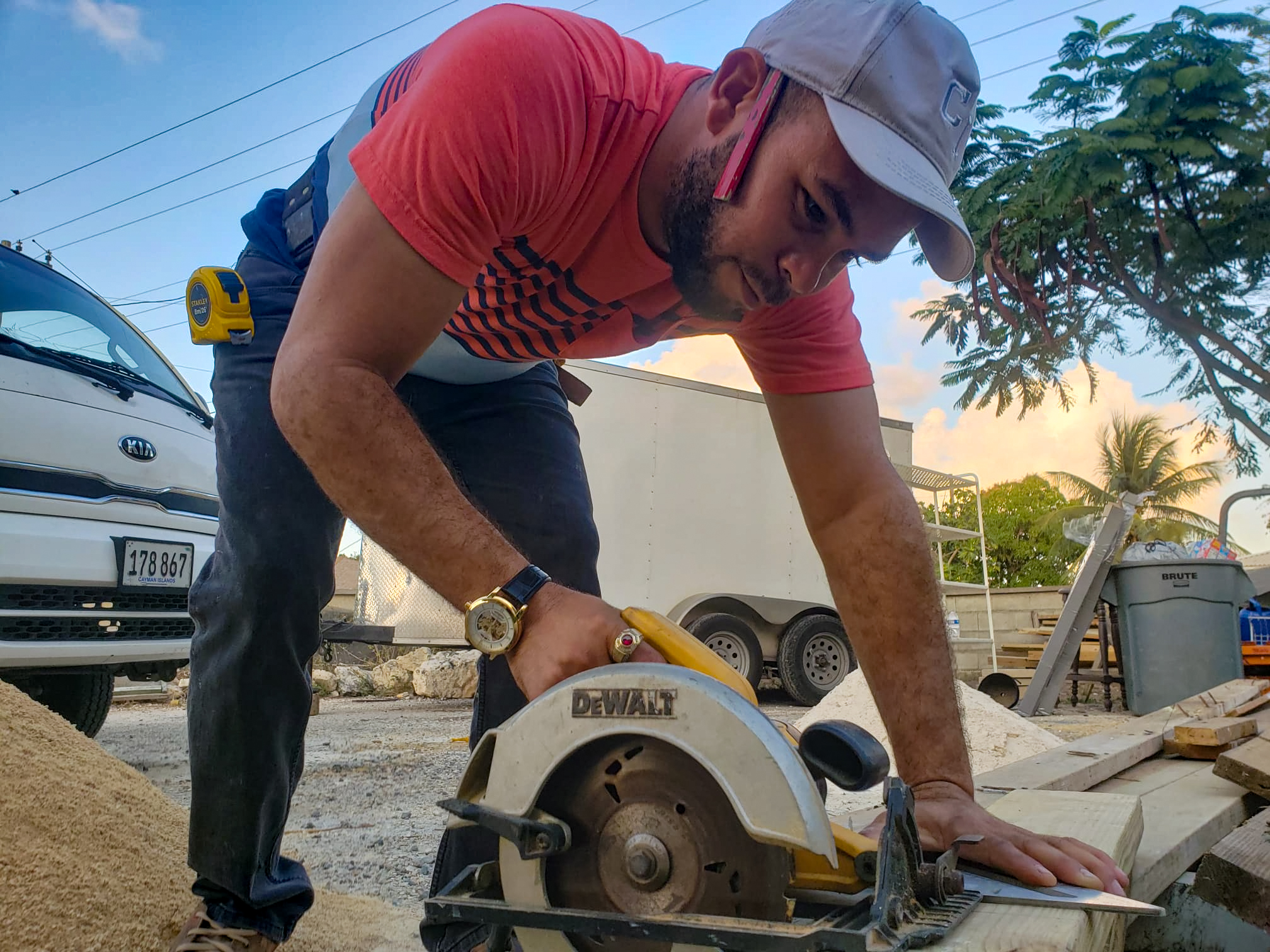
Pausing to gather his thoughts, Rodriguez, a 38-year-old carpenter who arrived in Cayman by boat in 2017, reflected on the fear he felt as a child growing up in the city of Bayamo, in Cuba’s southeastern Granma Province – ironically the location where Castro’s revolution is said to have begun.
“When I was younger, our parents would not speak to us about the war,” said Rodriguez, who was granted political asylum in Cayman in 2020.
“My grandparents, many of our great-grandparents, were silenced with fear and murder in the 1950s and ’60s when Fidel seized power and assassinated everyone who truly participated in the war.
“The people who did speak up either ended up in prison, dead or missing and it is still happening to this day.”
Castro, who died in 2016, ruled Cuba for more than half-a-century. Even after his death, his legacy lingers. Cuba remains a one-party communist state, now under the rule of Miguel Diaz-Canel.
According to the US Department of State, in 2022 as many as 712 people, some as young as 16, were thought to be held as political prisoners in Cuba’s state-run prisons.
But it’s not just the government that Cuban citizens are afraid of.
“You have to be careful because your neighbours and even your own family members are watching you and reporting everything to the government,” said Rodriguez.
It’s a grim reality that Nidia Sanchez Gordon, 44, learned the hard way during her formative years as a teen in her homeland.
“My mother’s sister was leaving Cuba, and when she wanted to go and say goodbye my father would not allow it out of fear of what other people would think,” said Sanchez Gordon, who remembers her mother defying her father’s orders at the expense of their relationship.
“My mother chose to go say goodbye to her sister, and that was the end of her relationship with my father,” said Sanchez Gordon who, at the age of 16, relocated to Cayman with her mother, who, though born in Cuba, was of Caymanian lineage.
Hunger, poverty and oppression
In addition to the widespread fear deeply rooted in Cubans, many live in extreme poverty, unbeknownst to tourists who are often dazzled by vintage cars and Venetian-themed homes in Havana, the country’s capital.
But beyond the quaint cobblestone roads, the reality for the average Cuban national is one of hunger, poverty and oppression.
“I can remember as a teen going back and visiting Cuba and talking with my cousins and telling them about the outside world,” said Sanchez Gordon.
“Something as simple as being able to eat pizza whenever you want is something you might take for granted, but they can only eat whatever is in season, so if only one type of crop is growing then that’s what they eat.”
For the past 64 years, Cuba has been hit with crippling and long-standing trade embargos while enduring two global financial downturns and numerous natural disasters such as deadly earthquakes and major hurricanes; and with each disaster, the country is plunged further into poverty.
But the 11.26 million people in Cuba have not gone without humanitarian aid. According to the World Bank, between 1960 and 2020 Cuba received US$174 billion, with the largest single lump sum of US$4 billion paid out in 2016.
“Where did that money go? I don’t know. It didn’t go to the people,” said Rodriguez.
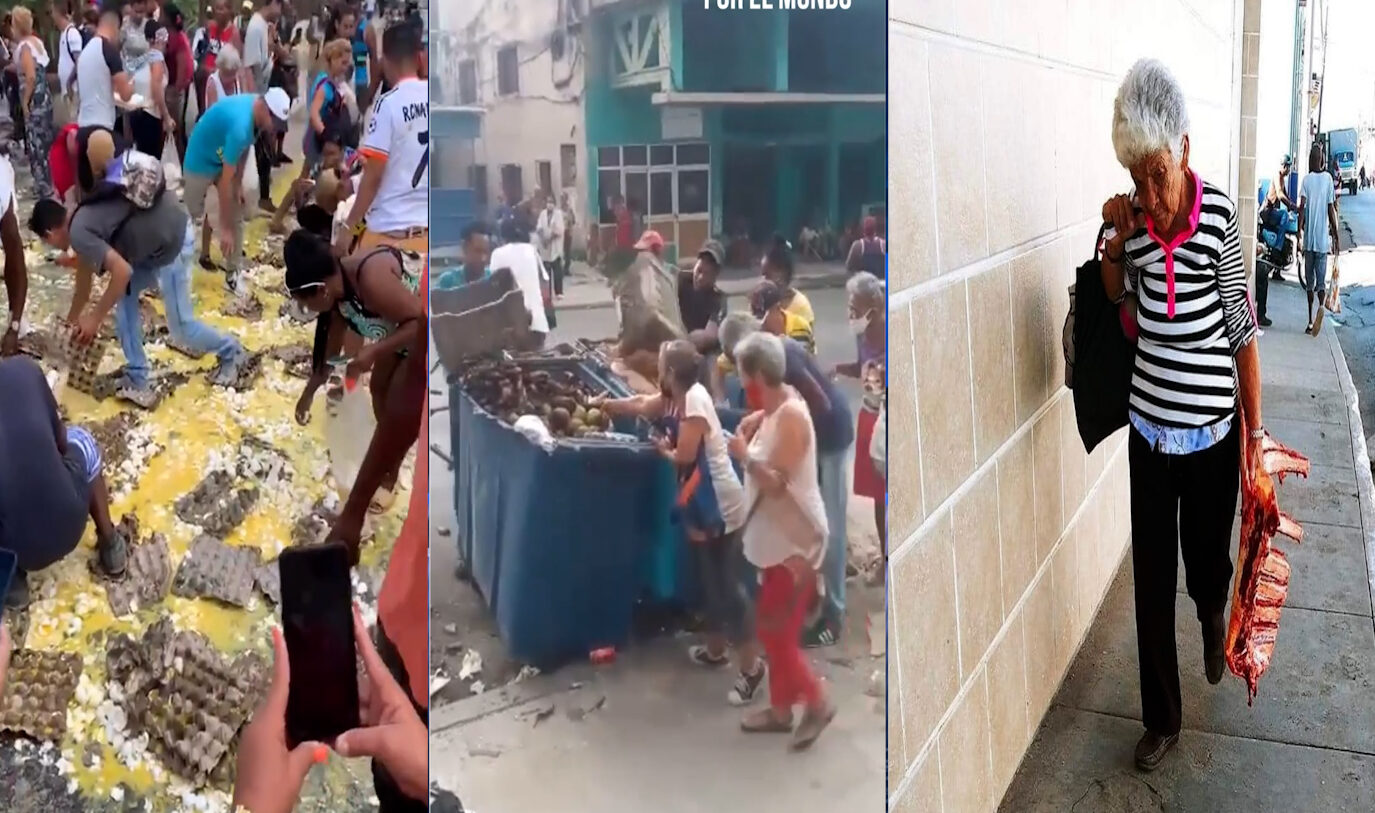
During 2021 and 2022, footage emerged of people rifling through garbage containers to get the scrap bones of butchered meat, while others actually scraped the yolks of broken eggs from the road after a poultry van crashed.
“That video broke my heart to see the people living in such horrible conditions,” said Sanchez Gordon.
But while the average Cuban national is literally scraping their next meal together, Castro’s grandchildren have taken to TikTok to flaunt their lavish vacations around the world aboard private jets.
“What ends up happening is that the people close to the Castro family who see how they are living try to do it as well, but they cannot afford to live the same lifestyle, so they take it out on the others, which is corruption,” said Sanchez Gordon, while noting that before the advent of social media, most people assumed the Castro family lived similarly modest lives as the rest of the population.
The disparity of wealth became evident to Rodriguez at a young age, fuelling his opposition to communist rule.
“I remember while in high school not having any drinking water for 30 days… so, we had to stage a massive protest and breakout and that’s when I decided I had to get involved and help return dignity to my homeland.”
From spy to sniper to activist
After this, Rodriguez said an American intelligence agency recruited him to gather pictures and testimonials of the hardships and dangers presented by the state-run hospitals in his area. That information was eventually published in American media outlets in 2006 when the internet and social media were out of reach for the average Cuban.
But his role as an undercover spy leaking sensitive information to the outside world came to a pause when he was drafted by the Cuban military.
“Everyone has to do military training and I was placed in the sniper programme,” he said. “But they realised that I didn’t think like them, and so they tried to scare me with jail, three times.”
He told the Compass while in a Cuban military prison he began to inspire his countrymen to rise up against the political and economic austerities, which prompted his dismissal from the Cuban Armed Forces.
Bolstered by some knowledge of Cuban military practices, Rodriguez then set about inspiring the younger generation to start protests and demonstrations against what he said was government-led corruption.
“Bringing that information to the public was like my rifle, and I didn’t care if anyone knew it was coming from me, just as long as the public got the information,” said Rodriguez.
His activism paid off and, in 2016, he helped to orchestrate and lead a large protest of several hundred students in the country’s capital. However, he says, a family member betrayed him, placing him on the Cuban government’s radar and prompting his decision to flee.

Economic hardship
Not everyone who flees Cuba does so for political reasons. For many, the only real opportunity for prosperity lies on distant shores like Cayman, and Central and North America.
“The only place in the world where Cubans are not prospering is in Cuba,” said Sanchez Gordon.
Given the country’s restrictive foreign policy, it is hard to decipher labour force data. However, most economic websites agree that the average monthly salary for Cubans is US$130, or roughly US$6.50 per day.
The minuscule earning potential, coupled with ownership structures designed to favour the socialist state’s economy, means even those who open businesses encounter large taxes and heavy scrutiny by the government.
When combined, these factors help embolden people to board makeshift vessels and venture out into the open sea, risking their lives – some in search of economic prosperity, others on the run.
In the next chapter of the Cuban-Cayman connection, The great escape, we take a look at the journeys of Cuban migrants from their homeland.
Related Videos