


Several shooting ranges may be built on one of the last remaining Crown-owned plots of mangrove wetland on North Sound – if the Central Planning Authority gives them the thumbs up.
The Cayman Islands Sport Shooting Association (CISSA) has applied for permission to construct a $500,000 facility off the future Airport Connector Road in George Town.
It plans to make the move from its current location near Owen Roberts International Airport in anticipation of the terminal and runway expansion, which will make the area unsafe.
However, the Department of Environment said mangrove forests are a “critical part” of the natural environment and recommended that they remain as its “primary habitat”.
‘Convenient and cost effective’
The CISSA presented its application to the planning authority in a meeting on 1 March. The minutes of the meeting, containing the decision, have not yet been published.
The association’s plans include a skeet shooting range, a number of other shooting ranges, a 747 square foot clubhouse, storage buildings, 70 parking spaces and tactical training areas.
The 40-year-old club, in a letter presented to the authority, said the 37.9-acre North Sound plot is the “most convenient and cost effective” location from which to operate.
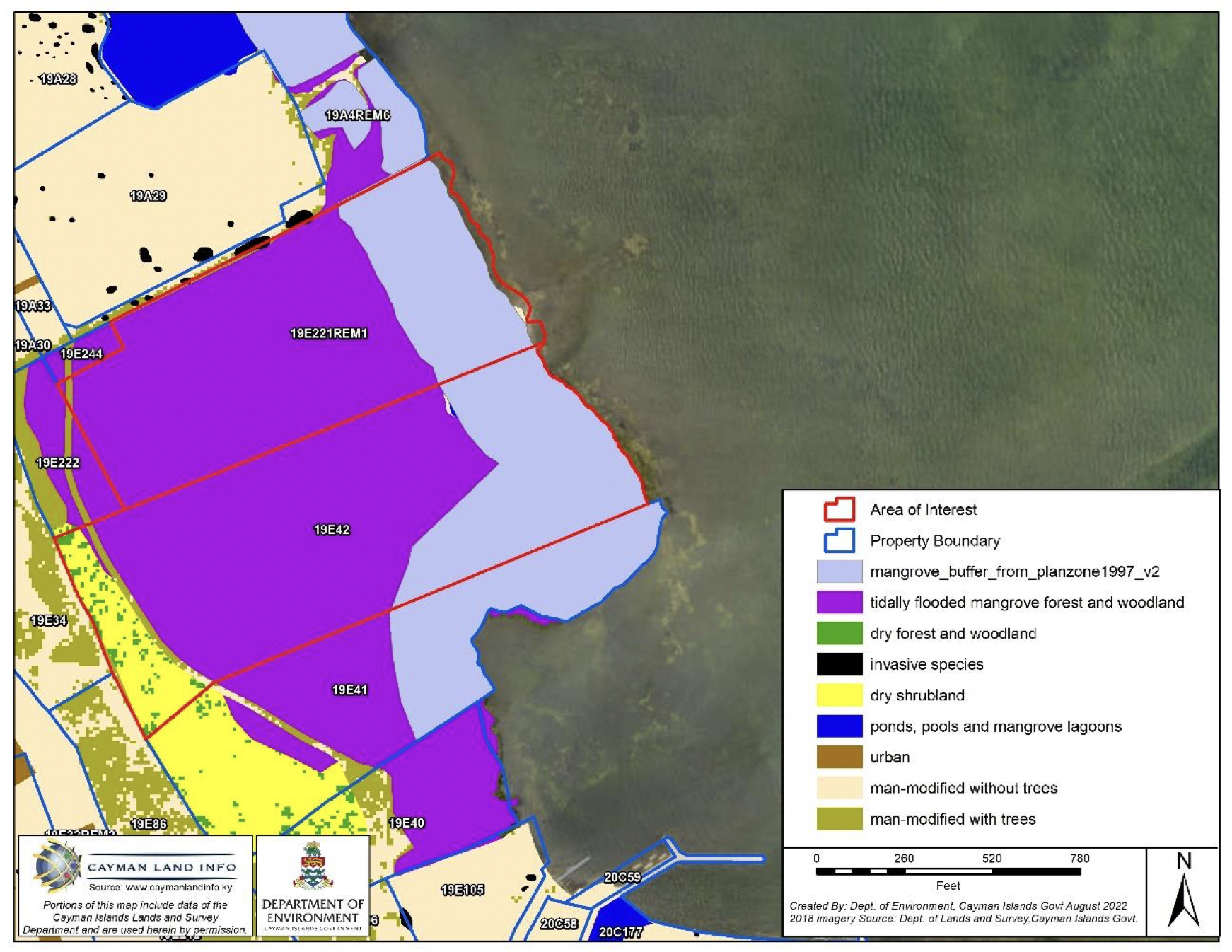
It has “superior attributes” to a previously-approved plot of Crown land in East End, the letter read, which was made up of comprised rock strata exposing the fresh water lens.
This was due to “illegal mining activities that were subject to punitive action taken on behalf of the Crown”.
The club added that the East End location would have presented a logistical and financial burden for its users who include uniformed services, athletes and recreational shooters.
Whereas the proposed site, which is zoned for heavy industrial use with a mangrove buffer, is in a predominantly commercial area devoid of residential development.
‘Extremely biodiverse’
A review of the application from director of the Department of Environment Gina Ebanks-Petrie spoke of the critical role mangrove forests play in protecting the ecosystem.
The application site, which consists of flooded mangrove habitat and mangrove buffer zone, is one of the remaining mangrove parcels on the North Sound within Crown ownership.
“Mangrove forests are a critical part of our natural environment, providing ecosystem services including mitigating the effects of climate change,” the director said.
“As one of the most productive terrestrial ecosystems, mangrove wetlands are extremely biodiverse and provide habitat and food for an immense variety of species.”
Mangroves, which are a protected species with a conservation plan, also function as natural sponges that trap and slowly release surface water.
“Inland wetlands in urban areas are particularly valuable, counteracting the greatly increased rate and volume of surface-water runoff from areas of hardstanding and buildings,” she submitted.
With trees, root mats and other wetland vegetation, it slows the speed and distribution of storm water, lowering flood height and reducing erosion.
“In addition, inland wetlands improve water quality by filtering, diluting and degrading toxic wastes, nutrients, sediments and other pollutants.”
Carbon sinks
“Mangrove wetlands are extremely effective at sequestering carbon from the atmosphere and serve as carbon sinks,” Ebanks-Petrie said.
“The large-scale removal of significant tracts of mangrove habitat tracts reduces the island’s natural carbon sequestration potential.”
She added that the removal of mature vegetation and de-mucking of the site has the potential to release captured carbon back into the atmosphere.
The environment director recommended the site should remain as it is and instead the proposed development should be built on a “man-modified parcel”.
The planning authority previously heard the application on 1 Feb. and it was adjourned to allow the Department of Environmental Health to submit comments on a noise study.
Along with the environmental issue, at the latest meeting it also discussed the intended use of the land for heavy industrial development not recreational use, and accessible parking.
Related Videos









Can Cayman get any worse??
Jeez
Red neck America, here we come.,
Please listen to and follow what the DOE says for once! In addition to what Ms. Gena said, think about how the birds, that have been pushed into smaller and smaller mangrove parcels by overdevelopment, will react to the sounds of constant gunfire!