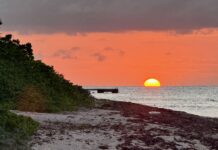
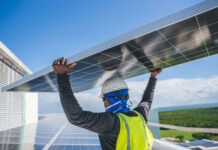
The procurement process for Bermuda’s first offshore wind energy project has begun, as the government works toward reaching its 2035 target of 85% renewable electricity generation.
Bermuda’s Regulatory Authority is inviting developers to submit expressions of interest to build and operate the project, which will start with a 60-megawatt installation and has the potential to expand to 120MW. The wind farm is planned for the island’s north shore, with turbines positioned about nine kilometers offshore from St. George’s Island.
“Offshore wind presents a compelling opportunity for Bermuda,” said Nigel Burgess, head of regulation at the RA. “By opening the door to this kind of large-scale renewable energy, we will not only lower our exposure to global fuel price shocks but also create space for long-term investment that benefits both the economy and the environment.”
The project stems from Bermuda’s 2019 Integrated Resource Plan, which identified offshore wind as a key part of efforts to de-carbonise the island’s power grid. Bermuda remains heavily dependent on imported fossil fuels, making it vulnerable to global oil price swings and contributing to high electricity costs for residents and businesses.
The planned wind farm will include 17 turbines in its initial phase, each with a 3.6MW capacity. Though modest by international standards, the project is tailored to Bermuda’s specific conditions, including aviation restrictions near L.F. Wade International Airport. Complementary studies on wind resources and seabed conditions are scheduled for completion by 2027, providing critical data for developers.
Bermuda’s move comes as other island nations weigh wind energy’s promise and challenges. Countries and territories including Puerto Rico, the Dominican Republic, Aruba, Curaçao, Jamaica, Barbados, Turks and Caicos, and Nevis are all exploring or expanding their wind energy portfolios to varying degrees.
Wind energy in the Cayman context
Cayman’s National Energy Policy for 2017-2037 initially forecasted that 3% of electricity would come from wind by 2037. However, the most recent update for 2024–2025 omits any specific wind energy targets. While the updated policy mentions the potential to revisit exclusion zones and technical restrictions in the future, no wind projects are currently in the pipeline.
In 2010, efforts to establish a wind farm in East End’s High Rock were shelved after studies showed that large turbines would interfere with the island’s newly installed $4.6 million early warning weather radar system. Although wind energy remains part of Cayman’s long-term renewable vision, the focus for now is firmly on expanding solar infrastructure.
Regional experiences highlight the promise and pitfalls of wind energy. Jamaica’s Wigton Windfarm — the largest in the English-speaking Caribbean — suffered significant losses in 2024 following the passage of Hurricane Beryl.
Yet interest in wind power continues to grow elsewhere. Turks and Caicos initiated a feasibility study last year to assess offshore wind potential.
“Among the challenges the feasibility study will examine are wind resilience to hurricanes and other storm activity,” noted Delano Arthur, commissioner of the TCI government’s Energy and Utilities Department.
Barbados is preparing to double the capacity of its Lamberts Wind Farm in St. Lucy to 60MW, and Curaçao now generates roughly 30% of its national electricity consumption from wind across multiple farms, with nearly 70MW of installed capacity.
The Falkland Islands, a leader in wind energy among British Overseas Territories, is supplying over 30% of Stanley’s electricity via wind and operating more than 100 small turbines in rural areas.
If successful, Bermuda’s offshore wind farm is expected to bring both environmental and economic benefits, reducing the island’s carbon footprint, stabilising energy prices, and lessening reliance on imported fuels.
As it continues to innovate and diversify its renewable energy mix, the success of Bermuda’s wind energy project, which is expected to be operational by 2030, could well influence Cayman’s own renewable energy journey.
Related Videos