

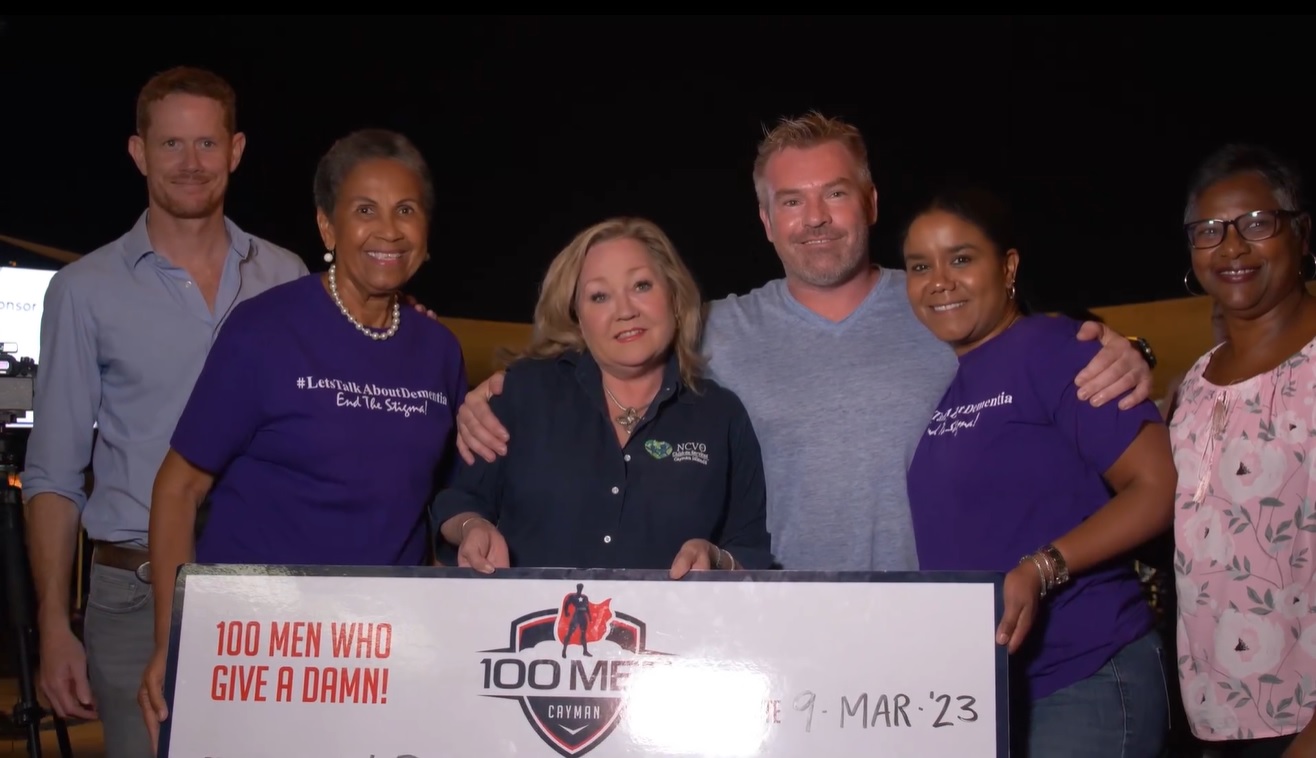
When Jason Butcher made a $10,000 donation to the Alzheimer’s and Dementia Association of the Cayman Islands, it was for strong personal reasons – not only do members of his family have the disease, he was diagnosed with it himself nine years ago.
Butcher, 49, made the donation at a recent 100 Men Who Give A Damn fundraiser. At each meeting, held four times a year, members put in at least $100 each, three charities present their causes, and one charity is chosen to be the recipient of the donations.
At the March meeting, the Alzheimer’s and Dementia Association, Cayman Connection and the NCVO were the three potential recipients, and the NCVO was picked to receive $10,000 donated by members.
That’s when Butcher stepped up and announced he’d be making his own separate donation to the association.
“The first reason [I made the donation] was I voted for them in the selection process and wanted them to win,” he told the Compass. “But the backstory was that I have a number of family members with dementia, and I was diagnosed with dementia when I was 40.”
“My grandmother and uncle are in a home with dementia. There are people very very close to me dealing with dementia, as well as Alzheimer’s,” he added.
Money will fund support services
Dorothy Davis, chair of the Alzheimer’s and Dementia Association of the Cayman Islands, said the donation was very welcomed and would be used for the wide range of support services the group offers to clients.
“I was in tears because it was such a personal donation,” she said.
She said every charity that had been present that evening was very deserving and she was happy for the NCVO when it was chosen to be the recipient of the $10,000.
“And then, when they said there was an individual who wanted to make a personal donation that matched that amount to the Alzheimer’s Association, it was like my heart just stopped,” she said.
The funds will go towards the services the association provides, including education and support, private family care presentations, community workshops and professional training, support group meetings, gift cards for food and personal items, 24/7 telephone support, home safe assessments, respite care, one-on-one consultation for those who are recently diagnosed, and for ‘memory cafes’.
Davis said the charity had never received such a large sum of money from an individual before, and is grateful that it has come from a person who knows and understands the illness and the many challenges it presents.
A personal battle
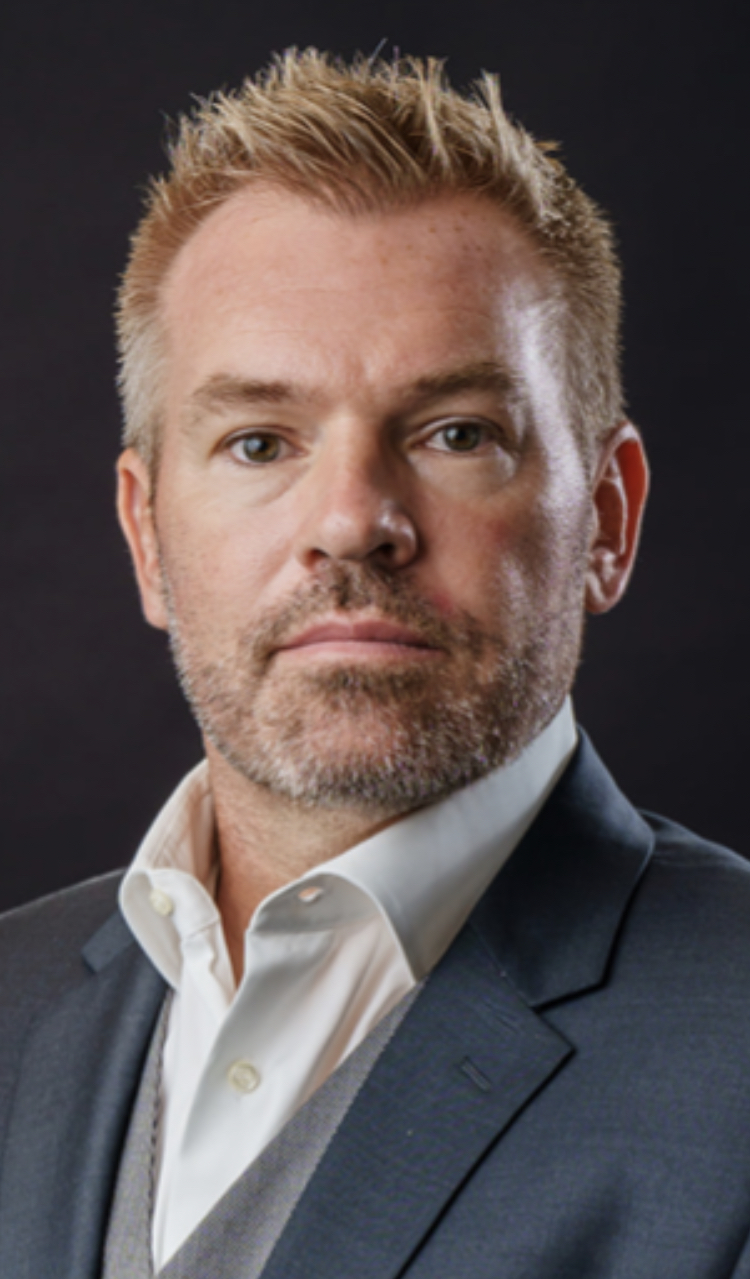
Butcher has fought hard against the disease for years.
He says with the help of my ex-wife Kami and a number of different methods, he has made a recovery, though he says, “I still deal with slight issues once in a while.”
He added, “It is a learned process to not get frustrated, and it is like that dealing with it still.”
It was when he started forgetting where he was going while driving home that he realised something was seriously wrong, and he sought help from doctors.
He said he was diagnosed by multiple doctors, who confirmed he had dementia.
His ex-wife Kami, who is a close friend and co-parent to their son, had a clinic in Vancouver which utilised PEMF Mats, which deliver low-frequency pulsed electromagnetic field stimulation. Butcher says this emerging non-invasive therapy helped enable his healing.
“For two months, every day, I got treatment from my ex-wife, which reduced inflammation in my brain,” he said. “Doctors wanted me to go on drugs and other things but we decided together that that was not something that was suitable and focused on treating it with the PEMF and biofeedback… and it was what helped significantly.”
Simply put, Butcher said, “If you damage something, you get inflammation. If you remove the inflammation, you will heal properly. That is how PEMF works.”
He also changed his lifestyle and work habits, cutting down on stress, sleeping better, and generally making healthier choices, and used biofeedback, a mind-body therapy that can teach people to change how their bodies function.
He says he can’t claim he’s “fixed”, as he had made many changes to “circumstances and situations” he was dealing with.
Even now, he says, “When I overdo it or if I’m exhausted, I may have challenges but that is more about really understanding yourself.”
Now he has a PEMF Mat at his house to use whenever he’s not feeling well. He also used infrared sauna, he says.
He first started noticing symptoms about six months before his 40th birthday. Just around the time he turned 40, doctors at a neurological centre and a psychologist diagnosed him as having inflammation in his brain.
Unlike some of his family members, including his grandmother and uncle, his diagnosis was of an early onset of the disease. His relatives were diagnosed much later in their lives.
Butcher, who used to own the Buy Sell Cayman trade newspaper, returned to live in Cayman in 2017. He had previously lived here from 2002 to 2007, but moved back to Canada after selling the publication in 2007.
Related Videos










Thank you very much for your generous donation. An excellent Association and programme.