

Cayman’s $6-an-hour minimum pay is below a “starvation wage”, according to the head of a committee charged with reviewing the figure.
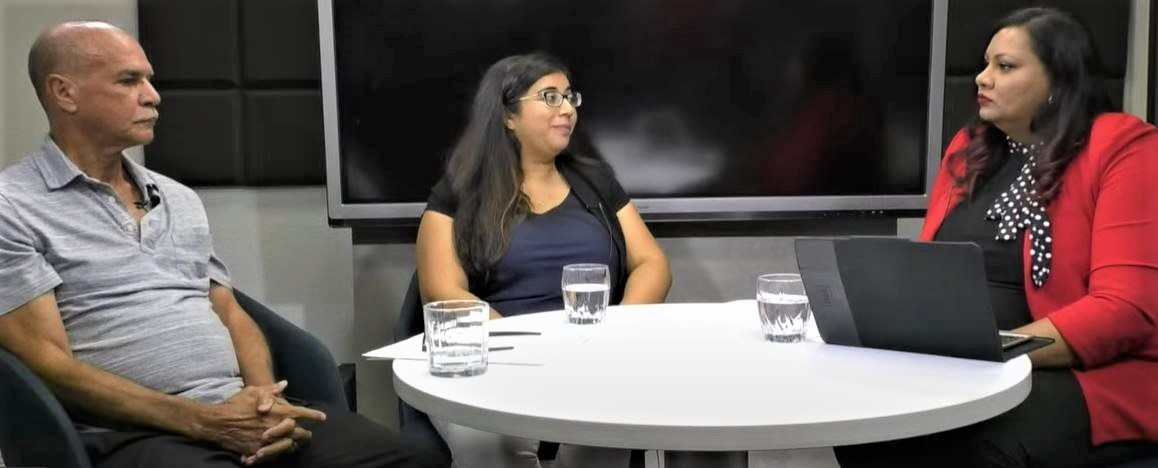
Chair of Cayman’s Minimum Wage Advisory Committee, Lemuel Hurlston, speaking on Wednesday’s episode of the Cayman Compass talkshow The Resh Hour, said, based on Economic and Statistics Office data, Cayman’s “starvation income or starvation wage” stands at around $6.50, which is 50 cents higher than the current $6-an-hour minimum wage.
“So anyone earning less than $6.50 at the moment goes into that vulnerability category and if their income fluctuates in the slightest, they could slip into poverty and they could really be in danger. So that is our… starting point, $6.50,” he said.
The committee has been meeting weekly since it was reconstituted January this year.
Hurlston says whatever the figure ends up being at the end of the ongoing review will take into account the current economic climate.
“It’s been seven years [since the current minimum wage was set] so one would think logically that, after that sort of period, there would be some need for an adjustment. The $6-an-hour minimum wage was set deliberately at a lower rate because it was an introductory rate. Now that we’ve had seven years of experience with that, we’re now in a better position to set a rate that is more realistic for the Cayman Islands in 2023 and beyond,” he said.
The actual figure, he said, will be the final item the committee will vote on before handing its final report.
Existing wage no longer works
He said people are finding it difficult to live on the existing $6-per-hour rate, which was introduced in March 2016.
However, he said, the committee recognises that the economy is in a different place from where it was in 2015 when the previous review committee, which he also chaired, considered the implementation of a minimum wage to Cayman for the first time.
“We’re now in a post-COVID environment. Businesses are just beginning now to recover and so it’s a complicated economic proposition this time around,” Hurlston said.
The committee, he said, knows that this will not be a “painless” process when a new wage is introduced, but based on Economic and Statistics Office data, there is capacity of businesses to pay more.
Hurlston said the committee believes that the majority of workers in the Cayman Islands already earn earn more than the minimum wage.
“So we don’t think that there’s too many that are going to be stuck down into that vulnerability category. At least, we hope not,” he said.
He added that enforcement remains an issue as the Pensions and Labour Department has limited compliance staff, and the committee will also be looking at this as it makes its recommendations.
Report due in September
The final report from the review committee will not be delivered as originally planned at the end of this month, and will instead be handed in at the end of September.
Research Methodologies Sub-committee lead Mahreen Nabi, who also appeared on the show, said the extension was necessary to allow for the widest participation from the Cayman community.
“It’s too complicated to do quickly,” she said, adding that the committee has planned a number of town hall meetings, as well as launched a survey to engage with the community on social media to get feedback on the issues to be considered.
Dates for town hall meetings have not yet been released.
After the final report is completed, Hurlston said, Cabinet will issue an order bringing the new rate into force.
“There will be a period of notice from the time the Cabinet announces that they have agreed on the rate,” he said. “Then there will be a period for planning purposes. You want to then announce an effective date at some future date so that businesses and the community as a whole can plan to meet that target date,” he said.
It took nearly a year for the recommendations of the last review committee’s recommendations, submitted in its final report in April 2015, to be formally introduced by government.
Hurlston said the committee is looking at minimum wages in other jurisdictions, including Bermuda’s recently introduced rate of $16.40 an hour, equivalent to CI$13.67.
The committee needs to consider the benefit to the community of an increased minimum wage while taking into account the impact on employers and avoiding business closures or job losses, he said.
“It’s a real delicate balancing act,” he added.
Nabi said a survey is ongoing with the local organisations, like the Small Business Association, the Chamber of Commerce, and the Cayman Islands Tourism Association, to get feedback from their members on the potential effect a legally mandated pay increase may have on operations.
“They’re being encouraged to speak to their members and say what are the most important factors to ensure that whatever minimum wage is set is affordable for your business, but also if there were a minimum wage [increase of] $2 more… 50 cents more, $3 more, what is the likely impact on your business? Is it that you would lose employees? You would cut back hours? Would you go out of business? And so all of that feedback is being collected now to be considered for the final recommendation,” she explained.
Different minimum wage for specific sectors being considered
Hurlston, who led the Minimum Wage Advisory Committee in 2015, said one option under consideration is introducing different minimum wages for specific sectors.
“We’re going to look at the Cayman situation and try to determine what is best for Cayman and we’re going to look at whether a national across-the-board rate continues to be ideal for us or have we now reached the point where we need to have different levels of minimum wage for different categories of labour,” he said.
Hurlston said, for example, domestic workers, gardeners and household employees “could possibly benefit from a minimum wage that is different from the the national rate”.
“Our terms of reference have given us the opportunity and the latitude to look at the possibility of introducing different rates of minimum wage for different employee groups so we’re going to be looking that,” he said.
Related Videos












A minimum wage across the board, no difference in the job.
There’s also the question of value any given employee is generating for the employer. And anyone who generates more value, can in turn negotiate a better pay. So heavy-handed regulatory approach to this question is uncalled for. It effectively becomes a tax. Especially considering that money is not a human right: somebody has to pay for it in the end. So IMHO, harder work would be the answer to a low pay, not redistribution. Free money corrupt.
One thing we can be sure of, foreign workers will continue to be exploited for some time to come before any change in the minimum wage occurs, whilst the decision makers continue to enjoy annual cost of living adjustments to their salaries.