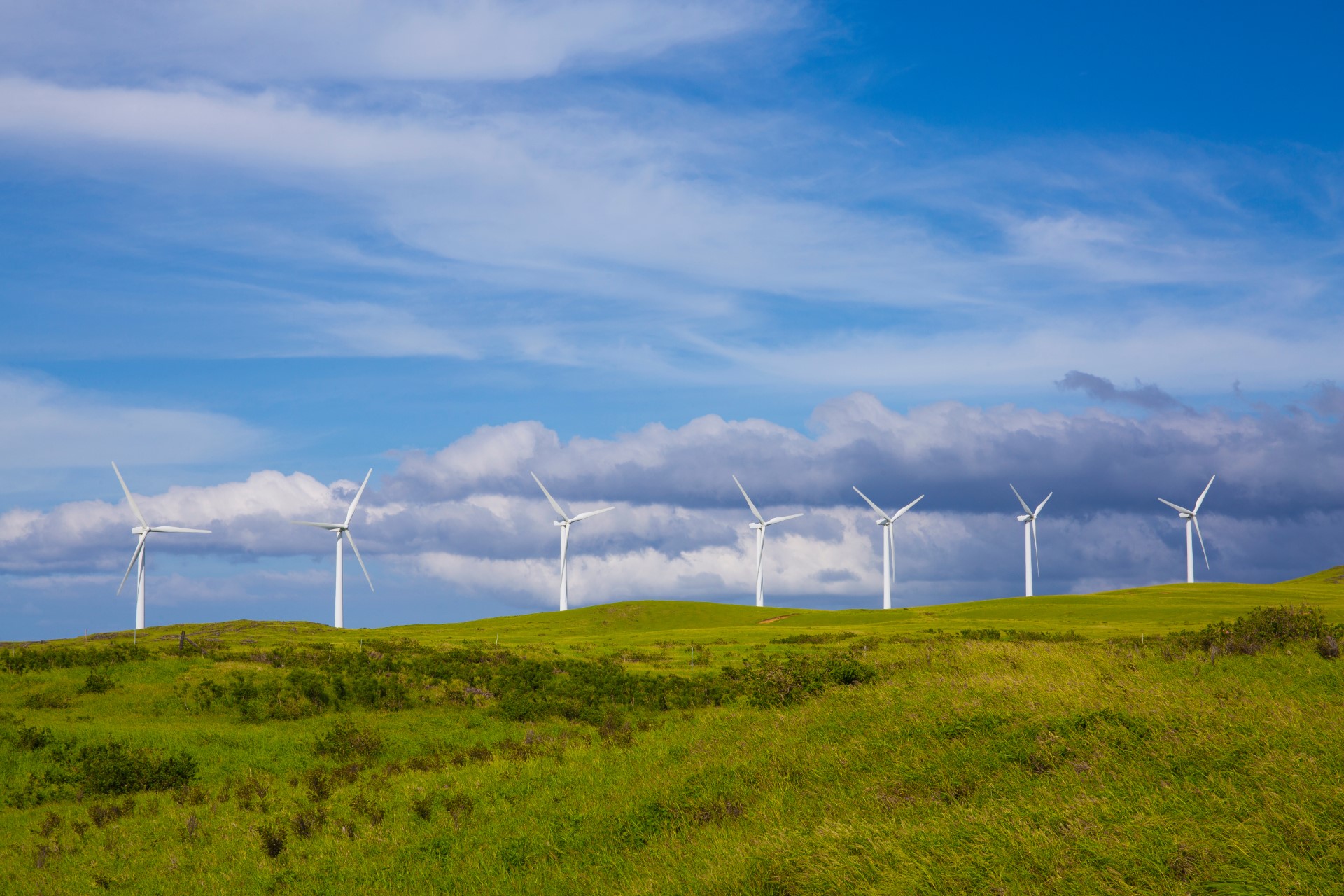
Is is possible for a small island to rid itself of fossil fuels and create 100% of its own energy from sun, wind and sea?
“There are always people saying you can’t do this. Well, it is already being done,” says Henk Rogers.
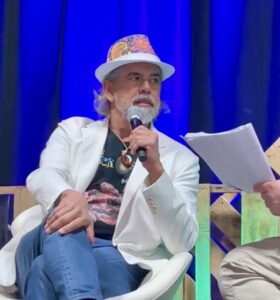
A Dutch-born video-game designer, best known for popularising Tetris, Rogers, over the past two decades, has turned his attention to renewable energy. He was instrumental in the lobbying, legislating and bureaucratic arm twisting that took place to secure the US’s first ever renewable energy mandate for Hawaii, where he has a home.
The state – currently at 40% renewables – will turn off the tap on fossil fuels in 2045. At that point, a law already on the books will kick in, essentially making it illegal to generate power from fossil fuels.
Extensive fines will also make it economically sustainable.
Now, Rogers is moving on to help secure similar action-driven legislation in other countries, including Tuvalu and Togo, which recently set similar mandates.
While the Cayman Islands announced a new ambition to reach 100% by 2050 this week, the policy stops short of a legislative mandate.
Though previous energy policies in Cayman have had little impact on tipping the balance towards renewables, the latest draft is being viewed as a roadmap to finally make inroads in the transition away from diesel generators, which still provide 97% of the islands’ electricity.
Rogers is familiar with Cayman, and believes a total transformation is possible.
But, based on his work elsewhere, he believes a legal mandate – with the teeth of enforcement action attached – is more powerful than a goal or vision.
In Hawaii, he said, it is already socially unacceptable and financially unviable to build any kind of fossil-fuel power plant. Given that such installations will be switched off by law in 2045, investor funding is not available.
Untangling vested interests
Reaching the point where legislators could set that kind of target and stand by it was a long job.
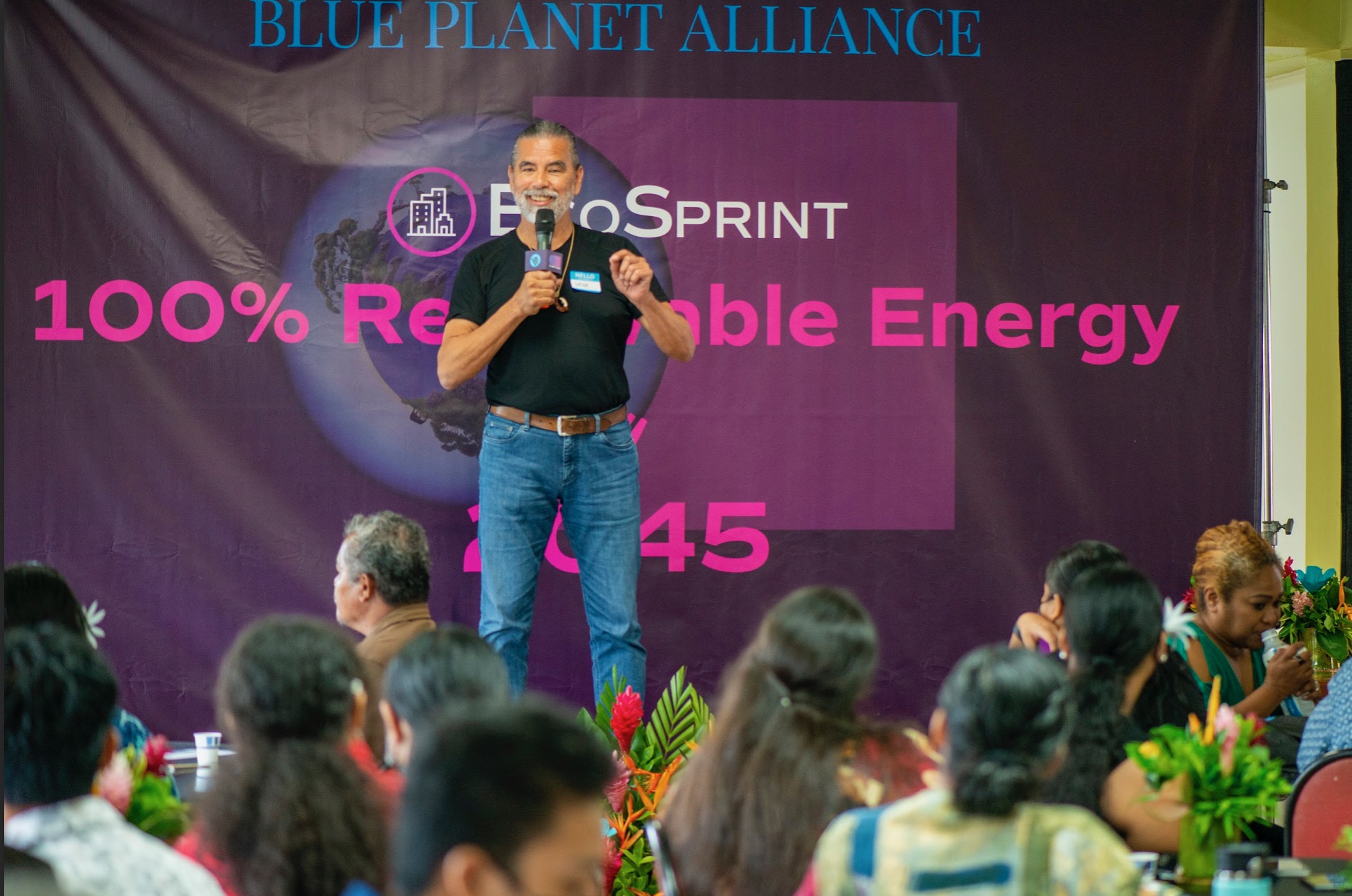
Roger’s Blue Planet Foundation led a grassroots campaign and brought in experts to transform the legal framework.
He believes that the practical case for renewable energy was overwhelming and remains so for any island community.
It’s cheaper, more stable and homegrown, offering energy security that doesn’t exist in the fossil fuels market.
The key to making it happen was not practical – but bureaucratic.
Hawaii, he said, had a system that incentivised fossil fuel use, with the electricity company contractually guaranteed a mark-up on its fuel costs – whatever the price of fuel.
“We had to change the business model of the utility so they could make more money by switching to renewables, and when we did that, they went from being our worst enemy to our best friend,” he said.
The shift allowed the utility to make slightly greater margins on solar and wind generation while keeping the consumer price lower than fuel-generated electricity.
Untangling vested interests and rewriting outdated legislation and renegotiating legacy contracts were critical to getting the ball rolling in Hawaii.
As Cayman seeks to accelerate its own transition, Rogers recommends legislators and clean energy advocates look to do the same.
“Somebody is probably making a lot of money on diesel and they don’t want that business to go away,” he said.
He argues that, for any island, the case for transition is clear.
“Islands pay an exorbitant amount of money to have those fossil fuels shipped to them,” he said. “Renewables have been cheaper for a long time.
“Right now, you are at the whim of the fossil fuels market, which has got no place to go but up.”
Inertia
Rogers uses a handy energy-based metaphor to describe the key barrier to progress – in Cayman and elsewhere.
Inertia: The principle that an object will continue in its existing state of rest or uniform motion unless that state is changed by an external force.
In Hawaii, Rogers’ Blue Planet Foundation was that external force. It aims to do the same in other islands and in US states, and is currently working with 10 governments on similar mandates.
Charismatic and not without self-confidence, Rogers recommends Cayman follows his play book.
The strength of his organisation, Rogers suggests, is to bring people together to turn vision into a plan, and a plan into reality.
“Inertia is the biggest problem,” he said.
“Each island had been on its own, with people saying you can’t do this. If you talk to people on other islands, you see it is already happening – it is already being done.”
It is critical, he says, that utilities, regulators, government and the private sector – as well as education establishments – are on board.
“You don’t just create the mandate and then think it is going to happen. You have to follow with execution,” Rogers said. “I have seen mandates brought through in other places and they haven’t moved the needle.”
The right enabling legislation, leadership and approach from regulators, who have oversight of the process, is essential, he says.
“They can’t just be rubber stamping for the electric company.”
He added that creating a 100% target with a hard deadline had helped everyone focus on getting it done.
“100% is your real target because that is when you turn off your fossil fuels and shut down those generators by law,” he said.
Related Videos