

 Customers at Cayman restaurants, hotels and other venues are increasingly unhappy about supplementing low wages they believe should be paid by businesses.
Automatic gratuities – charged directly to the bill – have been bumped up in the past year, with many establishments now adding as much as 20%.
The vast majority of the hundreds of locals and tourists that responded to a Cayman Compass survey indicated they are more than happy to pay for good service.
But a large proportion of those that responded felt that ‘tips’ should be discretionary, and almost all said they wanted that money to go directly to the server or to be shared between the server and other staff.
Only one out of the 314 people who responded agreed with the current policy, which allows restaurants to use gratuities to supplement up to 25% of an employee’s salary.
That means some hospitality staff earn as little as $4.50 an hour on paper, compared with the $6-an-hour minimum in other industries, though many earn considerably more when grats are added.
The vast majority of venues in Cayman add a minimum of 15% to the bill as a gratuity and leave an option for customers to give extra tips. Some venues add as much as 20% automatically to the bill.
These are split between the server and the back-of-house staff, according to a ‘gratuities scheme’ that has to be submitted, then vetted and approved by government for each business. A typical split is 60% for the server and 40% for the kitchen and support staff, though there are multiple variations on this theme. Salaried employees or managers are not supposed to get any of the grat pool.
Tips – over and above that percentage on the bill – are discretionary and generally go directly to the server, who can ‘tip out’ bar staff or other colleagues if they choose. Those arrangements are informal and business owners say they don’t get involved.
Most of the respondents to our survey said they were aware of the custom in Cayman of grats being added to the bill and were, in many cases, happy to add a little extra if the service was particularly good.
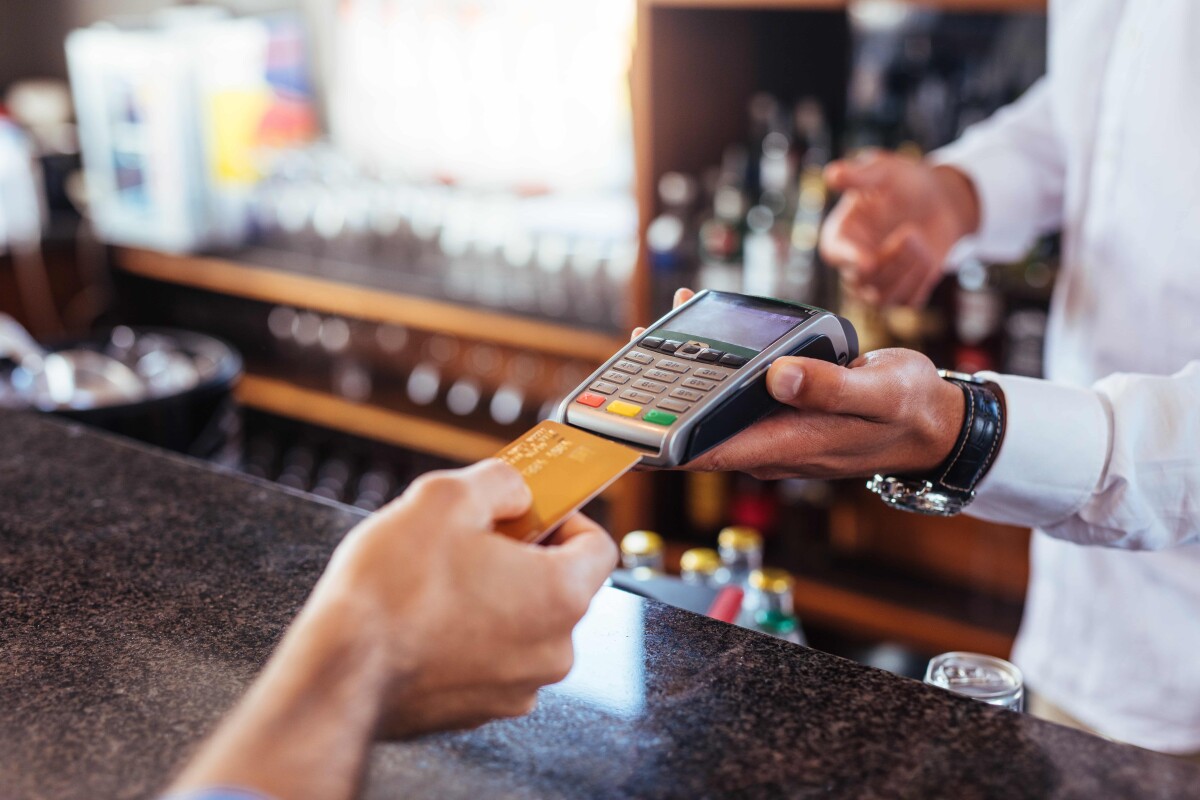
Several said they felt cheated by card-reader machines prompting them to add an additional 10% or 15% on top of what they had already paid.
Some objected to the concept of grats going on the bill, saying the whole point of a tip was to reward staff that went the extra mile and made their dining experience special. Many said they would actually pay more if the gratuity was wholly discretionary.
Others insisted that if the service was particularly poor, they would exercise their right to remove the 15% from the bill and just pay for the food.
Of particular annoyance to some respondents was having grats automatically added when buying a coffee or having food delivered.
Here’s a snapshot of what some of our readers had to say on what proved to be a hot topic:
“Some restaurants really take advantage of this (automatic gratuities). In particular, [a rstaurant] which not only shows a 20% added service charge on their checks but then suggests tipping on top of this; starting at an extra 20% “helpfully” calculated for the customer.”
“No. I do not agree with any tipping culture unless there is very exceptional service. Why should the consumer pay the wages for a restaurant owner?”
“I am travelling in Europe right now and staff are paid a fair wage. A tip is not even suggested! This is how it should be.”
“I prefer the European model of higher prices to cover a better wage for workers. I add to that for great service. Only the problem in Cayman is the already shockingly high cost of dining out. It is less expensive to eat at a similar restaurant in Paris or Geneva.”
“Server’s base wages are not nearly high enough. Raise prices if you need to, pay your staff more.”
“Employers should pay their employees a decent wage without the tips.”
“If I have terrible service and wait for 65 minutes to receive my order, why is a service charge already levied on my bill? I should have the right to withhold my tip for poor service.”
“Tips should be divided (among the staff). I’m not tipping a waiter really, I’m tipping the chef.”
“It’s gotten out of control with basic service/sales staff request a gratuity for selling you a coffee. It’s embarrassing to get asked each time, or worse yet, told that it is ‘mandatory’ in Cayman. They’re lying and are taking tourists (and locals) for a ride here for their own benefit.”
“It is fair to all the workers if the tips are pooled and equitably distributed among the staff. Everyone who works at the restaurant is responsible for the whole dining experience.”
“I have no problem with the gratuity being added to the bill. However, if the gratuity is added to the bill, servers and other restaurant employees should not expect additional gratuity to be added by the customer. I feel many servers expect the automatic gratuity AND additional gratuity from the customer.”
“I don’t agree with automatic tipping. The whole concept of tipping is to reflect quality of service. I don’t feel I should be forced to pay tips for bad service.”
“Service workers have a hard job for low base pay. My dad always taught me to take good care of your bartender and server. Especially as a local.”
“We generally end up tipping around 30% of the total bill – before the 14 or 20% is added. We do so out of a sense that service industry workers need to be able to make a living wage, and then some.”
“If service is bad, why I should pay that 15%? And now all the bartenders and waiters are crying ‘not enough’. This is a new game that’s started to play in the restaurant business. Very, very unfair.”
“I realize that the workers rely heavily on their tip to make a living wage. I appreciate the job they do, especially during busy hours and how hard it is to keep the pace and also deal with disrespect customers.”
“I will not add anything (to the auto grat). Some establishments I will not patronize anymore as the service is poor and with the automatic tip there is little incentive for excellent service.”
“I prefer to add a cash tip that is not filtered through the owner’s pocket.”
“Prices are also really expensive in Cayman and restaurants/businesses should be paying their employees more if a 15% tip isn’t enough. I only tip more than the 15% if the service is exceptional.”
“Tips should NOT make up a portion of one’s hourly rate, otherwise it is not a tip! The whole point is that wait staff have gone above and beyond their expected job and therefore deserve more.”
“I don’t think it should be the responsibility of the customer to ensure the staff are paid a living wage.”
“I feel that the minimum wage in Cayman is much too low and I want to reward great service with a supplemental tip. I feel that 15% tip is a bare minimum we can do, considering the minimum wage that many of these workers are making.”
“The whole culture of tipping is to the benefit of employers, letting them off paying a fair wage to employees, and placing an additional burden on customers.”
“Cayman should really move in the direction of Europe and Japan where wait staff are paid well enough that tips don’t have to be solicited.”
“I have, on occasion, paid my bill in cash and deliberately left out the 15%, as is my right. I will not reward bad attitude or bad service. I have, however, also left additional tips when the server was exceptional or when the food was exceptional.”
“When I give an additional tip, I give it in cash to the one who has earned it, be that a waiter, a cook or a busboy.”
“Sometimes the service does not qualify for 15% but you have to pay it. They should be paid a better wage so they are not dependent on tips.”
“If employers are not allowed to have some sort of a tip credit towards wages, then those costs will only get passed on to the diner with higher prices which, let’s face it, to the US traveller Cayman’s ‘dinner out’ prices can be quite a shock when the bill arrives!”
“No, I do not believe in ‘pooling gratuities’. It can create ‘ill will’ towards servers who do great work and are good for the businesses, as opposed to those ‘along for the ride’ and perform accordingly.”
“The minimum wage in Cayman is way too low to survive on without tips.”
“Tips should be compensation in excess of the hourly minimum wage and should be pooled and equitably distributed among staff to motivate teamwork.”
“Please, ram home the point that it is very awkward and misleading for the card machine to request a ‘tip’ when gratuity is already added to the bill. In one restaurant, I saw it say ‘additional tip’ which is just about acceptable – at least it’s not misleading, and a little less awkward.”
“An automatic service charge is insulting. They can’t sell any food or drink without serving it, so basic service should not be an extra, it is part of the regular cost. Tips should be a reward for service that is better than a basic required level, and should not be effectively imposed on a customer.”
“The worker should be paid a fair wage and any tipping should be for the quality of service received and direct to the individual. There should be no pooling.”
“Different cultures treat tips very differently. In Cayman, we follow an American culture where it is understood staff tips form part of their remuneration. In France, for example, this is not so much the case and loose change is considered appropriate.”
“Wait staff play a crucial role in connecting diners with the chef and have the potential, if skilled, to significantly influence the dining experience. Unfortunately, waiters are too often unskilled order-takers (which will eventually be replaced by AI) rather than an entertainer who can provide genuine hospitality.”
“A restaurant visit is akin to a night of entertainment; it’s not about being fed. It’s an experience and a waiter can enhance that experience.”
“Good service deserves a reward. I’m aware that most waiters are on minimum wage.”
“Non-customer-facing staff should be paid a satisfactory wage commensurate with the quality of their work. If a server on a lower wage does an awesome job, the tip should be theirs, unless the customer says ‘The chef did a great job, please pass them this.'”
Related Videos











Fair enough: if a tip is fixed, it’s really not a tip, but a sneaky way to misrepresent the price. Dictionary defines “tip” as “a sum of money given to someone as a reward for a service”, but it’s usually implied that it’s optional.
If I understand this correctly, many establishments are not even fairly distributing grats and grab u most of it for their countless managers, who mostly just look good and speak to who they want to.
This situation on island needs to ensure the workers are getting their grats fairly and to allow anonymous complaints to be logged triggering an investigation of the reported establishments.
Arithmetic would indicate that a $28 chicken dinner ends up costing over $40 once a 20% proprietor’s fee is added, and then the customer includes a 20% gratuity on top of that subtotal. A $16 glass of a 3 ounce serving of wine or a mixed drink or cocktail ends up costing over $23 if calculated the same way. If we did away with the owner markup fee and the entire gratuity system and instead, as has been suggested, reflected on the menu itself the total cost of the drink, for example, the list cost would be $23 for the cocktail and over $40 for the chicken. How would the dining public feel about seeing the true total cost on the menu?
Could we also talk about how much the retail banks take advantage of us? i.e. the USD-KYD conversion rate, charging us a percentage to withdraw USD, and generally also being charged to withdraw our own money from ATMs or use our card in a store, especially as they already use our money to make more money.
The increased cost of living is obviously a huge talking point at the moment but small things like tipping and banking charges really should be scrutinized in depth for the benefit of the wider public.