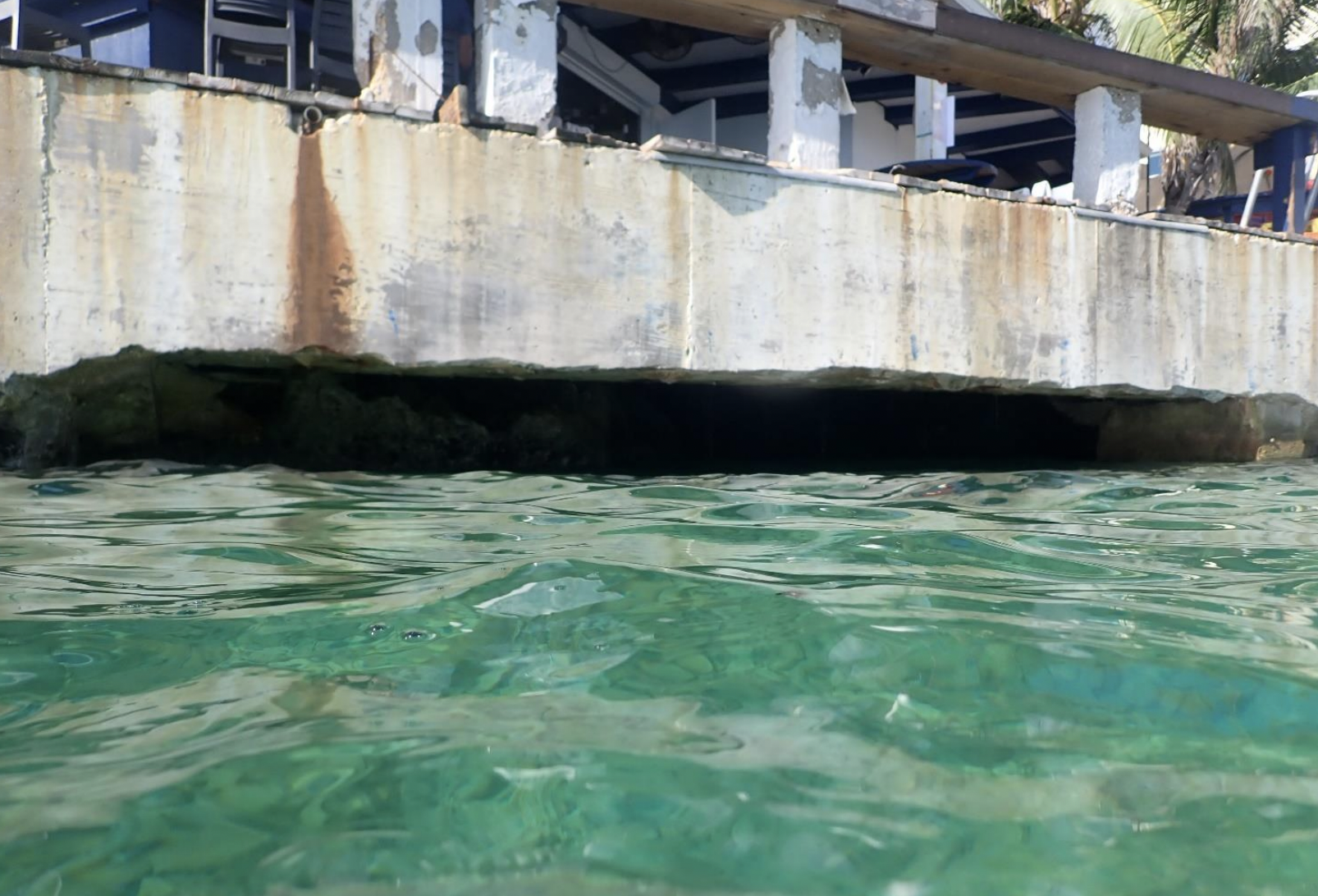
The manager of Rackam’s Waterfront Restaurant and Bar has applied for permission to repair a protective seawall after it was badly damaged during a tropical storm this summer.
Tim Langfitt wants to secure the existing structure which sits over Crown land because it has been “undermined by coastal erosion and damage”.
The Department of Environment published a review of his plan on Friday, 27 Oct., and recommended that Cabinet approve it with conditions.
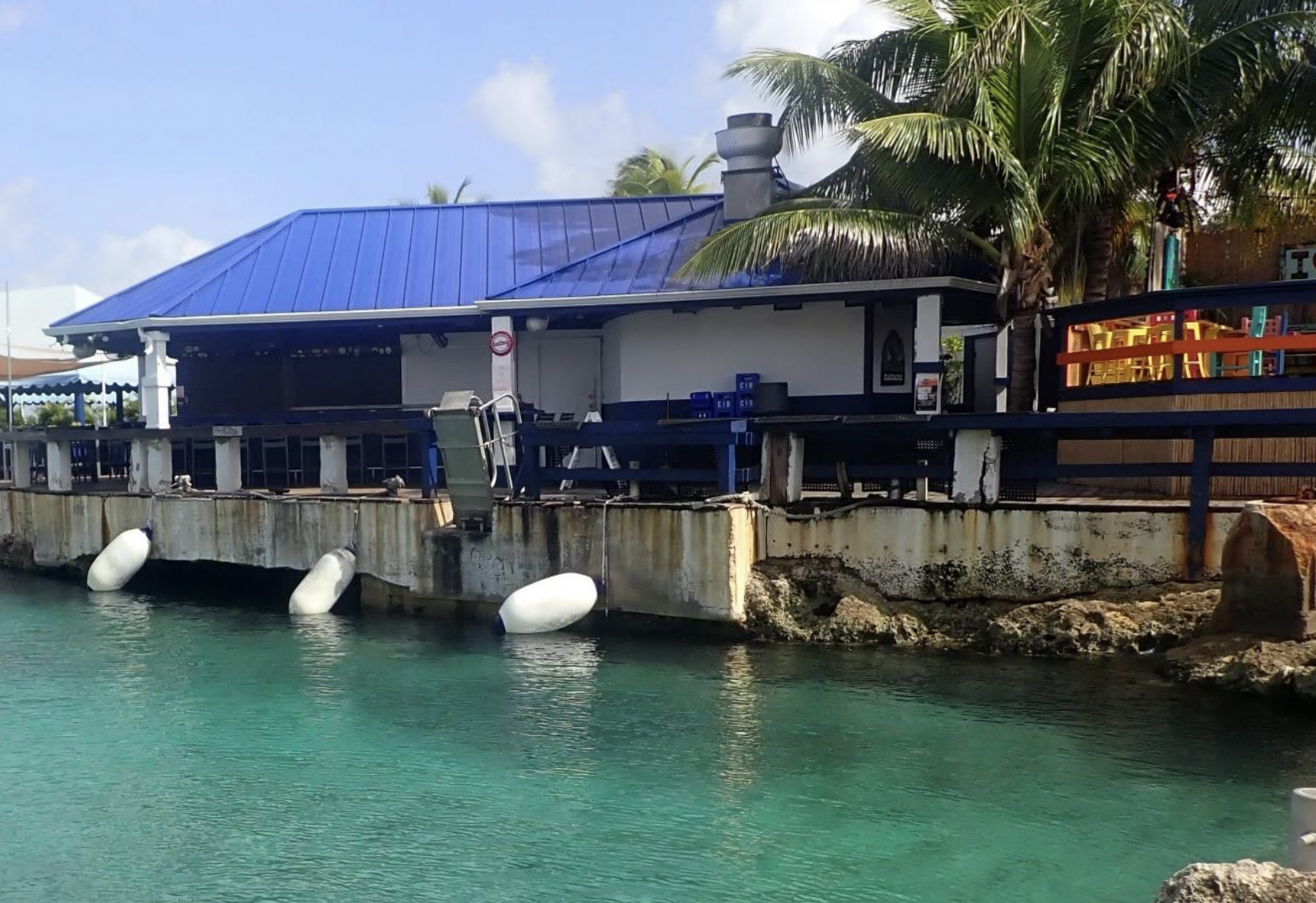
“The building and deck at Rackham’s Waterfront Bar and Restaurant has already impacted the ironshore habitat,” the department said.
“Therefore, rebuilding the seawall is unlikely to cause further impacts to the coastline.”
Over Crown land
Langfitt submitted his application earlier this year to rebuild the seawall in front of the property on North Church Street in George Town.
The submitted plans indicated that the repaired seawall will extend about 58 square feet over Crown land.
The site is located within a port anchorage area and was previously a marine park before the establishment of Cayman’s enhanced marine protected areas.
The immediate area of the proposed work is predominantly sand and rock, but there are some scattered corals nearby, the review said.
Langfitt’s planned construction will use equipment mounted on a barge moored to the existing pier.
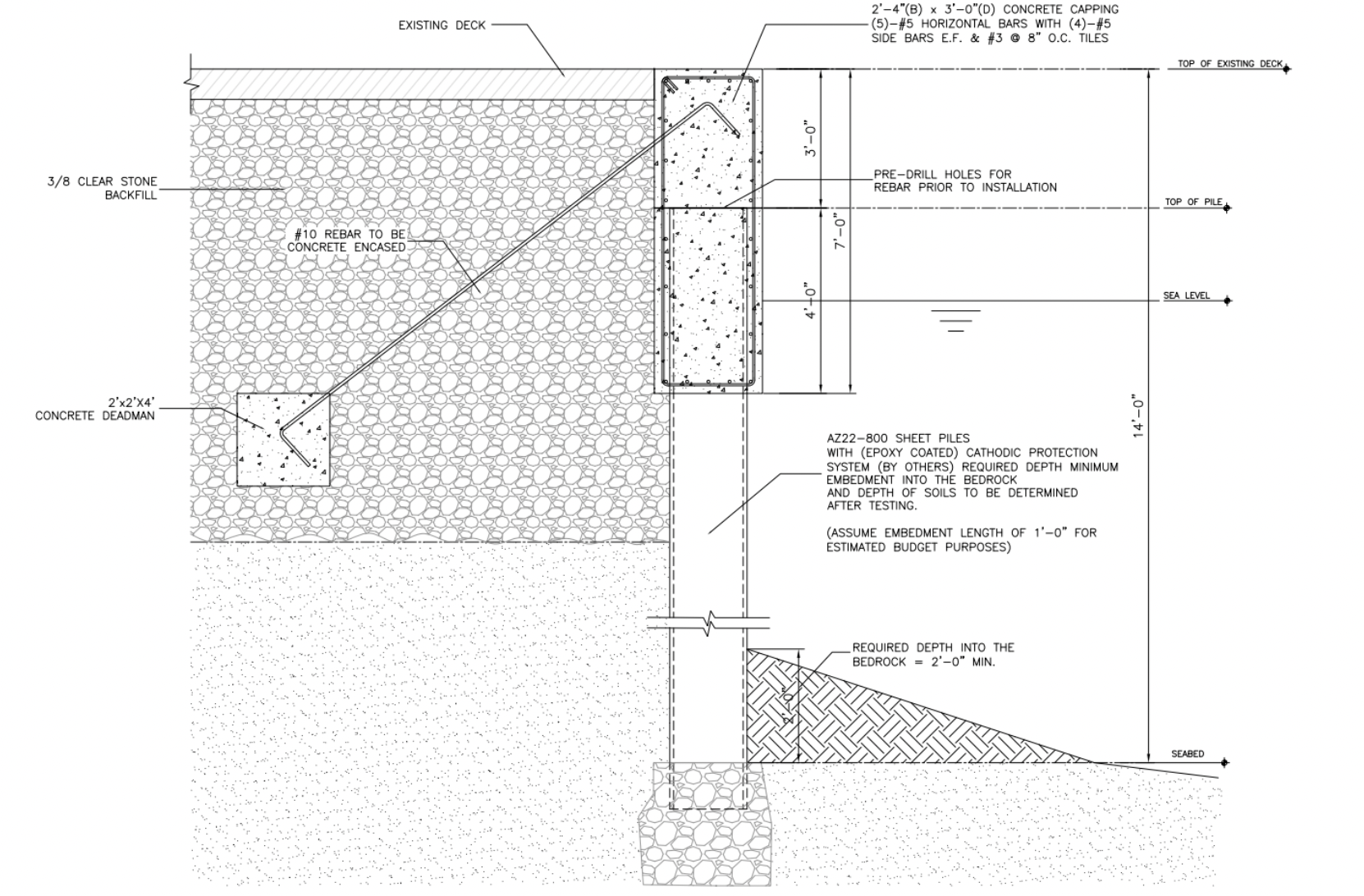
Sheet piling will be installed in the seabed, and a concrete cap – two foot four inches by seven foot – will be placed on top of it, he proposed.
In order to support the weight of the seawall, rebar will be attached to the concrete capping and will be connected to a heavy concrete block behind the existing seawall.
The application indicates that silt screens will be used to contain the area of the works while it the being carried out, the review said.
Environmental impact
The DoE explained in its review of the plan, that direct environmental impacts will result from the repair of the seawall, mainly through the drilling of piles into the seabed.
“The loose sand on the seabed is easily disturbed and suspended resulting in sediment plumes which can impact many species that depend on good water quality,” it said.
It added that the site is close to “ecologically and economically important” coral reef habitat that may be impacted by turbidity (cloudiness) from the construction site.
In addition, poor water quality in the area from the construction may harm amenities and tourism given the close proximity to the cruise terminal, the department said.
It stressed that it is important to limit the impacts of sediment plumes generated during the construction of the seawall through the use of silt screens.
However, the department said, silt screens even under perfect conditions are only partially effective, and in the open environment, they are less likely to be effective.
“Therefore, it is vital that a calm weather window is selected for the construction and that the silt screens are in good condition and installed/maintained as well as possible,” it said.
Benthic habitat
The department explained in its review of the plan that the benthic habitat at the site – the ecological region at the bottom of a body of water – is sand and rock.
Although sand is not considered as biodiverse as coral reefs or seagrass beds, it does still provide some ecosystems for juvenile fish, crustaceans and invertebrates, the review read.
Langfitt suggested the seawall will extend about 58 square feet over Crown land, but the department estimated that the works will result in the loss of 152 square feet of habitat.
It said the existing seawall bends towards the ironshore and the proposed seawall will need to be thicker than the two foot four inches indicated in plans.
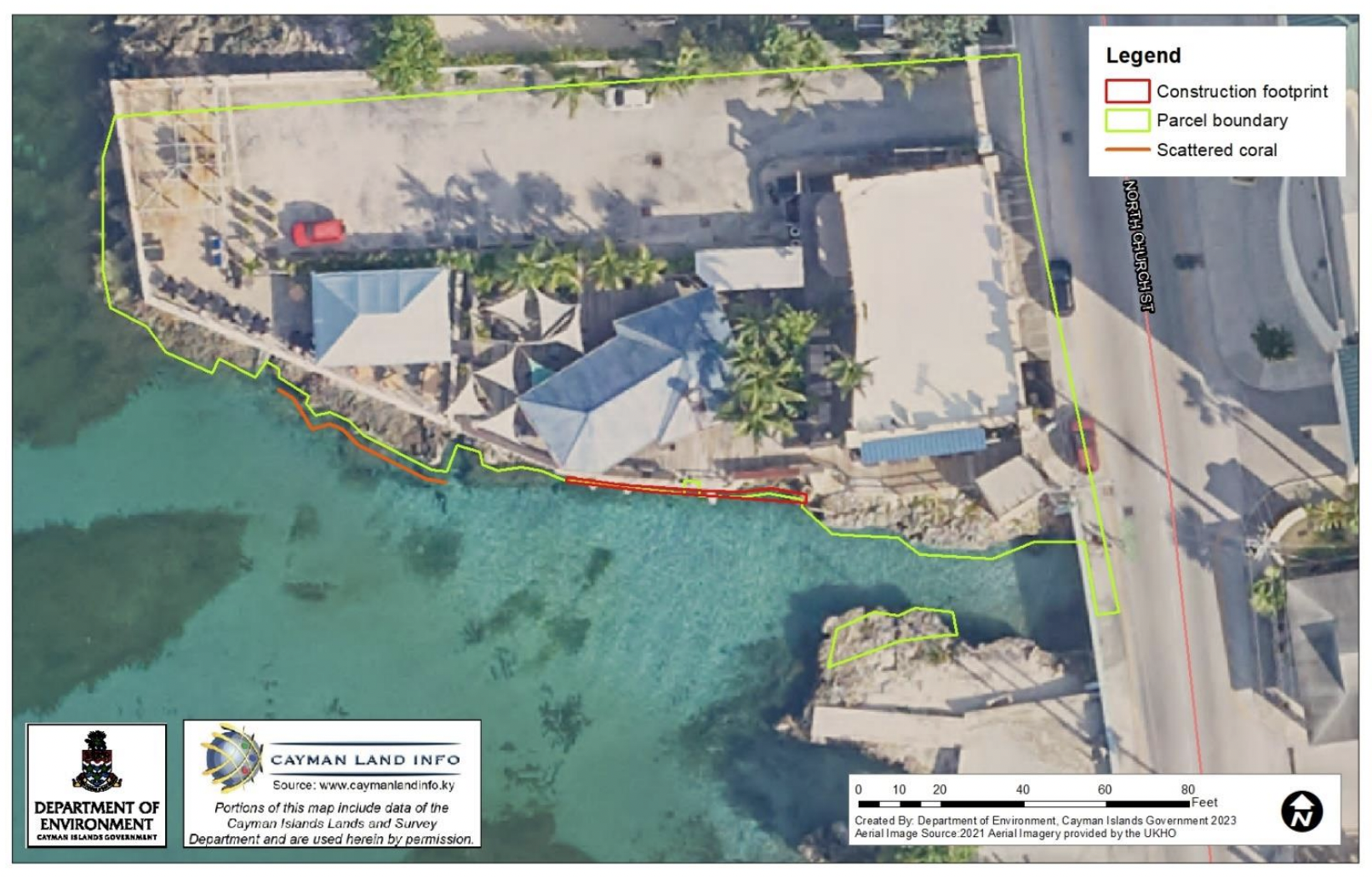
Meanwhile, the building and deck at Rackham’s has already impacted the ironshore habitat so rebuilding the seawall is unlikely to cause further impacts to the coastline, it said.
The environment department concluded its review by recommending that Cabinet approve the application subject to conditions and fees.
The conditions included the installation of silt screens and a sand bag wall placed about 10 feet seaward of the seawall, of sufficient length to fully enclose the work area.
These will help to mitigate turbidity from construction, the department said, and must be in place before work takes place.
It added that during any inclement weather all equipment and materials should be removed from the area in order to reduce the risk of them being impacted by wave action.
Coastal works reviews
Any development which is seaward of the mean high-water mark is on Crown land and therefore requires a Coastal Works Permit from Cabinet.
To do that, a developer must submit an application form and drawings to the Ministry of Sustainability and Climate Resiliency.
These are then passed on to the Department of Environment for review under delegated authority of the National Conservation Council.
The department will present its review within three weeks to the ministry and it will also be published online on the DoE website.
The ministry uses the review to prepare a paper for caucus, and then Cabinet will decide on the application. The ministry will inform the applicant in a letter on the decision.
Related Videos