

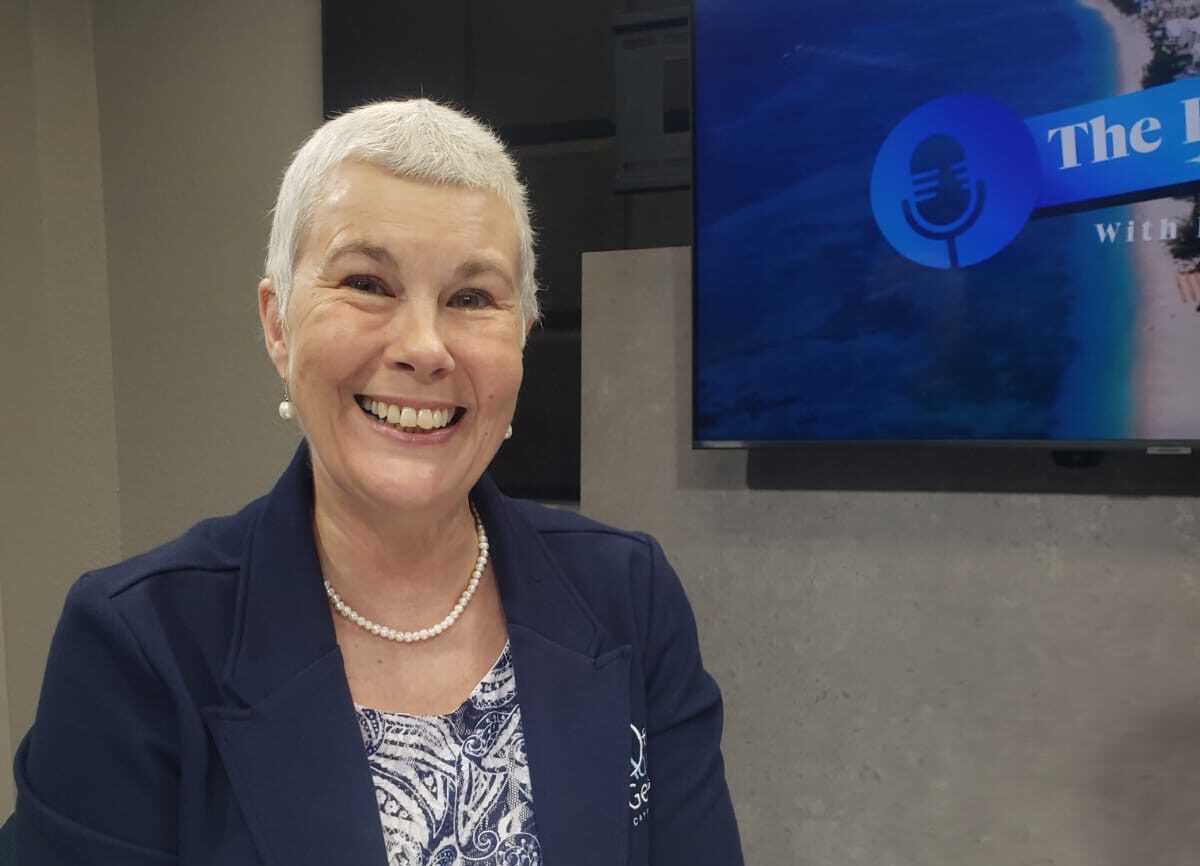
The ongoing rush to get the national budget completed before the 31 Dec. deadline is indicative of the need to reform the existing budget process, Auditor General Sue Winspear has said.
Winspear, speaking on Wednesday’s episode of the Cayman Compass lunchtime talkshow The Resh Hour, noted with concern the length of time it has taken to get the budget to the finish line, notwithstanding last week’s political turmoil and change in government leadership.
“That [budget] process is started in February and, as we well know, we’re now towards the end of November and, if reports are to be believed, we are still in a position where there’s a lot of work to be done,” she said.
Premier Juliana O’Connor-Connolly and her United People’s Movement team have been focused on finalising the budget since taking over leadership from former Premier Wayne Panton last week.
The auditor general wished the new administration “every success” as they lead the country.
“I hope, across the benches, given there’s only 19 MPs, that everybody comes together and tries to deliver what’s best for the country, and I know people have different views on that,” she said.
Though Winspear said she could not talk about policy, as her office is an independent entity, she did say, like everyone in the Cayman Islands, “What we want more than anything is success.”
“Cayman is economically vibrant. It’s a well-run, well-governed country and I would want this administration to ensure that continues,” she said.
Budget for improvement
Winspear, in discussing the budget situation, acknowledged that setting a budget is “never easy”, as there has to be agreement on priorities which can be “really, really tricky”.
However, she said, the current problem with the existing budget process could have been averted, if her office’s recommendations, from previous reports, had been implemented sooner, as it could have brought about “some improvement over time”.
She said her office had a “suite” of recommendations for improving the process based on the New Zealand budget model.
The recommendations are scheduled to be implemented in 2025/2026; however, she said there are measures that can be taken to reduce the inefficiencies leading to delays.
“I think focusing on some of the mechanisms that sit around things like the budgeting process would be really helpful because it consumes such an inordinate amount of civil service resources,” she said.
Pointing to the way the budget is derived, Winspear said outcomes, not outputs, should be driving the budget process.
Citing an old example of Needs Assessment Unit operations, Winspear said, previously every year elderly individuals would be asked to be reassessed for NAU assistance, and this was driving the budget outputs for the Social Development Ministry.
However, she said, if the need for consistent reassessment is changed, as is being done with the new financial assistance regime, then that outcome would drive what output/allocation is assigned in the budget.
She said there also needs to be a shared view on the performance of how “efficient and effective each ministry, each office, each government company, each statutory authority, is”.
While she noted that things have been improving, Winspear said, “We still don’t have really good performance metrics for a lot of these things and, partly, that’s because the budget process doesn’t measure the inputs going into the budget.”
She added, “Inputs and outcomes, I think, would be a much better budgeting process than one that just works on outputs.”
It is key in terms of how it drives the resources and services that are important to people, she said.
More importantly for an effective budget process, she said, “you also need to be really clear about priorities”.
She said she believes government ought to be planning further into the medium- and long-term, rather than just a two-year budget cycle.
However, she said, the two-year cycle, which was implemented out of the previous recommendations from her office, is a good start.
Repeat offenders ‘really irritating’
Winspear said though it can be frustrating that repeated recommendations for improving government processes are ignored, she believes that things are better than they were a decade ago.
“We’ve now got a Procurement Act. We’ve now got Standards in Public Life Commission. We’ve now got a Public Authorities Act. … they are part of the government structure that drives that improvement,” she said.
That being said, she added that her office will always be finding more to improve because that is in the nature of her job.
“I don’t shy away from that, but everything we do, everything we recommend, we have an evidence base. I don’t conclude or recommend anything unless I can absolutely point to what it is that we found in audit that has caused that recommendation,” she said.
She added that she knows that a civil servant’s job is really difficult, having been one herself, but when her office points out breaches or failures to comply with the law, and the same entity keeps repeating them, “that’s when it starts to get really irritating”.
She added, “There’s not a huge number of examples of that. We’re always finding things that are wrong, of course… that’s in the nature of life really. But it doesn’t take away from the fact that mostly this is a well governed, well-managed, well-run jurisdiction… where things work pretty well.”
Although, she said, if her team comes across fraud or theft in their audits, the files are forwarded to the police or Anti-Corruption Commission for investigation.
As an example of this, Winspear pointed to the court cases involving staff at the Cayman Turtle Centre which arose out of audits initiated by her office.
She also added that, “the leverage I’ve got is the Public Accounts Committee, [which] by convention, is usually chaired by the Leader of the Opposition here. … [M]embers are required to act in a completely non-partisan manner when it comes to Public Accounts Committee.”
As one of the Cayman two independent watchdog offices – the other being the Ombudsman’s Office – Winspear said, her job is to hold government to account.
“My job is to report when things aren’t going to plan, and the Public Accounts Committee take those reports, and they’re the ones that use the public hearings … to try to drive and force that change in behaviour,” she said.
For the most part, Winspear said, recommendations are accepted by the civil service.,
“I genuinely believe they do try and move things on, but, as I say, it doesn’t always move on as quick as you like, because they’re juggling a million and one different priorities,” she said.
Related Videos









Accountability or rather the lack of it, is responsible for most the problems our Civil Service and Govt representatives (MLA,s) experience. If you don’t do the job you are paid for, either smarten up or you lose it.