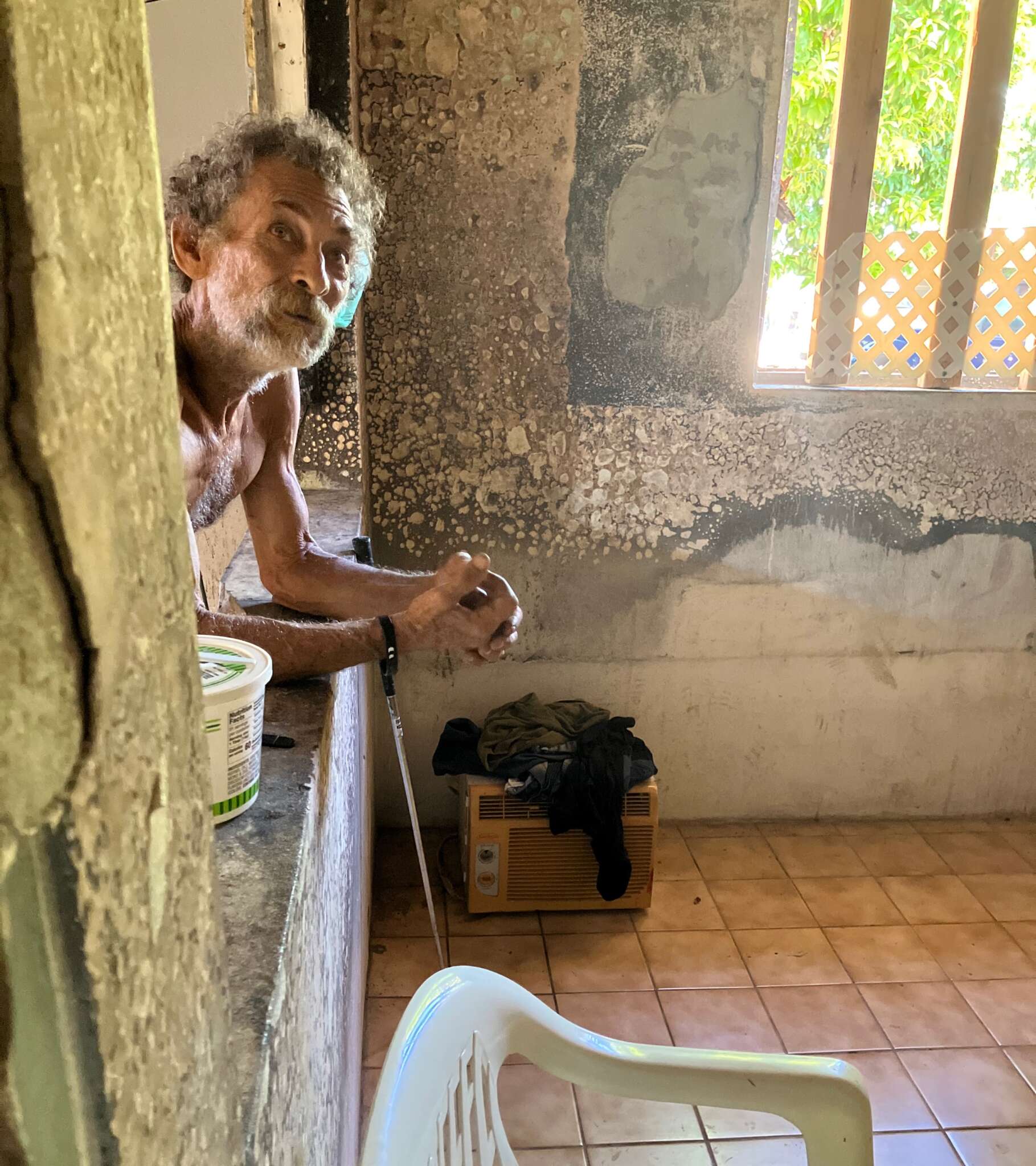
A Compass mini-series has focused on some of the issues facing people in crisis in Cayman, including homelessness and its underlying causes, ranging from mental health and drug challenges to broken families and a lack of community support structures.
Based on our reporting, we have compiled 10 solutions – some of which are being worked on by the government and some of which have been proposed by non-profits or others in the community in response to our articles.
1. A homeless shelter
A clear need for a homeless shelter that can provide a bed and a meal as a last resort, emerged from our reporting. Scores of people sleep rough in Cayman every night. Others sleep in cars, in abandoned buildings, under beach cabanas or in doorways.
Many have mental health or drug challenges that are unaddressed, and while the long-term fix is to get them into treatment or recovery, the reality is that short-term solutions are needed on a day-to-day basis. Something to eat and somewhere to stay should be achievable, and a properly run shelter could also serve as a point of contact for helping people lost to the system to get reconnected with avenues of support, including medical or financial assistance.
Local charity Acts of Random Kindness is in the planning stages of bringing a shelter of this kind to Cayman and is examining possible partnerships with government and the private sector to make it a reality.
2. Expanded network of halfway houses
The Hope for Today Foundation and the Bridge Foundation do commendable work providing both housing and treatment for recovering addicts. Beacon Farms provides an additional element of employment and support for those transitioning out of recovery.
But there remains scope for government and non-profits to increase the options for supported living for people struggling to function in mainstream society.
That could be for former prisoners adjusting to life on the outside, with support to find work and more permanent housing; group homes for people with mental health challenges who need support with every day needs; or the addition of another women’s halfway house for recovering addicts, something Hope for Today is planning.
Another option for government could be to examine the US ‘permanent supportive housing’ project, which packages rental assistance with other avenues of support, including help with life skills, substance abuse or disabilities.
3. A fully operational mental health facility
The building is up and the waiting list for places at the new mental health facility is long.
During our reporting on this series, one lawyer suggested there were enough people in line to fill the new residential care facility in East End three times over.
But it remains unclear whether the venue, which has not yet opened, will have room for people with a criminal background. A secure unit for people deemed ‘criminally insane’ at the prison may also still be necessary alongside the proper support staff to handle mental health problems in a prison setting.
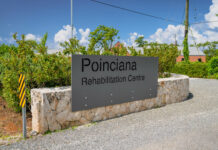
The senior staff for the facility, called Poinciana, are now being recruited and exactly what role it will fill will likely become clear in the first half of 2024.
But, for one, it will add a significant new resource for addressing mental health challenges locally. It could also add to the ‘brain trust’ of experts seeking to solve mental health challenges in the community.
4. Crisis intervention teams
Globally, police forces are turning away from being emergency responders to situations that would be better dealt with by mental health professionals.
In the UK, the Metropolitan Police have introduced a ‘right care, right person’ policy that effectively means they no longer respond to calls for support where the incident is deemed to be purely related to healthcare. That’s been controversial – more because of the lack of alternative system of healthcare first responders – than the principle behind it.
In Cayman, police are routinely called out to minor disturbances, vagrancy complaints or challenges involving people with mental health problems that lack a serious criminal element.
A report by consultant Dr. James Hard has recommended the deployment of ‘crisis teams’ of relevant experts to respond – alongside the police – to incidents with a mental health component. There is scope for an expansion of the islands’ network of psychiatric nurses to help go into the community and provide proactive support or intervention.
Such teams could respond to the needs of “an acutely deteriorating mental health sufferer in the community to reduce the risk of escalation to the point of offending”, the consultant wrote.
5. Intervention in prison
Like it or not, the prison has become a refuge of last resort for people in crisis in Cayman – as well as a place to hold those considered a danger to society.
And former and current inmates have told us that it was not until they committed a crime that they got help for a range of issues – from simple lack of shelter and food to illiteracy, vocational training, drug problems and job readiness.
Despite the perverse incentive inherent in that dynamic, modern prisons do offer a rare chance to address the causes of crime, as well as the crimes themselves.
Cayman’s prison system is far from modern – with long overdue renovations to the facility absent from the government budget – and staff allocations hindering progress on rehabilitation projects.
But significant work is being done within the walls of Northward and Fairbanks – particularly on literacy, where Keehon Moore, a supervisor with responsibility for some of the prison’s rehabilitation programmes, says breakthroughs are being made.
A revised Service Level Agreement between the Prison Service and the Department of Community Rehabilitation focuses on evidence-based risk assessments.
Led by the Department of Community Rehabilitation, a bespoke plan for every inmate aims to address the reasons for criminal behaviour and prevent reoffending. According to Deputy Director Erica Ebanks, that could involve anything from job skills and literacy intervention to counselling and drug rehabilitation.
The aim is to address the reasons for offending and prevent reoffending. The project is in its infancy and may require more staff.
6. Reform of the Needs Assessment Unit
The constant complaint – across a series of stories across a number of years – is that the Needs Assessment Unit is inefficient in its handling of requests for rental assistance and its payment to landlords.
As a result of this and challenges with the behaviour of some tenants, the phrase ‘no NAU’ is a common addition to many rental ads.
The reform of the unit – and its rebranding as the Department of Financial Assistance – seeks to address some of those challenges by committing to swifter decision-making and increasing the allocation in line with the cost of living.
It will also offer fast-tracked emergency support funds for people in crisis. But the availability of suitable accommodation for those on financial assistance is likely to remain an ongoing challenge.
7. New national ID system
The link between a national digital ID system and homelessness isn’t immediately obvious.
But the Ministry of Innovation and Social Affairs argues its eID programme will address one of the challenges faced by individuals on the periphery of society – a lack of official documents.
Several people in our series told us they didn’t have a passport or driver’s licence and so couldn’t go to the NAU for support. An eID system will help resolve that, a ministry spokeswoman told the Compass.
“By providing a formal means of identification, we aim to break down barriers that hinder access to essential support services,” she said, adding that it would also help some in the community get bank accounts for the first time.
8. Reform of the Criminal Procedure Code
People with mental health problems are routinely ending up in prison.
That’s not by accident.
Mentally ill prisoners – accused but not convicted of any crime – face the possibility of being locked up at Northward Prison indefinitely under current Cayman Islands law.
The prison, in the absence of any other secure facility for mentally ill people, has been designated as a legal ‘place of safety’ where people can be held at the ‘governor’s pleasure’ if they are deemed unfit to face trial or not guilty by reason of insanity.
A change to the Criminal Procedure Code aims to create new options for the treatment, monitoring and eventual release of people in those circumstances.
That could include options – not currently envisaged by the law – to provide support and conditions on release. Those orders would necessarily be tailored towards the needs and circumstances of the patient and could include, for example, measures to ensure they take medication as prescribed, receive support from community psychiatric nurses, report to hospital for monitoring at mandated intervals and to protect both the public and victims.
The list of options is still inhibited by the lack of infrastructure and care in the community provisions, however.
9. Family intervention
Several of the experts quoted in our series highlighted family interventions as something they would like to see more of in Cayman.
It’s no secret that crime can be a ‘family business’, and prison officials report that they frequently see multiple generations of the same family locked up at the same time.
Similarly, when it comes to drug and mental health challenges, involving family members as part of the intervention is seen as key. As evidenced in the Mental Health Court and in the anecdotes of recovering addicts, many have broken family ties.
Rebuilding those bonds can be a key step towards recovery and can open up housing opportunities – within the family.
Brent Hydes, who runs the Hope for Today halfway house, identifies this type of intervention and reconciliation among broken families as something that would be beneficial.
“There is always the possibility of forgiveness,” he said.
10. Mental Health Court
Cayman’s Mental Health Court has proved a huge step in the right direction in terms of diverting offenders towards appropriate recovery rather than prison sentences.
Several lawyers who appear frequently before the court hailed its impact and the work done by probation officers and others to help find housing and treatment options for people that appear before it. The challenge has been, and remains, that the range of services needed for people with mental health challenges in the community is not as robust as it might be.
The court would also benefit, legal experts argue, from a more formal statutory footing that lays out the options more clearly and provides a blueprint for the court to work from.
Related Videos