Researchers from the Central Caribbean Marine Institute are investigating how Cayman’s tropical marine habitat can help in the fight against climate change.
The Cayman Islands non-profit launched its ‘Blue Carbon Offset and Biodiversity’ programme in July 2023 and it will take three years to complete.
As well as looking at how the local habitat can sequester carbon, the team will also develop local initiatives that engage stakeholders in carbon offset and biodiversity activities.
“The threats posed by climate change are ever-pressing and the effects are becoming more visible in ecosystems, biodiversity, and even weather events,” CCMI said in a press release.
“Climate action is needed at international, national, and local levels to reduce the impact on the planet and protect the most vulnerable habitats and the services they provide.”
Carbon offset
Environmentally conscious entities often use carbon offset schemes to mitigate their carbon emissions.
Through these schemes they invest in initiatives to promote, protect or restore natural habitats that store and cycle carbon from the atmosphere.
Blue carbon offset takes this principle and applies it to the ocean and marine habitats.

Compared to terrestrial habitats, marine ecosystems store and cycle 93% of the planet’s carbon.
“This level of carbon sequestration and the vast marine area of the Cayman Islands puts us in a strong position to implement effective blue carbon offset strategies in the race to net-zero,” CCMI said.
“Although carbon offsetting alone is not the answer to climate change, it is a powerful tool to buy us time while ecosystems adapt, and carbon emissions are reduced.”
Conservation and restoration
Conserving biodiversity is often one of the main foundations of offsetting activities, enabling joint benefits for both atmospheric carbon levels and the heath of natural ecosystems.
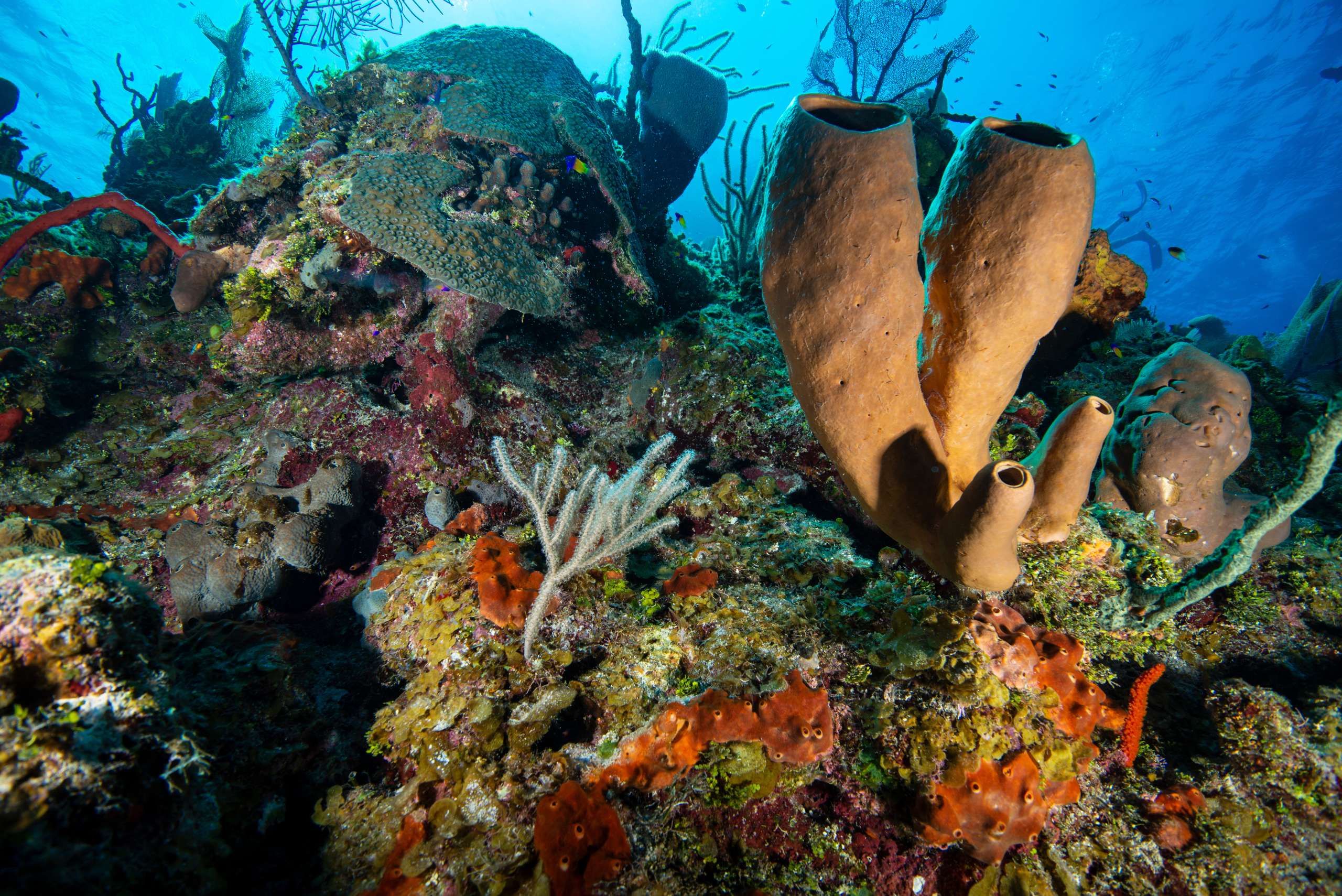
In the programme, CCMI researchers will investigate the amount of carbon stored in corals and seagrass and how restoring corals near seagrass impacts carbon sequestration.
This “holistic, ecosystem-based approach” is a key element of the programme, the 9 Jan. press release said.
CCMI’s education team will also develop immersive conservation and education to introduce students and local stakeholders to carbon offset activities.
The future of the project will build upon these outputs to create a model that will allow companies to obtain certified carbon credits through ecosystem-based marine restoration.
“This blueprint will be shared regionally for replication to deliver even greater climate action on the international stage,” marine protection group said.
Support
The project is being conducted in partnership with Butterfield bank.
Mike McWatt, Butterfield’s managing director in Cayman, said the company is committed to helping protect the environment with a focus on the oceans.
“This is why we are pleased to be backing CCMI’s research into habitat restoration for the next three years with the aim of better understanding how tropical marine environments can contribute to the blue carbon offset agenda.
“We look forward to following CCMI’s progress and supporting their overall efforts to protect and restore coral reefs.”
CCMI thanked Butterfield for supporting its work to address key knowledge gaps for blue carbon offsetting and raise awareness of climate change and carbon reduction.
The project launch video can be viewed on CCMI’s YouTube page.
Related Videos