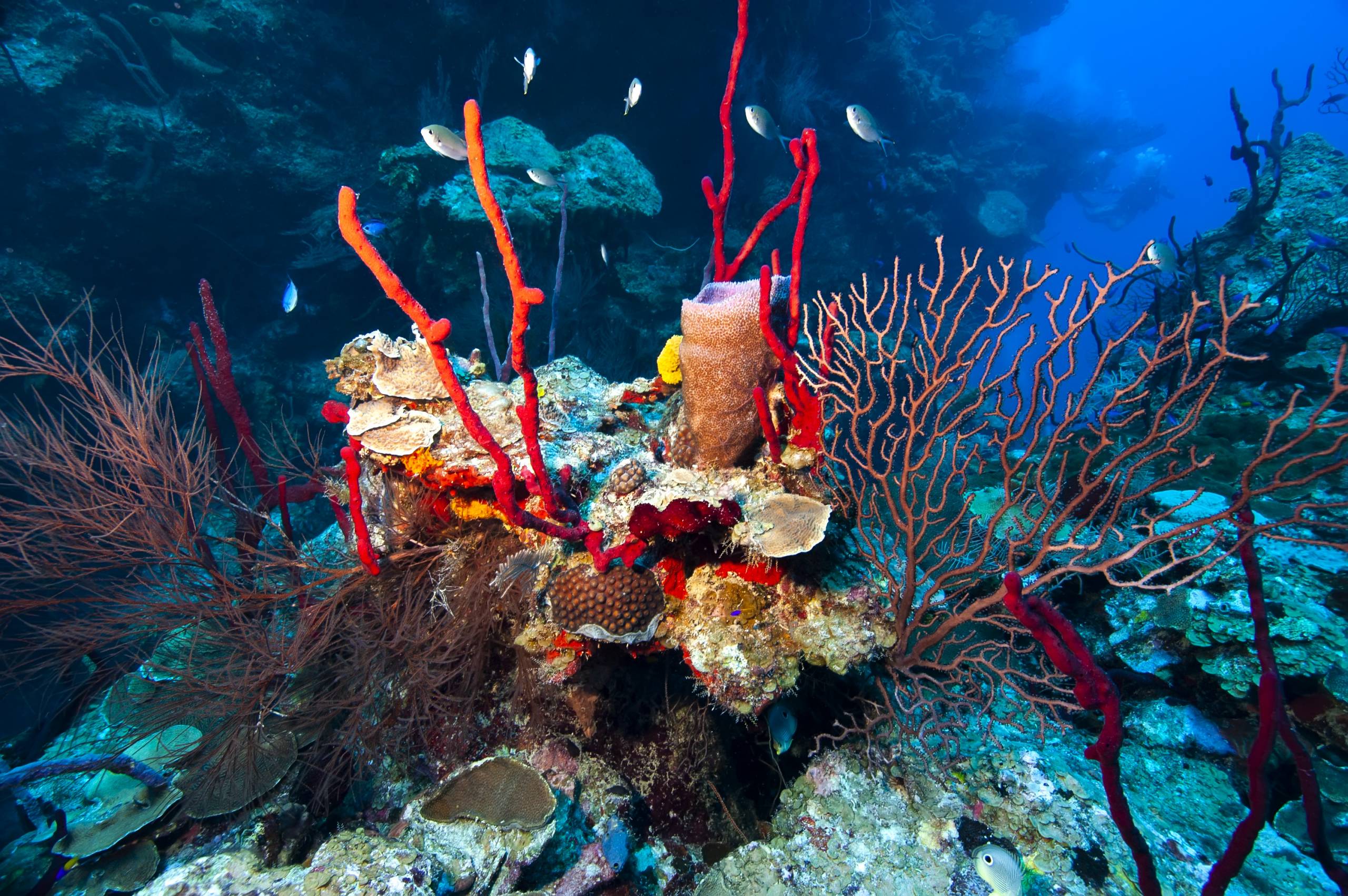
Record-high sea temperatures recently proved disastrous to Caribbean coral reefs, with the National Oceanic and Atmospheric Administration registering triple the previous record for heat stress last September.
However, scientists here have turned that devastation into a positive, taking the opportunity to learn more about which corals are more resilient to drastic temperature rises and other stressors.
Gretchen Goodbody-Gringley, the Central Caribbean Marine Institute director of research, led a virtual press conference on 18 Jan. to discuss the organisation’s two-year project about coral genetics.
Researchers specifically wanted to know if there was a particular genotype that could survive exceptionally well when ocean temperatures spike. She said they were surprised to learn that while a few particular types did well compared to others, they may not be the end-all-be-all solution to coral restoration.
The research project, partly supported by the European Union’s sustainable development fund, the Resilience, Sustainable Energy and Marine Biodiversity Programme, known as RESEMBID, originally was supposed to take place mainly in the lab. Researchers took coral fragments and studied what limits they could withstand before falling victim to coral bleaching.
However, researchers took to the open ocean as well when temperatures started rising last autumn. They began their “common garden experiment” in a nursery off Little Cayman.
“The goal of this project was to use our knowledge about past disease history, and incorporate some testing on heat tolerance and look at how these differences in resilience can improve our restoration practices,” Goodbody-Gringley said.
Even with the ‘garden’ being about 70 feet below the surface, the specimens showed the effects of coral bleaching during the “exceptional heating event” in the Cayman Islands, she said. This in turn provided valuable data for the institute.
Twin threats
The results pointed to a few specific corals which showed a more gradual dieoff than their counterparts as temperatures rose.
This does not, however, mean that CCMI is going all-in to restore this particular stony coral, acropora.
The frontrunners for temperature resistance seemed to have traded that advantage for being more susceptible to diseases like ‘white band’ that affects elkhorn and staghorn corals, Goodbody-Gringley said.
The disease is evidenced by stark white patches on the orange spires of the coral, showing where the living organisms have died off.
“The reason we’re focusing on the acroporid corals is because these corals have been historically impacted the most in the Caribbean,” she explained.
Unfortunately, surviving corals didn’t seem to gain any sort of disease resistance even if previously exposed.
Moving forward, CCMI will need to make sure to restore genetically diverse corals to ensure reefs survive major threats from both extreme heat and disease, Goodbody-Gringley said.
“We need to hedge our bets,” she added.
Results of the experiments are available on CCMI’s website.
Related Videos