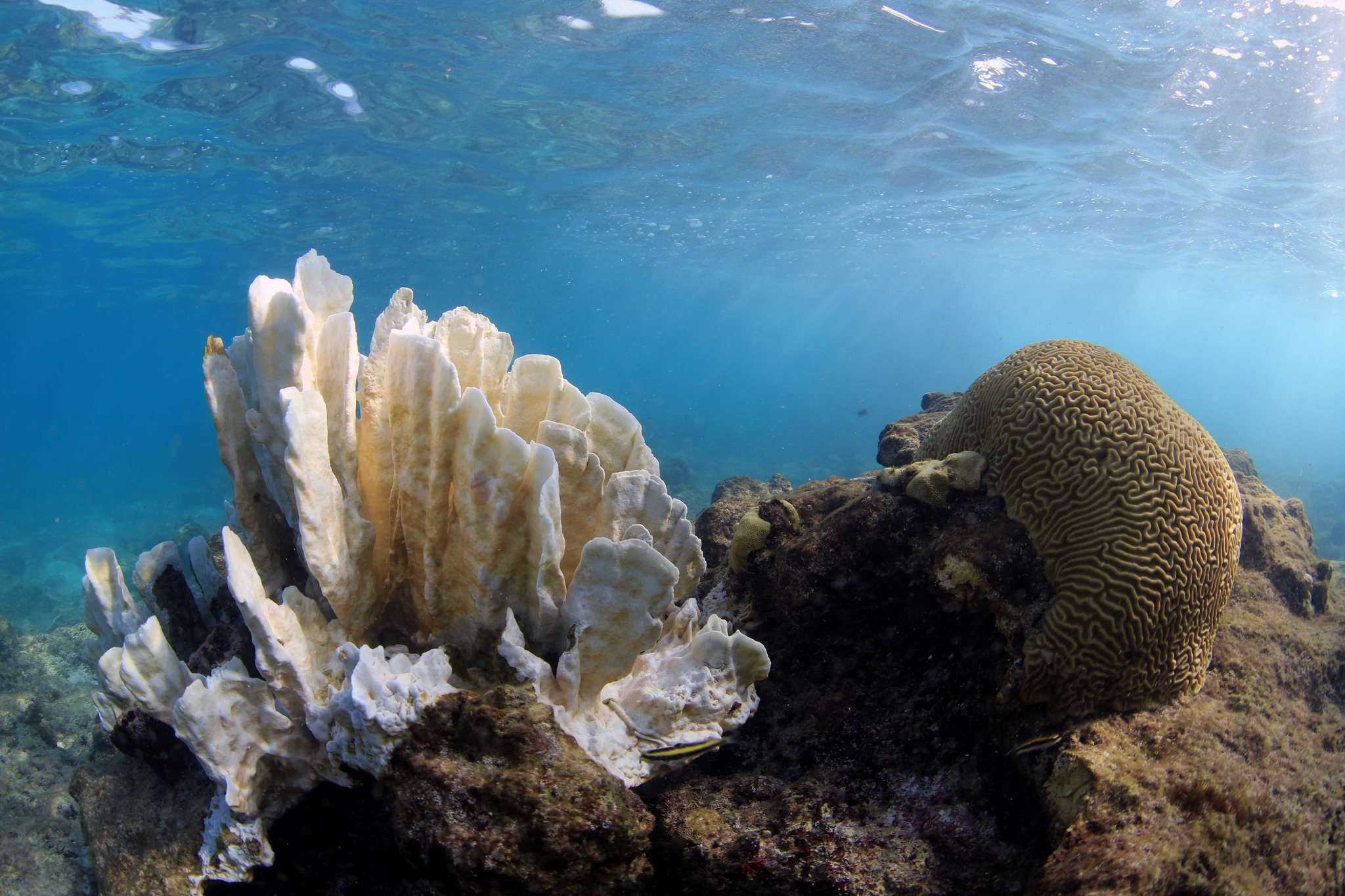
The highest level of alert warning of heat stress to Cayman’s corals has been triggered, meaning extensive bleaching is imminent.
The US National Oceanic and Atmospheric Administration has reported that the islands are under a level two alert which predicts widespread bleaching and possible coral death.
According to a Cayman Islands Department of Environment social media post, thermal stress causes corals to expel their zooxanthellae – symbiotic algae that live on corals giving them their colour.
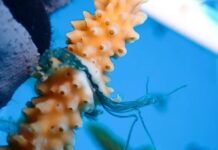
Bleached corals are still alive, but their tissue appears translucent or vibrantly white.
If the thermal stress lessens, corals could regain their zooxanthellae algae in weeks to months. However, if this stress persists, the corals cannot recover.
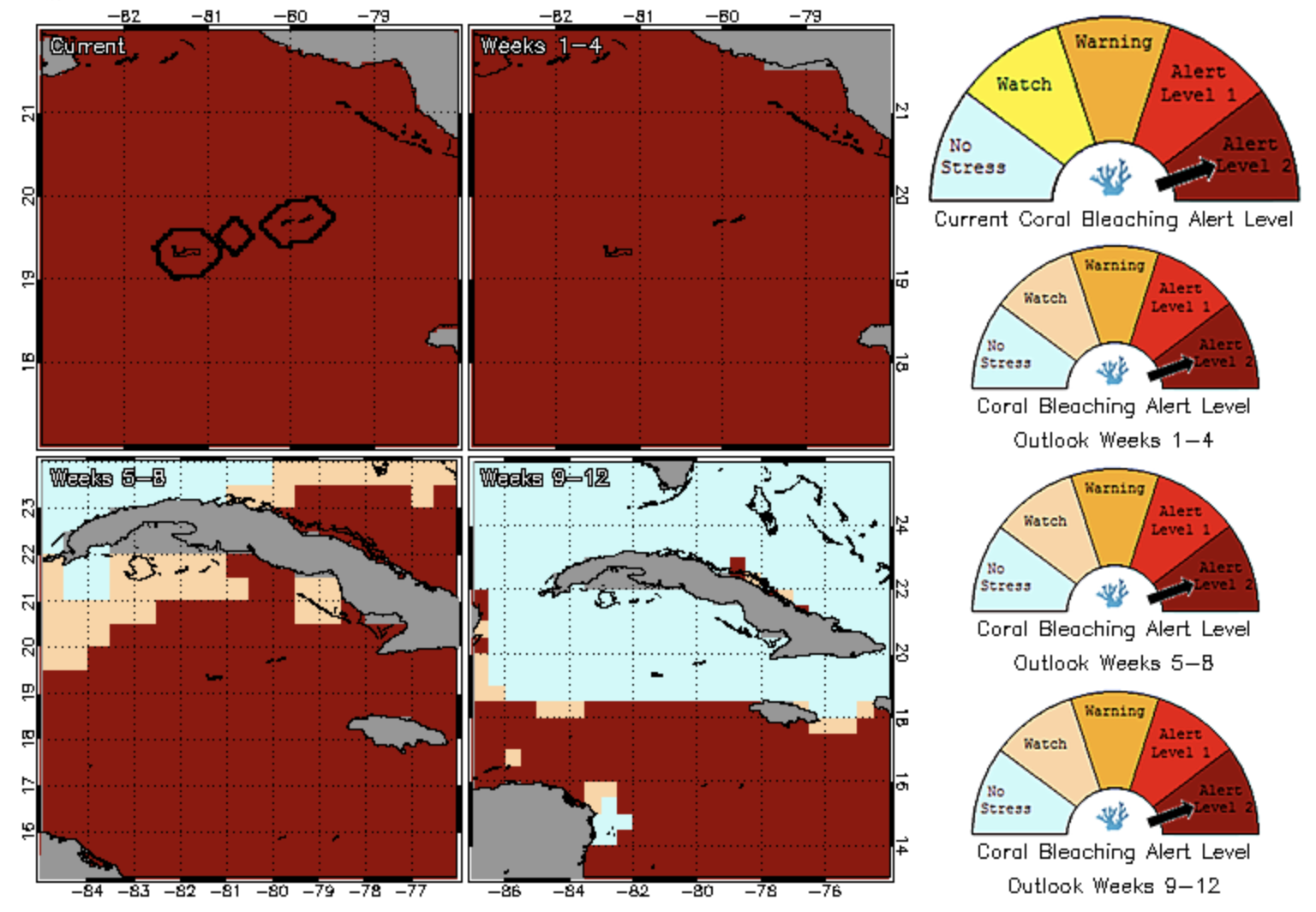
On its website, the NOAA bleaching alert map currently shows a high alert level – in dark red – across the vast majority of the Caribbean.
Forecasts show it covering the Cayman Islands for at least two months, with it dissipating sometime afterwards.
“Fortunately, NOAA has predicted heat stress to diminish in the next nine-12 weeks,” the DoE said, adding that it is a “glimmer of hope” for potential recovery of the reefs.
It added that global warming and rising sea temperature are global phenomena that impact Cayman’s corals.
A DoE spokesperson explained that, while not yet a yearly occurrence, a level two alert is “unfortunately not uncommon for the Cayman Islands”.
In July, the Compass reported on record sea surface temperatures breaking seasonal records around the globe.
At the time, Tim Austin, DoE deputy director, said he was very concerned.
“We are already over the threshold for coral bleaching and we still have the hottest months of the year ahead,” he said.
In 2005, parts of the Caribbean lost half of their coral reefs in one year due to major coral bleaching across the region. Cayman was less gravely affected.
An event of similar severity could critically affect Cayman’s fishing and diving industries as well as the marine ecosystem.
“Every year the ocean temperature is increasing and the long-term outlook for reefs is fairly bleak,” said Austin.
Projections of the impact of climate change will be discussed in the upcoming UN Climate Change Conference COP28 being held in the United Arab Emirates from 30 Nov. to 12 Dec.
The Cayman government has drafted a Climate Change Policy and a National Energy Policy which have gone through public consultation but are yet to be enacted.
Related Videos