

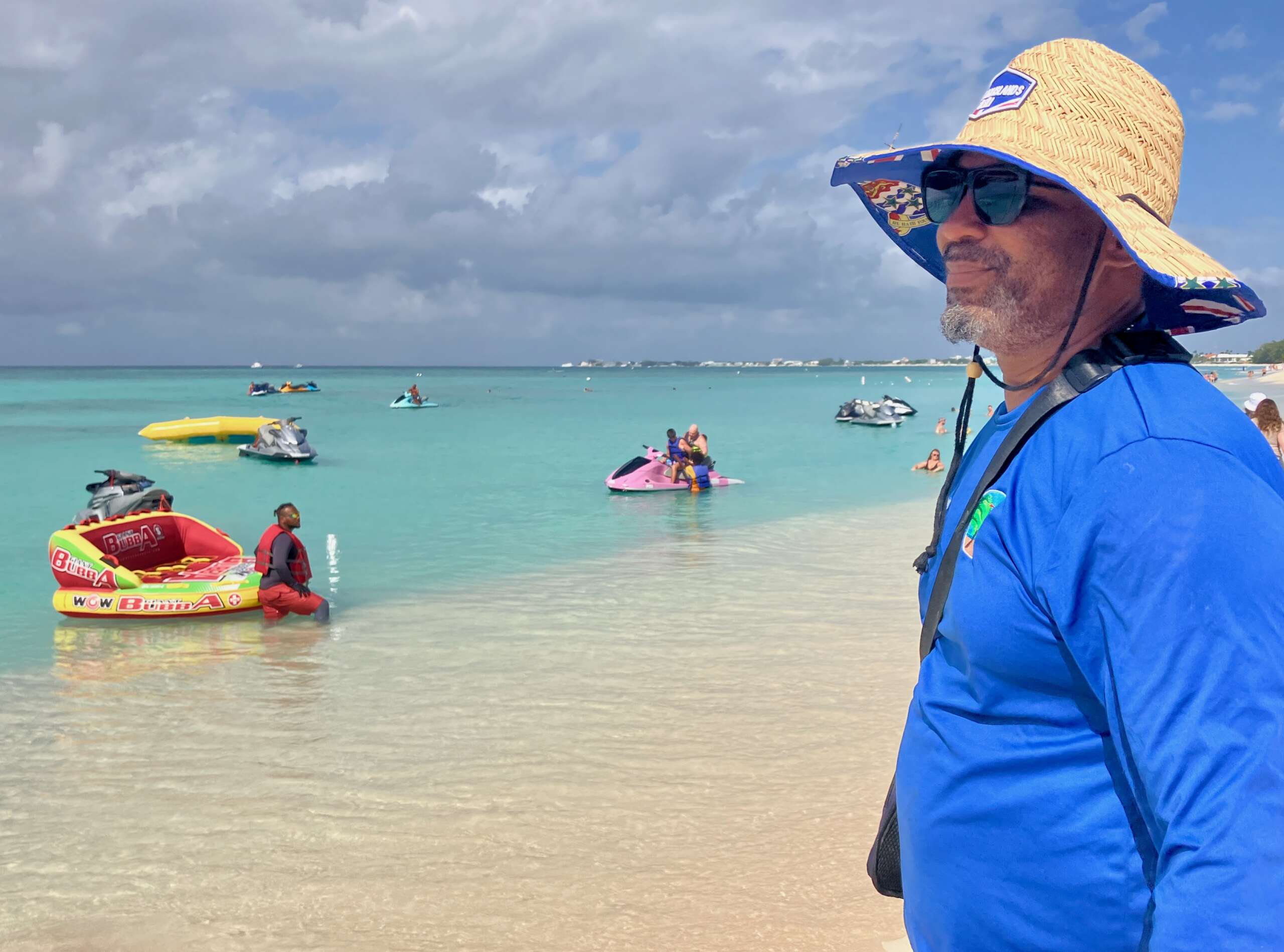
Government’s efforts to regulate trade at Seven Mile Public Beach have left scores of small business owners disappointed. A total of 34 out of 120 applicants were awarded conditional permits to operate at the site. The rest have until 14 Feb. to pack up and leave.
But multiple vendors told the Compass they are mystified by the selection process, which left some established entrepreneurs out in the cold, and that they have nowhere else to go and no other way to make a living.
They also believe government has misjudged the demand for their services from both cruise and stayover tourists. On a busy Thursday this month, with four large ships carrying more than 13,000 passengers in port, the Compass spent the morning at Public Beach to see the situation firsthand.
‘We want sun, local food and a good time’
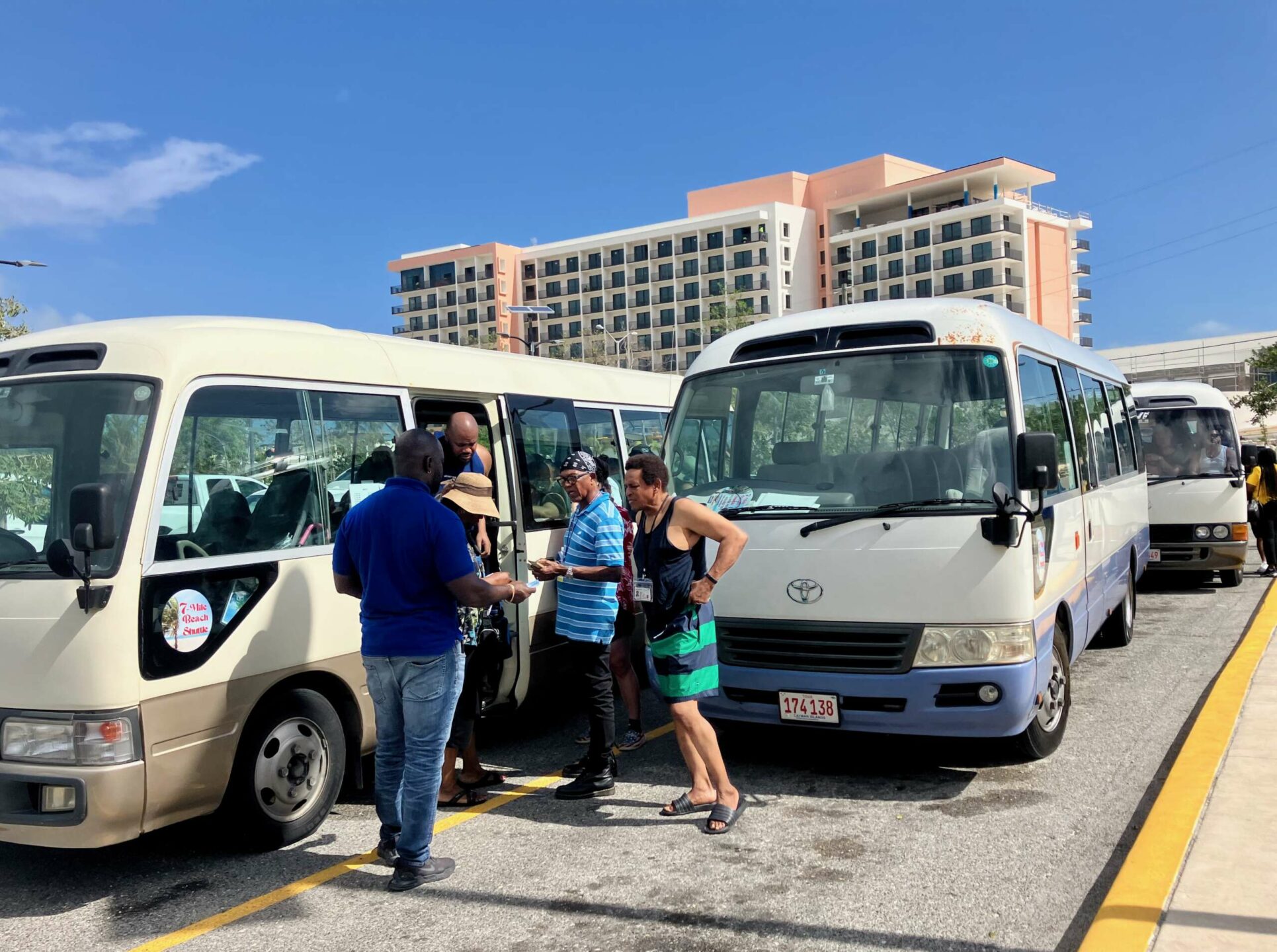
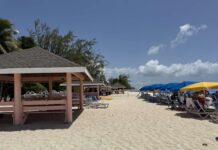
At Public Beach car park, a convoy of shuttle buses unloads a steady stream of tourists in brightly coloured swim wear. Amid the throngs of people strolling through the jerk chicken stands, trying on hats and T-shirts, or grabbing coconut water from the line of stalls along the walkway, a man in a bright pink shirt and dark shades leads a group of friends straight to the public cabanas.
“Where’s Miss Daphne?” Felix Mendez calls out in half-greeting, half-question to the Caymanian lady sitting in the shade.
“They told me you would hook us up. We’re gonna need chairs and we’re gonna need umbrellas.”
They agree on a price for a group of 24 and they start to drift off to enjoy the sun and the sea.
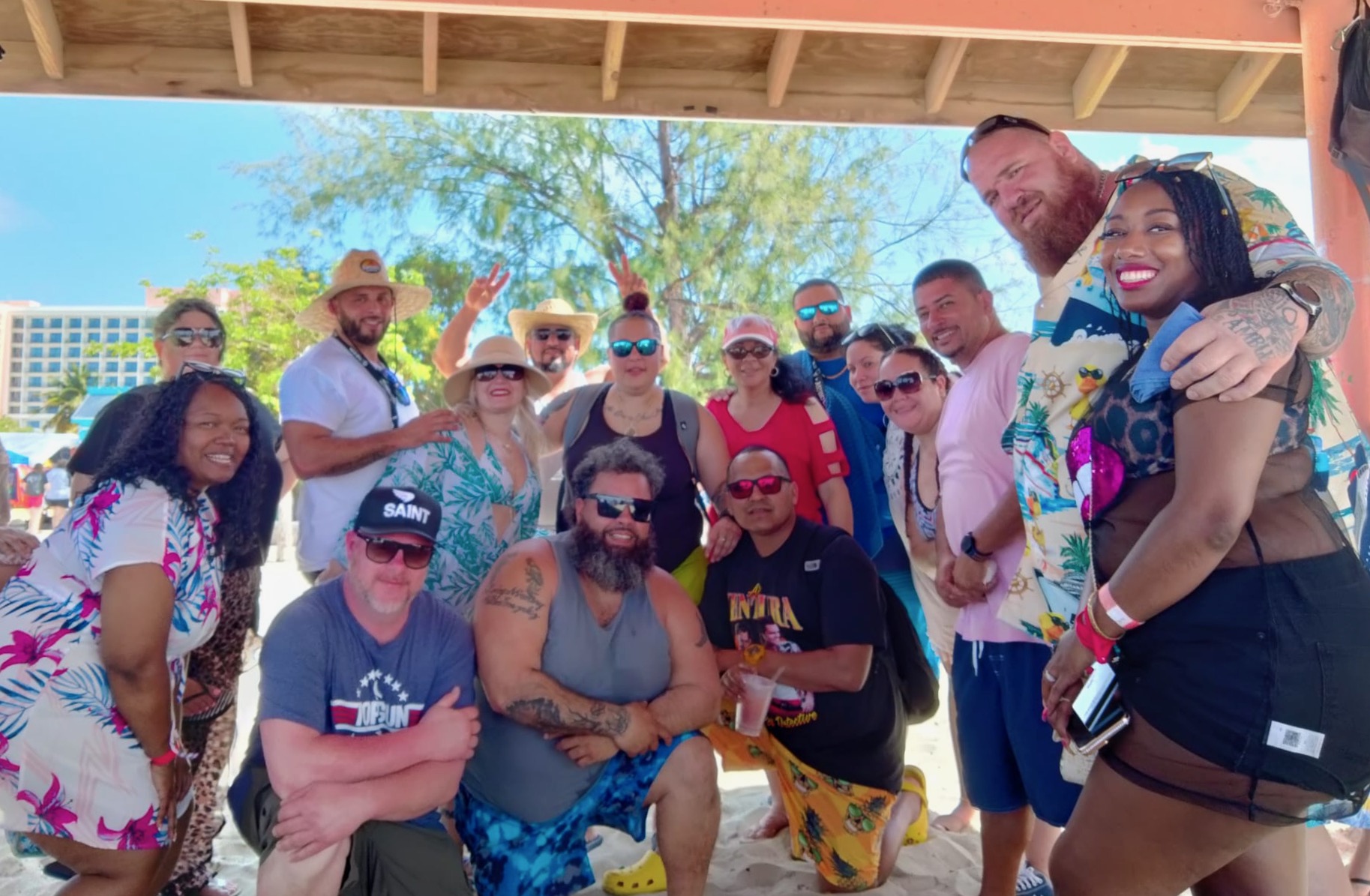
Mendez and his group of friends take a cruise together every year. Their demands, he says, are fairly simple.
“We just want to go to the beach, get some sun, get some local food, have a good time. After this, we’ll hit the bars and the shops.”
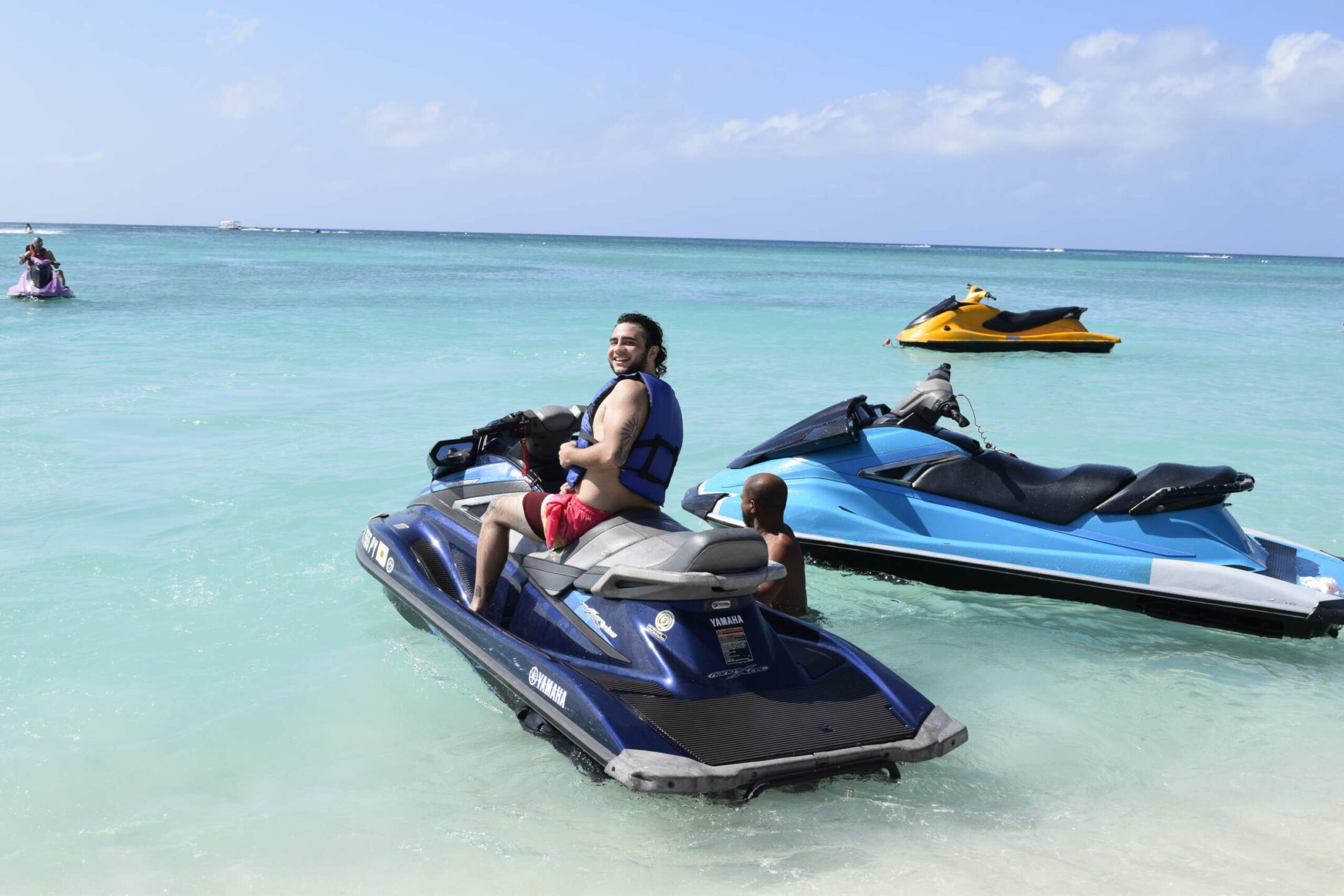
That’s precisely what almost every tourist that comes to Cayman wants, says David Lyons, one of the original vendors to set up at the beach, renting jet-skis and running banana boat rides for more than a decade.
There has been a groundswell of public opposition to businesses plying their trade on Public Beach amid complaints that the atmosphere is out of sync with the island’s image. Government’s efforts to find a middle ground culminated in the compromise of a permitting system, with the Public Lands Commission issuing the first set of licences last week.
But Lyons insists the vendors are providing a much-desired service that will be diluted by the new system, leaving some businesses, including his own Air Waves water-sports operation, out in the cold.
Despite the perception, he says there are many well-run businesses on the beach catering to a huge demand from visitors.
“Wherever there is tourism, you are going to see deck chairs, jet-skis and margaritas. It’s why people come on vacation.”
Collision of tourism visions
Not everyone shares that vision, however.
Public Beach has long been a spot where contrasting ideas of Cayman’s tourism product clash.
On a Thursday last week, with four ships in port, the evidence of those contrasts was clear to see.
A tourist relaxing oceanside could look out at boats and skis buzzing across the calm, clear ocean. Or they could look left and see the slowly accumulating glass tower of the Watermark condos. Look right and find the now familiar L-shape of the Kimpton Seafire resort. Or look behind and see the salmon-pink facade of the soon-to-be-opened Indigo hotel.
Every element of Cayman’s tourism – from budget cruise, to mid- and high-scale stayover, to owners – is literally converging on the beach.
“Location is everything,” says Lyons.
“Everyone wants to come to Seven Mile Beach.”
The vendors believe they are providing a service that can’t be found anywhere else in Cayman – local businesses, local food, local service – and an affordable good time.
And while there is a school of thought that upscale tourists, sold on images of deserted stretches of fresh white sand, are looking for something more exclusive, Lyons believes it would be a mistake to assume that is the case for everyone.
As if to prove the point, while we are talking, two different parties wander over from neighbouring hotels to rent jet-skis.
“I want to support a family business,” says one guest.
“Also, I was told it was cheaper over here.”
While many vendors accept that the beach – which had become a hotbed of unregulated commerce – needed some rules and management, they suggest the new rules are too restrictive.
In their efforts to contain the style and type of trade taking place at the beach, multiple vendors argue government has sorely misjudged the level of demand for their services.
‘How will I feed my family?’
With two-thirds of applicants denied permits, there was inevitable discontent among those that missed out.
Multiple vendors told us they had come to rely on the trade at the beach and had complied, over several years, with everything government had asked, yet missed out on permits, while others who had limited history of working at the site had been approved.
Others felt the terms of their permissions were restrictive to the point where they could no longer keep their staff employed or pay the bills.
There are also concerns over the fairness of the process for selecting who is licensed to trade at the beach and who is not.
Lyons believes it was his efforts, along with some of the other early vendors, that helped establish the right for business owners to operate at the site. He said he had been a pioneer in helping establish a degree of professionalism among the vendors, getting PRIDE tourism training, CPR instruction and liability insurance, and cooperating with every rule government has put in place.
But while other less-established operators were granted licences to rent jet-skis and run banana boat tours, he received a limited licence for chair rental only.
“I think it is a mockery, to be honest,” he said. “I have to fight for my business. I have all my money invested in this. What else can I do?
“I am not going to stand in the [Needs Assessment Unit] lines for handouts.”
Of the 16 original vendors who had initial permission to be at the beach, following a legal struggle in 2016, only a handful were granted permits under the new scheme, Lyons added.
Two other water-sports operators who did not wish to be named, indicated they had not been granted any type of licence and would have to leave the beach by mid-February unless their appeals are successful.
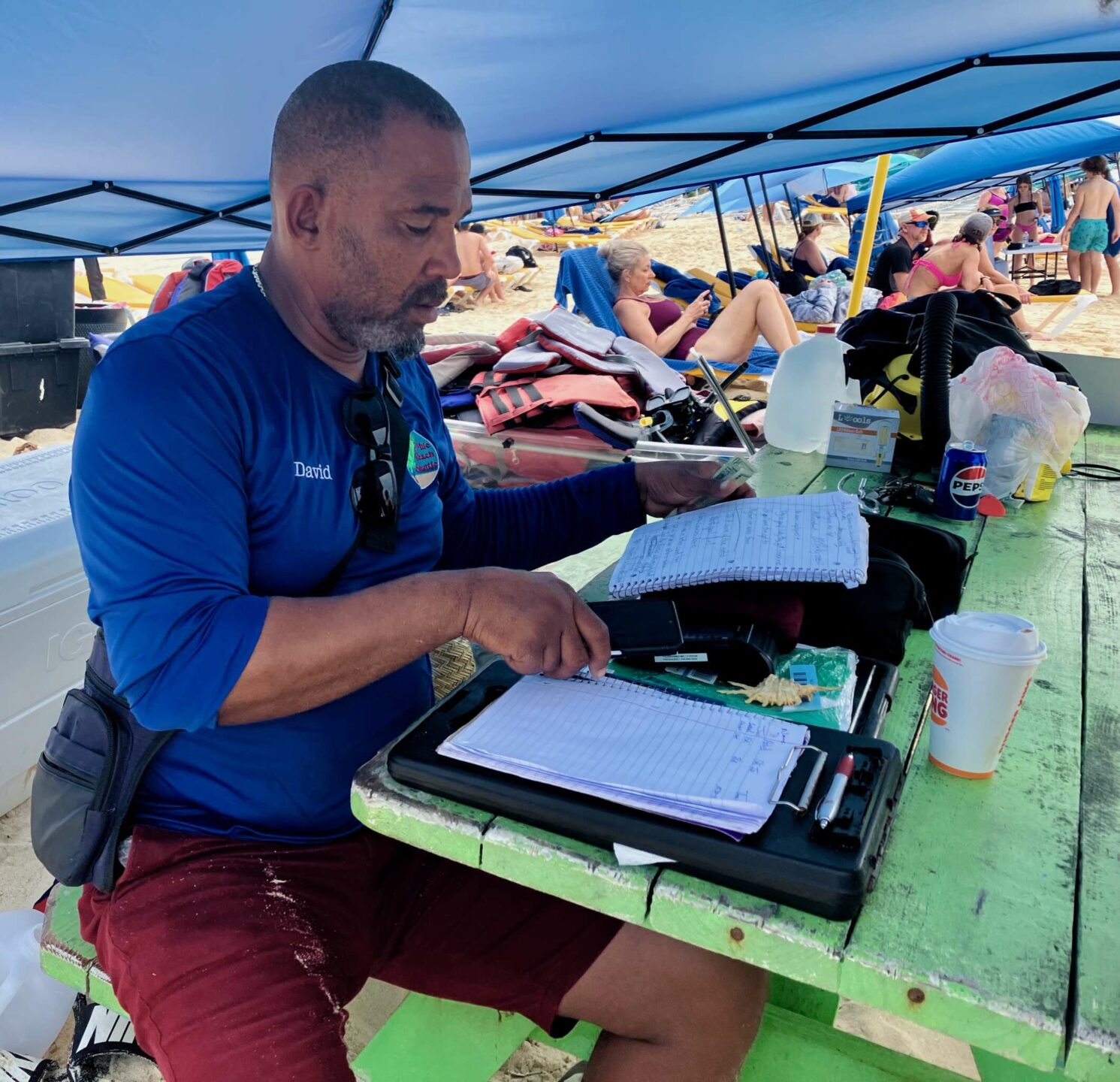
Along with Lyons, they say they were among the first to set up on the beach.
“I feel like we played by the rules and we lost,” said one of the men.
“I have my life savings invested in my business. How am I going to take care of my family?”
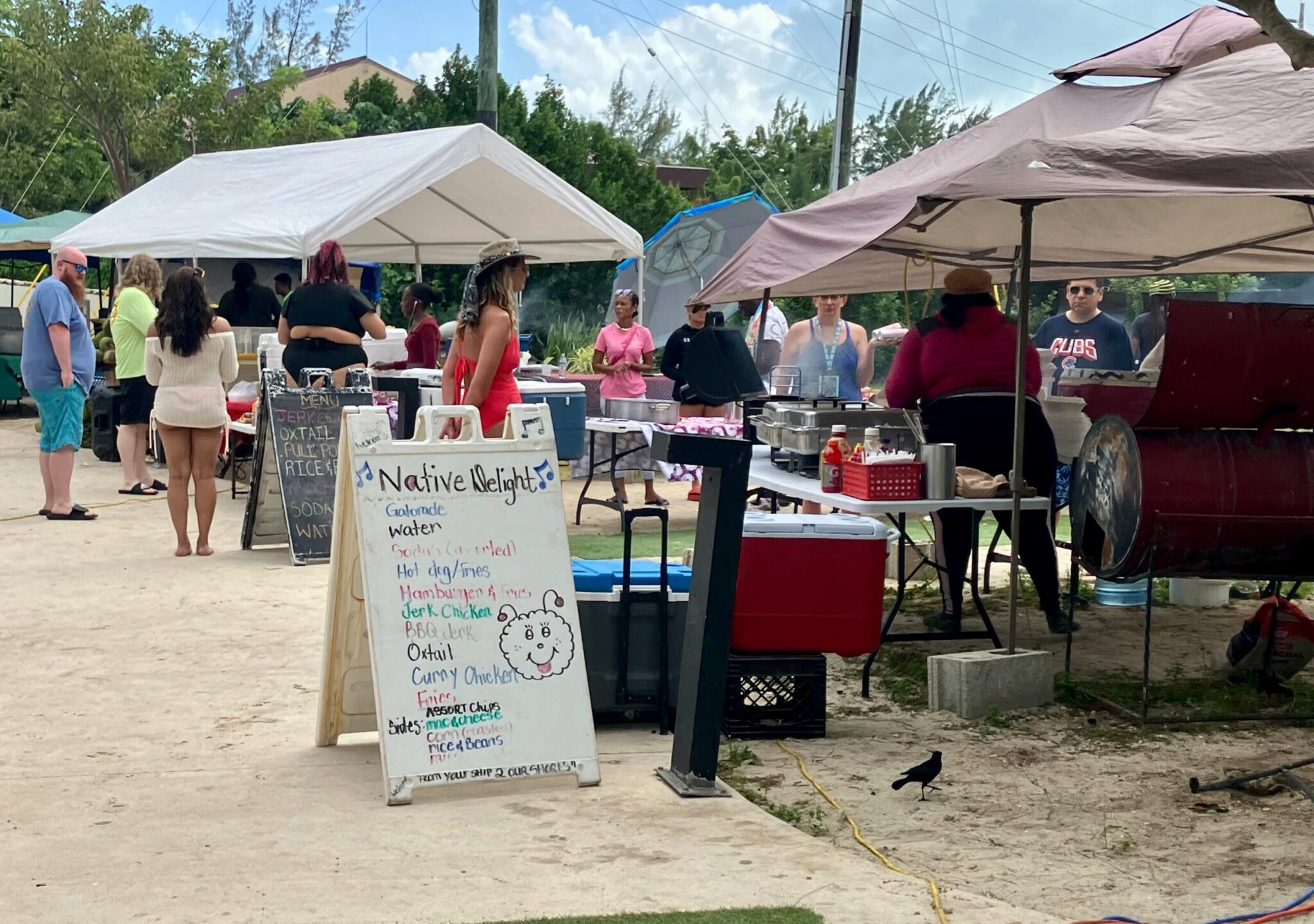
Lurlane Berry, of Native Delight, has been selling jerk chicken, oxtail stew and conch fritters, among other Caribbean dishes, for over a decade, but also missed out on a permit.
“I am very unhappy about the way it was handled. I think some consideration should have been given for the number of years people have been out here. We have formed a bond among each other. We are like family.”
Another vendor, offering hair-braiding to tourists, said she had also lost out.
‘They put me out after 18 years,” she claimed.
“We don’t know who for the permits. Everyone is keeping it a secret.”
400 chairs for several thousand visitors
Even those who did get permission to trade at the beach, and are happy to say so, believe they will struggle to stay in business because of the restrictive terms.
George Brooks was one of eight vendors to be granted permission to rent chairs and umbrellas at the beach. But he says the permit restricts the amount of chairs he can rent.
“They gave me a licence to be out there but I can’t pay myself and I can’t pay my workers with 48 chairs. I am right back to square one.”
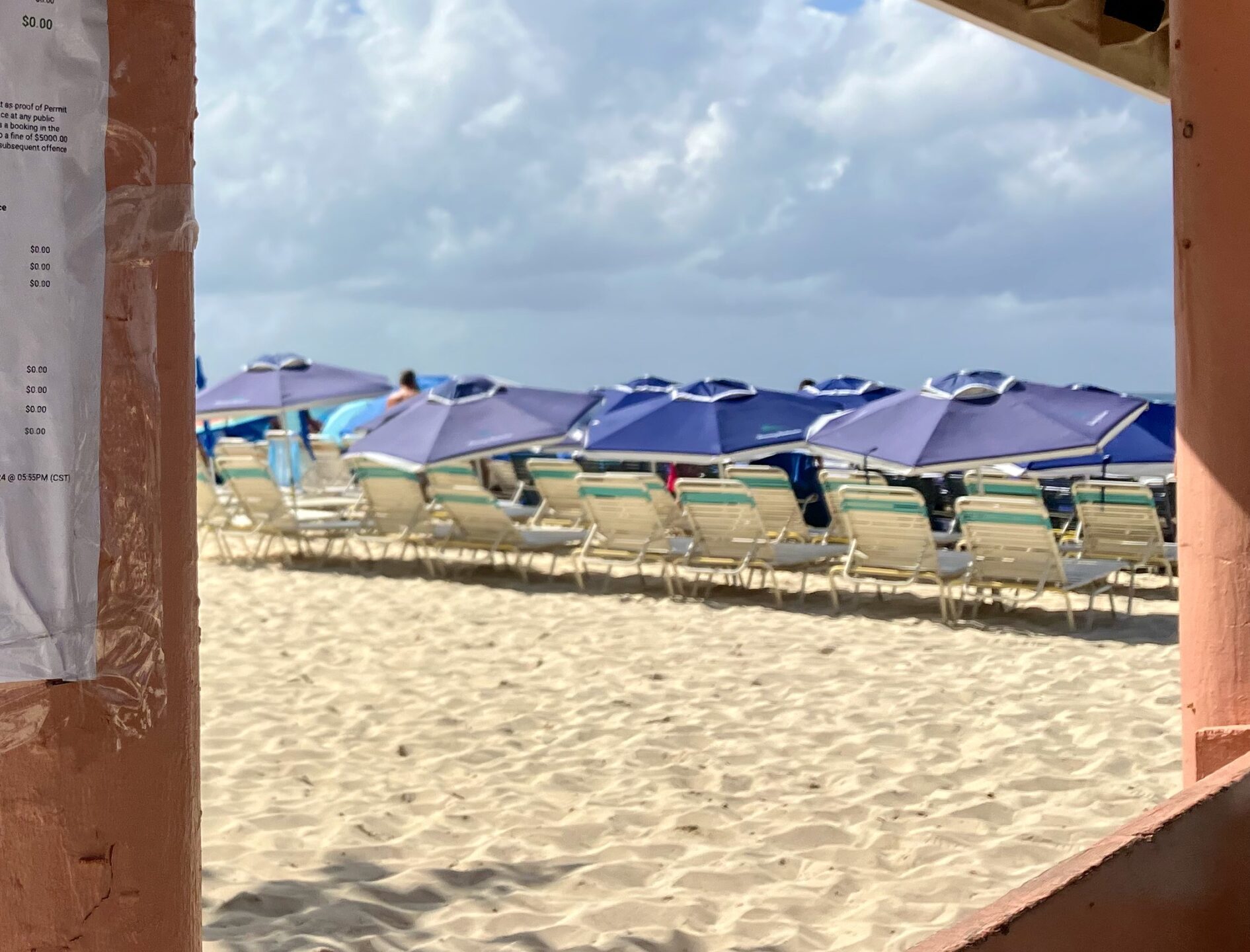
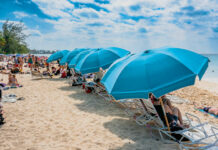
Fewer than 400 chairs in total are licensed. On busy days, vendors believe there can be as many as 2,000 people on the beach.
“Everyone wants to sit in the sun. We have been telling people this for years. There is no logic to what they are suggesting.
“I do appreciate that we were given this opportunity but what sense is there in limiting our ability to make any money? It is like telling the food vendors they can only make two pots of chicken, no matter how many people are out here wanting to eat.”
Lyons agreed that the restrictions would mean there are not nearly enough chairs for all the vendors.
“Some days Disney will bring 500 or 600 passengers alone,” he said.
He applauds efforts to create new public beaches in the east, including at Pease Bay, but believes the majority of tourists will always want the Seven Mile experience.
Some regulation needed
It is not that the vendors don’t want regulation.
Lyons believes a small number of bad actors have given the entire group a bad name.
He said he and others had long campaigned for – and agreed to provide resources towards – having a lifeguard at the beach and for a properly demarcated swim area. He also believes it would make sense – with thousands of tourists at the spot – to provide a police officer or public lands officer to oversee the activity.
There have been challenges, acknowledges vendor Ailaine Barnes, but she believes the beach has become better organised and the atmosphere is good.
“I have tourists come find me and tell me their friends were here and recommended they come look for me. People like to talk to locals and have local food. I am not saying we don’t need rules, but everyone is welcoming. The tourists have a good time.”
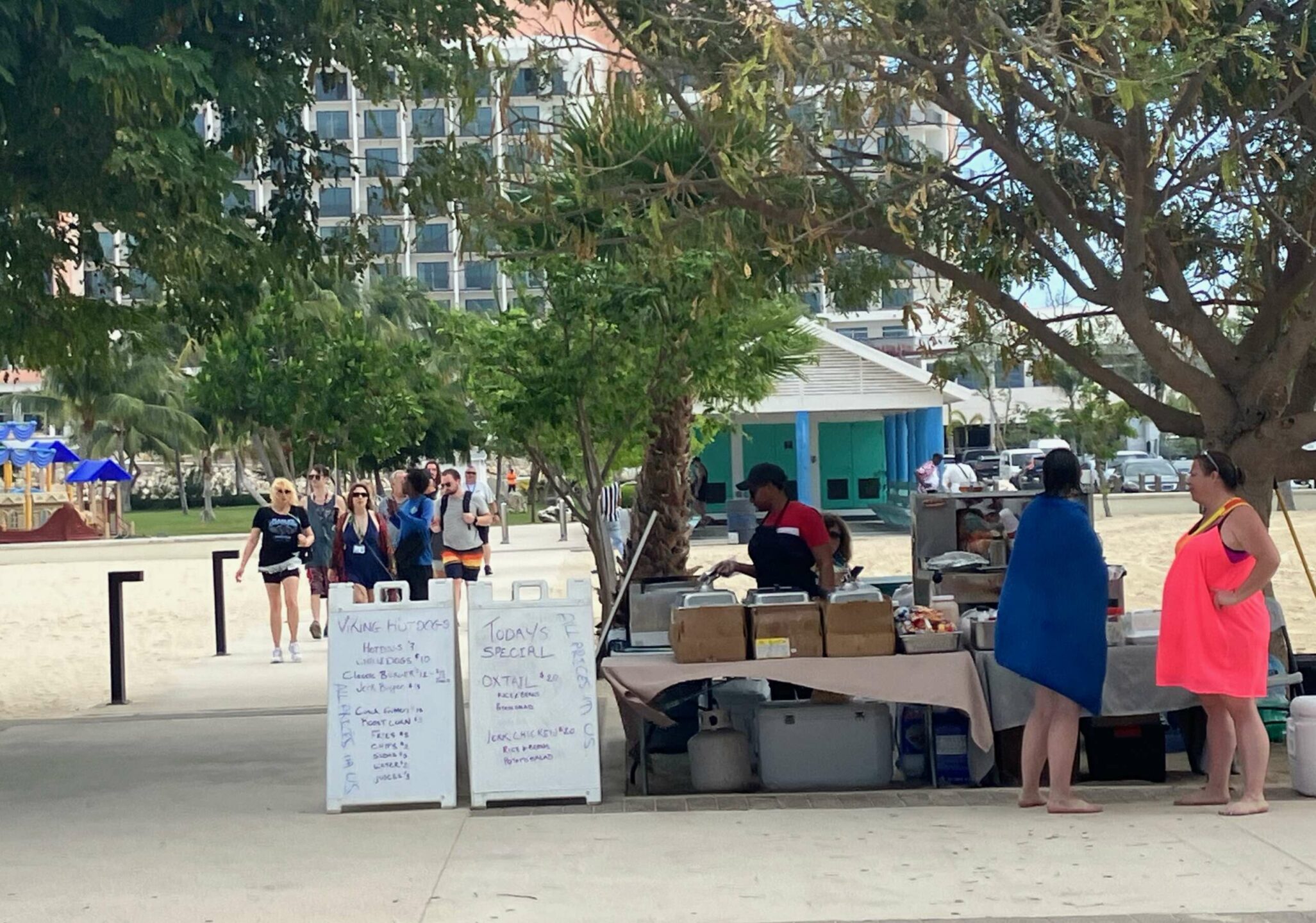
Trading on the beach has long drawn negative reactions from the general public in Cayman.
Responses to a Compass story on the issuing of permits last week were largely typical of a general antipathy towards the concept.
“So stupid, our lack of beach higglers is what is so lovely about Cayman. People just want to relax on the beach, free from harassment. We will soon be like Jamaica and The Bahamas where you can’t relax in peace without being hassled to buy something,” one commenter complained.
Another opined, “So sad to see the best public beach in Grand Cayman given over to higglers and cruise ship visitors, who leave trash on the beach.”
When the licences were issued earlier this month, Wilbur Welcome, chief officer in the Ministry of District Administration and Lands, said the government was seeking to ensure properly regulated commercial activity on the beach and would follow up with enforcement where necessary.
“While we understand the desire for persons to vend, we must balance this with the Cayman Islands Government policy and the wider public’s request for public beaches to be vending free,” he said.
The Compass submitted follow-up questions to the ministry based on the vendors’ concerns but had not received a response by press time.
The vendors acknowledge the poor public perception of what they do. But they say it is a far cry from being comparable to Jamaican beaches and insist there have been significant improvements at the area over the past 18 months.
With a few tweaks, they believe Cayman can have the best of both worlds.
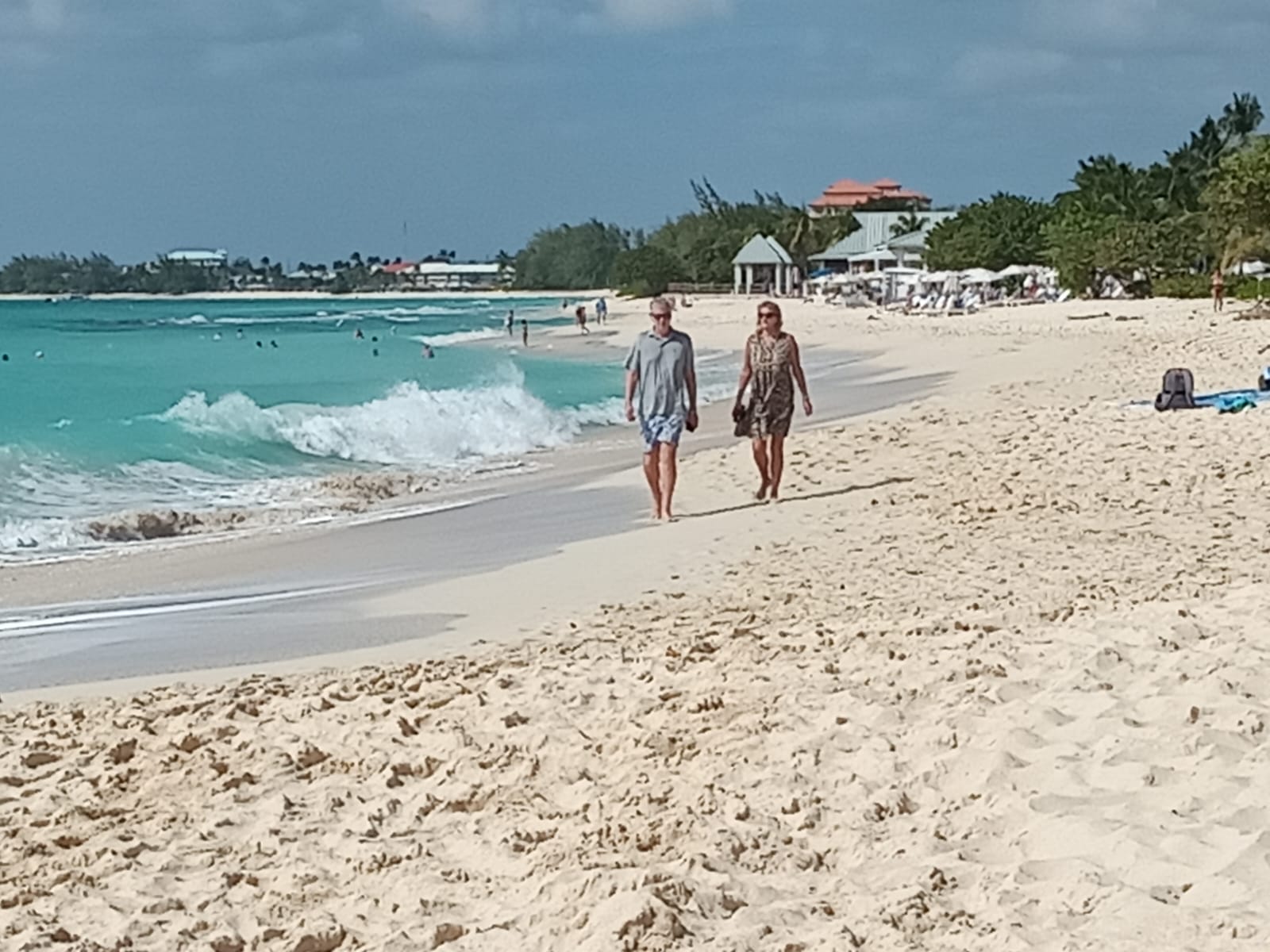
Brooks acknowledged, “A lot of people complain but it is just for five or six hours on a week day. Local people don’t come out here then – they are all at work.”
With the new regulations, he said, all chairs are moved from the beach and the area is clear well before 5pm on week days, and is clear on weekends, when they are not allowed to trade.
Vendors sent pictures to the Compass at 2pm on a cruise ship day earlier this week, to demonstrate that the beach was often clear long before the end of the day and that the chairs were removed from the site as soon as the tourists departed.
Lyons adds that the Public Beach vendors are not ‘higglers’ but a core of Caymanian business men and women – some of the few locals left on the front lines of the tourism industry.
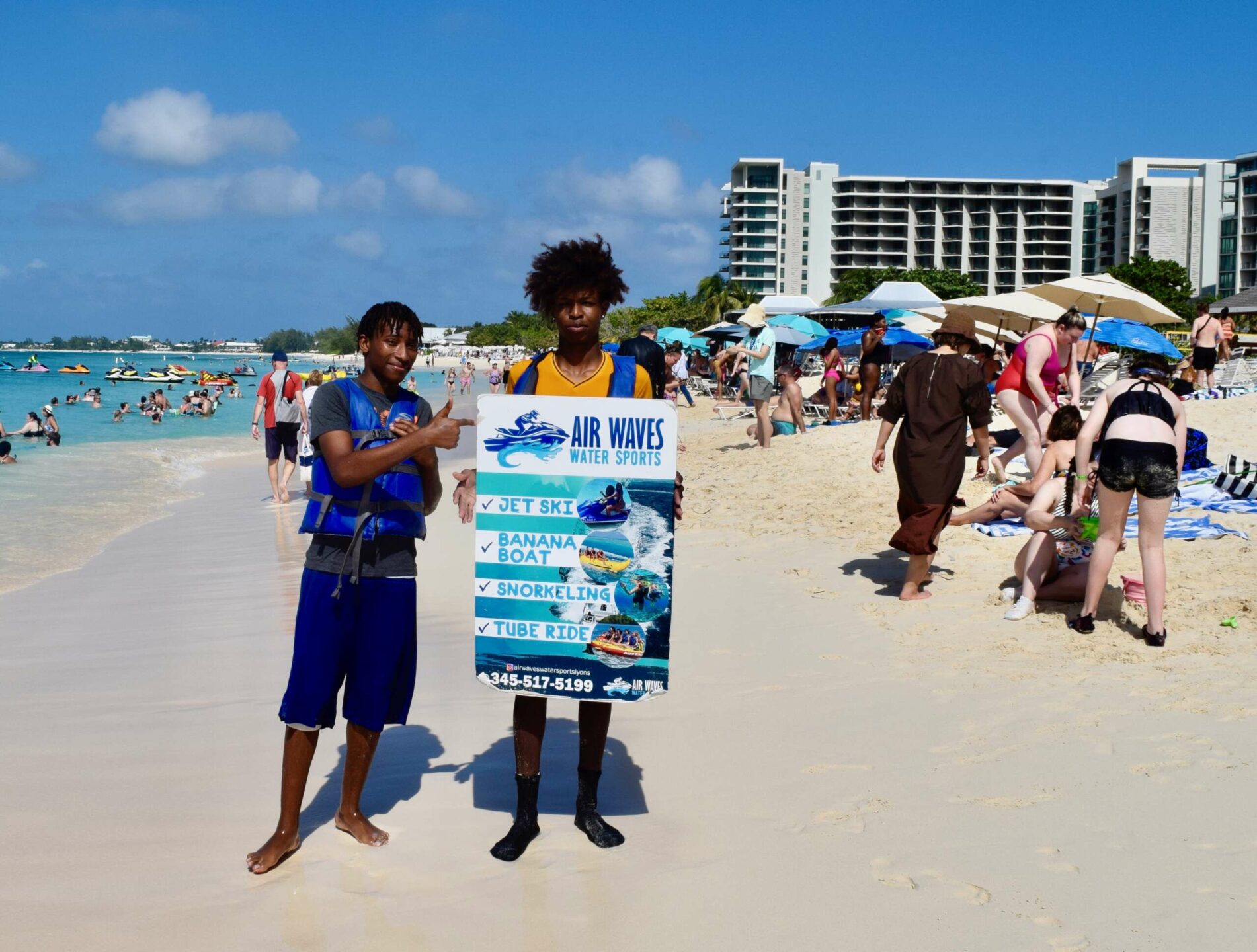
He believes government and the community in general do not fully appreciate the significance of cruise tourism.
“They don’t believe in cruise ship passengers but they have provided me a living for years. Right now, I don’t know how I am going to run my business and keep my staff employed.”
Regardless of what the national strategy is, he says the cruise ships will keep coming and the tourists want to be on the beach.
“I would like the MPs, the tourism board to come down here and see what cruise tourism has developed to on Seven Mile Beach. This is the spot to come to and people want deck chairs, umbrellas, local food and jet-skis. What else are we going to do with all these tourists?”
Related Videos









It won’t matter. When the new Indigo hotel opens it will be those tourists who will monopolize the public beach..
7 days a week.
If the beaches are not open to vendors on weekends I don’t see a problem. Where I do see one, is the unfair selection process for the issuance of beach permits, which bears a strong whiff of cronyism.
Unfortunately these beach higglers are making their way down the beach. Once the cruise ships leave, they are harrassing overnight tourists at the Kimpton and the Ritz, and probably every property in between. I’ve been approached aggressively lately at the Ritz about braids for my daughter while sitting in my beach chair, and while in the water was approached about buying a 5 minute ride on a Seabob recently. This will ultimately transition Cayman into a non-premium destination.
“400 Chairs for Several Thousand Visitors “??? The space is only big enough for a couple hundred chairs anyway if there is to be space for those locals who want to bring their own. The vendors leave their crap all over the beach. Like any business, they need TBL and required insurance just like everyone else who caters to tourism. To feed your family you need a livelihood that is correctly set up to be in business. It only makes it fair to everyone who obeys the laws. As far as numbers, there is no way a large number of vendors can be successful in such a limited space. They will all fail, if they refuse to understand supply and demand.