

Following the resumption of cruise tourism, vendors have returned to Public Beach, prompting complaints about unregulated trade, illicit beer sales and a scene that creates a bad image for Cayman tourism. The vendors, meanwhile, say they are providing a much-needed service to visitors and have been waiting in vain for government to follow through on plans to formalise their status as licensed traders. The Compass investigates both sides of the story.
A hub of trade
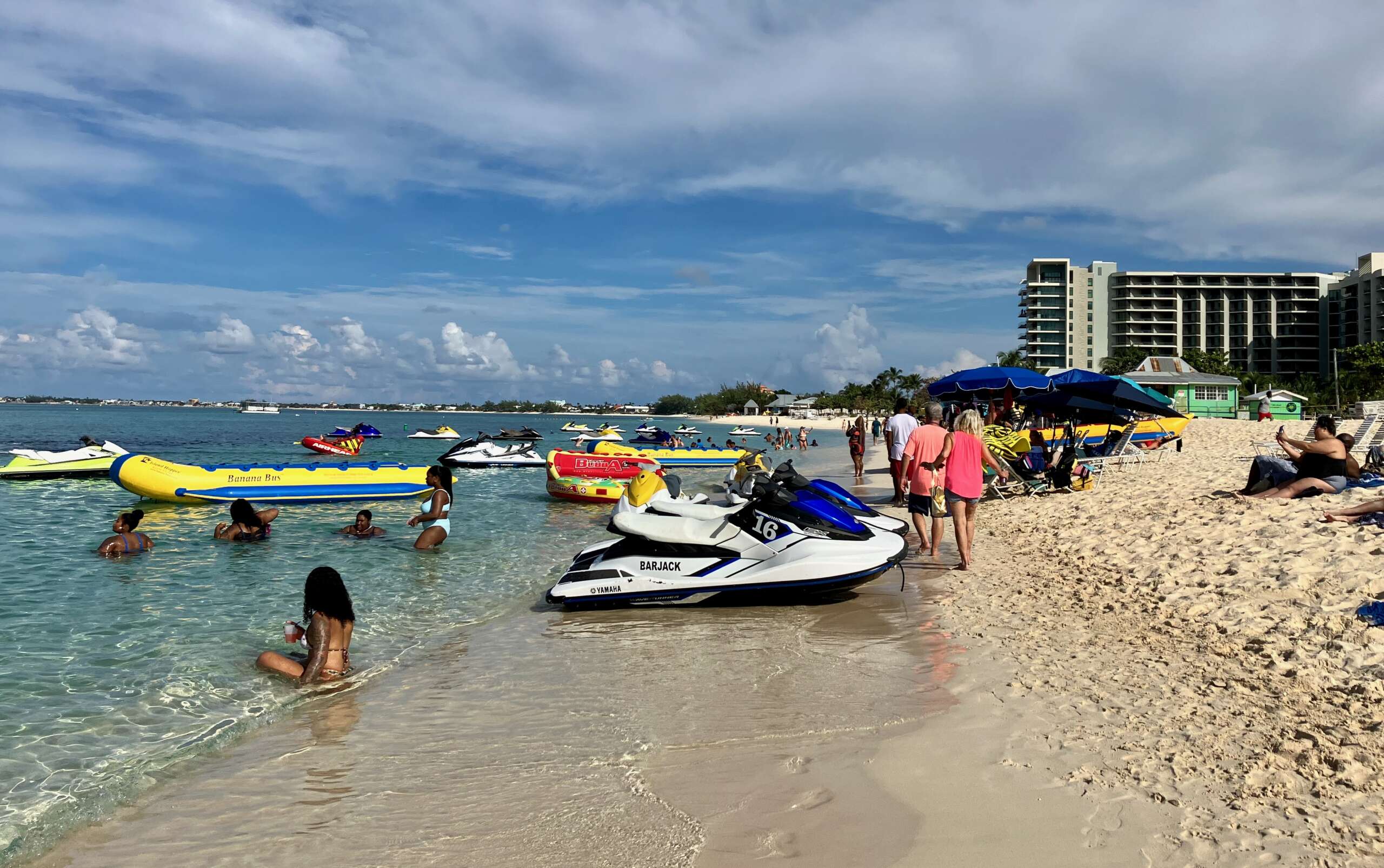
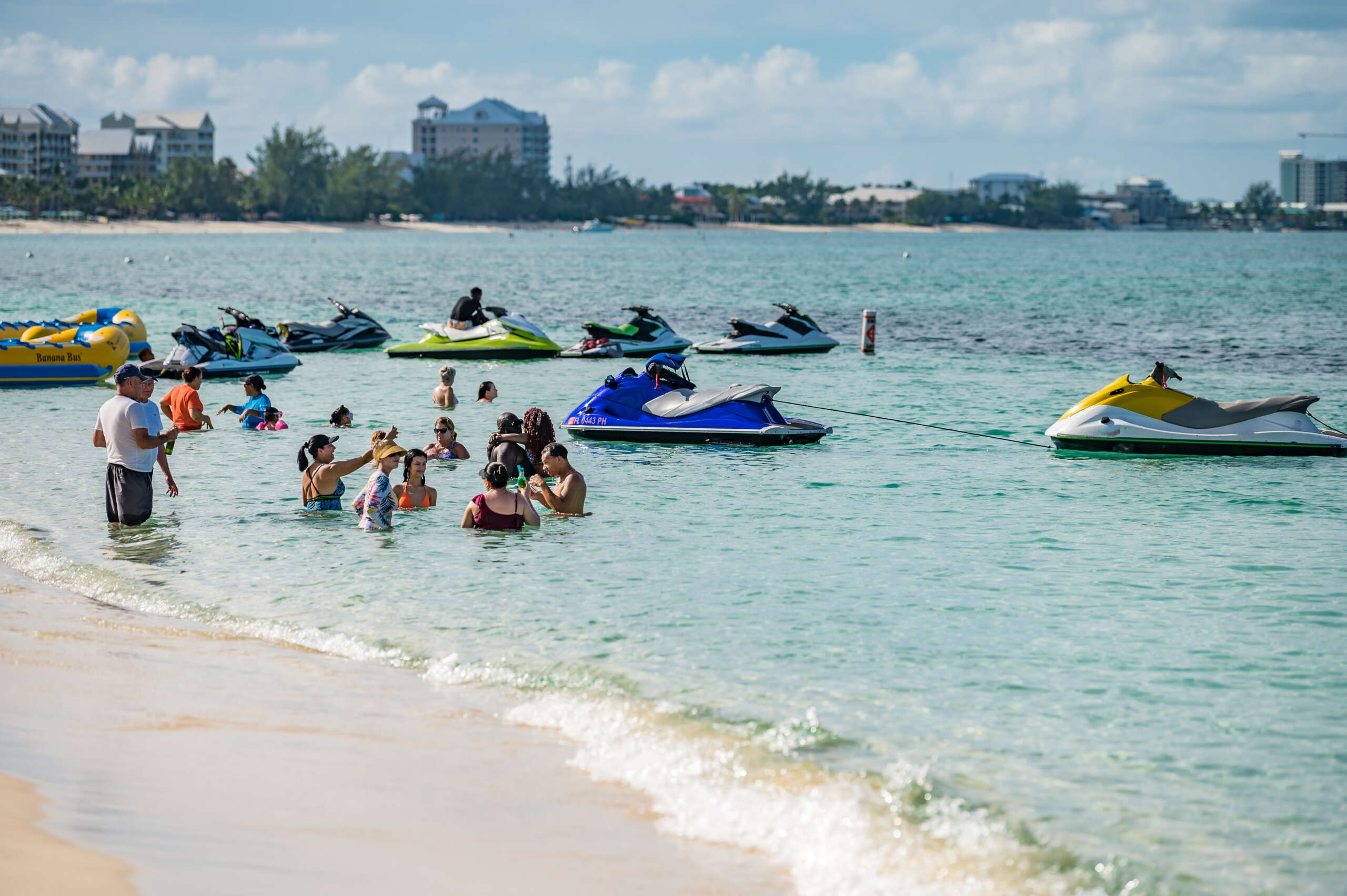
On a busy Wednesday morning on Public Beach, jet-skis and banana boats zip across the bay. Deckchair salesmen stuff dollar notes into waterproof bags as they set up coloured umbrellas at the water’s edge.
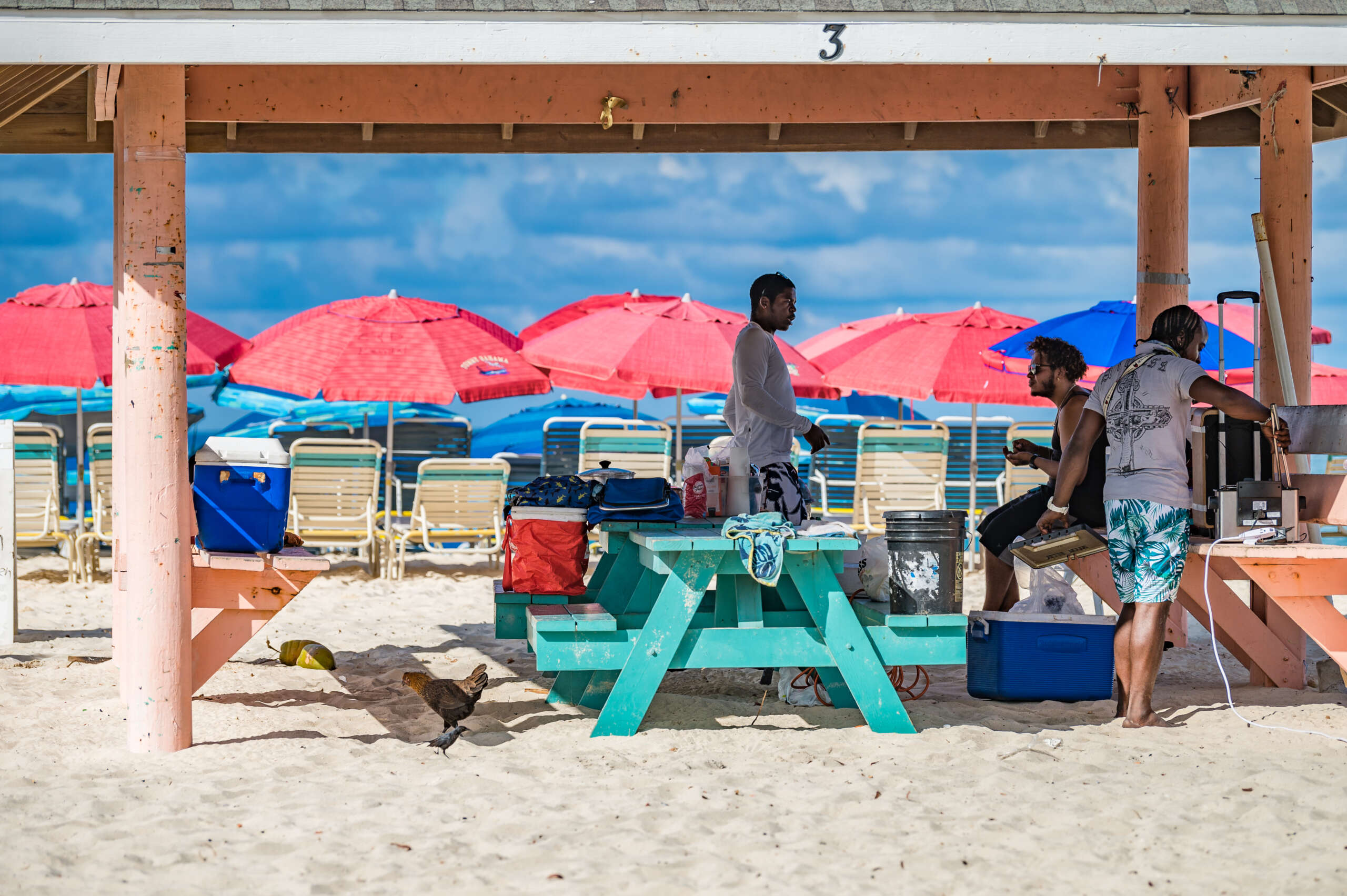
The smell of marijuana mixes with the scent of jerk chicken drifting across from the public cabanas, commandeered by a variety of chefs and souvenir salesmen.
Bob Marley’s ‘One Love’ blasts from the speakers, punctuated by the calls of vendors hustling for customers.
A woman sells straw hats under a canopy closer to the car park. There are T-shirts and snorkels for rent; and jewellery and bags, necklaces and other mementos for sale. Chalk boards advertise pulled pork, rice and beans, sodas and water.
In the middle of it all, a shirtless man with a cigar between his teeth wades into the shallows. Around him, tourists loll in the warm water.
Some grip glass bottles of Caybrew, evidence that seems to support complaints of a quiet trade in alcohol taking place beyond the more visible retail.
The beach is a hub of commerce, some of it legitimate, almost all of it unlicensed, and elements of it likely illegal.
It is also a locus for differing visions of what Cayman’s tourism product should look like.
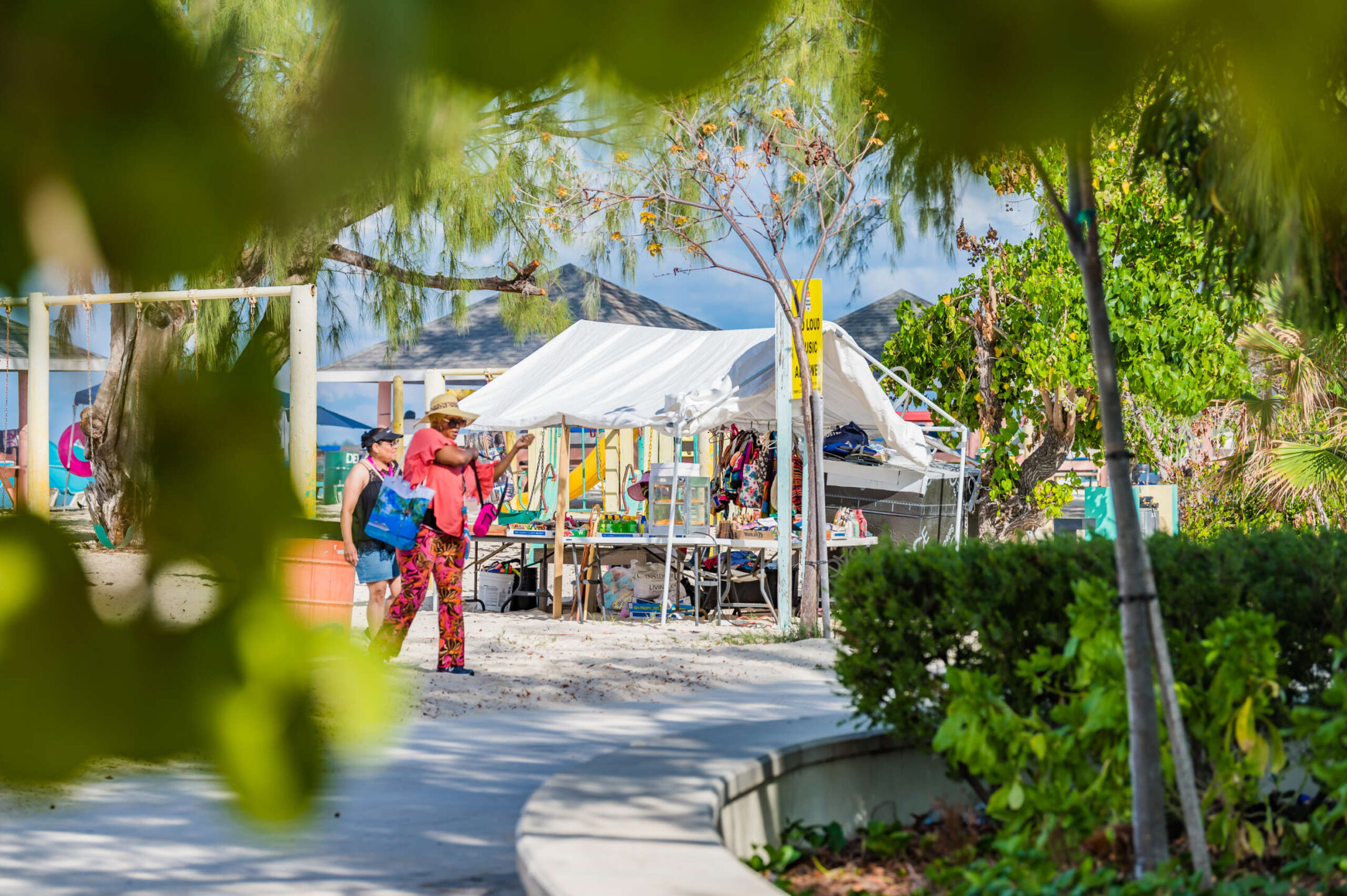
Some of the vendors say they are giving the tourists what they want and providing an attraction for cruise visitors amid the closure of so many beach bars and businesses.
Others believe the beach – and the scale of the unregulated commercial activity there – is tarnishing Cayman’s image as an upscale, upmarket destination.
There are broader concerns too – about the alleged sale of alcohol, the pushiness of some of the vendors and the fact that the traders are not licensed or insured to be operating on the beach.
The Public Lands Act created the capacity for ‘vendor permits’ to be issued. The Cayman Compass understands that – although the bill was passed in 2017 and the legislation came into force in 2020 – the details of the application process have not yet been formalised.
Though a handful of the 30 or so vendors currently operating at the beach are believed to have previous permission to be there, no official permits have been issued since the law was passed.
Empty huts
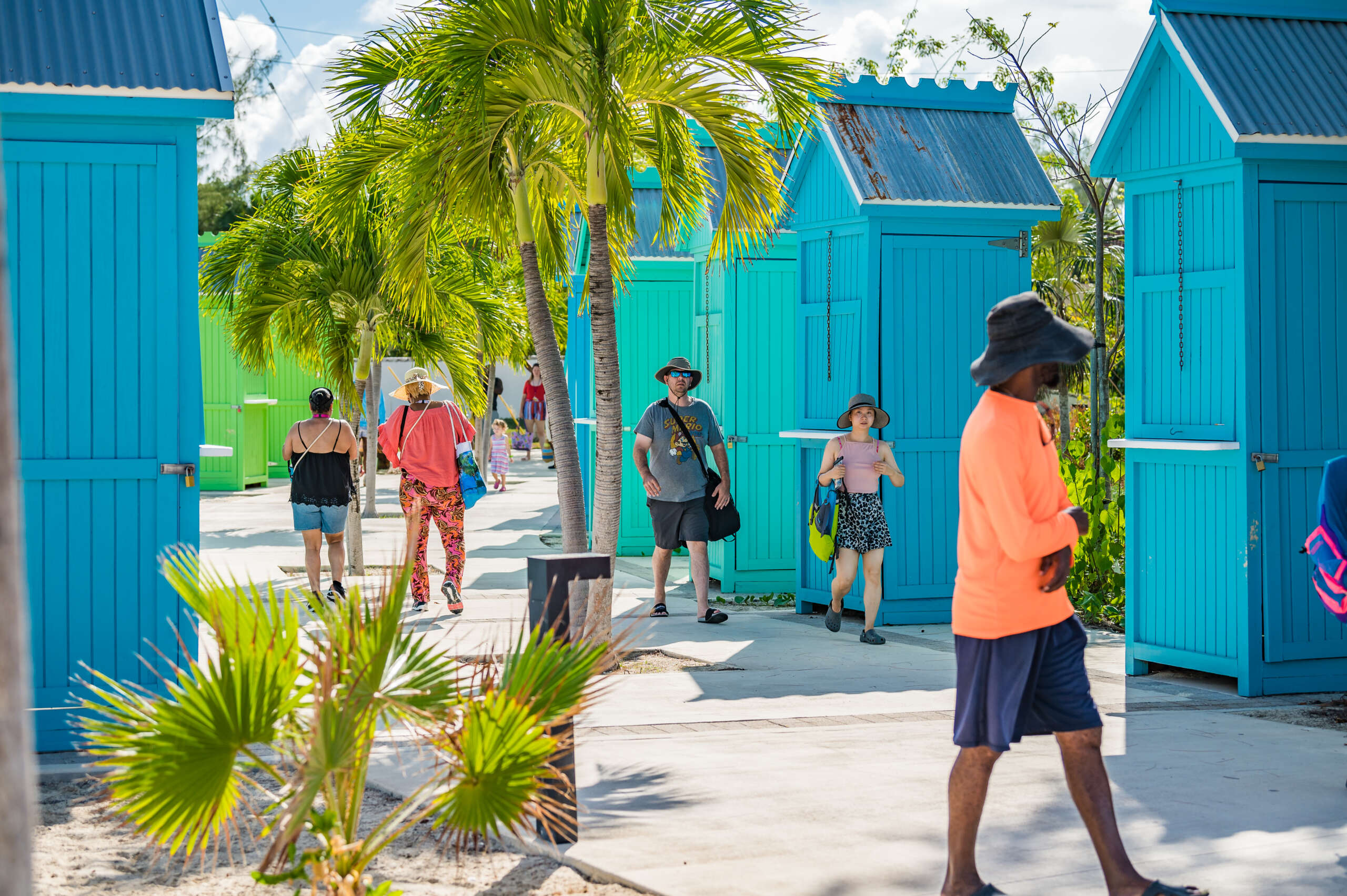
A row of tiny coloured huts – all of them empty and unused – is testimony to a previous failed attempt to bring order to the situation.
“We don’t want trouble, but we can’t go into those huts,” one vendor told the Compass.
“There is not even room to turn around,” said another.
Most were reluctant to talk to the Compass about the licensing issue.
“It’s rush hour, bro, come back another time,” one man told us.
Another woman said she believed she was licensed but thinks that many others are not.
“I have to stay right with the government,” she said.
Another trader said that people are just trying to make ends meet on the few days that cruise ships are in town. After COVID, every penny counts.
“It’s just a way for the locals to make a little money,” he said.
“The tourists are having a good time.”
One long-time trader spoke with us in detail, on condition of anonymity. They acknowledged the situation at the beach had got out of hand, but said many vendors had been working with government officials for years to regularise their status.
They said it was clear that the tourists at the beach needed chairs and umbrellas and other amenities and enjoyed the services offered. But they accepted that something should be done to bring order to the situation.
Poaching customers
A few miles away at Coral Beach Club, manager Fernando Soler is frustrated.
He has filed numerous complaints with the Public Transport Unit about bus drivers poaching his customers.
He said there had been several occasions when customers had made their own way to Coral Beach, reporting that a bus driver had refused to drop them at the destination, taking them instead to Public Beach.
On one occasion, he said, the driver had apparently told tourists that Coral Beach was closed.
He said this had happened at least eight times in the past two weeks. He only sees the customers that find their way back to his bar, which he believes represents the tip of the iceberg.
Soler added that the unregulated trade at Public Beach was not good for the destination.
“We are supposed to be a first-class destination and the jewel of the Caribbean,” he said. “It just looks bad.”
Durk Banks, director of the Public Transport Unit, confirmed that a complaint had been filed and that a driver had been reprimanded after a report he had wrongly informed customers that a tourist destination was closed.
“A Public Transport inspector has spoken to the party concerned and given advice on the matter. In addition, we are working with the Cayman Islands Port Authority to ensure that the matter does not re-occur,” he said.
Illicit alcohol sales
Garth Mckenzie, who runs a liquor store on West Bay Road, shares concerns about the image of the beach trading, as well as its impact on surrounding businesses, which are required to pay fees and maintain a premises.
He said the trade in food and drink on the beach was not regulated by the Department of Environmental Health nor the Department of Commerce and Investment, and that vendors risked the reputation of the islands.
Mckenzie said reports of the sale of alcohol by unlicensed vendors were especially concerning. He said it was evident that people were buying cases of alcohol and selling them from coolers at the beach at a mark-up.
He added that the situation at the beach was getting out of control and the atmosphere was sometimes hostile, with female tourists being harassed.
“It is not the image Cayman wants or needs,” he said. “If they don’t get this under control soon, it is going to be extremely hard to do so in the future.
“This has been going on ever since [the border] reopening, and nothing has been done.”
Charmane Dalhouse-Morgan, enforcement manager for the Department of Commerce and Investment, said it was aware of concerns.
“DCI is working diligently in collaboration with Public Lands Commission to rectify the issues on the beach. We have officers who will be doing spot checks and dealing with persons accordingly,” she said in an email.
Long-running concern
Concerns over unregulated trade at Public Beach date back several years.
In 2016, amid a slew of complaints from surrounding property owners, DCI began issuing enforcement notices against vendors, saying trade and business licences were location-specific and they were not entitled to operate on Crown land without Cabinet approval.
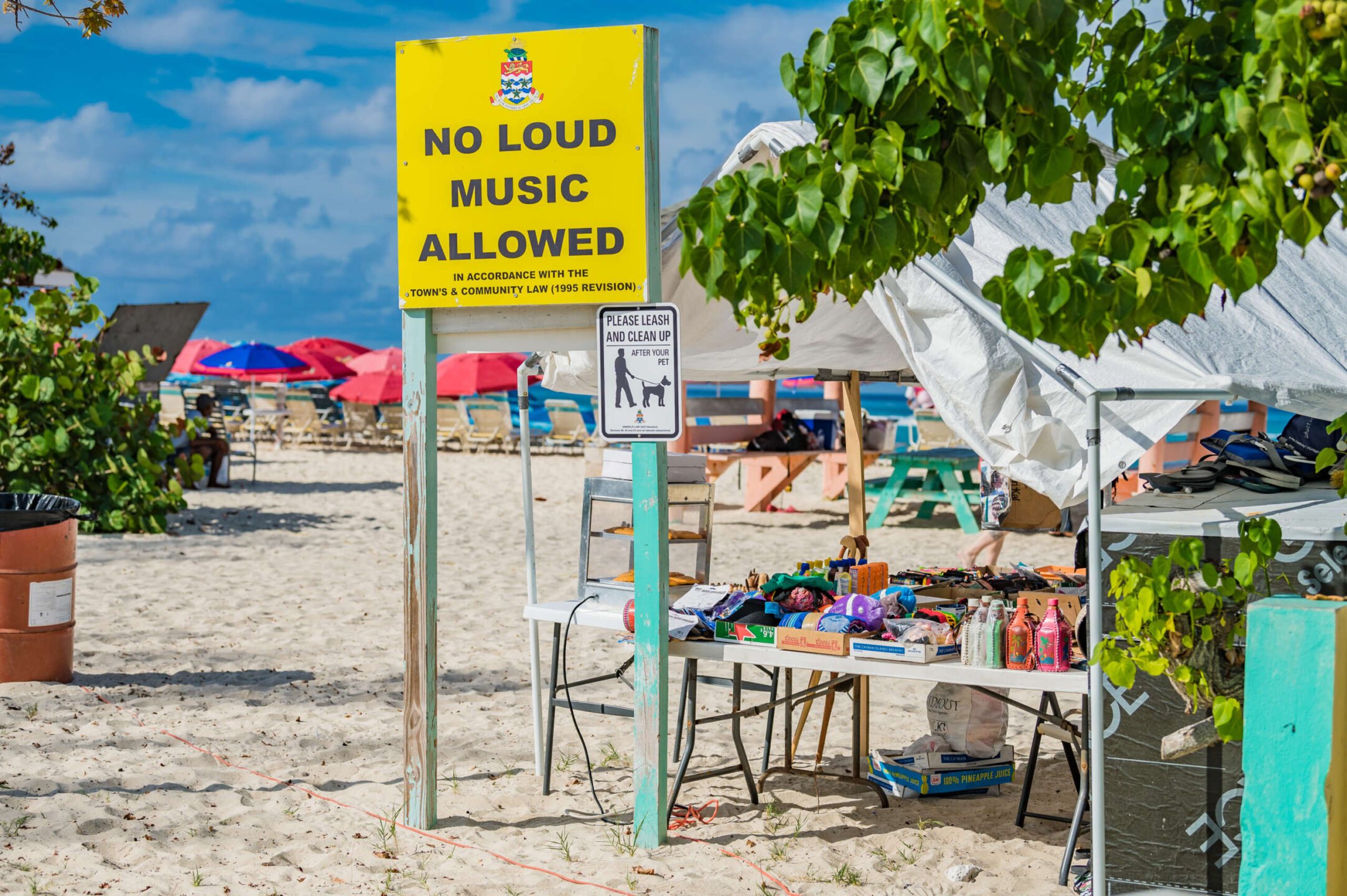
Ryan Rajkumarsingh, director of DCI at the time, warned that the beach could become a “wild wild west” if the problem was not dealt with.
A year-long effort to prosecute several vendors, including a deckchair salesman and two water-sports businesses, floundered and the charges were ultimately withdrawn as government negotiated a compromise.
Several existing businesses were granted special permission to operate on the beach, with a string of conditions attached.
The Public Lands Act, which passed in 2017, included an attempt to formalise that process.
Joey Hew, who was minister of commerce at the time, said the process had been put in place and all that remained was for the agreement with the vendors to be formalised and approved by Cabinet.
Those vendors that had been operating on the beach were to have ‘first refusal’ on the new licences.
The Public Lands Commission has a remit to issue licences under the law.
The Compass understands that the details of the licensing regime have not been finalised however, and that none of the vendors are currently licensed under the new law.
It is not clear how that impacts the status of the few vendors who were previously authorised to operate at the beach, prior to the law coming into effect.
One operator told the Compass he had filed his cheque to government – part of the requirement to be at the beach – as normal and it was sent back.
The Compass sent a list of questions to Wilbur Welcome, chief officer in the Ministry of Lands, which has jurisdiction over the Public Lands Act, among other things, on 18 Oct. In an emailed response, he said he would need until 28 Oct. The Compass will publish that response when it arrives.
Woody DaCosta, current chair of the Public Lands Commission, did not return a call with a request for comment.
The lack of a functioning licensing regime is making it challenging for authorities to intervene at the beach. The past government had made it clear it intended to allow some commerce at the beach, but no formal licensing regime has been officially established, making it difficult to distinguish legitimate traders from rogue operators.
‘Out of control’
One businessperson who has been a regular fixture at the beach for many years acknowledged that something needed to be done, saying “It is out of control.”
But that vendor hopes the response won’t be to shut down business on the beach completely.
The businessperson said several operators had been trying for years to legitimise their presence on the beach.
A group of vendors took courses in CPR, first aid and PRIDE tourism training, to satisfy previous government conditions. They paid an annual fee on top of their trade and business licence.
Out of that original group, the vendor acknowledged that not many are left.
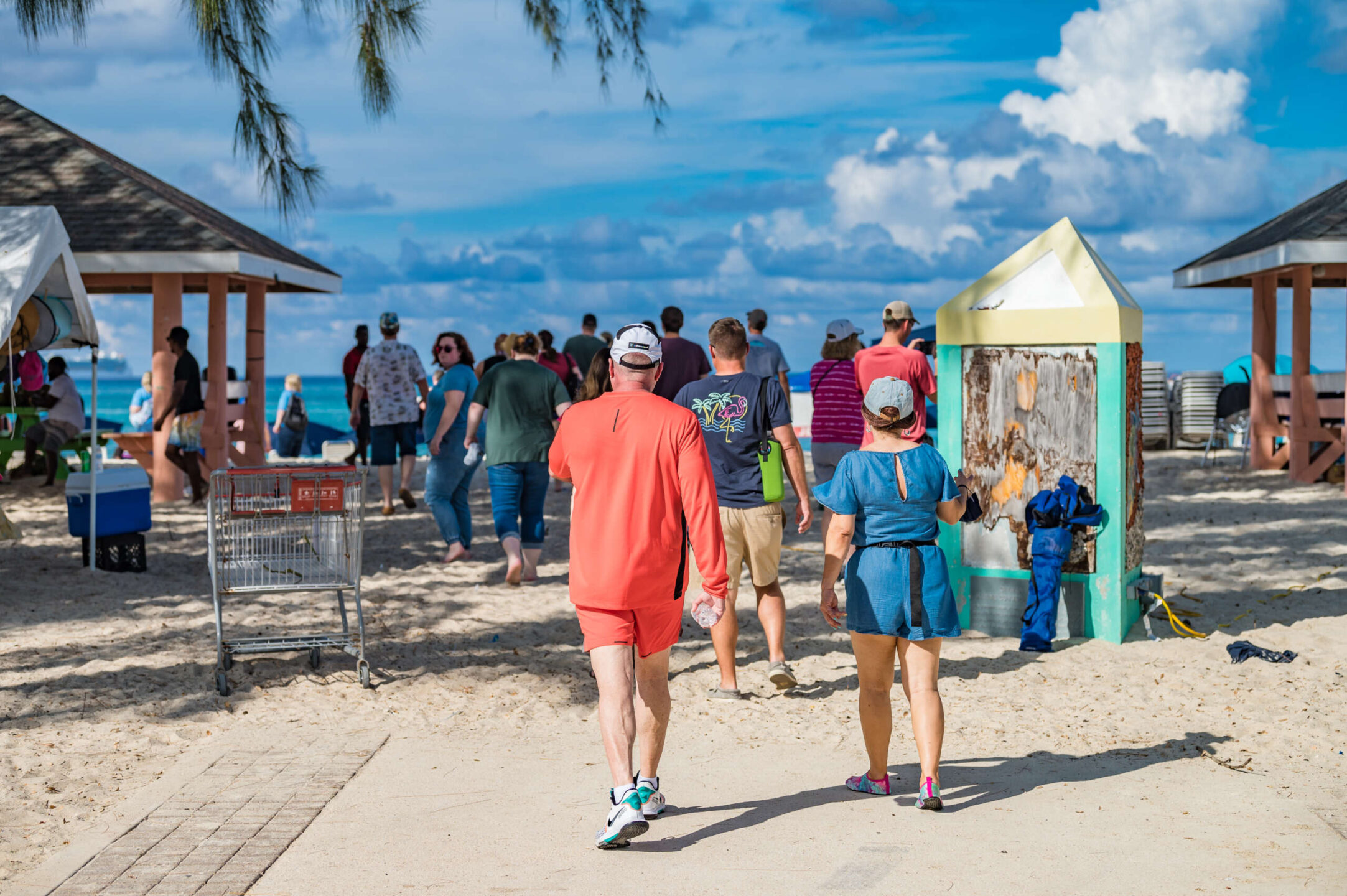
The situation was escalating pre-COVID and got worse after the reopening, with more people trying to make money from fewer tourists.
“Once it came out that we had permission to be down there, everyone and their grandmother came out with a wave runner or a jerk chicken pan,” the vendor said.
The loss of Calico Jack’s has created a vacuum with no amenities for visitors to Public Beach, something that could be fuelling a reported illicit trade in alcohol.
Cruise tourists need somewhere to go
The vendor, who spoke to the Compass on condition of anonymity, wants people to understand that there is an advantage to having traders at the beach.
Scrolling through video reels of happy customers dancing and splashing in the water, the vendor told us these businesses on the beach are giving visitors what they want.
With Calico’s and Royal Palms closed, they said there were few other places for cruise tourists to go.
“Look at any beach in the world,” the vendor said. “People want chairs and umbrellas, they want to get some lunch or hire a wave runner. We provide what they need.
“I view myself as am ambassador for the Cayman Islands. This is my joy.”
Passenger decline could make problem worse
Government has made no comment about the issue.
But with the cruise lines confirming a steady reduction in passengers over the coming years, the challenge of managing Public Beach represents a flashpoint for wider concerns about the future of the tourism industry.

While many opposed the cruise berthing dock and pushed for Cayman to target more lucrative stayover passengers, the lack of amenities for cruise visitors and the challenge of transitioning cruise industry workers to jobs catering to stayover tourism remain unaddressed.
The vendor who spoke to the Compass said many workers at the beach, and across the industry in general, got into the trade straight from school, without much formal education, and so are unlikely to put on a uniform and work for a hotel.
Hew argues that the decline in cruise passengers and the struggles of those who rely on them for their daily bread is an unfortunate flip-side of the decision not to build a cruise pier.
The Ministry of Tourism, based on information received from cruise lines, projects that just 746,000 cruise passengers will arrive on island in 2024 – a drop of nearly half compared to the 1.4 million expected to land here by the end of this year, and a 60% reduction on 2019 figures when 1.84 million passengers arrived by ship.
Hew said losing 750,000 cruise passengers, with an average spend of $80 per passenger, would mean $60 million less revenue for the various operators that rely on the trade.
He said ‘retraining and retooling’ was not a realistic option for many and could take generations to achieve. In that context, he believes the situation at the beach could get worse.
“You can’t just have more and more vendors selling to fewer people. It is not going to work,” he said.
Related Videos









Well, after Royal Palms and Callico Jack closed, Grand Cayman no longer has anything to offer the cruise passengers looking for a beach experience. I think most day tourist are looking for what the two old beach bars offered, namely buckets of beer, quick meals and a good time. The horrendous skeletons of the old collapsed buildings are still there for all to behold, and it is honestly shameful to invite tourist to “enjoy” a day on the beach beside these wrecked structures. With absolutely nothing to offer except a chaos of vendors trying to make a few bucks. Is this really what we wish to offer our visitors?
Don’t assume that people that have wealth and the capacity do go wherever they want don’t enjoy this at times. Go to BVI and there are multi-million dollar yachts pulled up to shacks selling beer out of a cooler. If you want only upscale, go to Ritz or Kimpton and stay onsite.
Once again a “world class” performance from Govt in mismanagement.
The tiny huts on the beach are a joke. Whose idea was this money wasting folly?
The public beach should be for the local public, not cruise boat passengers.
Stop the cruise ships and make this a stay-over destination only.
The old Cayman, with its low key, laid back lifestyle is what some people actually desire.
Not everyone comes to Cayman for an upscale, “first class experience”.
Some prefer to mingle with the locals and learn a bit about their culture.
Allow the vendors the space to conduct their business, if legit…after all, it is THEIR island!!!
Please stop always trying to make Cayman something more than what it is!!
Thanks for nothing Mr Dart …
Maybe Government could lease Palms from Mr Dart, repair it, have stalls for vendors in the vast car park area, fix the beach a bit and make a turn from the beverage and catering? A win for everyone?
Whose bright idea was it to build these little wooden huts? Put a toilet in them, that’s all they are good for. Useless waste of money.