


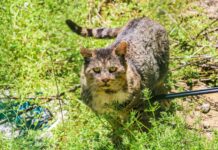
A Darwin Plus project on eradicating feral cats on Little Cayman has secured the help of international experts to assess the feasibility of ridding the island of the entire population of these animals.
The Cayman Sister Islands – Darwin Plus Invasive Species Project said the experts will accompany the project team to Little Cayman in November “to perform a robust study to assess whether it is feasible to entirely eradicate feral cats from Little Cayman in the future”.
In June this year, a joint team from Department of Environment and the Department of Agriculture culled 35 feral cats on Little Cayman as part of efforts to control the wild feline population.
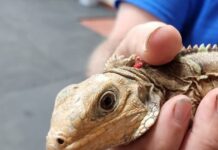
The cats have been hunting and killing juvenile iguanas on the island, threatening the survival of the entire species, as well as seabirds.
In a social media post about the planned study, the Invasive Species Project said it was important to bear in mind that the cat cull will not necessarily result in eradication of the cats.
“For an eradication to be considered feasible, many variable factors need to align, including but not limited to, local legislation, funding, local terrain, behaviour of the target species and, of course, social acceptability of requisite methodologies,” the project stated in a post on its Facebook page Tuesday.
It said while the visiting team is in Little Cayman, they will be surveying the terrain, talking to government and other stakeholders, and will hold a meeting with community members to share some insights and hear the public’s views.
An eradication, it said, is a targeted attempt at complete removal of the invasive species from an area and is different from control efforts, which requires ongoing efforts aimed at keeping the populations of the invasive species at a manageable level.
“Over time, control efforts become very expensive and [are] highly resource intensive,” it added.
The campaign to cull the cats, due to the threat they posed, was subject of a lengthy legal battle between government and local animal charities.
However, this year they came to an agreement, almost four years after a plan to control the island’s cat population was stalled, due to a legal challenge brought by the charities to stop the animals being killed.
The animal charities agreed to close the matter through payment of their legal costs, which amounted to $25,000.
At this stage, feral cat control measures are only being considered in Little Cayman, and not in Cayman Brac.
Cats also pose health hazard
The project reported that necropsies were performed on the 35 feral cats that were humanely euthanised and the results gave some insights into the quality of life of these animals.
For example, it said the necropsies found “high internal parasite load, with over 50% of the cats studied carrying adult tapeworms. Roundworms were also visible in a number of the cats examined. (Actual numbers expected to be higher than what could be observed.)”
It said that it is assumed the feral cats trapped in the initial round of control were accustomed to feeding around the landfill and in residential areas.
“The results from these initial examinations are therefore not necessarily representative of the entire population of feral cats on the island. The expectation is that the more reclusive feral cats living in the interior of the island are wilder and more likely to predate on wildlife than to consume human food waste and garbage. Those animals are therefore also more likely to be “trap-shy” making them harder to access,” it added.
The findings from the necropsies also noted physical injuries were common, ranging from deep lacerations likely caused by running over glass or sharp metal on the landfill, to extensive abrasions possibly due to vehicular impact, to broken canines and miscellaneous cuts and scars.
“Over a third of the cats examined had empty stomachs. For the remainder the stomach contents showed high instances of ingestion of plastic, paper and human food waste. Bird remains, frog remains, plant material and commercial cat food was also noted. Consistent with previous studies no rodent remains were found,” the project added in its post.
It noted that over all areas, trapping yielded fewer feral cats per unit effort with each successive night.
“This trend is expected to continue with subsequent efforts making the current control process highly resource intensive and any progress slow,” it added.
Related Videos








What about our feral chickens which are found everywhere throughout the islands, raiding garbage bins and ripping open plastic bags inside. Truly this qualifies us as a third world country.