


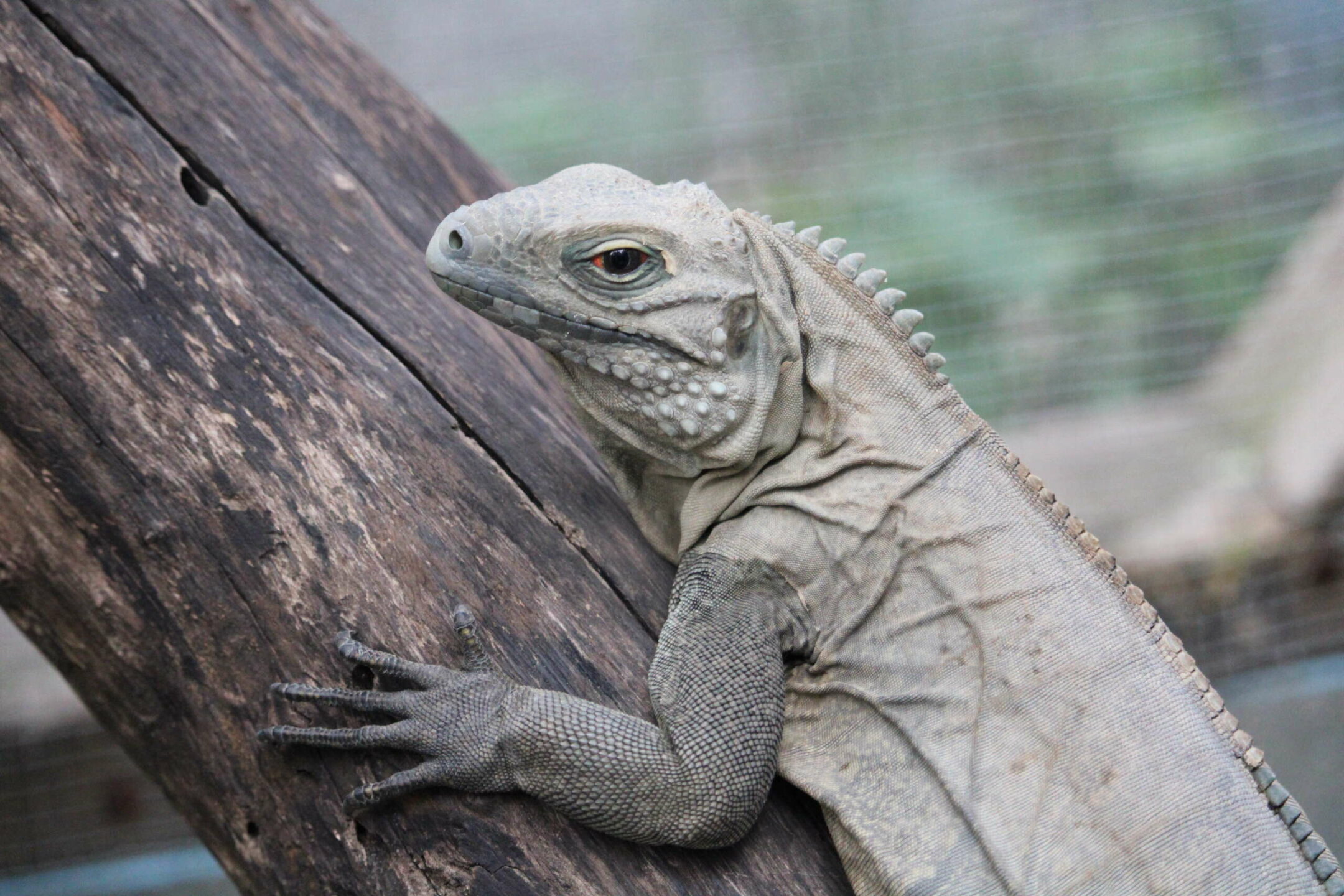
A lightning bolt-shaped stretch of road dissecting private property between the green swathe of two blue iguana reserves is at the centre of a new dispute between landowners and wildlife guardians.
The property owners argue that conservation watchdogs have gone too far in their efforts to protect the endangered iguanas and, in doing so, have devalued their basic rights to enjoy their land.
The National Conservation Council, meanwhile, is going to court in an effort to enforce its legal right to be properly consulted on that application and any future planning applications in that area.
They believe the law gives them the mandate to insist on measures that can protect the globally endangered iguanas that roam the land.
The road itself is a dusty shot-rock track in places, a wider vehicular access in other, spanning a total of four miles across three properties. Its significance to both sides expands beyond its borders to questions of where the issue might lead.
This is not a case of large foreign developers seeking to make a buck at the expense of the environment, insists one of the protagonists, Cline Glidden, referencing a common narrative around such disputes.
“Everyone involved here is Caymanian,” Glidden insisted.
That goes for the iguanas, too, which are described as an “iconic Caymanian flagship species” that is “found nowhere else on Earth” in Department of Environment submissions to planning officials.
The landowners’ dilemma
In 1994, a group of seven young Caymanians pooled their resources, took out a loan with a bank and bought a 90-acre piece of land in East End.
“We didn’t have much money at the time and it was an investment for our future and for our children’s future,” one of the men, Mark Scotland, told the Cayman Compass.

The zoning for the land was, and remains, low-density residential and agricultural – a designation which would allow for one home per acre, for potentially as many as 90 houses.
The owners say they had a legitimate and uncontroversial right to use the land for that purpose. At the time, the National Conservation Act didn’t exist and what is now the Blue Iguana Conservation programme was in its early stages.
Now, they believe, a directive from the National Conservation Council has left them severely restricted in how they use that property.
“We have been left with something that is essentially useless and valueless,” said Scotland.
National Conservation Council and Department of Environment officials have been advised not to comment on the specifics of the case, elements of which will be litigated in court.
But the interim directive, seen by the Compass, does not purport to totally outlaw development in the areas it covers. It does designate the land as ‘critical habitat’ for blue iguanas and requires that any legally permitted development in that zone contain measures to control traffic and limit the impact of outdoor cats, which are known predators of the endangered species.
In the years since the purchase, the land has been largely left dormant.
But the group believes its hopes of extracting commercial value from the investment have been impacted by a decision from the council to designate the land and a neighbouring 300-acre plot owned by Caymanian lawyer James Bergstrom as ‘critical habitat’ for blue iguanas.
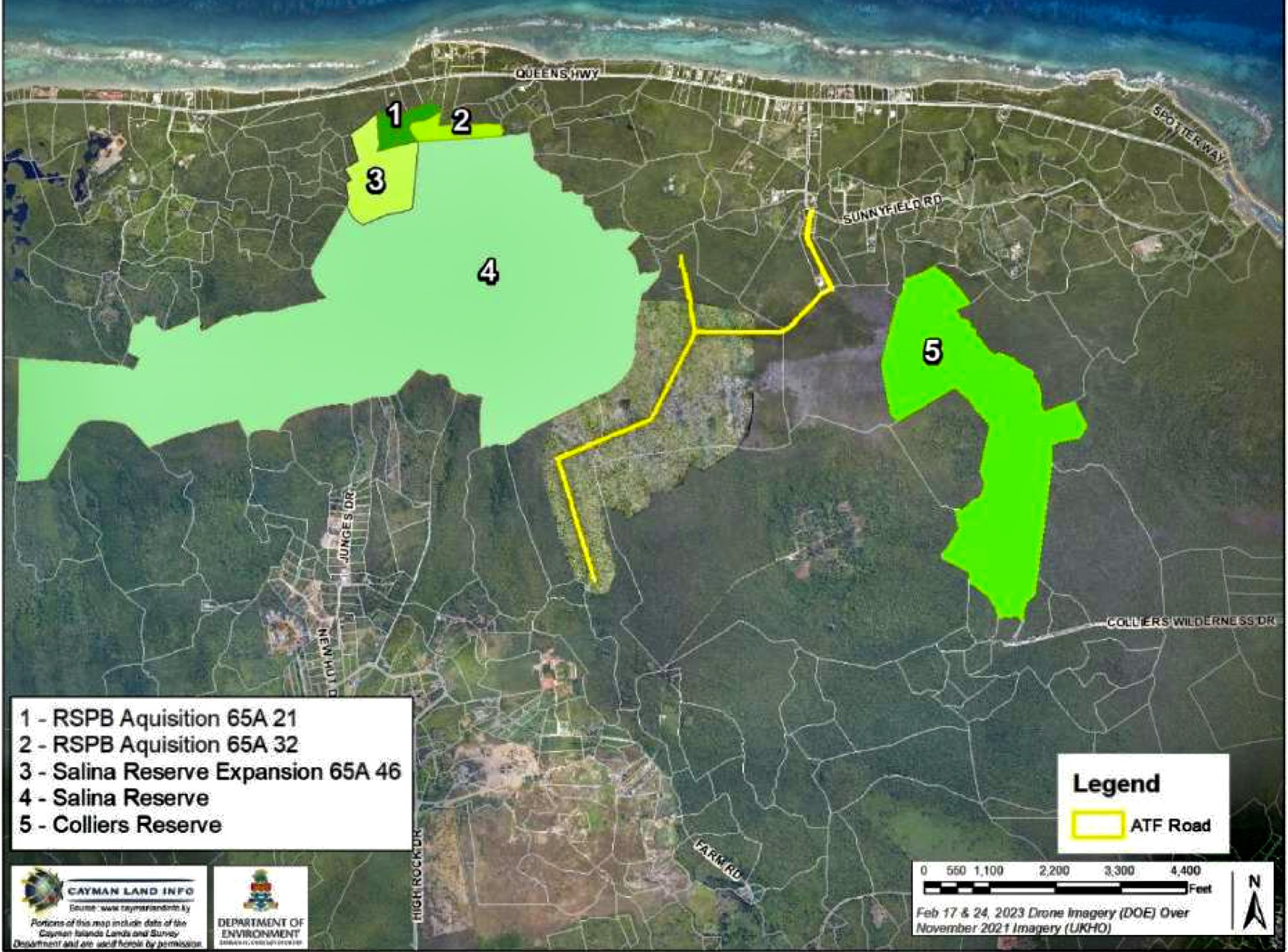
The two plots are between the Colliers Wilderness Reserve and the Salina Reserve in East End.
What this has done, said Glidden, another of the owners of the plot and a lawyer who has argued cases before the Central Planning Authority, is incorporate private land into a public conservation reserve, without any consultation or compensation to the owners.
“The council has used its power to put in a provision that sterilises the property of any commercial value,” he said.
“Buying this land 30 years ago, we couldn’t have envisaged being disadvantaged from a commercial standpoint in this way.”
Again, this interpretation of the impact of the law, as applied in this case, is disputed. The National Conservation Act does allow for development applications on land that is designated as critical habitat for key species.
What it is trying to insist on in court is its right to be the decision-making authority in such cases and to impose conditions where it sees fit.
‘Landowners have been disenfrachised’
Glidden and Scotland are both former MPs with the now disbanded United Democratic Party and were part of the government during the discussions about the conservation law, although they had both lost their seats by the time it came to Parliament in late 2013.
“I know that it was never the intention of the legislation for Caymanian landowners to be disenfranchised like this,” said Gildden.
He’s nonetheless anxious that the debate does not get caught up in the febrile atmosphere that surrounds the current discussion of possible changes to the legislation.
“I think it needs to be separated from that, because this isn’t about a large foreign developer, this is local Caymanians who bought land as an investment and are not able to use it.
“That is a significantly different thing from what has been talked about in the headlines.
“It just happens that we have the ability to fight this. What if it was someone else?” he said, pointing to the fact that much of the land in East End was owned or inherited by Caymanian families, many of whom do not have the same resources.
A route through the wilderness
The conflict stems from a planning dispute over a road, or ‘track’ depending on whose preferred terminology you use, that was built by Bergstrom through his own land and through the neighbouring property – at their request.
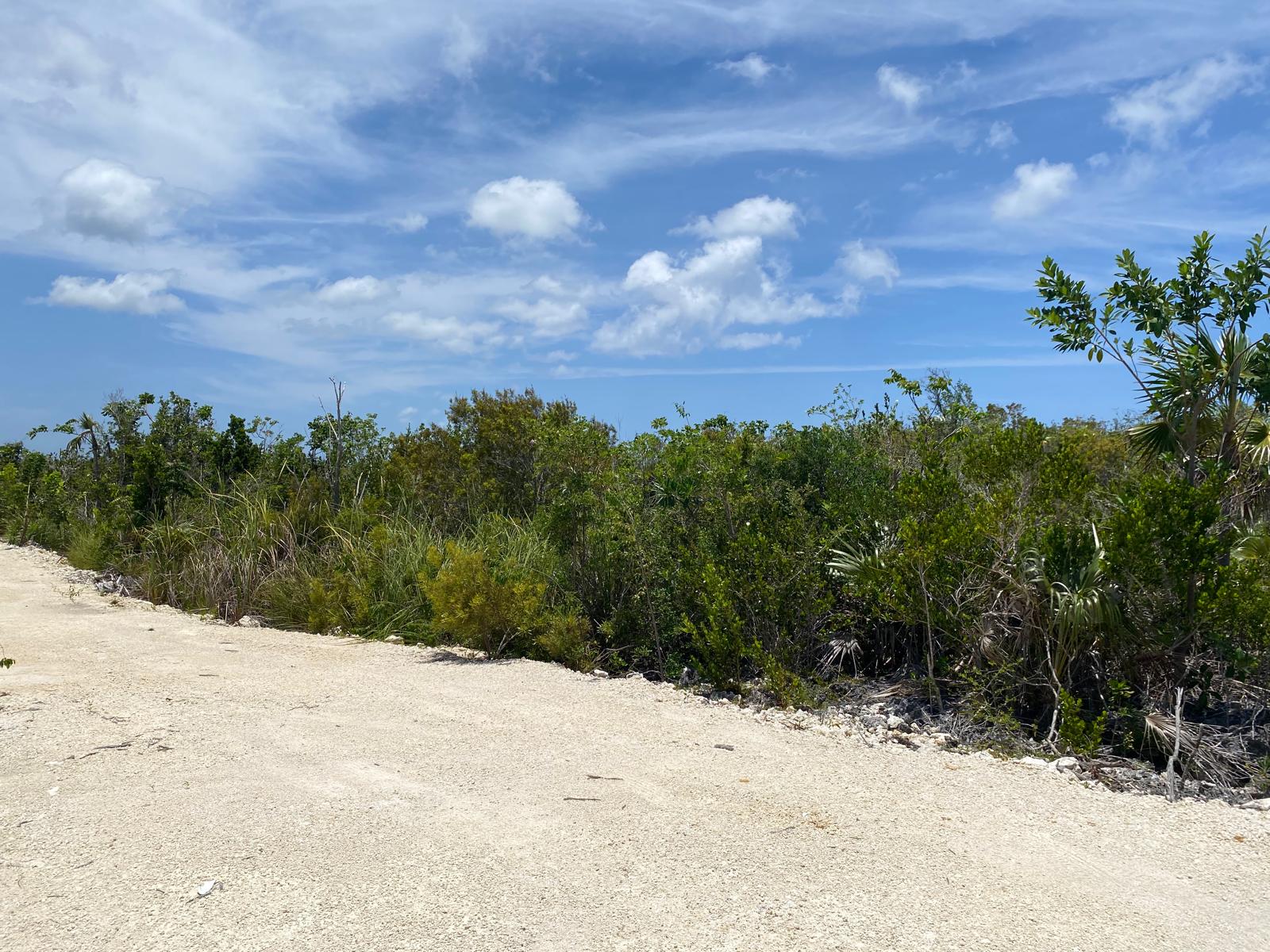
It is a 24-foot-wide blacktop access road across an existing vehicular right-of-way through Scotland’s and Glidden’s property. On Bergstrom’s larger land lot, it narrows to what he describes as a 12-foot-wide shot-rock trail traversing the length of the property, though environment officials have argued it is much wider in places.
Bergstrom acknowledges he did not seek planning permission for either part of the road, suggesting that routes over registered easements and internal trails for personal use had typically not required such permission.
He subsequently applied for, and was granted, after-the-fact planning permission by the authority – a decision that is being challenged in court by the National Conservation Council. The Central Planning Authority granted approval only for the works already completed and it indicated a new application would be required for any further development.
Work ceased before the route was completed, after the National Conservation Council issued an ‘interim directive’ in February 2023, for the protection of the blue iguanas, covering the Salina Reserve, Colliers Wilderness Reserve and the land parcels owned by Bergstrom and Scotland’s and Glidden’s group.
The National Conservation Act empowers the council to make such directives where they are “urgently required for the immediate protection of that species” and indicates that the directive ceases to have effect once Cabinet approves a proper conservation plan for the species.
Bergstrom and Glidden have separately gone to Cabinet to request it be removed.
“They have the ability to overrule it, they just haven’t,” said Bergstrom.
Proper conservation plans for blue iguanas and sea turtles have been mired in administrative delay.
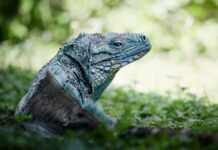
Blue iguanas are critically endangered and feature on the IUCN Red List of globally threatened species. There is evidence that blue iguanas – released into the two reserves as part of a captive breeding programme to revive the species – have established territory on the land in question.
While the directive does appear to give the council the last resort option of directing that the Central Planning Authority refuse an application completely, the history of development applications in similarly impacted areas suggest this is not a common approach.
Seven Mile Beach also ‘critical habitat’
A lot of coastal property in the Cayman Islands is classified as ‘critical habitat’ for nesting sea turtles – also through an interim directive.
The majority of applications to the Central Planning Authority on those plots are not opposed by the Department of Environment or the National Conservation Council. The usual protocol is for the council to require conditions, such as turtle-friendly lighting.

In this case, the interim directive proposes a series of measures that could be applied to any development approval in the area.
The document highlights the “urgent need to immediately protect” blue iguanas, which it states have “historically been released” on the property.
As well as identifying the land as “critical habitat”, the directive requires that any permitted development on the land shall include speed bumps and other traffic-control measures. It requires restrictive covenants preventing any residences or farms from allowing outdoor cats or unleashed dogs and gives blanket permission for Department of Environment officers to “control alien species” on the land.
It stops short of blocking future development on the site. However, it does require that such development applications are decided by the National Conservation Council. The relevant section of the law states that the council should only refuse permission if the adverse impacts of the development could not be satisfactorily mitigated.
Both the designated areas of critical habitat for blue iguanas and sea turtles are currently in place through ‘interim directives’ – a tool in the law designed to bridge the gap until a proper conservation plan is in place.
How long is ‘interim’?
Bergstrom meanwhile questions whether the words ‘urgent’ and ‘interim’ can legitimately be applied to a directive that is now almost 18 months old.
According to his interpretation of the law, it should by now have been replaced by a proper species-management plan, crafted in consultation with impacted landowners and approved by Cabinet.
The directive, he says, hands power of refusal to environment officials, without going through the proper process.
Glidden and Scotland also object to their land being incorporated in the interim directive and designated as critical habitat for blue iguanas in a strategic species action plan used to bolster the directive.
Given the challenges Bergstrom has faced over a trail on his property, Glidden questions what the reaction would be if he and his fellow owners put in an application for a subdivision.
“All James Bergstrom wants to do is a put a trail on his property,” said Glidden.
“If you can’t do that, then you can’t do anything else. You are basically saying he can’t use his 300 acres for anything except preserving iguanas.”
He added that he believes the council and the National Trust, which owns the neighbouring reserves and manages the Blue Iguana Conservation programme, were lucky to have a neighbour like Bergstrom who wants to make low-impact use of the property, even though the zoning for his land allows for 300 homes.

On their own piece of land, he and Scotland acknowledge they have bigger plans.
They argue that the two neighbouring reserves, both in National Trust ownership and collectively adding up to more than 800 acres, or around 2%, of Grand Cayman’s total land mass, should be sufficient to ensure the future of the touchstone species without impacting the rights of neighbouring landowners.
Both men emphasised that blue iguanas were released onto their land long after they had bought it.
Property rights
The bottom line, said Glidden, is that they bought the land with legitimate expectations that they could use it.
“We have plans, and we feel we are entitled to them,” he said. “I think the public would agree that we have a right to do what we are legally allowed to do on that property.
“When we bought it, the intention was that ourselves or our children would have the benefit of that property.
“I don’t think we reached a stage where the public is willing to accept that simply by decision by the NCC, they can take that benefit away from us.”
He acknowledged that there were legitimate arguments in support of the conservation law and the apparent sentiment in the country that Cayman is developing too fast.
But he insisted, “We are not a large foreign developer. We are a group of Caymanians who made an investment 30 years ago and who believe we have a right to enjoy that land within the law.”
- Editor’s note: James Bergstrom is a former owner of the Cayman Compass.
Related Videos








“We bought the land for our children’s future, so our children will have the benefits of the property”. In reality this means any big offer from a wealthy developer will be gladly accepted as our environmental future is never an issue, only profit. The “Islands that time forgot”, will no longer exist, only a concrete jungle. Is that really what all responsible Caymanians want?. As it stands the percentage of land in public ownership preserved for future generations is far less than in most countries and time is running out.
Quote from Mark Scotland (2011): “Development should never trump conservation and even as we work to build a strong economy, it is equally important to think about the kind of environment we want to leave behind for our children. Yet the challenge is not only for government; it is also for individual citizens and for the private sector. Long-term solutions can only be found if everyone steps up to the plate.”