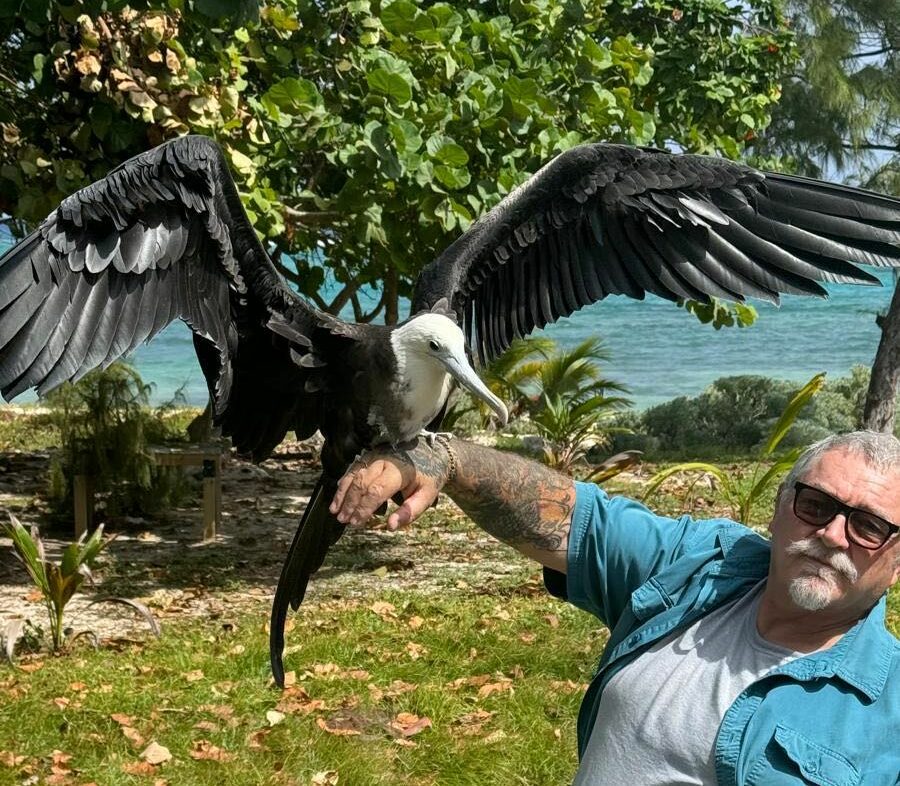
Magpie, the offspring of one of Cayman’s iconic magnificent frigatebirds on Little Cayman, is now soaring high after five months of tender care and attention from Department of Environment officer Ronnie Dougall.
Dougall, though happy to see Magpie’s progress after she was rescued as a baby chick, has been left with a bittersweet feeling since the bird has now left what had been her temporary home since May.
“Magpie taught me a lot and I miss her badly and look for her flying by every day, but I know she is now free to live, as she should, thanks to the people of Little Cayman and their generosity,” Dougall told the Cayman Compass.
Magpie was rescued at just few weeks old on Spot Bay Road, Little Cayman in May.
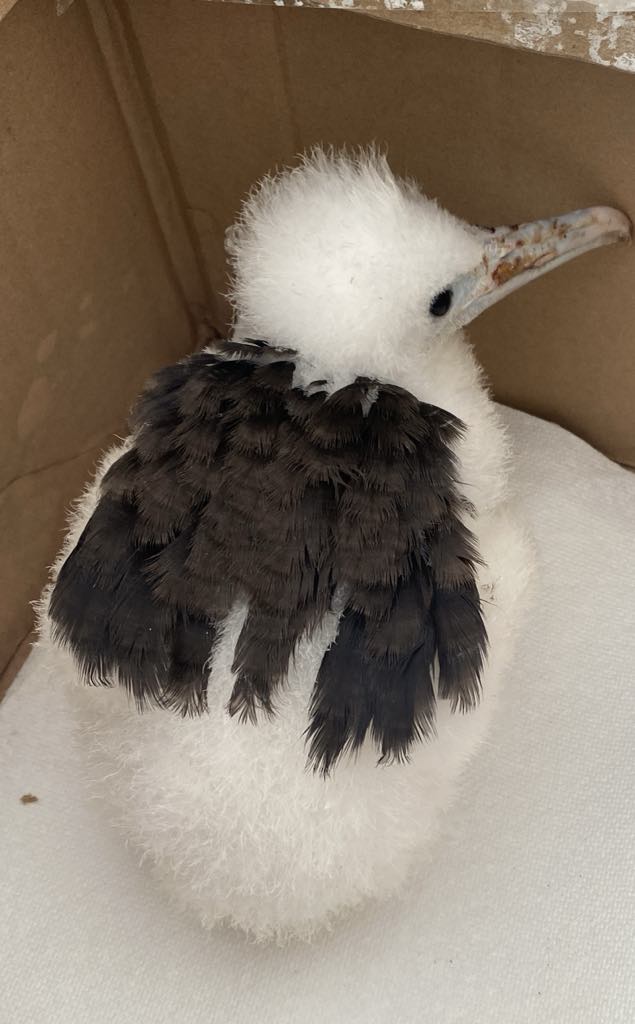
Gregory McTaggart, chair of the Little Cayman District committee of the National Trust, took charge of the chick when she was found.
He had previously said finding the chick in that area of Little Cayman was unexpected, as frigates do not nest in the same area where the booby chicks are found.
Dougall paid tribute to McTaggart for “his wealth of experience and help as he has and still is looking after young birds whenever needed”.
The DoE officer in Little Cayman, said it was with the Department’s support that he was able to care for Magpie.
“I had her for five months and it was a long process as she was the first frigate to be raised by hand in Little Cayman. She demanded attention and food on a regular basis, sunrise and sunset,” he said.
A mature magnificent frigatebird, also called man o’ war, can grow up to 3 feet, 9 inches long, with an impressive wingspan of 7-8 feet, and is the largest species of frigatebird.
Dougall said the people of Little Cayman were very supportive of the effort to nurse Magpie to health.
“[They] made donations to the National Trust for the purchase of squid, ballyhoo and sprat. A lot of sprat was also donated by local fishermen,” he said, pointing out that the bird was very much part of the community.
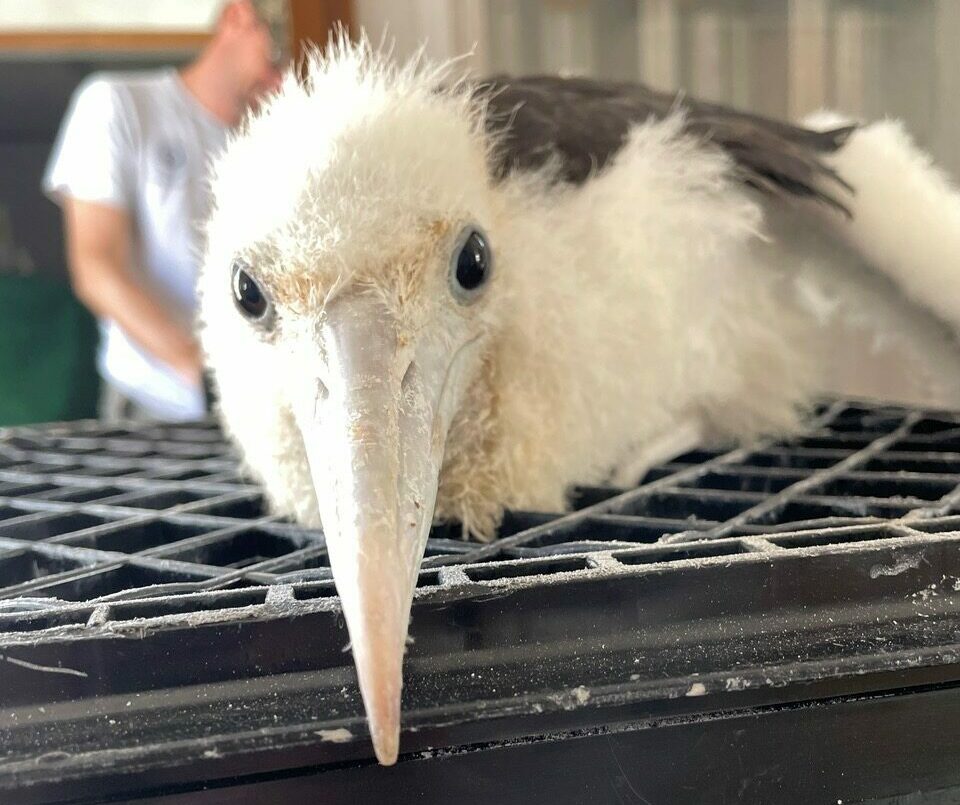
Magpie was free to leave once she was mature enough, which is what she did when she flew off from the DoE building.
However, Dougall said told the Compass during an interview on Thursday afternoon, 18 July, that she had returned.
“She was well fed and is now sleeping,” he said. “I’m pretty sure she will leave again tonight or tomorrow.”
He added that bird experts have said she will depend on him for about a year for food.
Frigates may roost in the Cayman Islands, but the satellite tags from a previous Department of Environment study show that they roam far and wide, foraging in international waters.
One bird tracked by a study team in 2019 was recorded as far away as New Orleans before returning to Little Cayman.
“Frigatebirds have the largest wingspan of any bird and are not capable of landing on the water due to a lack of waterproofing of feathers and, as such, must develop efficient methods of catching prey above the ocean’s surface,” a DoE report on coastline birds stated.
Related Videos