

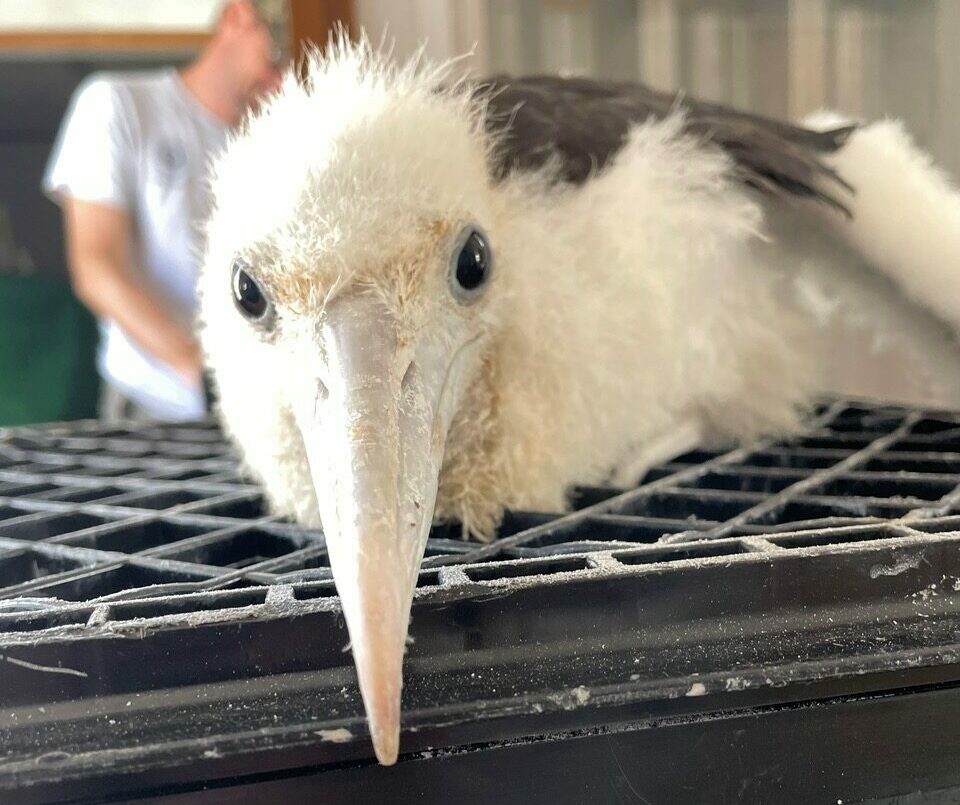
Magpie, the offspring of one of Cayman’s iconic magnificent frigatebirds on Little Cayman, is on a journey to recovery in the hands of Department of Environment officer Ronny Dougall.
The baby chick is being nursed back to health after being found on Spot Bay Road, Little Cayman, last month.
Gregory McTaggart, chair of the Little Cayman District committee of the National Trust, told the Cayman Compass that finding the chick was “quite unexpected”.
“The frigates do not nest in the same area where the booby chicks are found,” he explained. “The frigate chick was found on 11 March on Spot Bay Road. It was in good health but so far away from the colony it was impossible to determine a nest from which it came.”
He said the committee will pay the costs for feeding the chick for six months, about half the time it will take to raise it.
“Frigate chicks are dependent on their parents for food for over a year. This chick has been named Magpie and Mr. Ronnie Dougall of the DoE is caring for it,” he said.
A mature magnificent frigatebird, also called Man o’ War, can grow up to 3 feet, 9 inches long, with an impressive wingspan of 7-8 feet, and is the largest species of frigatebird.
“Frigatebirds have the largest wingspan of any bird and are not capable of landing on the water due to a lack of waterproofing of feathers and, as such, must develop efficient methods of catching prey above the ocean’s surface,” a DoE report on coastline birds stated.
Frigates may roost in the Cayman Islands, but the satellite tags from a previous Department of Environment study show that they roam far and wide, foraging in international waters.
One bird tracked by a study team in 2019 was recorded as far away as New Orleans before returning to Little Cayman.
Related Videos







This bird is too cute. Good luck Magpie!