


In a sudden about-face, Labour Minister Dwayne Seymour has said he will be seeking support from his government colleagues for more low-income workers to get a minimum wage increase next year. Domestic workers, however, will not be included in this effort.
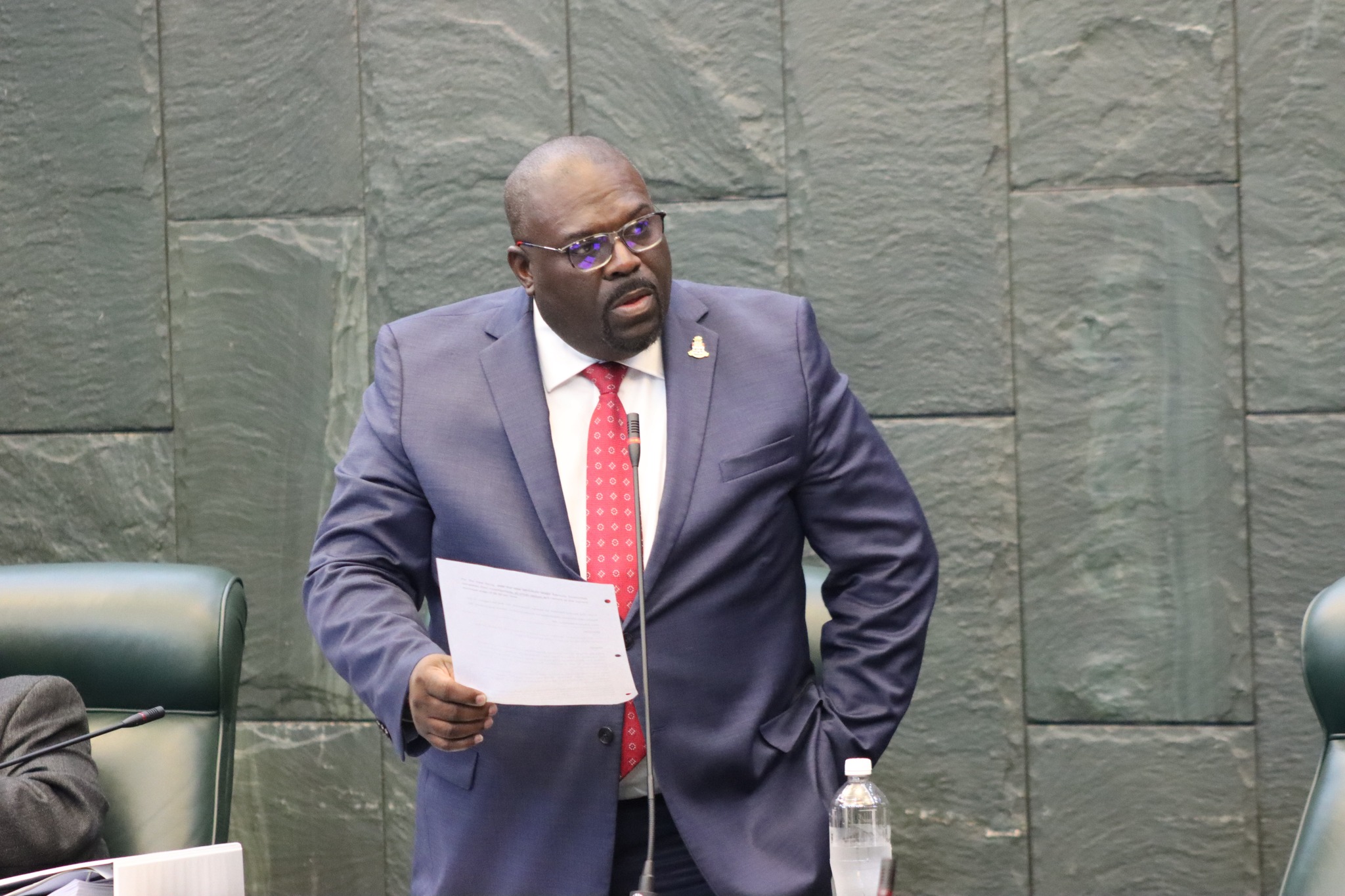
Seymour made the comment in Parliament on Wednesday afternoon as he addressed the minimum wage review and the decision to restart the review process.
In his initial statement on the matter on Monday, Seymour said the minimum wage would increase only for hospitality and service workers to $7 an hour starting 1 July 2025. The industry had previously been allowed to pay a minimum wage of $4.50-an-hour and use gratuities to make up the shortfall to the national minimum wage of $6. That will no longer be permitted.
The minimum wage for all other industries, he said, would remain at the current level of $6 an hour.
However, Seymour, through a statement in Parliament on Wednesday, said he will be seeking the support of the government caucus and his Cabinet colleagues to add workers in “construction and security services and other such industries” to have the benefit of the $7 per hour minimum wage coming into effect next year.
He followed this by saying that these sectors “can benefit from having more Caymanians employed, and the increases in the minimum wage will help to make it more attractive and viable”.
“An increase in the wage for these sectors also acknowledges the potential for increased risk to holders of positions in such sectors while executing their duties. However, as with any government proposal, we are open to additional dialogue and possible additional adjustments,” he said.
Seymour, who also runs a security business, did not offer a timeline when this increase will be confirmed.
The Minister re-emphasised that until the new minimum wage committee completes its “investigation”, to be “done with urgency”, all other industries will remain at the current wage level.
He said he trusts that the review will not take an “extensive” period and it is expected that “new wages will be introduced in the foreseeable future”.
Low-income workers reacted with shock and disappointment Monday after the minister said government would not follow the recommendations of the review committee to increase the $6-an-hour wage for most employees.
‘Not an easy topic’
Seymour said when he took over as Labour Minister and learned of the minimum wage review that was already in progress, he was concerned and remains concerned “that one fixed minimum wage across all sectors would be problematic”.
He told lawmakers that the matter of determining the minimum wage “is and has not been an easy topic”, but an across-the-board increase for workers could be “counterproductive”.
“Considering the sector-specific impacts of a minimum wage hike is critically essential. Industries that rely heavily on low-wage labour, such as domestic services, retail, hospitality and agriculture would be disproportionately affected,” he said.
Cabinet members, he said, have been “deep in debate” on the various approaches to making changes to the minimum wage regime.
Speaking to the special attention given to hospitality and service workers, Seymour stated that it was no secret that visitors often “arrive and depart” after having never interacted with “one of our own”.
“One of the major driving forces behind the lack of Caymanians in the hospitality sector is that, despite the opportunity for high earnings through gratuities, the base pay is and has remained low for quite some time,” he said, alluding to the increase established for only that industry.
When it came to an overall increase, he said, a critical concern is the potential for job losses.
Seymour said “a significant increase” in the minimum wage poses considerable financial challenges to many employers, especially Caymanians, who employ domestic helpers and who own and manage small and micro businesses after many years of no adjustment to the wage level.
He sought to defend the position of not assisting other low-income workers, a cross section of which also includes Caymanians, with changes to the minimum wage, saying it would increase the burden for Caymanians already struggling with inflation, slim profit margins and stagnant salaries.
“It must be noted that the majority of people we are increasing the minimum wage for are transient workers, and that 78% of the people who stand to benefit are not Caymanian. This, in fact, is not lost on Caymanian employers who are demanding that we politicians recognise this and further demand that we balance the minimum wage with their ability to pay increased labour costs,” he argued.
An uplift, however, would have benefitted the 22% of minimum wage earners who are Caymanian.
When it comes to domestics, he said, there will be no increase for these workers, as they are largely non-Caymanian.
This sector comprises 2,400 expats and 113 Caymanians, the majority of whom are under the employ of Caymanians.
“We have heard their cries of concern for their ability to support themselves and their families and afford the domestic help that allows them sometimes to work two or three jobs just to keep their heads above water,” he said.
Seymour said government made the decision for a new review committee investigation and recommended a sectorial approach to minimum wage, which “we believe to be a better fit for islands than the existing blanket national minimum wage”.
He argued that different sectors of the economy have varying costs and structures, profitability, margins and economic realities.
“By setting minimum wage according to sectors, we can ensure that wage regulations are more in line with the financial capabilities and realities of each industry, avoiding a one-size-fits-all approach that is not consistently practical across our dynamic economic landscape,” Seymour said.
He said it was crucial to consider the phased implementations of an approach by sector to wage increases and supportive measures for businesses to mitigate these adverse effects.
Seymour said there were changes in the government over the course of the minimum wage review period last year.
Those changes, he said, also came with an “adjustment of how the government views the role of minimum wage” and it being a tool for empowering Caymanians and strengthening the economy while also improving the livelihood of those most vulnerable in the labour market.
CITA responds
Cayman Islands Tourism Association President Troy Leacock said the Association “will continue to strenuously advocate for changes that are fair and practical for tourism industry employers and employees” as he responded to the Labour Minister’s latest statement.
He pointed out that in Minister Seymour’s statement in Parliament he sought to clarify that the minimum wage change for the hospitality and service sector announced on Monday was a “proposed direction.”
However, Leacock said, “the minimum wage recommendation does not align with the current Government proposed direction, particularly on the treatment of approved gratuities”.
Gratuities is currently used to supplement wages that are paid at a lower rate of $4.50 within the industry to take the earnings to the $6 minimum.
Based on the Minister’s statement next year all tourism related-businesses will be subject to the $7 an hour minimum, the provision to supplement wages will be removed.
Related Videos












Only in Cayman would a Minister state that a particular sector will not have their minimum wage increased because “they are not Caymanian”. Is there any other country in the world that has a discriminatory minimum wage such as this?/