

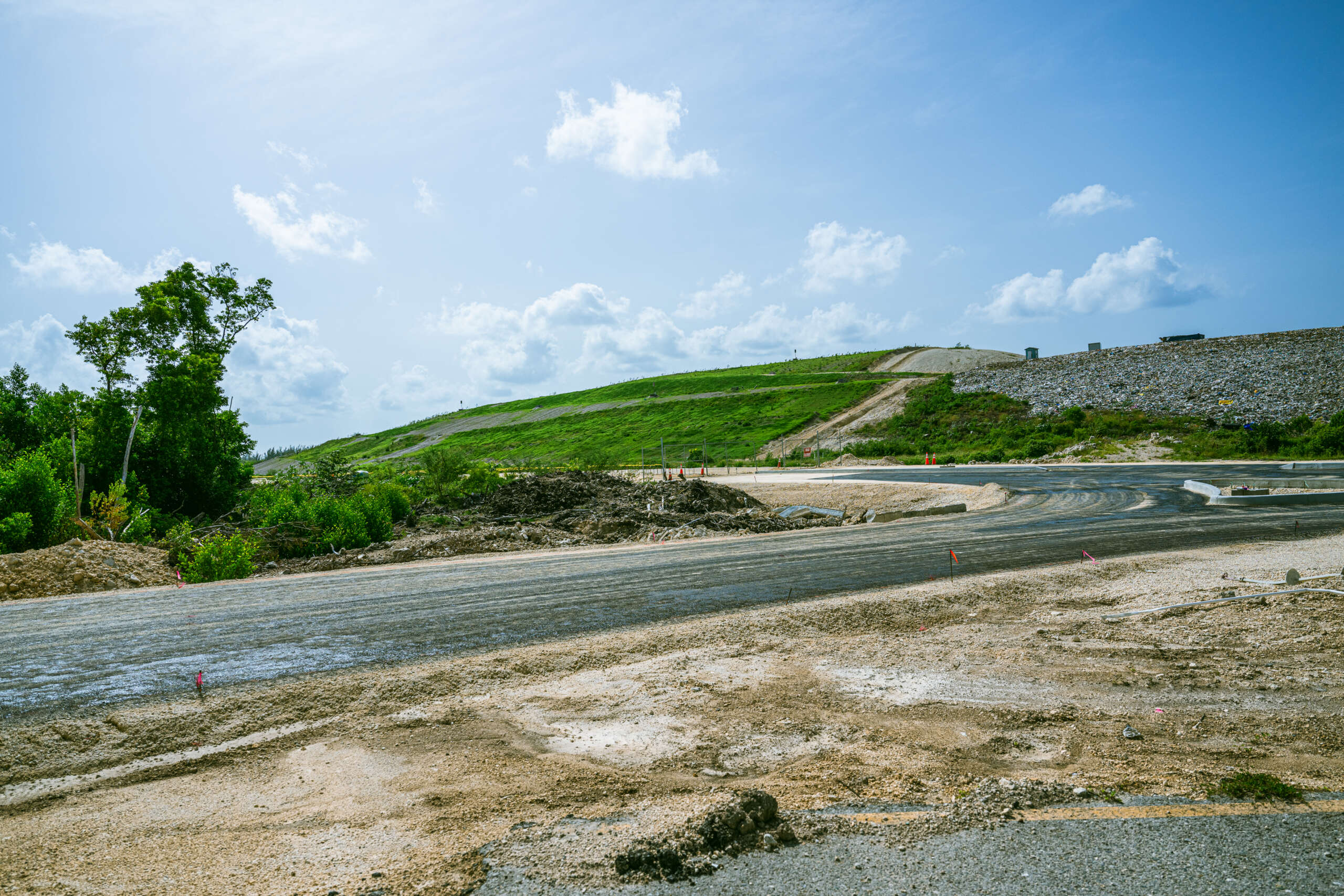
Government announced that it has pulled the plug on a multi-million dollar project to replace Cayman’s unsightly landfill with new facilities, after seven years of negotiations collapsed.
The decision to call time on the ReGen project, which would have seen the unlined landfill replaced with a waste-to-energy facility, was announced in Parliament Thursday.
Sustainability Minister Katherine Ebanks-Wilks said the project had become too expensive.
She said government could not continue with a deal that would “saddle current and future generations” with “undue financial strain” and “unacceptable levels or risk”.
“We need a solid waste management solution that is financially, environmentally and socially sustainable,” she added.
The deal between government and a Dart-led consortium was first announced in 2017 after a competitive tender process. But the negotiations to finalise the deal dragged on and costs escalated.
Now government is back to square one in its efforts to deal with a problem that has plagued Grand Cayman for decades.
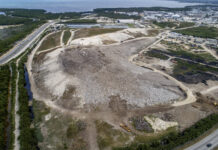
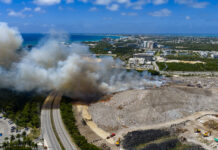
Meanwhile, the clock is ticking on the current landfill, which remains an environmental and fire hazard and is expected to run out of space within the next few years.
No alternate plan has been announced.
Ebanks-Wilks indicated another strategic outline case would now be needed along with revisions to the ‘Integrated Solid Waste Management Strategy’ before a competitive bid process to find a new private partner commences.
Even once a preferred bidder is decided – as the ReGen deal had demonstrated – it could be several years before an agreement is reached and work can begin.
After months of silence on the project and amid growing concern about the likely costs, Ebanks-Wilks acknowledged, under questioning in Parliament, that the deal was dead.
She said government was taking the “necessary steps” to exit its contract and indicated the process would begin again.
“At the end of the day, this decision that was taken by Cabinet was based on facts and figures and in the firm conviction that a more affordable solution is needed for our country,” she said.
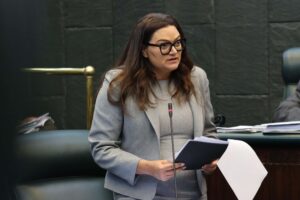
She declined to say how much the deal would have cost, amid claims from former Finance Minister Chris Saunders that it was as high as US $2 billion. Opposition leader Roy McTaggart, whose Progressives party was in power when the deal was first touted, questioned how costs could have escalated from around US $670 million to US $2 billion.
“It seems impossible. For crying out loud, tell us what the number was,” he beseeched.
Dart declined to comment Thursday, citing a contractual arrangement with government.
‘Untenable’
Ebanks-Wilks said that, despite months and months of project meetings and several presentations, it became clear that the cost of the project and “the risk profile that the government was being asked to accept was untenable”.
Her comments about risk are understood to be a reference to insurability concerns.
She said government would learn from the process as it seeks to move quickly and “cost effectively” on an alternate option.
The minister added that the work already done to fix and beautify the mounds of trash that had amassed at the site was handled under a separate contract and that remediation work would continue despite Thursday’s announcement.
Protracted negotiations
Government and the Dart consortium have been trying to hammer out the financial close on the project since 2021, when the Progressives left office with a deal partially done.
Ebanks-Wilks said when the former PACT administration took over there were “dozens of outstanding matters”, including the power-purchase agreement – to sell electricity to CUC – yet to be finalised.
“It has been presented by some that the project agreement signed in March of 2021 amounted to a fully negotiated contract that simply needed to be taken forward and executed.
“That is not so, given the dozens of outstanding matters discovered… it is no wonder that these negotiations have taken so long to finalise,” she said.
CUC did not agree price
Ebanks-Wilks said there was also a growing concern regarding the negotiations with CUC, over how much the electricity company was prepared to pay for the power generated by the waste-to-energy plant.
She said, from the completion of the outline business case in the procurement phase, it was always assumed that the power-purchase price would be near to 15 cents per kilowatt hour.
However, nothing was signed and CUC, the only possible customer for the electricity, did not agree to a price or to buy energy from ReGen.
“So we’d be entering into the agreement to build a waste-to-energy facility with no confirmed power-purchase agreement,” she said.
Waste management still a ‘priority’
She said the long-term project will have significant impact on the government’s forecast and fiscal compliance over the lifetime of the facility.
“Achieving a modern, sustainable and affordable solid waste management solution for the Cayman Islands remains a key priority for the government. We need to move away from landfilling as our main method of dealing with solid waste,” she said.
She claimed there is still five to six years of capacity left at the George Town landfill.
Editor’s Note: The Cayman Compass is a subsidiary of Dart Media and Entertainment.
Related Videos









Elect people in government who can thiink and act on this issue and not run away from the NIMBY noise. In 5 years garbage will just pile up on the streets with no where to go.
What a disgrace. All of the right things have been done to make an educated decision. Get in with it!
4 to 5 years of landfill capacity goes by really quickly. Debris from even one minor storm could turn those five years into two. Even if the original $670 million budget was correct to the penny, that’s still a lot of money to spend to handle solid waste for community of 100,000 people. How much would it cost to barge all the trash off the island? This isn’t rocket science. Hire the trash to the experts off island and barge the stuff to the states or South America and charge pro rata rates locally for disposal. Seems cost-effective and simple.
Like so many difficult Gov’t projects this will be sidelined and “left to the next lot”. Waste to energy plants are highly complex and need expert management. If we can’t maintain a radar facility we would have no hope with this project. We need to start looking for a location for another landfill.
7 years ago I went online and figured out in 10 minutes that this island did not generate enough trash to support the cost of waste to energy. Thank goodness Government finally figured it out.
“Elect people in government who can think and act on this issue and not run away …”
Absolutely. Those in office should be ashamed of the way they have squandered 7 years of precious time and $$ – and need to be removed.