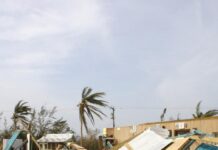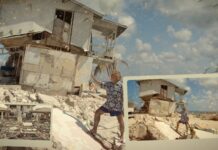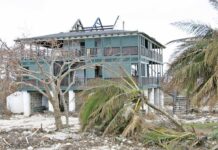
In the aftermath of Hurricane Ivan, thousands of expatriates and Caymanian residents were evacuated from Grand Cayman.
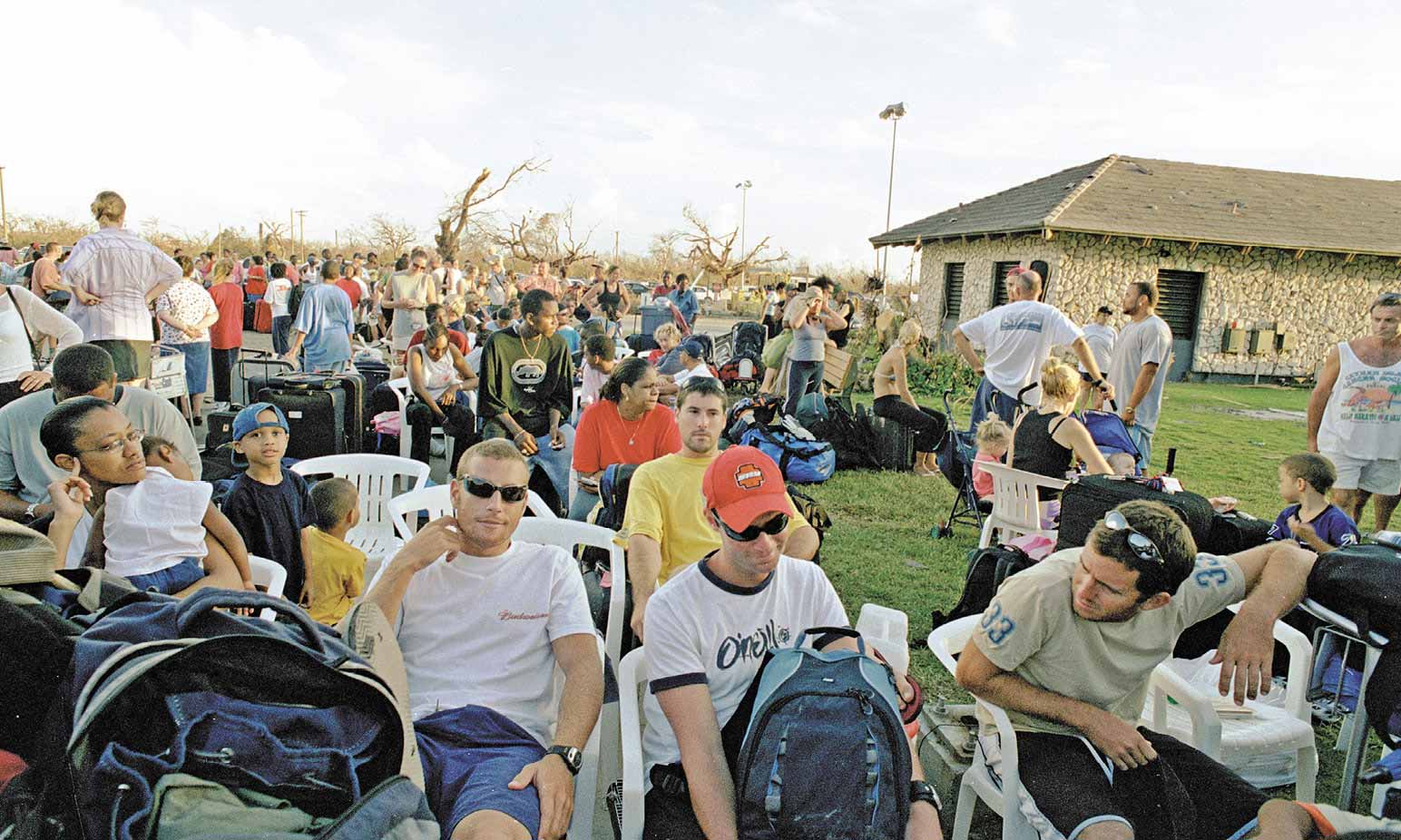
However, as the airport building had been badly damaged in the storm it was no easy task to process the passengers and coordinate flights.
Compounding the situation was the fact that many people had lost their essential travel documents during Ivan, proving a logistical nightmare for airport and consular staff, who were themselves personally coping with the effects of the storm.
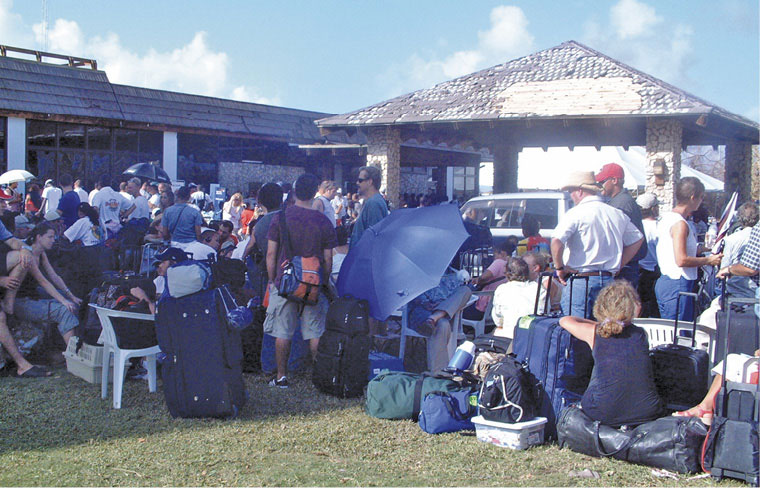
People of all nationalities converged on the airport, often standing all day in the scorching sun, with no sanitary facilities and little in the way of food or water, while patiently waiting their turn to board a plane.
Flights could not operate at night due to the destruction of the airport lighting system, so evacuations were restricted to daylight hours, meaning it took several days to cope with the huge numbers trying to leave the island.
Consulate staff and embassy representatives rallied valiantly to help their citizens in scenes unprecedented in the Cayman Islands.
The following stories are recollections of some of the consulate staff involved or who were briefed afterwards.
THOUSANDS OF JAMAICANS EVACUATED
As Jamaicans make up the largest percentage of expatriates in Cayman it was no surprise that they also ranked amongst the greatest numbers of foreign nationals evacuated after Ivan.
Getting back to Jamaica, however, was not easy, with thousands lining up at the devastated airport for several days while waiting on a flight.
In the end, Air Jamaica (that island’s then national airline) sent in a fleet of planes to rescue tired, hungry, hot and homeless citizens. They also took nationals from other countries who were transiting through Jamaica to reach places such as Honduras and the Philippines.
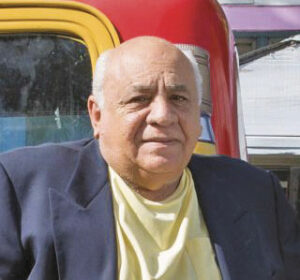
“It was a terrible time and there were a lot of desperate people,” the late Capt. Robert Hamaty, who was then the honorary Jamaican consul in Cayman, said afterwards.
“Many people had no passports and other travel documents as these had been lost in the storm, which all added to the problems.”
However, Hamaty was able to organise an airlift to transport all the people to Jamaica thanks to perseverance and good personal connections, having previously worked as a pilot with both Air Jamaica and Cayman Airways.
He was assisted by former coworker Mike Adams, who was by then CEO of Cayman Airways, and by Christopher Zacca, head of Air Jamaica, whose father Edward Zacca was a magistrate in Cayman and a relative of Hamaty’s mother.
Meanwhile, the Jamaican consular team of Hamaty, Elaine Harris and Gillian Harvey, mobilised to do the best they could for the thousands of their fellow countrymen in need.
“The airport building was badly damaged so we operated out of the cargo shed,” recalled Hamaty.
At the time, there were around 12,000 Jamaican nationals on work permits in Cayman, with several thousand others living as permanent residents.
Many of these Jamaicans left in the evacuations after the storm, with Air Jamaica operating around a half-dozen emergency flights, while others went aboard Cayman Airways planes.
Those with return bookings were given priority but nobody who wanted to travel was left behind, with Air Jamaica taking many people free of charge.
“Those were really difficult times, but a number of people came forward to help us and we eventually got everyone out,” said Hamaty.
As well as dealing with the thousands of Jamaicans who needed help, Hamaty had to cope with his own home being flooded, and evacuating his elderly mother, and her friend who had been visiting the island. His business, Tortuga, also had its premises in Industrial Park more or less destroyed as a result of hurricane damage.
And on top of that, Hamaty nearly died after catching chickenpox from a baby amongst the people waiting to be evacuated at the airport.
“There was a mother and baby at the airport and I took the little one in my arms without thinking; it was covered in spots,” he said.
Eight years before the storm, Hamaty had undergone a heart transplant and, as a result of a weakened immune system, he ended up in intensive care in hospital in Miami for nine days when he contracted the chickenpox virus. However, both Hamaty and Cayman made a full recovery with Jamaicans playing a vital role in the cleanup efforts following Ivan.
“Jamaican men and women helped all over the island and were commended by the then leader of government business, McKeeva Bush, and Franz Manderson who was head of immigration,” Hamaty recalled.
Aside from his duties as honorary Jamaican consul, a role Capt. Hamaty held from 1992 until 2008, his most abiding memory of the hurricane was riding out the storm at his home in South Sound.
“It was smelling the rawness of the water coming into the house and realising it was the sea,” he said. “It was the feeling of fear, not knowing how high the water was going to rise.”
The property was flooded with three feet of water, which thankfully receded with the storm, but then Hamaty was to face another shock when he finally got out and saw the devastation all around, including his business premises.
“I had to cry when I saw my life’s work destroyed before me,” he said.
AMERICANS LEAVE THE ISLAND
At the time of Hurricane Ivan there were between 8,000 and 10,000 American citizens living in Cayman, the majority of whom evacuated after the storm.
The United States Embassy in Kingston, Jamaica, which oversees its nationals in Cayman, had sent officers in advance of the hurricane, who were ready to help in the storm’s aftermath.
Working with the US Consular Agency in the Cayman Islands and the Cayman government, the officers helped locate American citizens and arrange their evacuation back to the States.
This took two to three weeks and was the first emergency for the US Consular Agency in the Cayman Islands.
“We continue to learn – through this emergency and others since – the importance of Americans enrolling with the embassy prior to a crisis,” said Pauline Kastner, chief of US Citizen Services at the US Embassy in Kingston at the time of the 10th anniversary of Ivan.
“This helps us locate people and get out information on evacuations or other disaster responses.”
CANADIAN NATIONALS
The Consulate of Canada in the Cayman Islands also had staff on-hand at the airport to assist their nationals evacuate after the storm.
The consulate was created in 2004, just prior to the hurricane, so Ivan was the first emergency of its kind for staff whose task was to help the 4,000 to 5,000 Canadian nationals living in Cayman, if required.
The High Commission of Canada in Jamaica, to which the consulate reports, was in charge of emergency responses prior to that.
“That is why we have the Registration of Canadians Abroad (ROCA) system in place so we can look after those Canadians registered prior a major hurricane and we know if their intentions are to stay or evacuate,” said senior consular officer Guylaine Pomerleau, afterwards.
BARBADIANS BRAVE THE STORM

For Barbados Honorary Consul Juliette Gooding, Hurricane Ivan meant wearing two crucial hats at one time as she was also the director of the 911 emergency centre.
At the time of Ivan there were approximately 315 Barbadians registered as resident in Cayman with the consul. Out of these, 18 Barbadians sought evacuation assistance from the consul, while 14 children were sent off-island afterwards, some to the States and others to relatives in Barbados.
“The process was extremely chaotic especially with the airport and Cayman Airways component,” Gooding recalled in later times.
“Our children who were evacuated went without their parents and they ended up on an aircraft going to Tampa and not Miami as expected. We had people from the Office of the Consul General waiting to meet them in Miami and when we found out they had been put on the wrong flight, the Consul General’s Office made arrangements for them from Tampa to Miami.”
Many other nationalities went through similar trying circumstances to leave the island.
Related Videos