

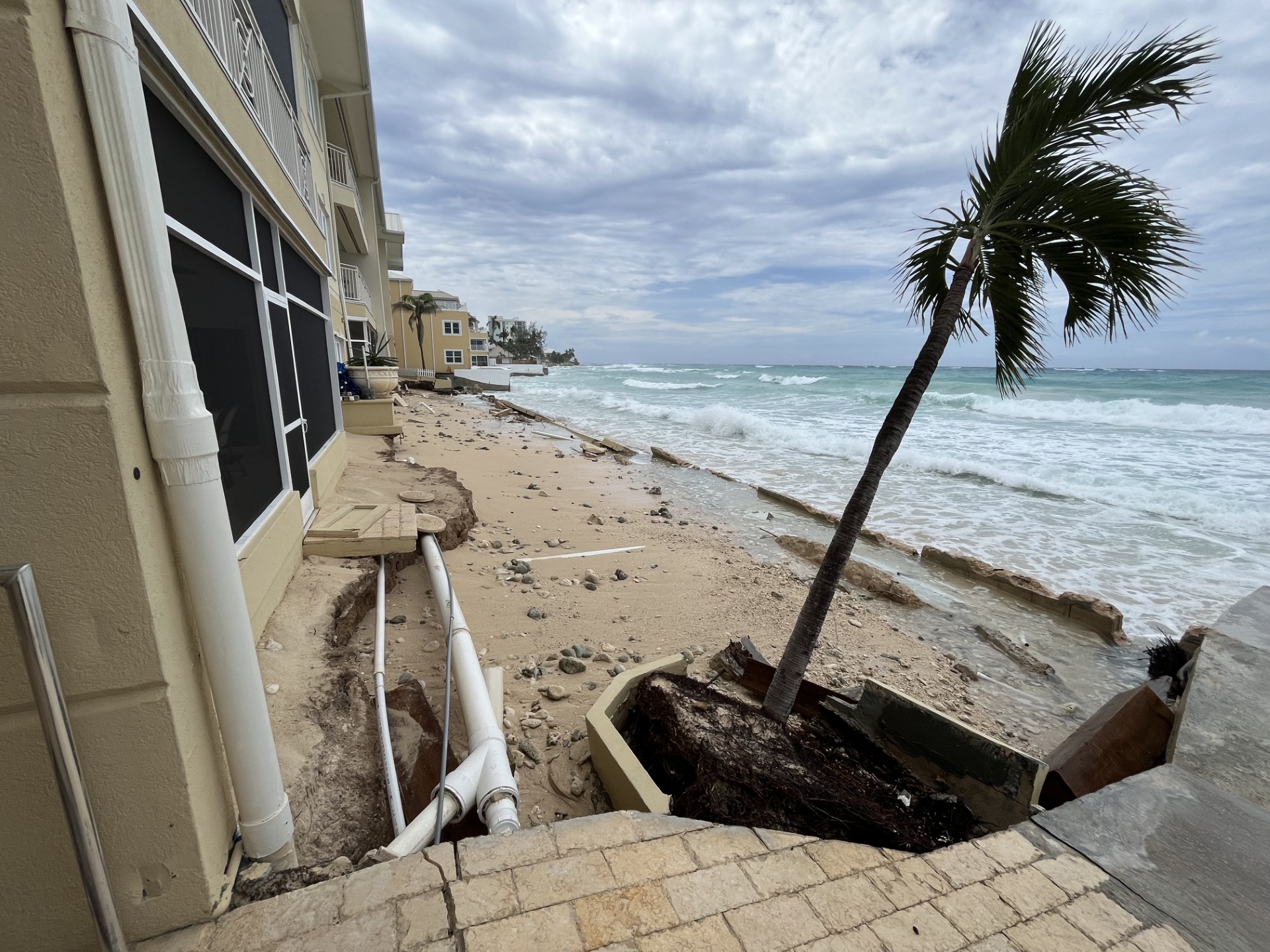
Dealing with beach erosion has become a controversial and polarising topic in Cayman as the island searches for solutions to the loss of its prime asset.
But the issue is not unique to our islands.
Beaches everywhere are valued as an economic resource, a recreational asset, and, in Cayman especially, a part of our way of life.
Sand provides beachfront properties with important protection from storms and helps buffer the impact of large waves. In Florida, they have been renourishing stretches of eroded beaches since 1966, primarily utilising sand that is pumped ashore from the sea near the eroded beaches.
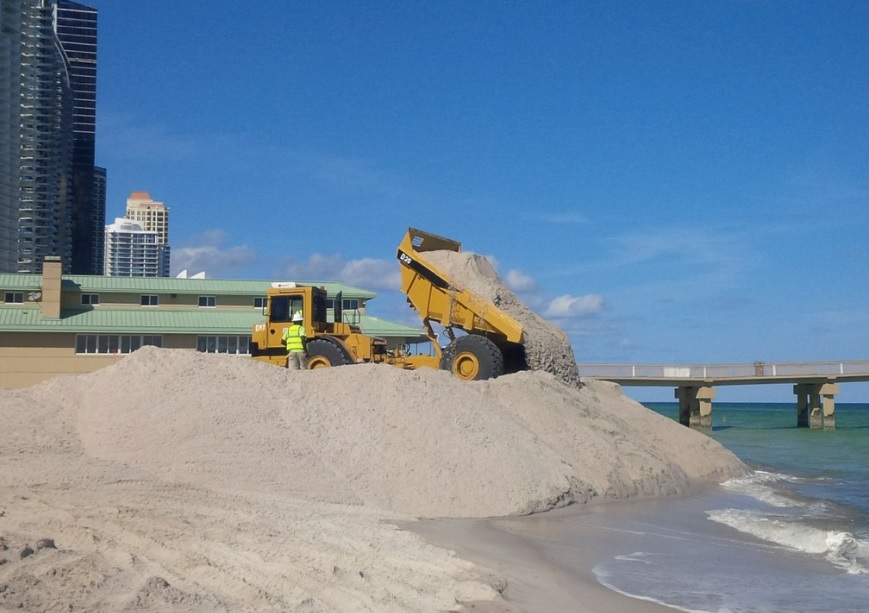
“Miami-Dade County beaches are known worldwide as a prime tourist destination, and tourism is one of the most important economic engines for Miami Beach and the County,” the Miami-Dade government says on its website.
“But our beautiful beaches also provide other important benefits, such as storm protection for our beachfront infrastructure, which is worth billions of dollars. Beaches also serve and provide protection for several animal species such as sea turtles.”
The Miami-Dade County Beach Erosion Control and Hurricane Surge Protection Project, which was authorised in 1966, renourishes certain beaches “on an as needed basis to maintain the storm protection and recreational benefits”.
More recently, it has been noted that “the large number of nourishment projects completed in Miami-Dade County has largely depleted known offshore sand sources”.
As a result, they have commenced a number of investigations “to identify sources of nourishment material”. The website noted that these include “deep-water sand searches, geotechnical evaluations of previously-used borrow sites to determine if small, but usable quantities of sand remain in them, the use of flood and ebb shoals at Haulover Inlet, and backpassing of sand from accretional to erosional areas.”
The issue of sand mining is not without controversy, however. According to a 2023 article published by World Economic Forum, sand is the second most utilised natural resource after water. “Demand for sand mining for construction materials has tripled in the past two decades, reaching 50 billion tonnes a year,” the article said.
And according to the United Nations Environment Programme’s Sand and Sustainability report, quoted in the World Economic Forum article, around 6 billion tonnes of marine sand is being dug up each year.
Environmental impacts
There are concerns about the methods of extraction and the impacts on the environment, and the UN Environment Programme has proposed a number of recommendations to ensure that access to this vital asset continues, and that sand resources are managed in a “just, sustainable and responsible” way.
So where are the potential sources of sand that are similar in look and feel and which have the same biological origins as the beautiful white sand beaches of the Cayman Islands?
Bahamian aragonite sand has been proposed as an option, and it has similar properties and qualities as Cayman sand, and perhaps most importantly, there are companies in the Bahamas that offer it for sale.
According to Robert Lawrence, who wrote ‘The Mysterious Origin of Oolitic Sand,’ for Hakai magazine, a Canadian publication focusing on coastal science, the Grand Bahama Bank “contains the largest reservoir of oolitic aragonite sand in the world”.
Another option that could be investigated is the south coast of Cuba, which is far closer to the Cayman Islands than Bahamas and therefore may offer savings on transportation costs.
If agreement could be reached with the government of Cuba to source sand from there, it is likely that locations such as Isla de la Juventud would have deposits of the same calcium carbonate sands that are biological in origin, and which form the composition and structure of the sand along Seven Mile Beach.
At the end of the day, regardless of whether private property owners are willing to pay for sand, the decision about renourishment rests with the government and, according to the Department of Environment, “at this time, no one has communicated with the DoE regarding plans for the reactivation of the beach erosion technical working group”.
Related Videos













The only lasting solution to the beach is to face the cold hard truth and that is to remove every man made structure within 75 to 100 ft of the water and allow nature to restore it. This will be a painful process but it is the only permanent solution. The natural course of the wave action during the times of bad weather will restore the beach. as long as we have man made structures too near the water this will always be the results. The force and power of the wave action must be able to diffuse itself naturally.
Hokus pokus talk..
You could move every man made structure along SMB back 200 feet and with a century the waves would be lapping at your ankles, as your great grandchildren tell us to move back another 200 feet.
Interesting that Florida has been carrying out beach nourishment projects from the 60s and we’re only just now debating that…
I think we need to have a proper study done on it to determine whether it is the structures that are causing the removal of sand or rising water levels or both. Once we get the results, all parties should be willing to take the necessary action to remove the threat. Of course, it would be stupid to just put millions of dollars of sand there only to get washed away with the next hurricane or storm and equally stupid to put walls there if that is causing the problem. So the short term solution maybe to put sand back until an urgent study can be done.