

A long-term policy to protect Cayman from the devastating effects of climate change was unveiled on Wednesday.
Speaking in Parliament, Katherine Ebanks-Wilks, the sustainability and climate change minister, told MPs the long-awaited policy, a first for the country, was crucial to “safeguard and support our people, our economy and our environment” and had six key areas.
Cabinet approved the new Climate Change Policy 2024–2050 at its meeting on 25 Sept., and the policy was tabled in Parliament Wednesday.
Ebanks-Wilks said, “The core goals of the policy are to increase resilience to climate change, to support the transition to a low-carbon economy, and to ensure climateactions are fair and take future generations into account.”
She added, “This policy is a strategic pathway for a more climate-resilient future for
the benefit of us all, and the key to its success is in the collaboration of
everyone.”
The key areas include the development of a strong, diversified economy, sustainable planning and building that is climate-resistant and “healthy and resilient” communities, with an emphasis on health and safety.
The others are “resilient infrastructure networks” to create infrastructure designed to withstand the worst weather, the protection of ecosystems, which helped foster a healthy economy, and the creation of strategies to cut red tape and streamline government processes to speed up climate decisions.
A draft version of the policy was circulated for public consultation last year, with officials stating at the time that it was expected to be presented to Cabinet and approved in July 2023. The previous premier, Wayne Panton, who was also sustainability and climate resiliency minister, was ousted in November, delaying the approval of the policy, which is based on a similar document from 2011, which was never implemented.
A Climate Change Council, responsible for implementing and review the policy will be set up.
Much of the new policy is based on an extensive climate change risk assessment that was conducted in Cayman in 2022, which explored the potential implications of climate change on Cayman environment, society and economy.
Lisa Hurlston-McKenzie, senior policy advisor in the ministry, said in a statement that the policy provides a “clear strategic pathway to address the most pressing risks posed by current and continued climate change factors”.
She said the policy’s strategies “have been crafted to reduce the impacts of extreme weather events on households and communities in the short and longer term,” and added that work on an implementation plan with government and non-government partners would “begin immediately’’.
Ebanks-Wilks told parliamentarians that the new policy set out “clear timeframes and strategic actions”, with “23 quick wins” identified as short-term goals that can be achieved by 2030.
She added, “The quick wins include identifying climate-related financial opportunities and vulnerabilities, progressing the Coastal Setback Reference Line reassessment, and implementing a National Sargassum Management Strategy, to name a few.”
The policy will be reviewed every two years to include up-to-date scientific finding, climate statistics and technological advances.
Impact on livelihoods
Ebanks-Wilks said, “Although climate change is often thought of in terms of its environmental impacts, the impacts of climate change on human lives and livelihoods is
increasingly in the spotlight.
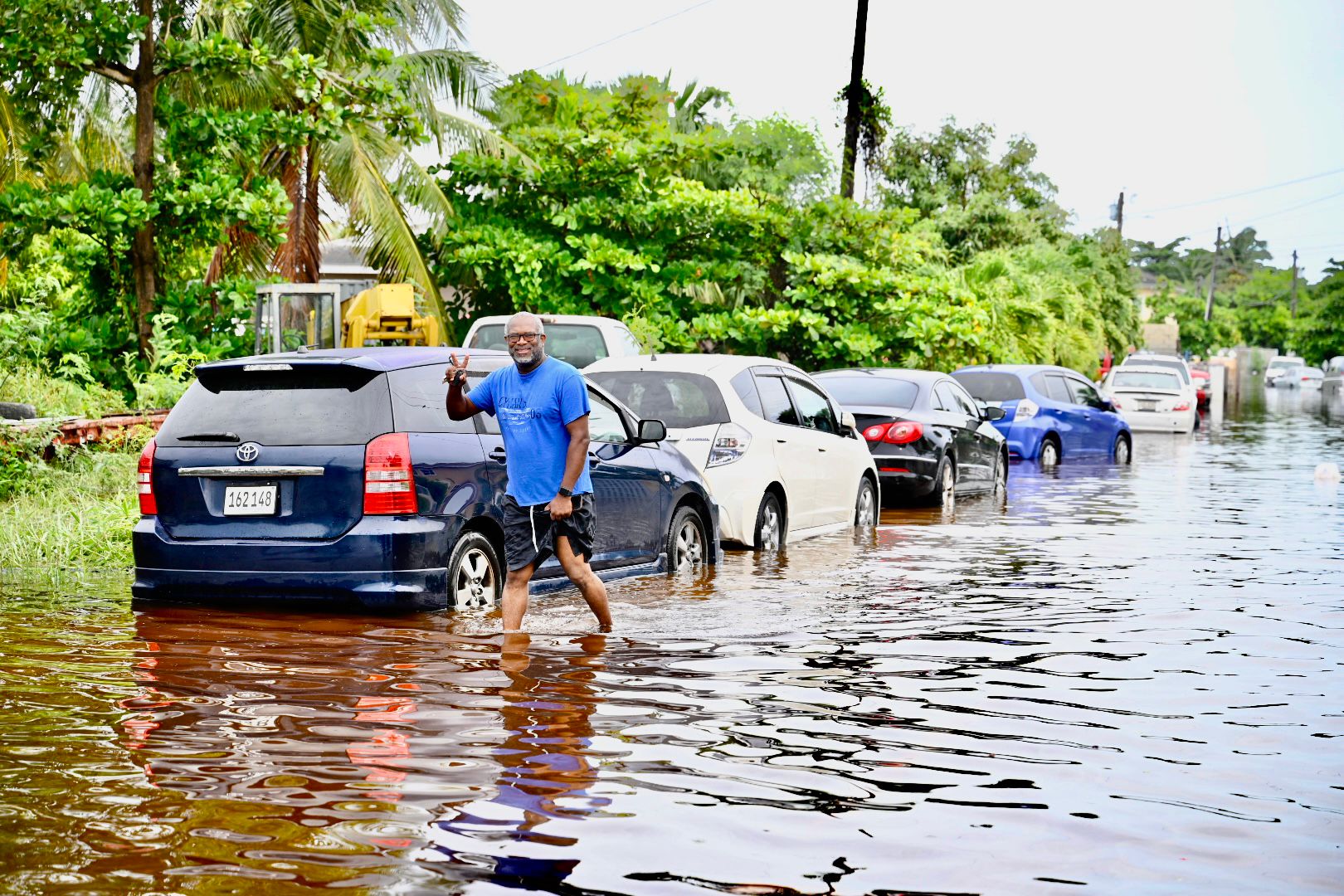
“An example of this was the impact that each of us experienced with the recent flooding events that affected our homes, schools and businesses.”
Cayman has experienced widespread flooding from recent storms and high tides.
“Climate change affects our lives, not just our environment,” the minister said. “That is why the Climate Change Policy sets our strategies to support economic diversification, aiming to create sustainable livelihoods and make our economy more resilient to climate shocks.
“By acting now, we are protecting both the financial services sector and the broader economy from climate-related risks.”
She added that specific areas, such as resilient infrastructure and safeguarding the natural environment, were key to protecting tourism and other critical sectors.
“By reducing climate risks, the policy aims to ensure the long-term sustainability of these industries,” she said.
Collaboration needed
But she warned the success of the policy hinged on collaboration between the government and all sectors of society.
Ebanks-Wilks said, “Climate change is a complex issue that requires coordinated areas across many sectors.”
She added, “This collaborative approach aims to embed climate resiliency into the national agenda.”
Ebanks-Wilks said that climate change was often thought of mainly in terms of its environmental impact, but its effects on lives and damage to economies were increasingly evident.
She added, “An example of this was the impact that each of us experienced with the recent flooding events that affected our homes, schools, and businesses. Climate Change affects our lives, not just our environment.”
She said taking action now meant protection of the financial services sector and other parts of the economy from “climate shocks”.
Ebanks-Wilks added, “Specific areas such as resilient infrastructure and safeguarding the natural environment are key to protecting tourism and other critical sectors.
“By reducing climate risks, the policy aims to ensure the long-term sustainability of these industries.”
She said that the policy also included the importance of looking at requirements of vulnerable groups such as children, the elderly, disabled individuals and people on lower incomes as climate change had a “disproportionate impact” on these groups.
Ebanks-Wilks said the policy would be funded, as far as possible, through the budgets of ministries, but that a special climate resiliency fund would also be created.
She said Premier Juliana O’Connor-Connolly had written to the British government in her role as president of the UK Overseas Territories Association to ask for better access to international climate finance and for a “focused dialogue” on the establishment of a climate fund for the territories.
“The approval of this policy, and the creation of a local climate resiliency fund, will
enable the Cayman Islands to be well-placed to take advantage of any opportunities that should arise from these discussions with the United Kingdom government,” she said.
Ebanks-Wilks highlighted that the country and the region had suffered heavier rainfalls and more intense storms, which brought increased dangers of flooding and damage.
“Warmer sea temperatures and longer periods of drought jeopardise the health and viability of valuable, limited natural resources, upon which our tourism, our food
security, our livelihoods, and our quality of life depend,” she said.
Related Videos











I read until page 41 when the pages stopped getting numbered for some reason. There is no action plan here. It’s a paper filled with lots of boilerplate ‘State of the World” type stuff – more of a SWOT analysis. A “plan” consists of realizing what’s happening around you and then sets a clear direction for us all to follow that will materially alter our outcome. Here’s a plan: We need to save our seven mile beach and renourish it with barges of sand to keep tourists coming and to give our accountants and lawyer families a place to enjoy themselves on the weekend. Financial services can thrive here as temperatures rise if the families of accountants and lawyers enjoy being here because our beach is nourished and there is shade from heat and somewhere to walk and something to do. We need a wide walkway like the one in front of Kimpton from public beach to Georgetown. It should be shaded by trees so tourists and locals can walk and get relief from the heat. If there is no shade or comfort for tourists and locals, then there will be no tourism or financial services. We need a cruise berthing facility in town so curious tourists can come and become overnight visitors in the future. The seed tourists here are cruise visitors. They are part of a regional ecosystem that adds value by building our reputation with overnight visitors as they become the overnight visitors of the future. We need a national incentive to plant shade-trees for our quality of life. This long delayed policy paper doesn’t really define any policies for us to adhere to that will alter our future. Writing about rising temperatures, sargasum, or the now cancelled Regen plant (p. 29) adds little value to our future. A man with a shovel building a sidewalk, a beach or a pier, will.
The right step forward. I hope members from DOE are adding to council and their advice is taken under consideration. Not like the CPA which is full of conflicts.
Sadly, although many intelligent and hard-working people were involved, this “policy” is the kind of document that gives government a bad name. Three vague goals with neither specific metrics nor targets, 74 impossibly over-ambitious “strategic actions” (some making no practical sense and others cutting across one or several other Ministries with better things to do), and worst of all, no budget or implementation plan whatsoever.
Everything hinges on the creation of a “climate resiliency fund” of unspecified amount. If the aim is to fund 74 strategic actions, it better have $200 million in it. If it is only going to be $2m, the authors should have worked to that from the start to avoid wasting 99% of their time.