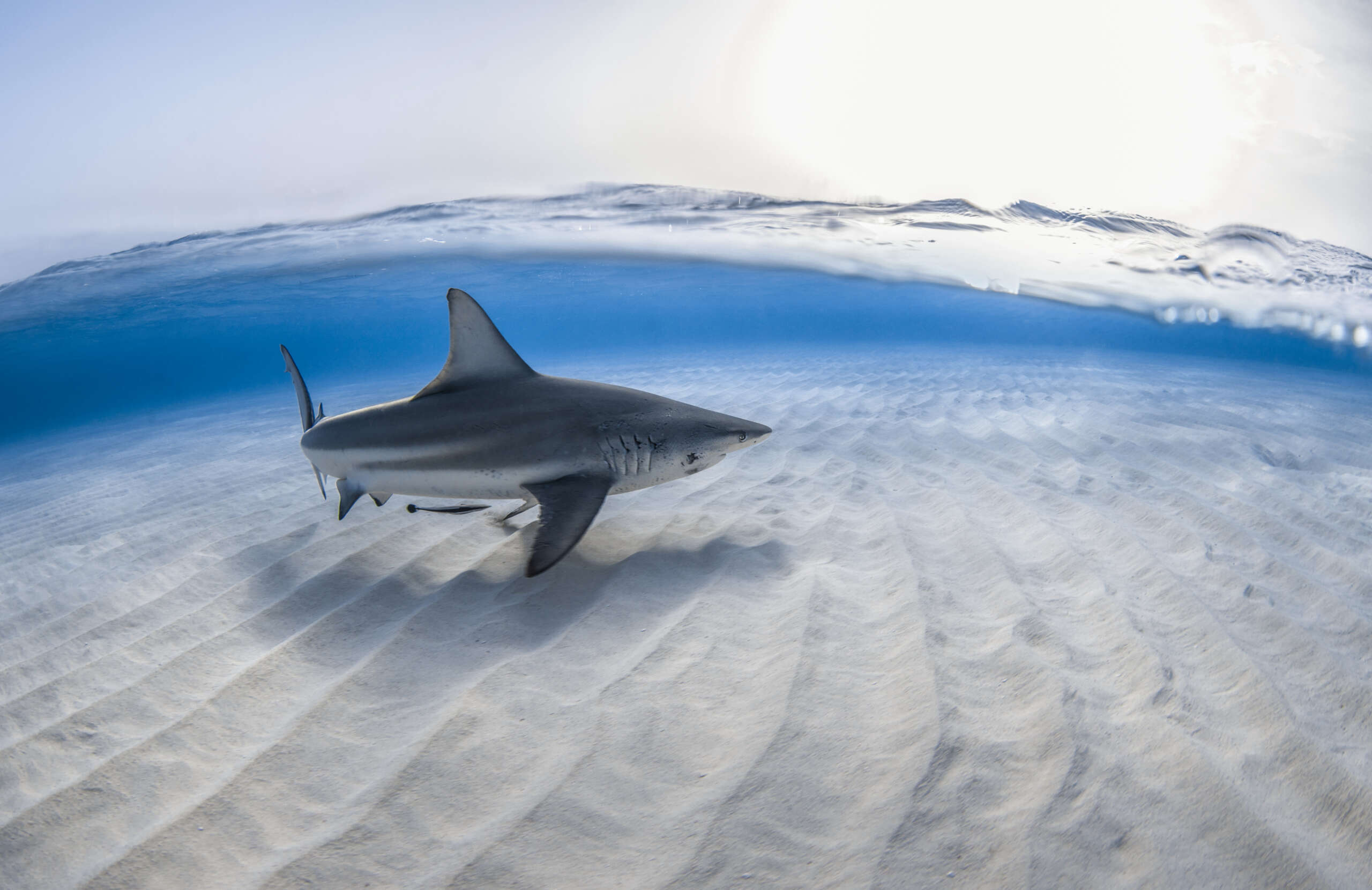
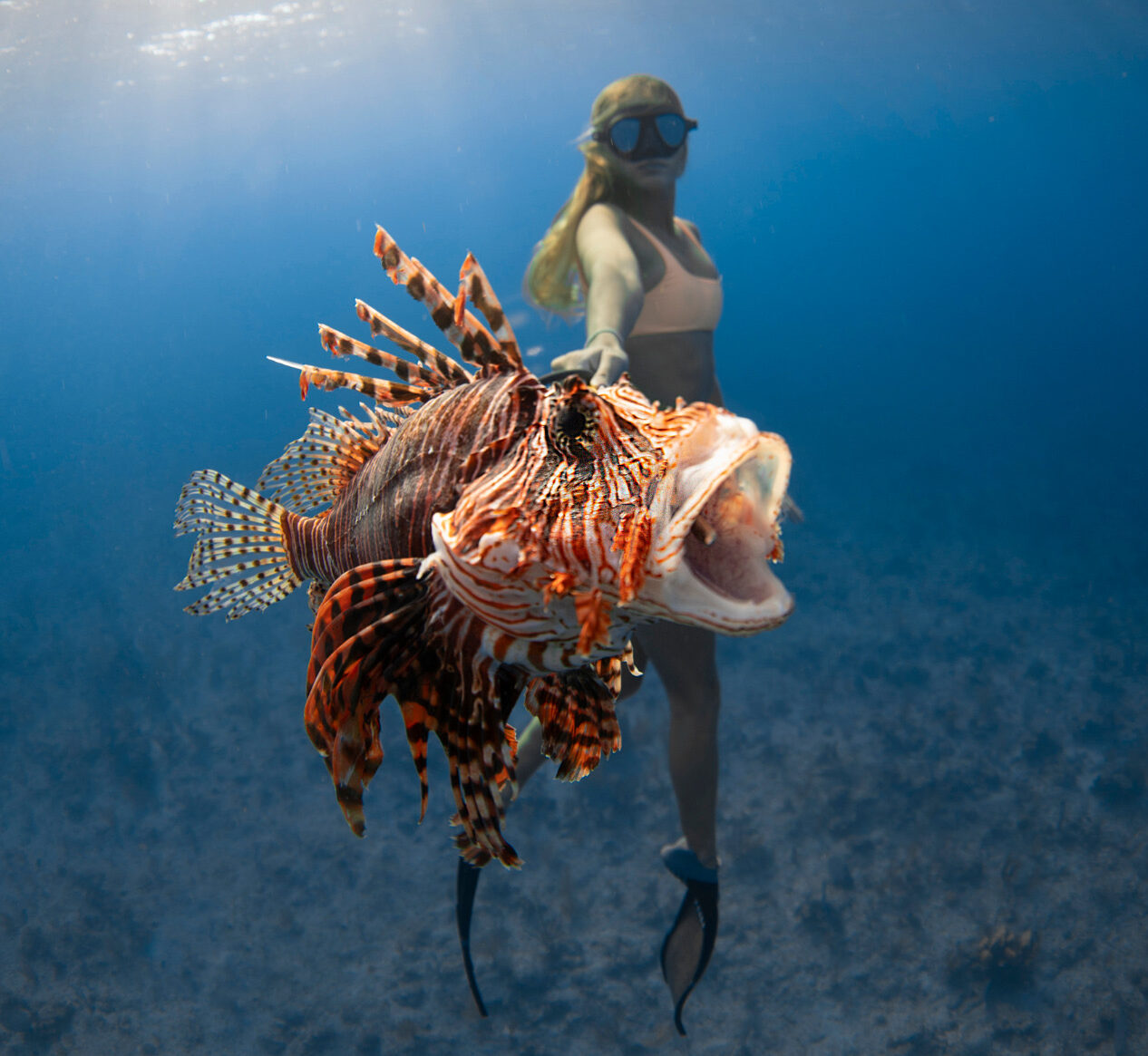
Government worker Miles Charman was recently lionfish culling on his day off, when he was approached by what the Department of Environment described as “an assertive shark”.
In a video released on Cayman Islands Government TV, Charman described how he was out hunting on the North Wall when he saw two sharks “that came very close and started to circle around me”.
One of the sharks approached him with an open mouth, at which point he poked it with his lionfishing spear. However, it continued to circle around him until he jabbed it again, this time in its tail. It then swam away.
“I definitely felt uncomfortable and threatened and I haven’t hunted since then,” Charman said.
‘Expected to be fed’
Experts with Cayman’s Department of Environment have issued a warning about the dangers associated with feeding sharks.
Johanna Kohler, a shark research coordinator with the department, noted that Charman’s experience indicated that “the shark expected to be fed with the spear”.
“This incident clearly shows that we have now reached a stage where sharks have learned to associate divers with food,” she said.
The department’s chief conservation officer, Mark Orr, said he knows that some scuba divers have been breaking the law and intentionally feeding lionfish to sharks. He pointed out that “feeding sharks has been illegal in Cayman waters since 2002 because of the known risks of injury for both divers and sharks”.
He added, “Some people believe feeding sharks is great for business or will increase tips from customers, and some even mistakenly believe that conditioning sharks to take speared lionfish will somehow teach them to hunt lionfish out of reef crevices. But teaching sharks to take food from divers only really endangers both humans and sharks.”
Despite Charman’s recent encounter, shark attacks in Cayman waters are incredibly rare and there isn’t a single recorded fatality involving sharks here.
However, there have been a few recorded instances where people have been bitten – almost invariably when they have been spearing fish.
Long before lionfish invaded local waters, spear fishermen were also encountering sharks who wanted what was on their spears.
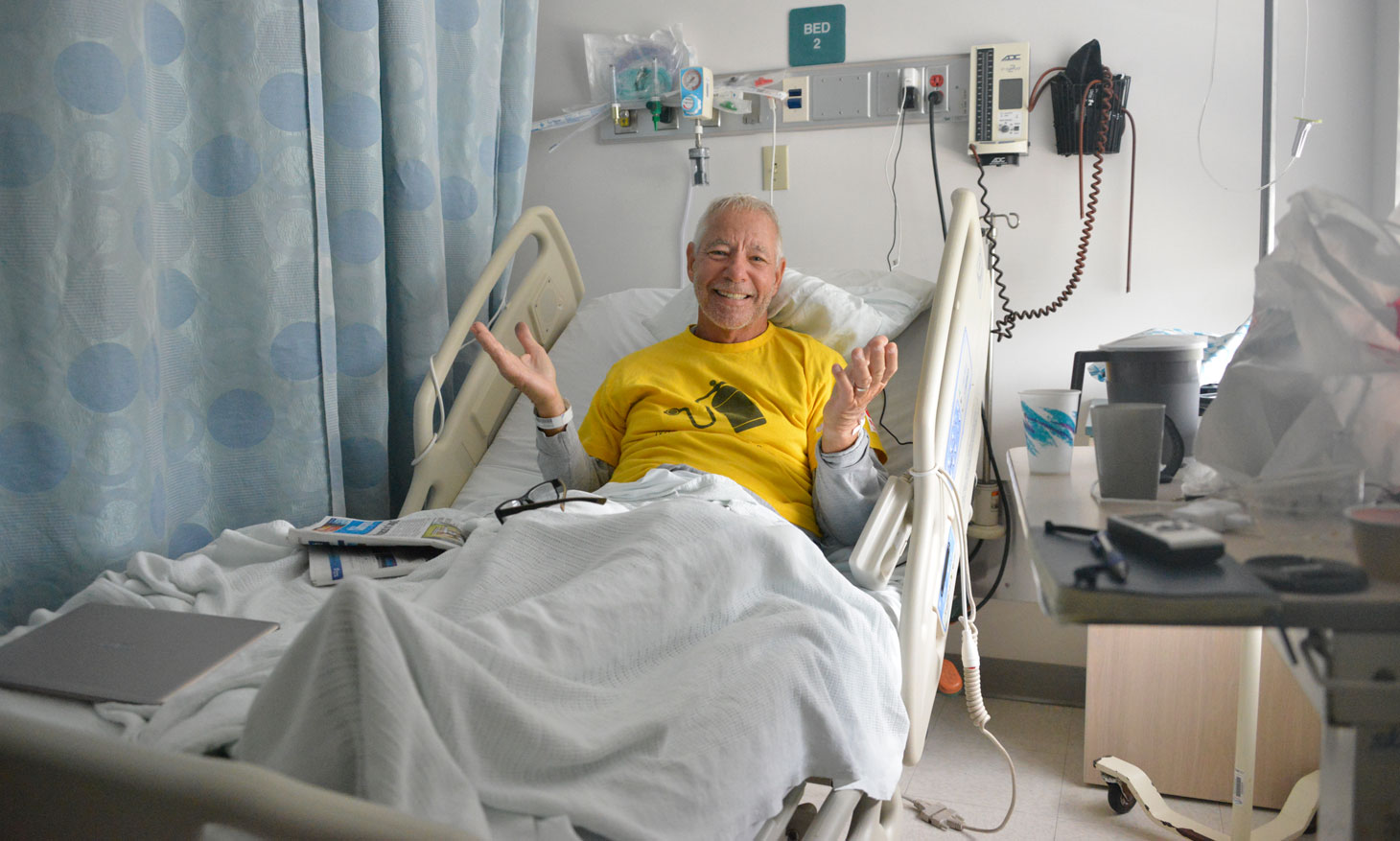
Randy Ebanks recalls how, 33 years ago, he was out spearfishing outside the North Sound reef when he was attacked.
“I was in about 40 feet of water off main channel catching fish for the guests to have lunch,” he told the Compass. “I had already shot some fish with my speargun and I had just caught a nice big lagoon snapper weighing about three pounds. As I was taking the fish off the spear, a 6-foot reef shark came up from behind me and swallowed the fish and my arm,” he said.
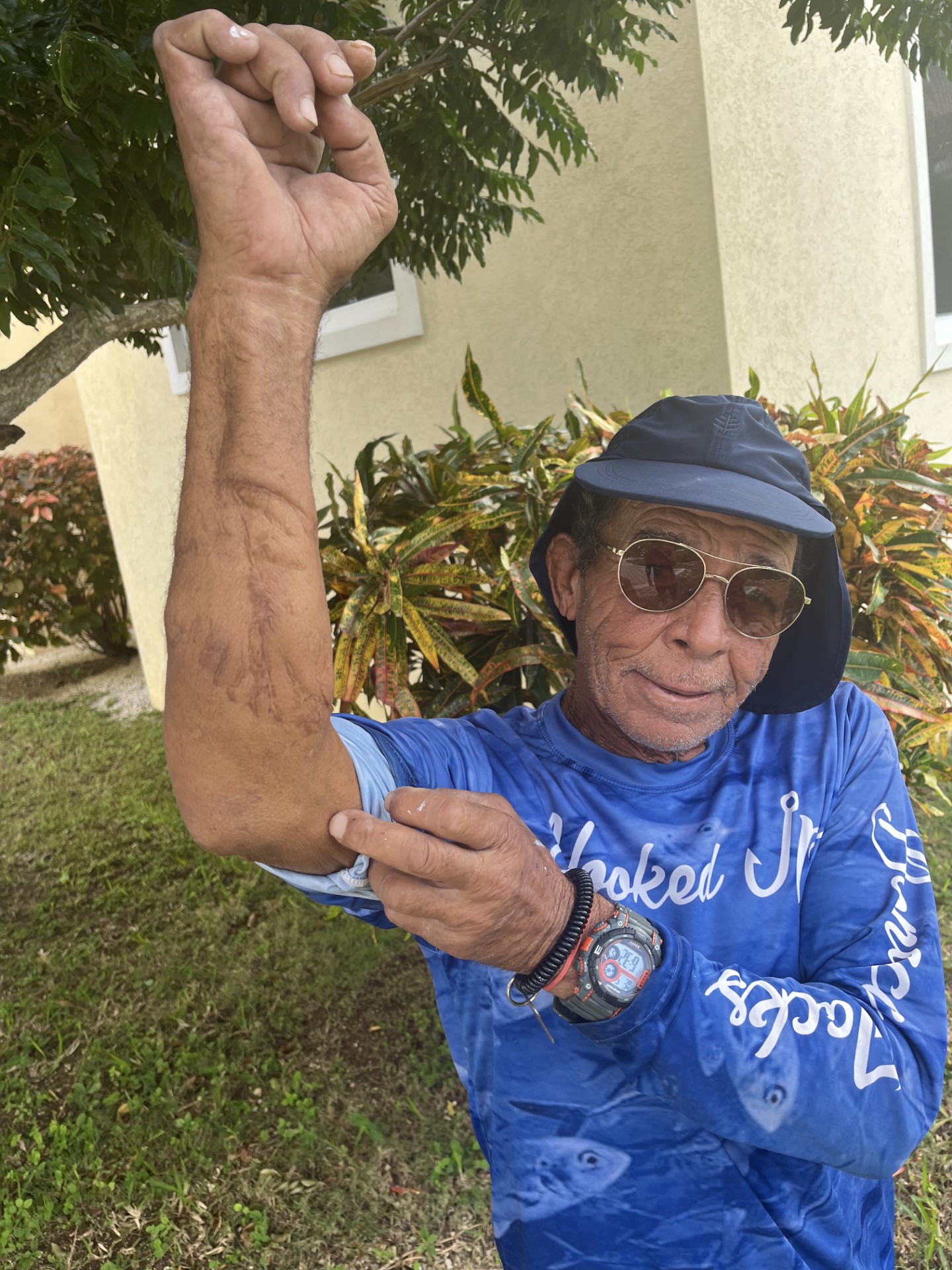
Describing what happened next, Ebanks said, “I didn’t see the shark until it had already grabbed my arm. I dropped the speargun, and next thing, the shark pulled me about 4 or 5 feet underwater. Meanwhile, I was using my left arm to push against him, to try to pull my arm out of his mouth.
“It was holding me by its front teeth, so the second he opened his mouth to get another grab, I was able to pull my arm out.”
Fortunately for Ebanks, help was nearby.
“I wasn’t too far away from the boat, so I swam over and my brother Ronclair quickly transferred me onto my brother Shyster’s charter boat, which also happened to be about 400 feet away, and it was much faster than Ronclair’s boat,” he said.
“I was losing a lot of blood, but among the tourists on the charter, there were two doctors on board, and they put a tourniquet on my arm and the boat headed for Morgan’s Harbour, where an ambulance was waiting to take me to hospital.”
Fish likely attracted shark
Ebanks says that being a regular spearfisherman back then, he had many encounters with sharks.
“If I didn’t have the fish, he probably wouldn’t have been attracted, and certainly if I had seen him first, I would have been ready,” he said.
Ebanks says he still goes in the water, but these days he is always alert and aware.
“I lost a lot of blood,” he said, “I had countless stitches, and they gave me six pints of blood in a transfusion, but I was fortunate.
“At first there was a lot of numbness but now I can use my arm. The nerves have repaired and I am okay now.”
Lionfish hunter injured
Five years ago, Paul Egleston was taking part in a lionfish culling tournament when he also had an encounter with a shark.
“I was diving off the North Wall during a lionfish culling tournament. I had a lionfish in my bucket and a nurse shark was pestering me during the whole dive, but I didn’t want to give up my lionfish because we were in the tournament.
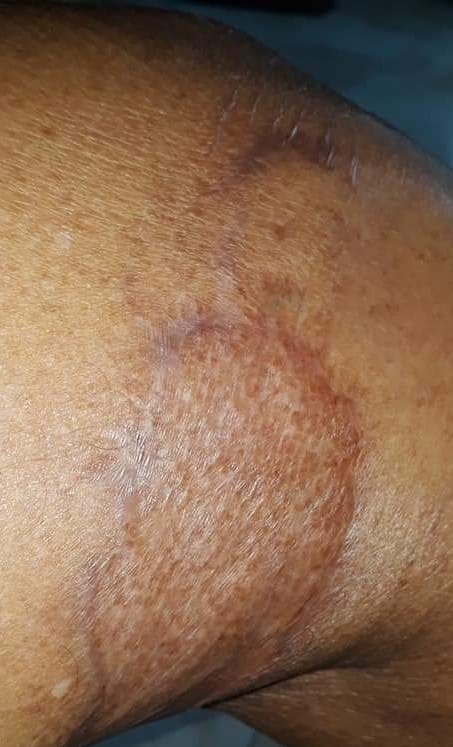
“Suddenly the nurse shark bit me on the back of my leg and took quite a big chunk out of it. I ended up in hospital and had a couple of skin grafts since then, but fortunately I have recovered now,” he said.
Egleston is certain that the nurse shark had been fed by divers before, so it had started to associate people with food.
“When the invasive lionfish first started appearing in Cayman waters in 2008, the divers were trying to get the groupers and snappers to eat them, so they would learn to recognise the lionfish as food, and it was hoped they would start catching them themselves.
“Later on, some of the dive operators would feed the lionfish to the sharks to entertain their guests, but, from at least five years ago, people started having encounters with aggressive sharks, sharks that were expecting to be fed by people,” he told the Compass.
Egleston says the Department of Environment made the right decision to make it illegal to feed sharks in the Cayman Islands.
DoE: Sharks tend to avoid humans
Kohler, who holds a doctorate in marine biology and ecology, says research by the Department of Environment over the past 15 years shows that sharks naturally tend to avoid areas with high human in-water activities, such as diving or boat traffic.
“Sharks eat fish so they don’t naturally associate food with humans,” she said in a statement issued by the DoE. “However, sharks (and other predatory fish) conditioned to expect food from humans through feeding may become more assertive, which puts both unsuspecting divers and sharks at risk of accidental injury.”
She added, “An aggressive encounter may also prompt action for the animal to be removed, but it is not the shark’s fault. This is a human-made problem.”
Protected species
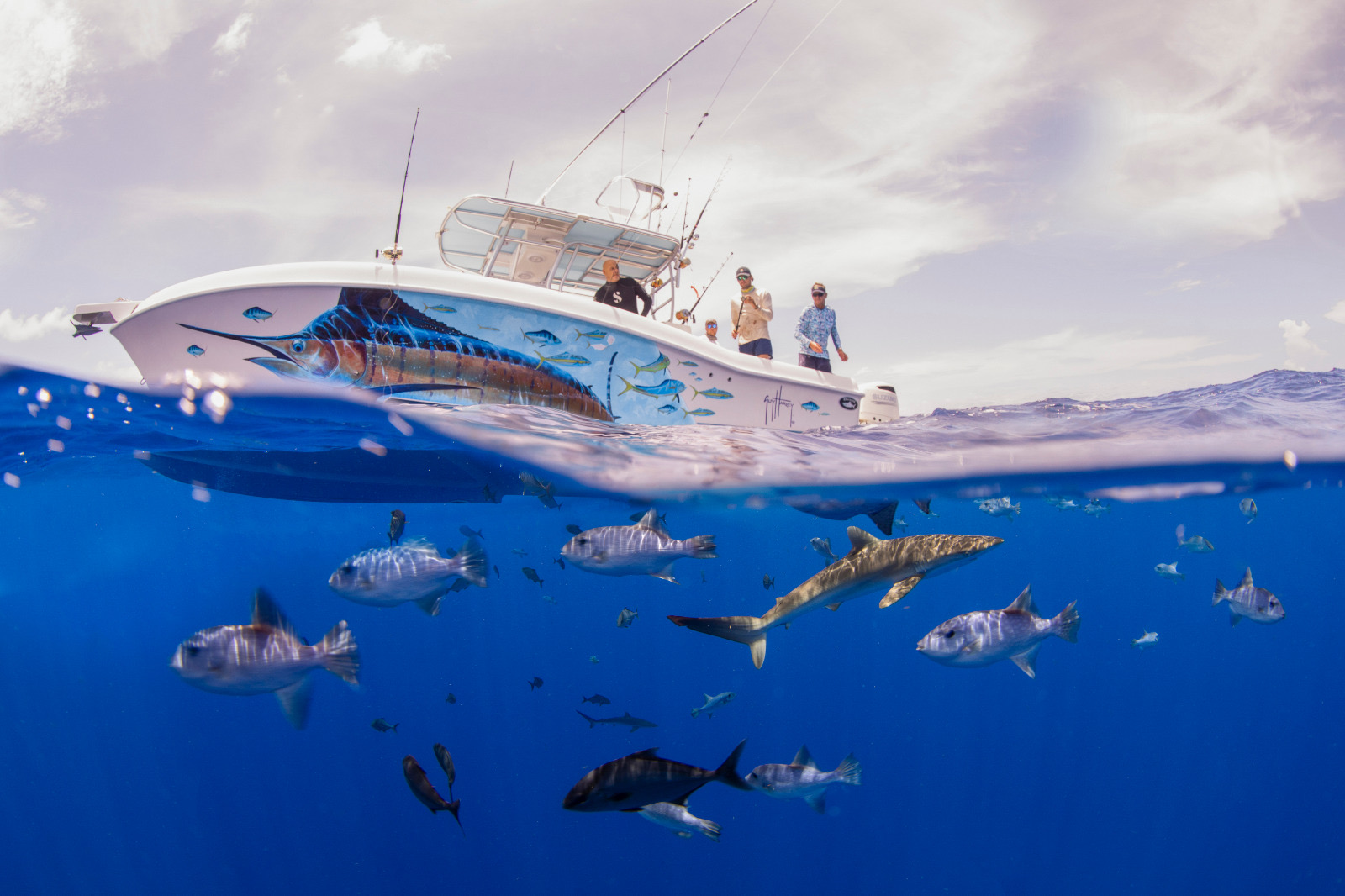
Sharks have been protected in Cayman waters since 2015 under the National Conservation Act, so it is now illegal to feed, harm or kill sharks.
According to the Department of Environment, sharks are crucial to maintaining the balance of Cayman’s marine ecosystems.
“They remove injured and sick fish, keeping lower levels of the food chain healthy,” Kohler explained. “They are also important for tourism and generate income for watersports operators who benefit from the high demand by tourists to see and dive with our local sharks in a natural and safe manner.”
Orr says that over 50 years ago, several Caymanians were engaged in catching sharks on a commercial basis.
“Shark skins were being shipped off to the States and they actually killed off the majority of sharks in our area,” he said.
Nowadays, while both sharks and rays are protected by law, the shark population has still not recovered to the earlier levels, Orr explained.
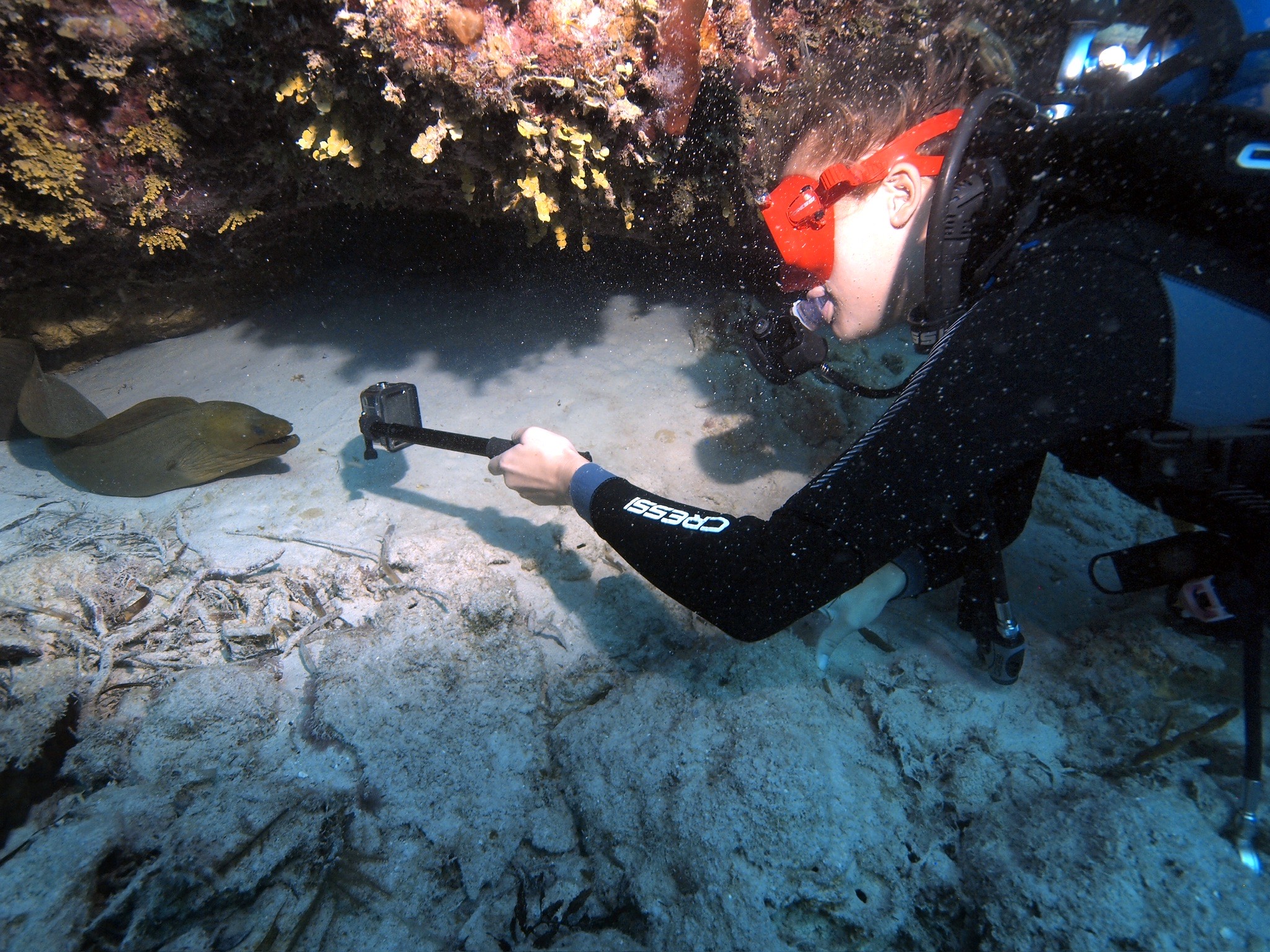
“If you catch one by accident,” he said, “you have to make every effort to release them. We have [also] had incidents with eels, again seeing people as food after being fed, so all of that is illegal. You have to follow the laws even if you think you are doing something good for the environment when you feed them.”
Battling the lionfish invasion
Steve Broadbelt, co-founder of Ocean Frontiers dive company in East End, said when the invasive lionfish started showing up in Cayman in 2008, “it was a crisis situation, but now there are more natural predators and the numbers are less”.
But he still feels that it is important to continue to manage the lionfish population.
“There has to be a balance, and there are lots of reef sharks, and if you go culling, you have to be aware that, sooner or later, you are going to have an encounter with a shark,” he said.
Prior to 2002, when the restriction on feeding sharks came into effect, Ocean Frontiers dive operation had a shark dive where customers would watch the sharks being fed.
“We stopped feeding sharks as soon as the law came into effect,” said Broadbelt, who added that cullers “should never feed lionfish to sharks or any other predators, including barracudas or moray eels, and if a shark shows interest in a diver or culling container and begins to act in an aggressive manner, they should stop culling and leave the water as soon as possible”.
According to the conditions on the lionfish spearfishing permit issued by the Department of Environment, “Culled lionfish shall not be fed to any other form of marine life and must be immediately placed in an appropriate containment device.”
Bahamas shark diving
Jason Washington, owner of Ambassador Divers, says tourists and visitors love seeing sharks, but illegal feeding activity is causing a problem, and even some divers who are not actively culling have recently been harassed by sharks.
“If you don’t want chickens on your doorstep, don’t feed chickens. It is learned behaviour,” he said.
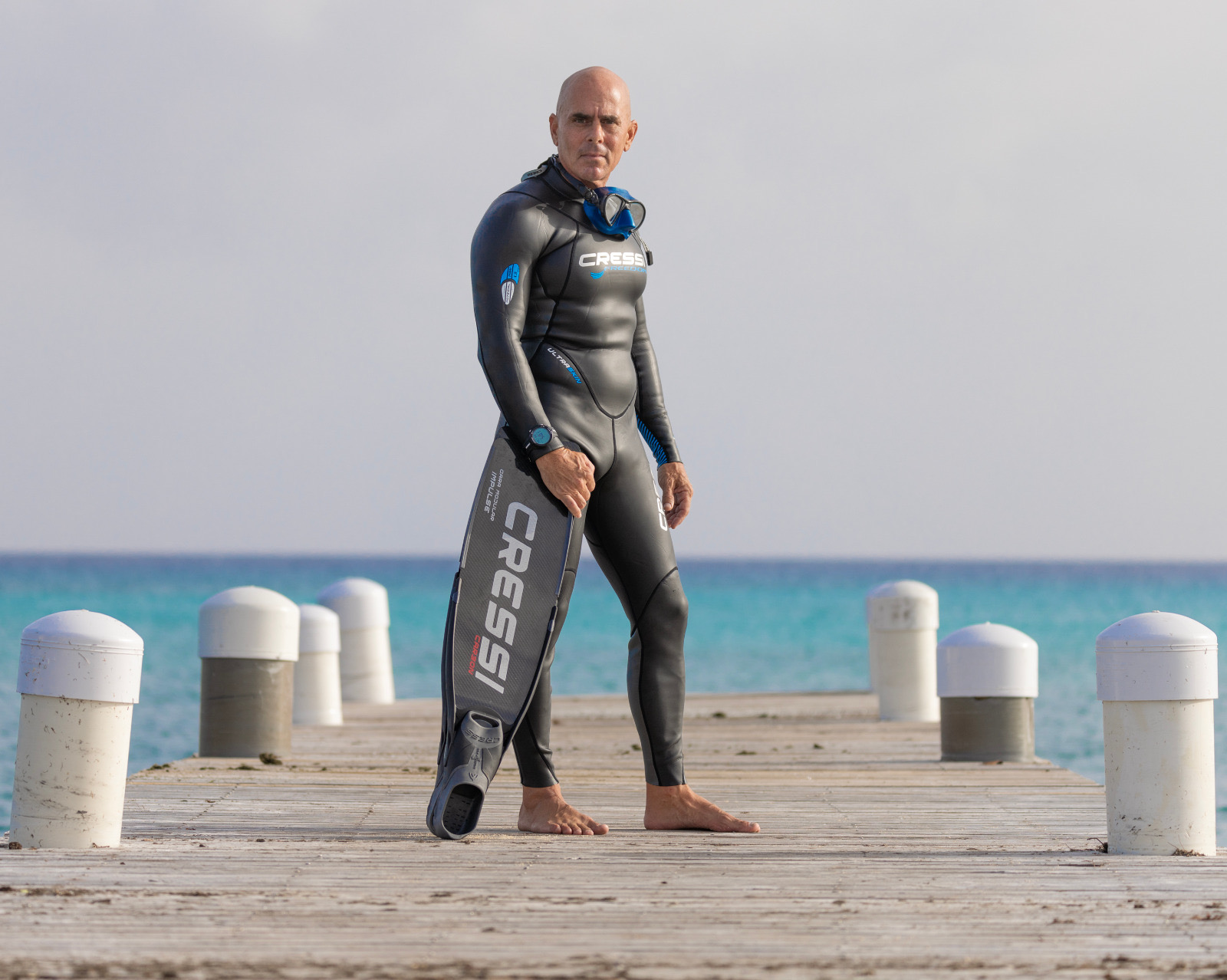
Washington, who in addition to owning a local dive company, is also a highly respected underwater photographer, says that shark dives could benefit the local tourism industry, but he believes if it were ever to be considered, it would have to be very carefully managed and properly regulated.
“Shark dives in Bimini bring in millions of dollars each year to the economy in the Bahamas, and with it come large media production companies and many repeat tourists,” he said.
But he stressed that there are many controls in place in the Bahamas to help make it safe, and make sure people are not randomly feeding lionfish to sharks.
“In Bahamas, only one person is allowed to be in the water feeding the sharks and it is a professional diver on the sea bed, with the food contained in a bucket. Everyone else is located some distance away and the sharks only get fed if they come in gently and in a non-aggressive manner. None of the ‘hot’ sharks get fed,” he said.
He added, “Bear in mind that each year, only around 10 people are killed by sharks worldwide, so that is less than the number of people killed by lightning strikes and by bears and by falling vending machines.”
He added that while he respects and adheres to the Cayman laws that prevent shark feeding, he thinks that, one day, if the laws about feeding sharks were to change, it might be possible to have shark dives that are safe for both people and sharks.
“If the dives were done offshore, in an organised and professional manner,” he said, “perhaps using an offshore fish [aggregation] device, far away from regular dive sites and fishing activity, it might work, and the shark dives could help reduce fear, and educate people about the plight of these amazing endangered animals.”
Related Videos