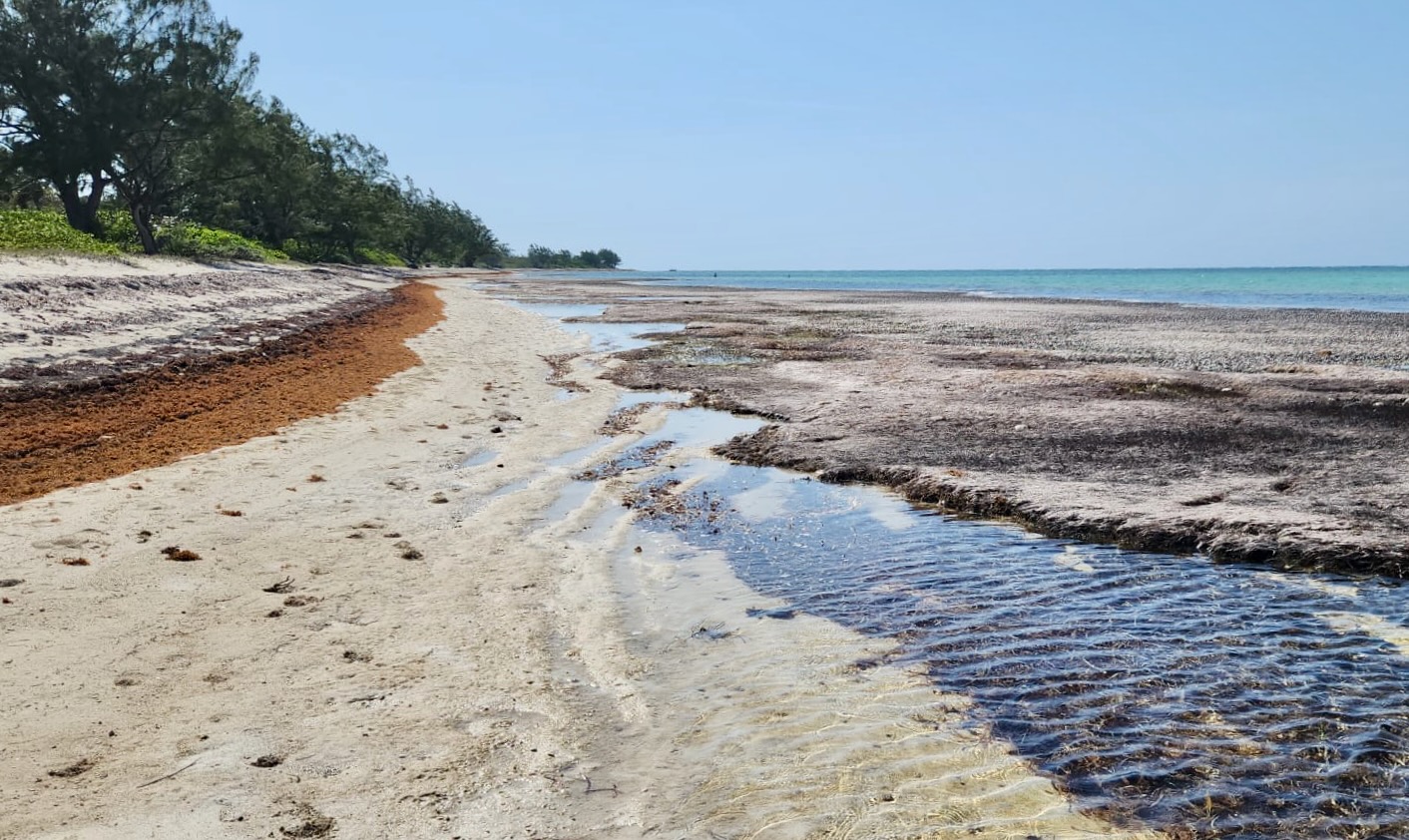
Cayman is experiencing extremely low tides, making for striking scenes on the coastline.
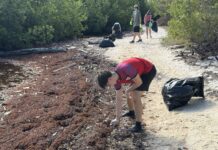
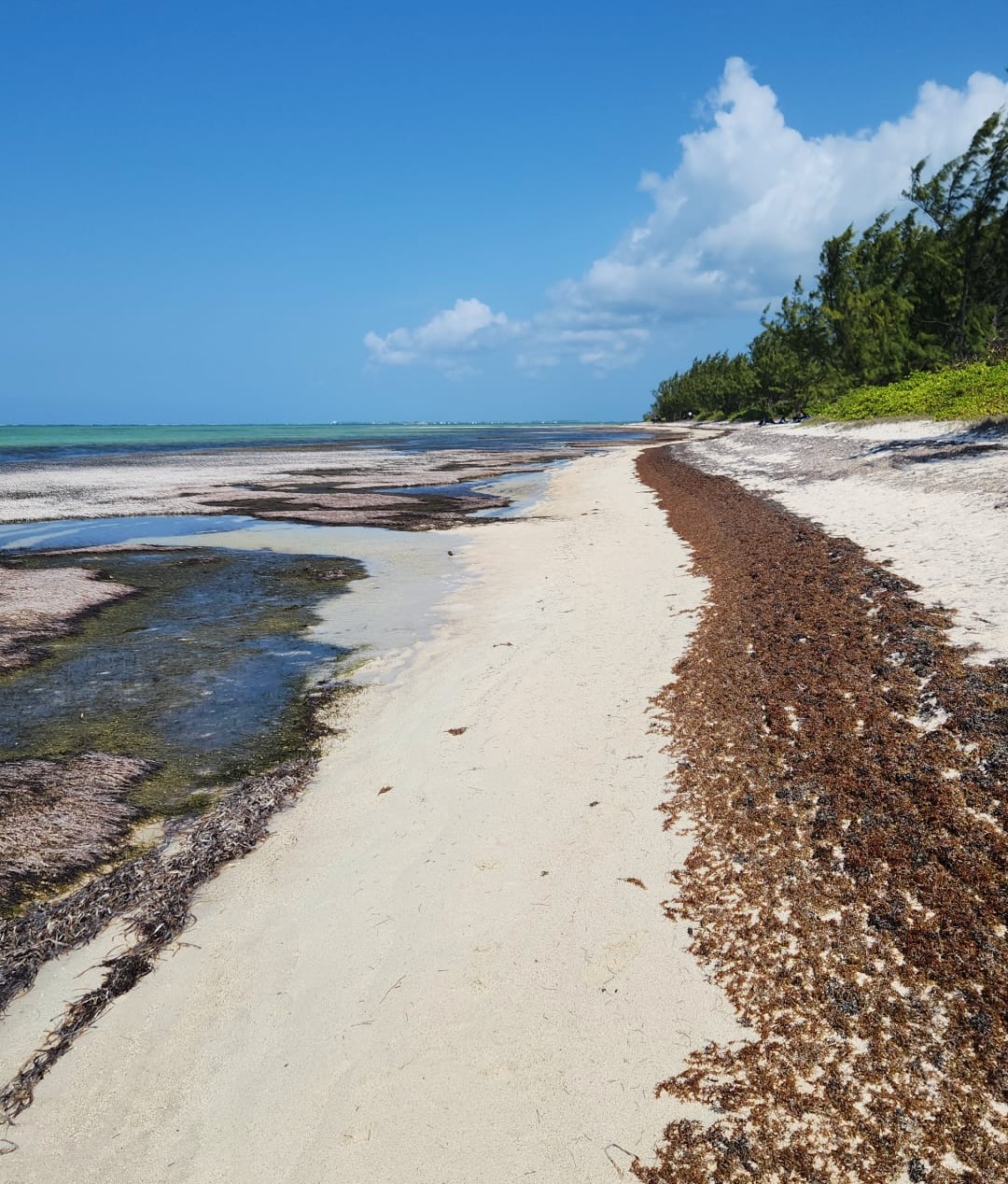
At Barkers National Park, the ocean has rolled back to reveal an extended intertidal zone, with beachcombers wandering amid a tapestry of exposed turtle grass.
Playful dogs now run along extended patches of beach, where only weeks ago, Easter campers swam in the shallows.
There are similar scenes on coastlines around the island. David Blumenthal, a kayak guide who works primarily in North Side and Rum Point but walks the beach in Bodden Town, said the tides were lower than he had seen in over a decade following the same routes. But he remembers a time, growing up in the 90s, when such scenes were commonplace.
“We would often see coral breaching the surface at low tide or run aground on dry patches of turtle grass.”
There isn’t sufficient tidal data to analyse just how low the current tides are historically.
Experts at the Department of Environment say extremely low tides happen seasonally in sync with patterns of the sun, Earth and moon in orbit.
“The low, low tides we’ve been experiencing are striking, but not all that unusual,” said Cody Panton, a DoE marine research officer.
The more dangerous flip side of low tides is the so-called ‘king tides’, which occur periodically and can cause coastal flooding, particularly in low-lying areas.
But Panton said there is nothing to suggest we will see unusually high tides any time soon. The highest king tides are expected in early January.
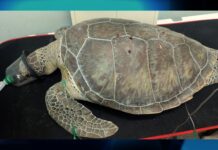
The creatures that inhabit the intertidal zone are adapted to survive across a wide flux in sea level and are not at risk, Panton added. For globally endangered nesting turtles, meanwhile, the possibility of laying eggs below the high water mark is remote.
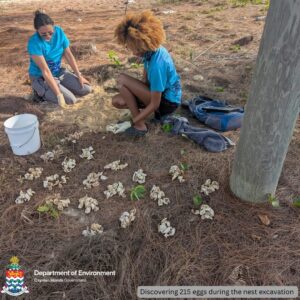
“Sea turtles typically avoid coming ashore during very low tides. They also do not usually choose to nest in wet or damp sand and will crawl up to drier sand, which reduces the chance of their nests becoming washed over,” said Jane Hardwick, turtle nest programme monitoring manager.
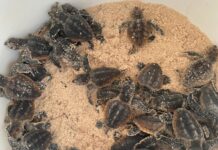
Across the Cayman Islands, a crew of volunteers walks beaches every morning and alerts the department to the locations of every nest to help officers ensure as many hatchlings make it as possible. If nests are flooded for extended periods of time, the eggs will likely fail to hatch.
Beach erosion and storm surge are a greater risk, however, than tidal variation, Hardwick said.
The science behind low tides
Panton explains why low tides occur and helps answer some questions about their likely impact.
What causes low tides?
Panton explains that extremely low, or spring tides, in general, occur twice a month — every full moon and new moon, when the Earth, moon and sun are in alignment, where the gravitational pull of the sun and moon combine to produce higher high tides and lower low tides.
What makes some tides extremely low?
The distance of the sun and the moon from the Earth will also have an effect on the gravitational pull of each, Panton said. Perigean spring tides occur when a full moon coincides with the perigee, which is the point at which the moon is closest to Earth in its orbit, resulting in larger than normal tidal ranges.
“These occur about 6-8 times per year, and we are currently experiencing one now,” he said.
Should we expect extremely high tides on the flip side?
Panton said there is no reason to expect an especially high tide this month.
“While we see no cause for concern about flooding from a king tide at this time, we encourage the public to always be vigilant if they live in coastal or low-lying areas, particularly as we enter hurricane season,” he said.
“The closest perigee this year will be on 5 Nov., which coincides with a full moon, so there is a possibility for an extra high king tide around then, as well as 4 Dec., with the effects being amplified by the sun’s gravity as we move towards perihelion in January (where the Earth is closest to the sun).”
Will low tides affect sea life?
The sight of sea grass beds being exposed to air may appear concerning, but there is no need for alarm. Spring tides, especially perigean spring tides, often result in shallow bars being exposed at low tide. The flora and fauna that inhabit these intertidal zones are adapted to survive in these circumstances, and most will be fine when the tide comes back in.
Related Videos