

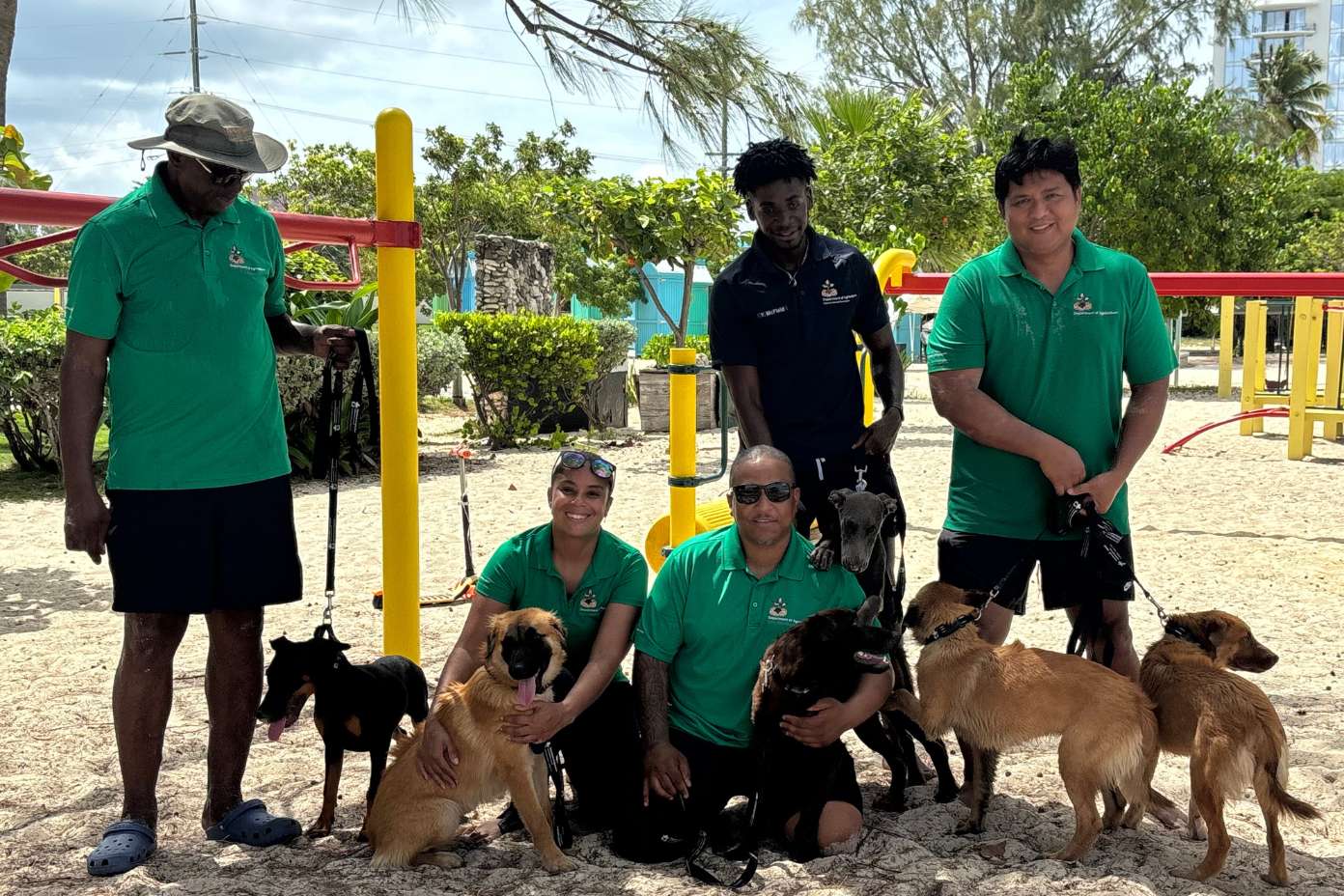
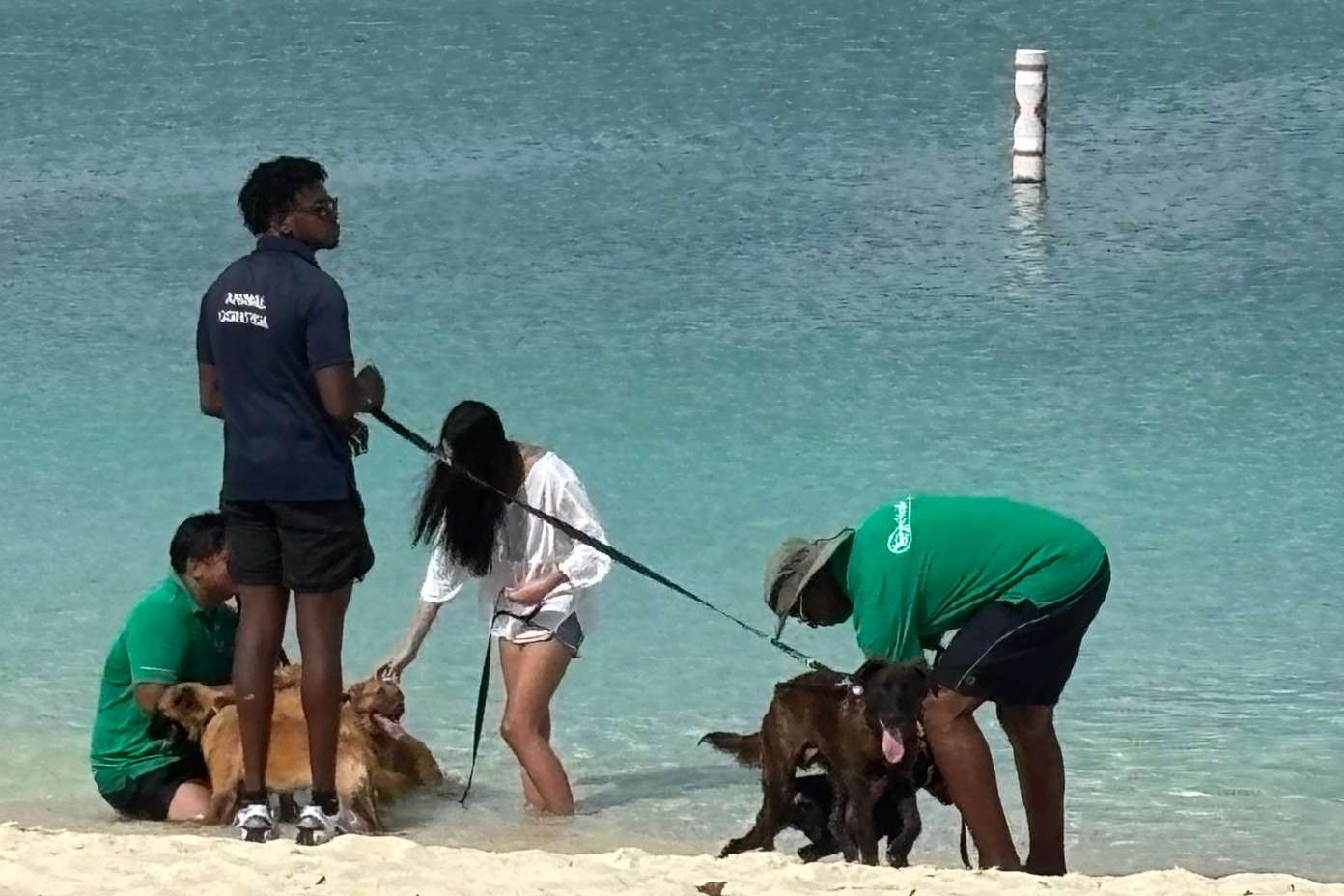
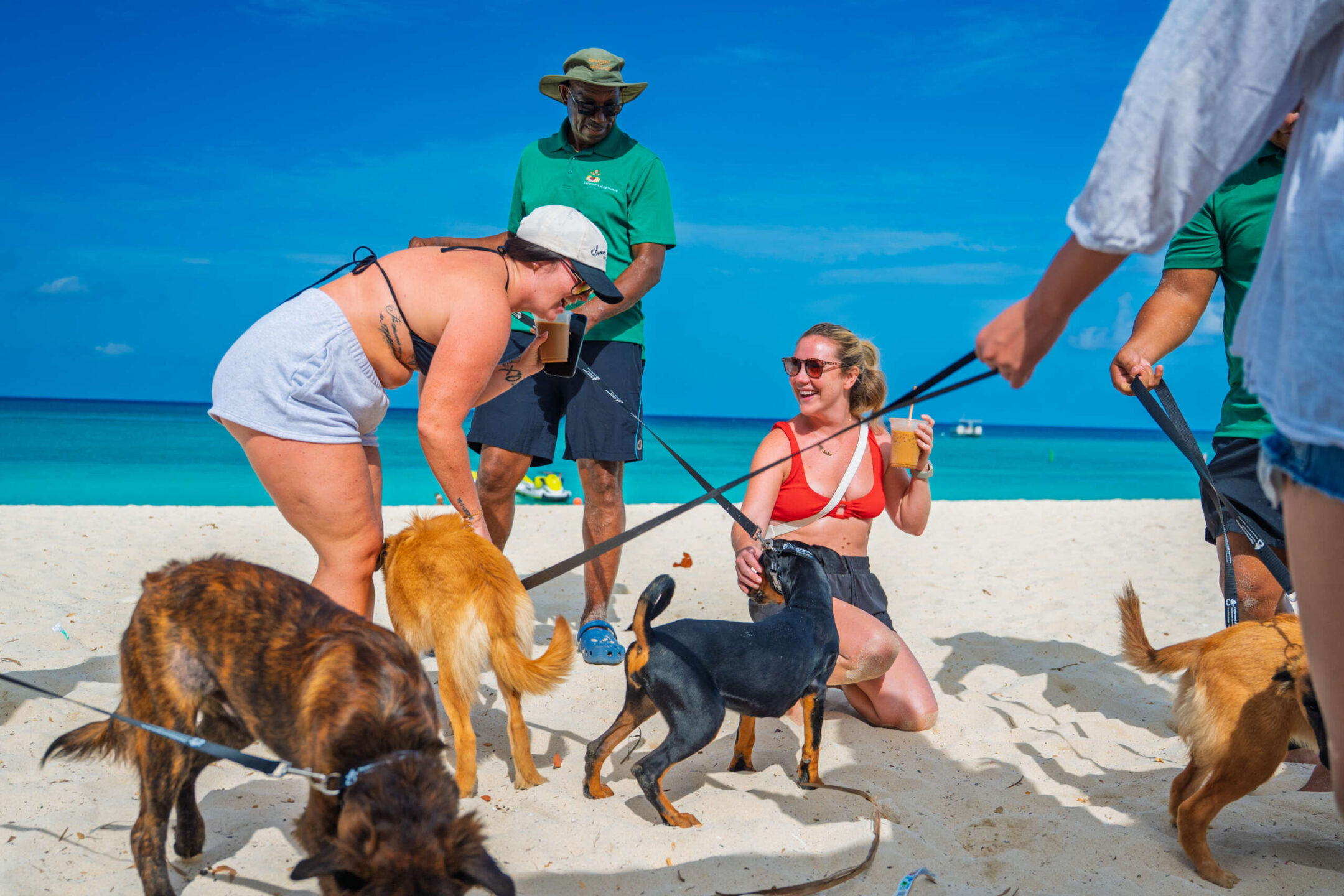
On Sunday morning, 10 Aug., Department of Agriculture staff traded kennels for coastline, leading a beach walk on Seven Mile Beach with a group of playful, adoptable dogs.
The event, part of a series of monthly initiatives, invited the public to meet the animals, learn about adoption and bust a stubborn myth: that dogs at the facility are destined for euthanasia.
“Euthanasia is a last resort,” said Dr. Ashli Welcome, veterinary officer and head of the Animal Welfare and Control Services Unit.
“Some of our dogs are even on prohibition from euthanasia,” she said. “All of the dogs you see here, they will never be euthanised. The other option we have is a transfer programme. So we partner with the Humane Society, One Dog At A Time and other charity organisations. We wait for them to have space and we transfer our dogs over there. We hold the dogs as long as we possibly can.”
The dogs in Sunday’s line-up had stories as varied as their personalities.
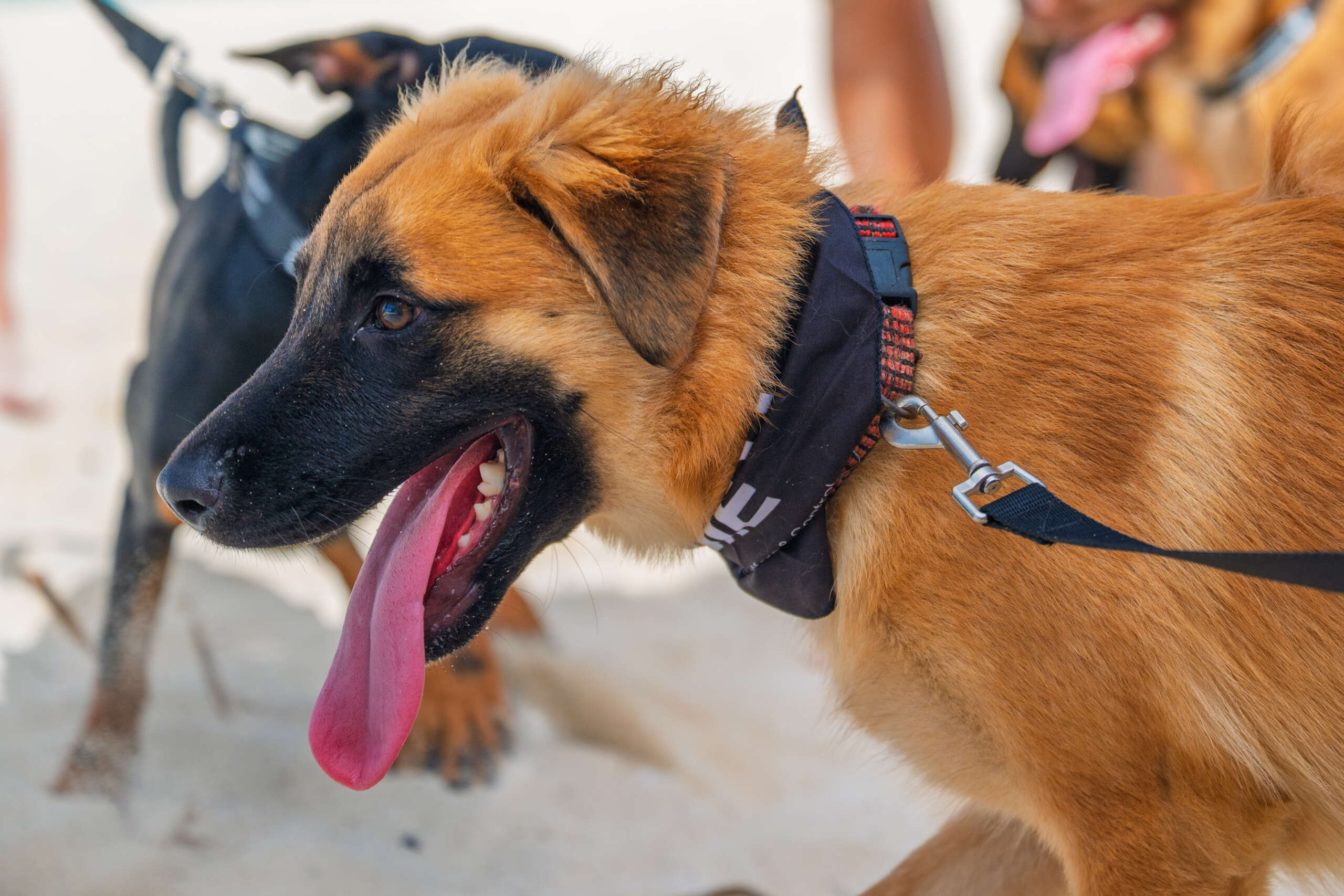
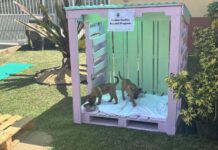
George, a fluffy black-and-brown ‘sweetheart’, was rescued from a cat cage crammed with four other dogs. Reggie, a sprightly golden retriever mix and his siblings Ham-Ham and S’mores were born at the Department of Agriculture after their mother was found pregnant and wandering the streets. Juniper, a striking dalmatian-Doberman cross, was born in Department of Agriculture care after her owner surrendered her pregnant mother.
“Some of the dogs have come to us through neglect situations,” said Welcome. “Some of the dogs have been surrendered by owners who either can no longer or are no longer willing to care for those animals.”
There are currently over 30 dogs under the Department of Agriculture’s care, Welcome said, with about a dozen ready for adoption. Before going home, each dog is dewormed, vaccinated, microchipped and – within 60 days – spayed or neutered.
Welcome urged Cayman residents to take a proactive role in preventing the birth of unwanted dogs, starting with the most critical step: spaying and neutering pets. She called on owners to microchip their pets so they can be returned if lost and to license them as required by law to aid in reunification.
She also encouraged Cayman to “adopt, don’t shop” and said that many of the animals at the pound are close to purebred – including Doberman and Ridgeback crosses – eliminating the need to buy from breeders.
 Above all, she emphasised responsible ownership, stressing that people should only take on an animal they can commit to for its entire lifespan, and have a plan if they can’t. “It’s not fair,” she said, “for a dog to live with you for years and then be surrendered to an unfamiliar environment.”
The agriculture department’s goal for 2025 is simple: to clear the shelter. In just one day before the event, three dogs found homes thanks to community support.
For adoption information, visit the Department of Agriculture website or call 947-3090 or 916-3051.
Related Videos





No dog should ever be euthanized. They need to be neutered or spayed. All dog owners should have their dogs licensed. So called breeders must be licensed, and meet certain criteria.. Many are back yard breeders, and haven’t a clue on dog breeding. Animals are sadly discarded here and on many islands. Animal welfare is not taken seriously. Look at the Humane Society. The conditions are horrific. The workers do a wonderful job with what they have to work with, but a flooded facility most of the time, too little space, and lack of resources, have now created an intolerable situation. I used to live on Cayman, and know first hand the problems of caring for animals, no one wants. Time for Cayman to step up, and fix a fixable problem.