

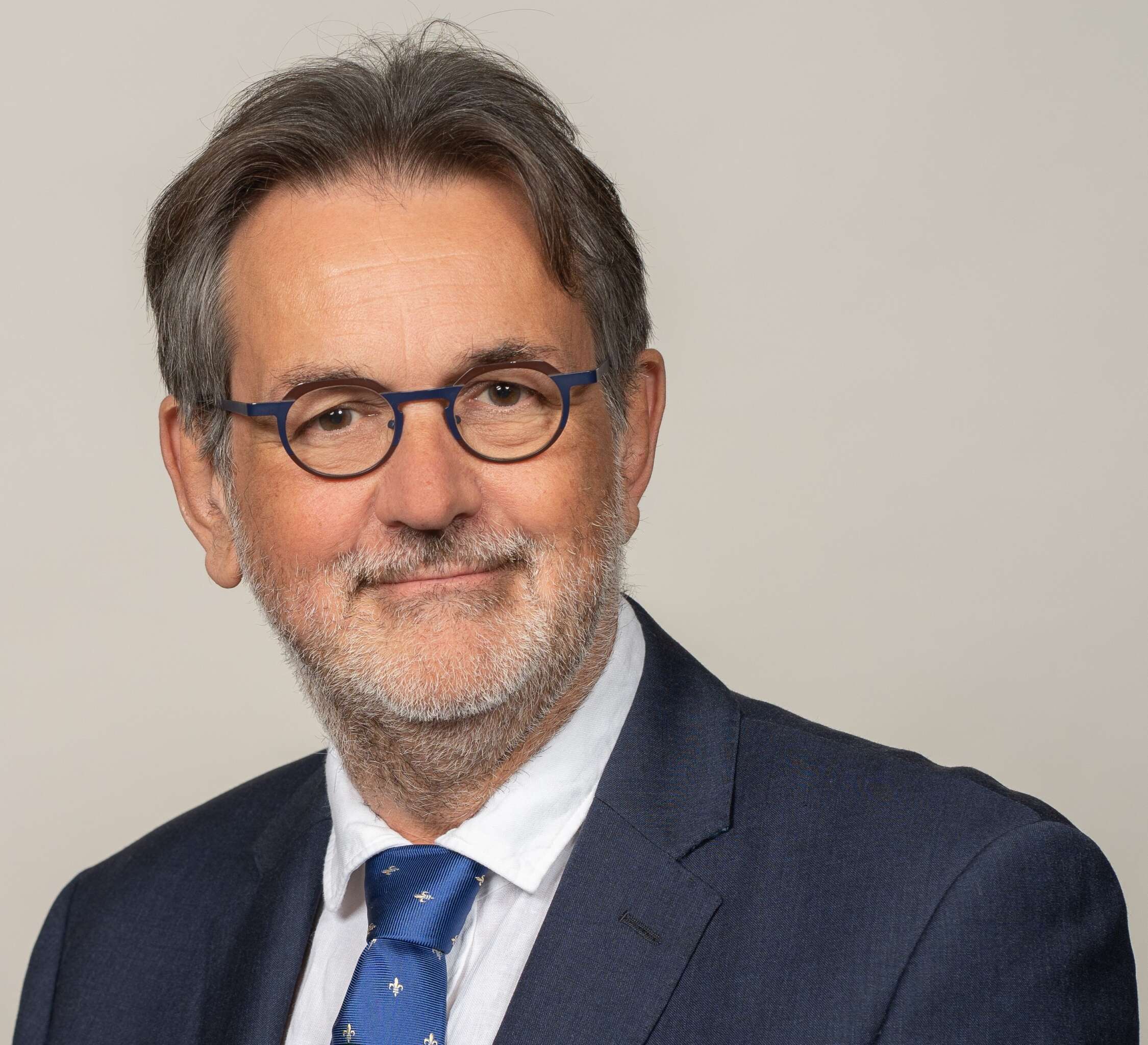
A worldwide measles resurgence, driven in part by a growing anti-vaccine movement, has Chief Medical Officer Dr. Nick Gent warning that, even with currently high immunisation rates, Cayman cannot afford to be complacent.
“Measles is probably the most infectious disease that we ever routinely see,” said Gent. “If immunisation rates slip and a vulnerable population develops, measles can get in quickly… It goes through a population faster than you can control it when that happens. We must not let that happen in the Cayman Islands.”
Worldwide, measles cases are climbing sharply. In the Americas alone, there have been 9,756 confirmed cases so far this year, according to the Pan American Health Organization. Canada has recorded more than 4,300 cases, Mexico nearly 3,750, and the United States 1,356 cases and three deaths as of 5 Aug., with almost 60% of those US cases reported in Texas.
In 2024, more than 14 million children worldwide received no vaccines whatsoever, according to the World Health Organization and UNICEF. Just nine countries accounted for over half of these unprotected children. The consequences are already being felt – reports warn that Canada could lose its measles elimination status as early as October.
Cayman’s measles vaccination numbers
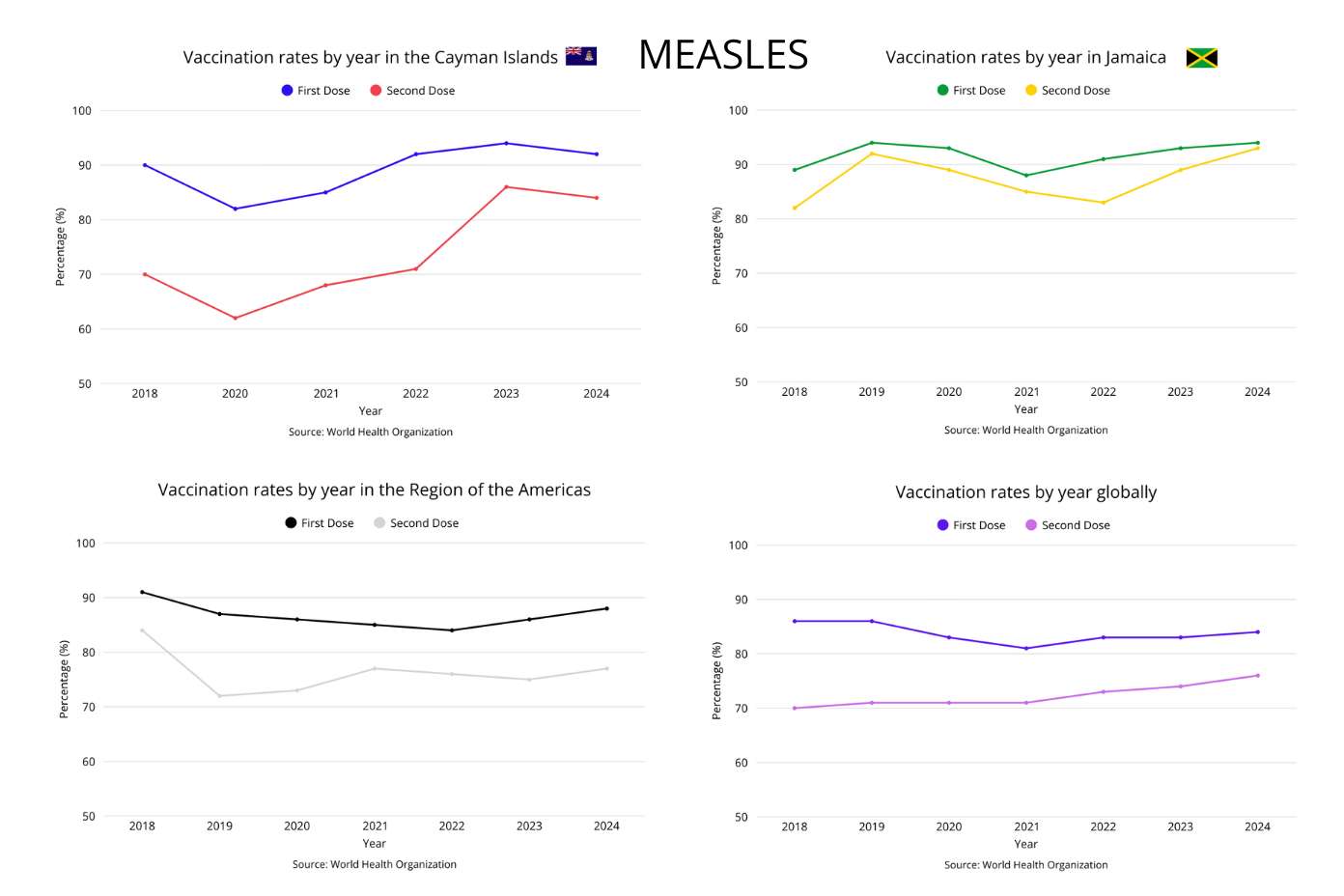
Cayman’s latest vaccination figures are stronger than most of the region. According to the World Health Organization, 92.2% of children here received their first dose of the measles-containing vaccine in 2024, compared to 88% across the Americas and 84% globally. For the second dose, Cayman’s coverage is 83.6%, above the regional average of 77% and the global average of 76%, but still below the WHO target of 95% for both doses.
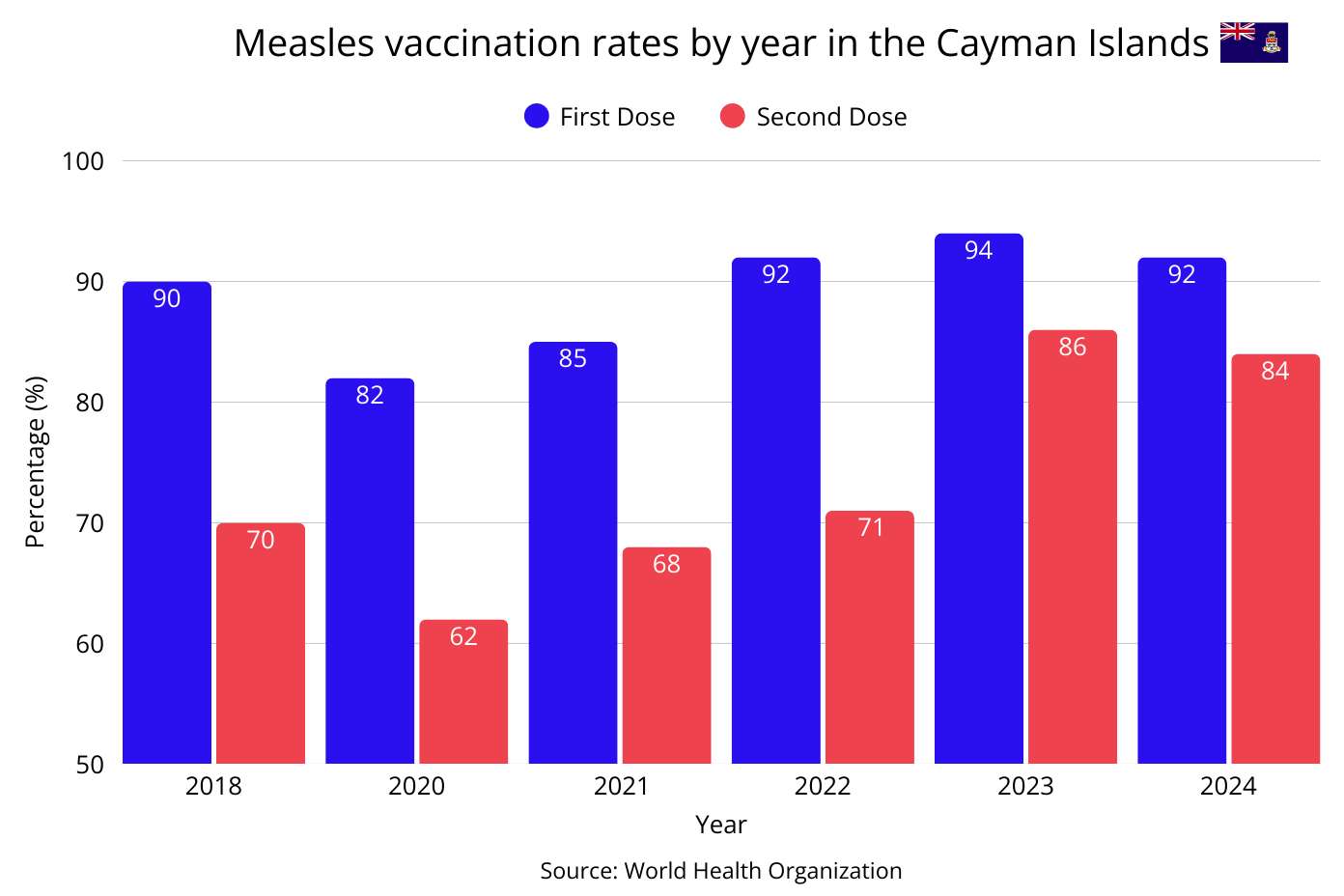
While Cayman’s rates have rebounded from pandemic-era lows – first-dose coverage dropped to 81.7% in 2020 and second-dose coverage to just 62.4% – the latest data show a slight decline from 2023 levels.
“Our immunisation rates for measles are good, but they’re not as good as I want them to be,” said Gent. “Our immunisation rate for first MMR – the first dose of the vaccine – is about 92% and for the second dose, it’s about 84%. I would like both of those to be well above 90%.”
Why measles spreads so fast
Gent warned that measles’ infectiousness is unmatched.
“When people are infected, they generate a lot of measles virus … The infectious dose is very low, so susceptible people only need a small amount to become ill,” he explained. “If people remember the R number [the infection rate of the virus] around COVID – we were concerned about two or three – the R number for measles is over 20. It’s at the top of the list when it comes to infecting people.”
And while many in Cayman, including most practising doctors, have never seen measles firsthand, Gent stressed the seriousness of the disease. “There’s a myth that it’s not severe. In fact, it’s actually one of the worst childhood infectious diseases … I don’t know of a parent who’s had a child with measles [who was not] vaccinated, who wouldn’t say, ‘I wish I had had my child vaccinated,’ when they see how truly ill the children are.”
Countering anti-vaccine narratives
Social media posts circulating globally, and even locally to some extent, echo global anti-vaccine rhetoric – questioning WHO recommendations, suggesting that vaccines themselves cause outbreaks and highlighting rare adverse reactions.
Gent offered a strong rebuttal. “The world is a different place because of vaccines … We’ve used them in such enormous volumes that we know they’re safe … There are lots of people making an industry out of questioning the safety of vaccines, but they’re not looking at that magnificent track record that we’ve got of eliminating diseases … Vaccines are safe. Go and talk to your healthcare professional. They will have an honest discussion with you. They work. There really isn’t a downside.”
He also points to a troubling cycle seen abroad. “People decide vaccines aren’t for them, vaccination rates drop, the diseases reappear. And everybody goes, I want the vaccines again.”
Making vaccination easier
Gent says access is key to keeping Cayman’s numbers high. If vaccines are available in a convenient clinic, rates are high. If there are barriers – cost, travel, infrequent availability – rates fall. Remove the barriers, make them free and remind people, and rates will rise.
Recent changes to Cayman’s pharmacy law, which allow more healthcare professionals to administer vaccines, could boost uptake further. “Putting immunisation into pharmacies as well as the traditional clinics, for instance, or using non-traditional settings where people can visit and set up immunisation clinics. These are the kind of things that I want to see happening,” he said.
For Gent, the bottom line is clear. “Two doses give good lifelong protection. Around 12 months of age for the first and around 18 months age for the second. It’s part of our national childhood immunisation programme, available free of charge.”
Related Videos









Is Cayman able to / wishing to require proof of Measles Vaccination (or a titre test) for persons requesting residency? Is that a human rights violation? We did have that requirement for covid vaccinations if I recall correctly.