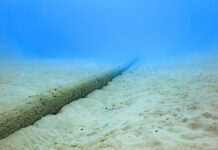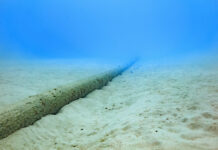
With the government set to issue a ‘request for proposal’ for third subsea data connection, a Cayman-led consortium has announced it is ready to enter a bid.
The news follows the December approval of the Submarine Cable (Telecommunications Resilience) Act, 2025. It’s a marked pick-up in activity for Cayman’s third subsea cable project, which had been discussed for years without any tangible progress.
The consortium is comprised of Caymanian internet firm SALT Wireless, its sister firm the Cayman Cable Co. and Telconet Latam, an Ecuadorian telecoms firm. SALT Wireless operates Cayman’s only internet exchange point, which means it runs the infrastructure that allows different telecoms companies in the islands to exchange data with each other. Cayman Cable Co. was set up by SALT Wireless to handle the bid and any local operations.
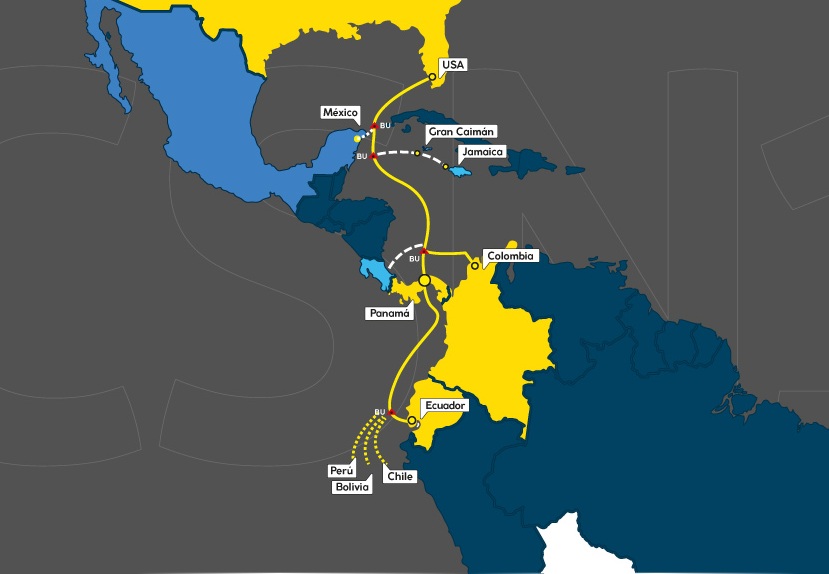
Telconet is a key partner for SALT because it has experience developing and operating subsea cable operations. It is currently developing the CSN-1 cable, which will run from Ecuador’s Pacific Coast, pass through the Panama Canal and then head north through the Caribbean before making landfall in Florida. The cable is already more than half built, having made landfall in Colombia in October 2025.
Cable competition
SALT Wireless CEO Blair Lilford, who is also CEO of the Cayman Cable Co., told the Compass that the bid is more about just laying a cable. “This is about safeguarding Cayman’s digital future – supporting financial services, government, healthcare, education and the broader economy with resilient, secure, and future-proof connectivity.”

Lilford said if the consortium won the bid it wouldn’t necessarily lead to lower internet costs, though it would bring faster internet speeds to Cayman.
In addition to creating extra capacity and faster internet speeds, a new cable could potentially help diversify Cayman’s dependence on Flow’s parent company Liberty, which controls the subsea cable landing stations on the islands.
At time of publication Liberty had not responded to a Compass question about its plans to bid for the third cable, although Liberty recently announced plans to upgrade one of its existing cables. Over the past two decades various companies, including Digicel and Seaborn, have demonstrated an interest in building a third cable.
No formal bids can be submitted until the government issues a request for proposal. “A firm date has not yet been set,” said a Ministry of Planning and Infrastructure spokesperson. “The ministry is currently preparing an Expression of Interest for release to the market, which will be followed by a formal Request for Proposals. The ministry anticipates initiating this process in the coming weeks.”
But what is clear is that the government is going to take a clear role in the third cable, with the legislation empowering the government to “enter into an agreement with a commercial partner for the purposes of constructing and operating a submarine cable connection”.
Some industry experts have questioned if the recent arrival of Starlink in Cayman would reduce the need for a third cable. But that was refuted by the ministry spokesperson. “Satellite providers offer a useful option for hard-to-reach areas and as a supplementary or back-up solution. However, the ministry does not view satellite connectivity as a viable substitute or alternative to a dedicated subsea cable connection, which remains essential for national-scale capacity and resilience,” she said.
Related Videos