The magic of Little Cayman is no secret to anyone who has visited.
People seldom make their first trip their last. I’m no exception. I’ve been returning to this island for nearly 20 years … on the full moon in late January or early February. I’m part of a team studying a Nassau grouper spawning aggregation on the west end of the island.
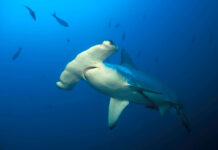
The Grouper Moon Project – a partnership between the Department of Environment, Reef Environmental Education Foundation, UC San Diego Scripps Institution, and Oregon State – has produced one of the most successful restoration efforts for any marine species.
For those involved, we believe in magic. We’ve seen it.
We’ve watched thousands of huge fish spawn in unison, their behaviour triggered by light bouncing off an object a quarter million miles away. And we’ve been amazed by the capacity of this ocean ecosystem to bounce back when humans release the stranglehold of high demand. For us, Little Cayman is special.
But there’s even more magic on Little Cayman. It starts in outer space. For all the years I’ve been visiting, in the winter months, one special star among the mind-bending millions in the Cayman night sky intrigues me.
Want to see it? Look into the southern sky, not high above the horizon (fewer than 18 degrees up, for those who like numbers). You’ll see a tiny disco ball madly flashing red, blue, green and white. You’ll know it when you see it. It’s hard to miss.
It’s a star named Canopus. I call it the Party Star. One look and you’ll understand why.
The Party Star … I did some research to see if the name has ever been used before. I found nothing. I asked ChatGPT. Nothing. So I thought I’d plant the flag after telling people about it for years.
I think Little Cayman deserves to be known as ‘The Home of the Party Star’.
Why does the Party Star flash colours? Smart people say it’s because the star is so low in the winter sky when seen from Little Cayman.
When Canopus’ starlight finally finishes its 310-year journey across space to Earth, it hits at a low angle relative to Little Cayman, so your eyes are seeing it through a lot more of Earth’s atmosphere than light from most other stars. As it travels through all that air, it encounters layers with different temperatures, densities and humidity. These layers cause the light to bend, scatter, and split – they essentially create a fluid prism.
Scientists call it “atmospheric scintillation” – it’s twinkling on steroids.
It makes sense to me. I’ve seen Canopus from Chile. There, it’s high in the sky and simply shines bright and white. In Little Cayman, it enters the party and shouts’, welcoming me on every visit.
Little Cayman isn’t the only place on Earth where Canopus flickers, but it may be the best. The island has the perfect combination of clean, layered maritime air, strong temperature inversions over its warm water, and very little light pollution.
Most other places at similar latitudes lack one or more of these qualities. That reduces the intensity or reliability of the effect. I’ve rarely been disappointed by Canopus in Little Cayman – and only when the clouds block it.
If you want to see the irrepressible, colour-cycling magic of the Party Star, now you know where, and when, to find it – somewhere dark, tropical, and connected with the sea. Just sink your toes in the winter sands of Little Cayman, then look for an unruly celebration just above the horizon in the southern sky.
You’re standing in a special place, where outer space silently works its magic – guiding groupers across the generations – and marking it with a blinking light.
You’re in the home of the Party Star.
Steve Gittings
Steve Gittings is the former chief science officer for the US National Oceanic and Atmospheric Administration’s Office of National Marine Sanctuaries, a board member of the Central Caribbean Marine Institute, and a regular visitor to Little Cayman.
Related Videos