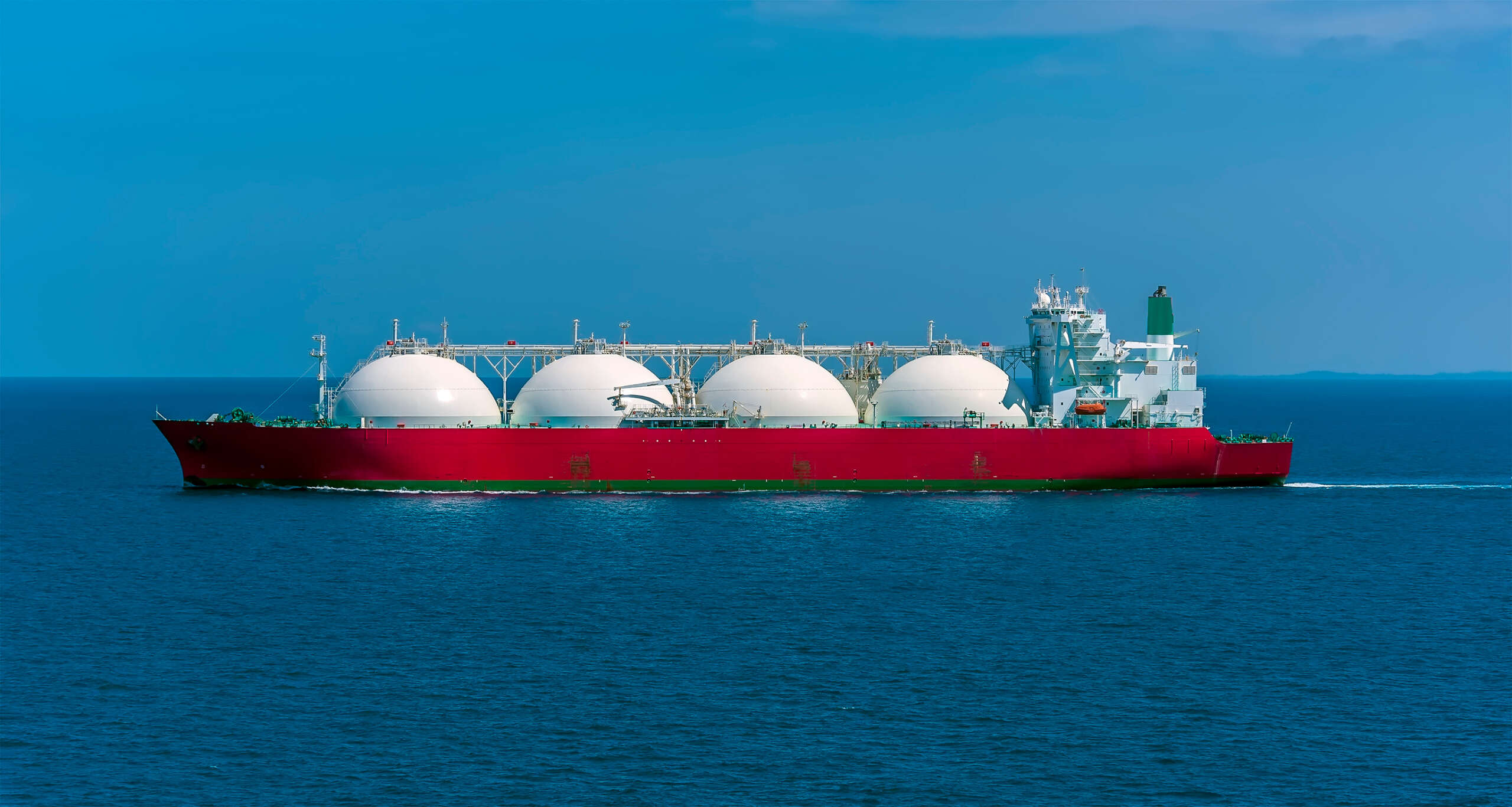
Historically, natural gas was a regional market because suppliers could typically only sell to countries that were connected by gas pipelines. But since the turn of the century, heavy investment in liquefied natural gas plants – operations that cool natural gas into a liquid form that can be transported in special LNG tankers – has massively increased global supply. That makes gas-fired power plants more feasible for islands, like Cayman, that aren’t connected to regional natural gas pipelines.
LNG isn’t a renewable energy source, but gas-fired power plants emit less greenhouse gases than diesel ones. The US Energy Information Administration calculates that petroleum-based power plants emit an average of 2.46 lbs of CO2 per kilowatt hour (kWh) of electricity produced, compared to 0.96 lbs of CO2 per kWh for natural gas plants.
That means LNG can help Cayman meet one of the key goals laid out in the Cayman Islands National Energy Policy 2024-2045. The policy aims for electricity supply emissions to be reduced by 30% from 2019 levels by 2030.
Another advantage of LNG is that gas-fired power plants are a reliable source of “spinning reserve”. As Cayman incorporates more intermittent renewable energy onto its grid, it will need spare supplies of electricity that can kick in during dark or cloudy conditions. Long term, that cover would need to be provided by a storage system if Cayman wants to meet its goal of 100% renewable energy by 2045. But in the medium term LNG could be a more economic solution.
Recent power plant upgrades by CUC mean that some of its generators could be converted to run on natural gas. In early 2026 the company issued a request for proposals to pre-qualified bidders to supply LNG to the Cayman Islands.
LNG also costs less than diesel. “If we can save 5 cent per kilowatt hour (kWh) by utilising LNG as an alternate fuel to replace 40% of the diesel we are currently using, then this could provide fuel savings of $15million in annual fuel cost savings for our customers,” said Richard Hew, CUC’s president and CEO.
Price stability
Price stability is another advantage. One of the issues with Cayman’s diesel dependence is that external events over which the jurisdiction has no control – such as the war in the Middle East – have massive repercussions on local finances. For example, it’s estimated the government’s energy “relief package” announced in late April will cost approximately $9 million.
That volatility makes it harder for households, businesses and the government to plan their finances, which is why Cayman needs more stable electricity prices. LNG could help here too. The reason is that natural gas is typically much cheaper – per unit of energy produced – than diesel. But converting natural gas into LNG, so that it can reach places not connected to natural gas pipelines, requires costly operations and equipment.

“A large part of the LNG fuel cost is fixed,” said Hew. “The commodity cost – the cost of the molecule itself – is relatively small compared to the overall price. So, when commodity prices move, the customer does not experience the full swing.”
That contrasts with the price of electricity produced from diesel – which doesn’t need the same level of expense to be converted and shipped – and is more closely correlated to movements in the cost of oil.
“If LNG cost 10 cents per kilowatt hour, perhaps three cents would be the molecule [the natural gas] and seven cents would be fixed costs such as liquefaction, shipping, storage, regasification and equipment,” said Hew.
“If the [benchmark] Henry Hub natural gas price doubled, under that scenario the molecule might rise from 3 cents to 6 cents per kilowatt hour. Add the 7 cents of fixed costs and you go from 10 cents to 13 cents,” explained Hew. “But if diesel at 15 cents doubles, you pretty much double the cost and you are at 30 cents per kilowatt hour.”
Yet the hurdle with LNG for Cayman is that the National Energy Policy says the jurisdiction’s electricity sector must be fuelled by 100% renewable energy by 2045. That creates a financial challenge to build gas infrastructure and earn the necessary return on investment before the equipment must be decommissioned.
Related Videos