Residents are being urged to take precautions as a plume of Saharan dust moves across the western Caribbean, prompting a Dust Alert from the Cayman Islands National Weather Service through Thursday.
The Ministry of Health, Environment and Sustainability and the Public Health Department issued a public health advisory Tuesday, warning that reduced air quality could affect vulnerable groups, particularly people with asthma and other respiratory conditions. The dust alert will remain in place through Thursday.
Chief Medical Officer Dr. Hilary Wolf said the annual phenomenon originates in North Africa and can travel thousands of miles across the Atlantic before reaching the Caribbean.
“Saharan dust is a mixture of dust and sand that travels thousands of miles,” Wolf said. “This dust is expected to reduce air quality and cause respiratory issues, so it is important that all residents are monitoring official channels to ensure they are taking the necessary steps to protect themselves and their families from the potentially negative impacts associated with the dust cloud.”
Based on forecasts from the National Weather Service, the effects of the dust plume are expected to begin Tuesday evening, with the highest concentrations forecast on Wednesday before gradually diminishing through Thursday.
Dr. Samuel Williams-Rodriguez, director of Primary Healthcare Services at the Health Services Authority, said residents may experience a range of respiratory symptoms while the dust remains overhead.
“Coughing, wheezing, sore throat and shortness of breath may be experienced while the dust cloud is over us,” he said. “Persons with asthma or other respiratory conditions are at increased risk and are advised to take additional precautions during this period.”
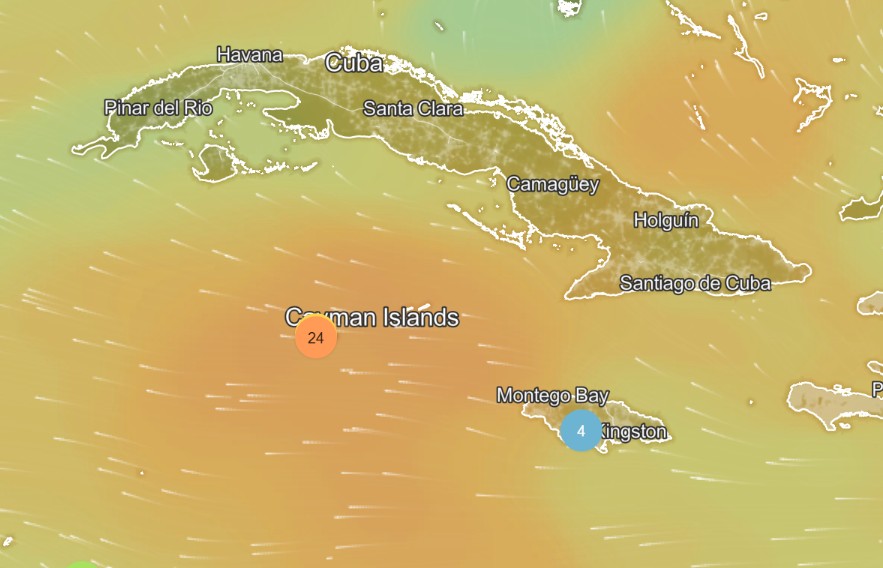
The advisory follows a Compass report on 30 May, which noted that a large Saharan dust plume was already moving across the Atlantic and beginning to affect local air quality. The article highlighted elevated levels of PM2.5 which are microscopic airborne particles commonly associated with dust, smoke and pollution, detected in Grand Cayman through the United Nations Environment Programme’s IQAir monitoring platform.
The phenomenon, known as the Saharan Air Layer, consists of hot, dry air carrying fine dust particles from the Sahara Desert. According to the National Oceanic and Atmospheric Administration , these outbreaks occur regularly between May and October and can transport more than 100 million tonnes of dust across the Atlantic each year. The dry air can also suppress cloud formation and tropical cyclone development.
Health officials are advising residents to stay indoors where possible, keep doors and windows closed, use air conditioning on recirculation mode and wear masks if spending extended periods outdoors. Schools and workplaces are also being encouraged to limit outdoor activities until conditions improve.
The National Weather Service forecast calls for warm and hazy conditions over the next several days as the dust plume slowly drifts across the region.
Related Videos