At a glance
- Two loggerheads, named Amber and Watts, have been tagged with trackers.
- For the first time in 20 years, satellite tags are being fitted to turtles to monitor their migratory patterns.
- Acoustic tags that will ping off receivers will track them in local waters.
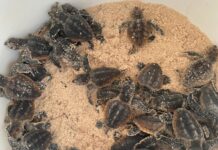
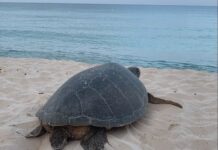
Two loggerhead turtle nesting on local beaches have become the first turtles to be fitted with a satellite transmitter and acoustic tag as part of a new tracking programme by the Department of Environment.
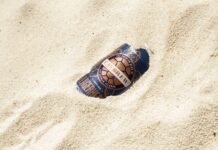
The first turtle, named Amber in honour of Cayman Islands Brewery’s Lagerhead amber beer which helps fund turtle conservation, was tagged by a team of researchers on the night of Monday, 1 June. The second, Watts, sponsored by CUC and named after units of power, was tagged on Tuesday, 2 June. They are the first of 10 turtles the department expects to tag this summer.
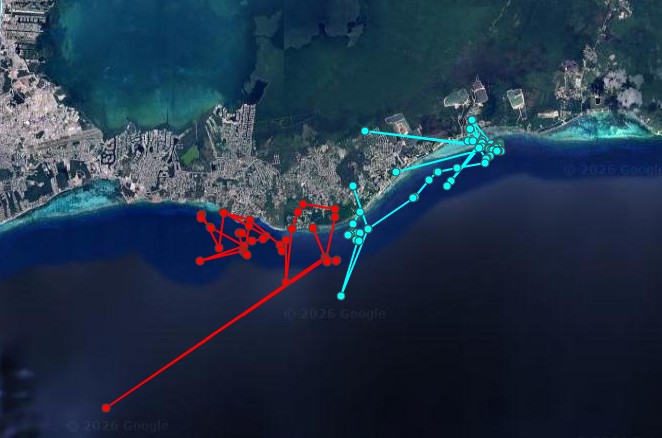
The project, funded by the UK’s Darwin Plus Local initiative, involves attaching an acoustic tag, or pinger to the turtles, which sends a sound signal that can be detected by dozens of receiving stations around all three islands. If the turtles pass within 300 metres (985 feet) of the receiver, their signals will be picked up.
The turtles were also fitted with a satellite tag so they can be tracked if and when they migrate outside local waters.
The last time satellite tags were used on turtles was in 2006, part of a PhD project for the Department of Environment research officer Janice Blumenthal. Now, 20 years later, she is working on this project.
“We’re starting out with loggerheads, and then we’re going to be doing also greens and hawksbills,” Blumenthal told Compass Media in a recent interview. “We’re getting sponsorship from the community for the satellite tags, and these will allow us to follow these turtles and their migrations overseas.
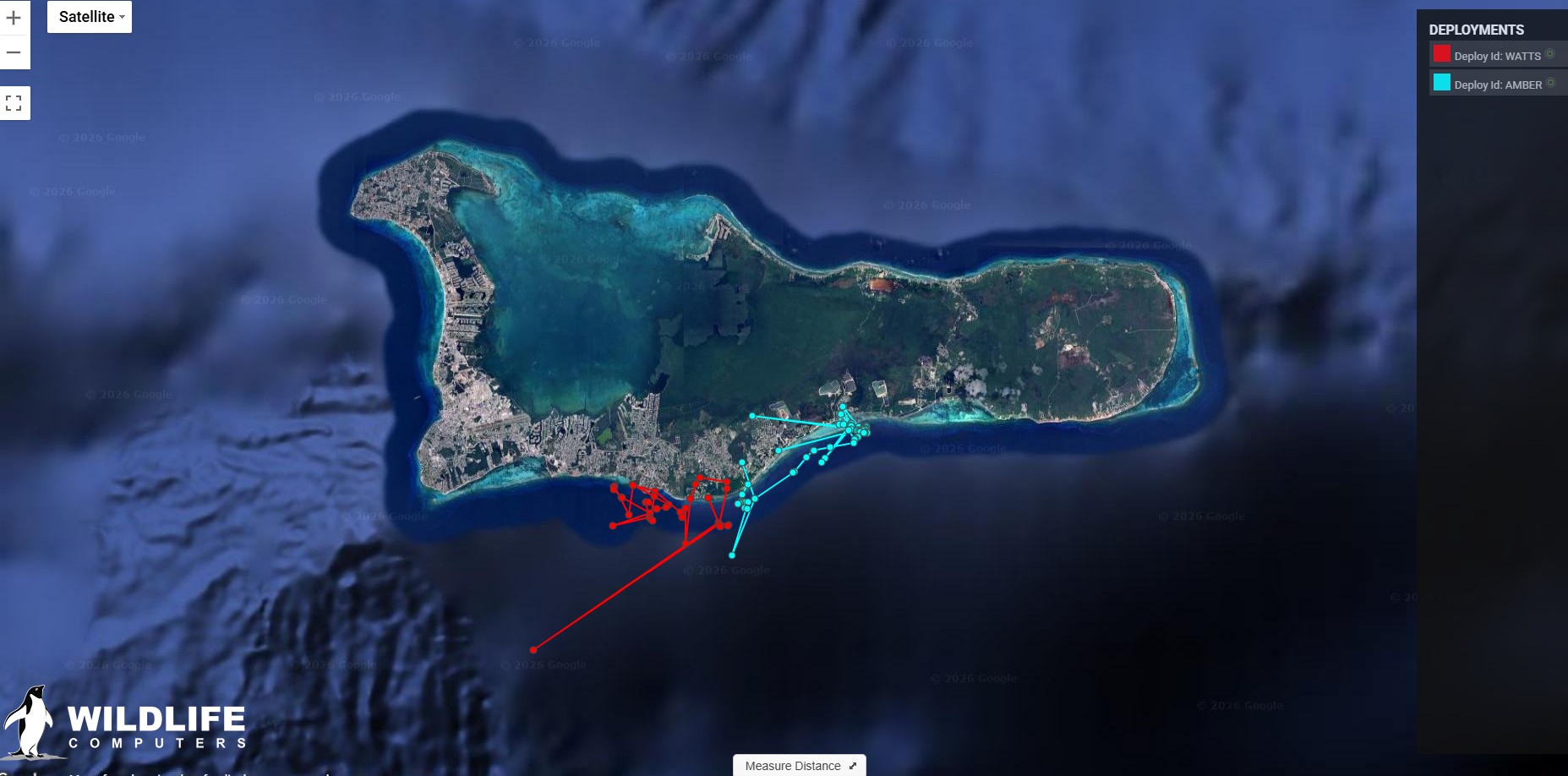
Tracking turtles when they leave Cayman waters
Speaking after the first turtle was tagged, Blumenthal said the team was excited “to see where Amber goes locally with her acoustic tag, and also as she begins her journey, where she goes overseas”.
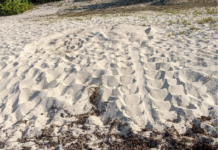
The Department of Environment has been monitoring turtle nests on local beaches since the 1990s.

“We know a lot about our turtles while they’re nesting on the beach,” said Blumenthal, “but this will give us information on where they go when they’re not nesting”.
While the nesting turtles can be tagged on the beaches when they come ashore to lay their eggs, male and juvenile turtles – which the researchers also hope to track – will have to be caught and tagged in the open sea.
Alejandro Prat, the project leader on the tagging project, and Joseph Roche, the field leader, tagged Amber on Monday night, having waited in place for a number of nights for the turtle to nest. Turtles lay multiple clutches of eggs during the May-November nesting season, usually returning to the same beach site to lay each time.
However, tagging the first loggerhead wasn’t easy, Prat said, as it took two weeks of visiting the beach nightly to find her.
Describing the process, Prat said, “We wait for the first loggerhead nest … then we can schedule more or less when this turtle is going to come back. We know that between 11 and 15 days, that turtle is going to come back to the same beach. That is in theory, because we’ve just studied the green turtles in this island. … They have real fidelity to the beach they go to, but we are sure that loggerheads are moving around beaches, so it’s not that easy to find that turtle on the night we are expecting. So it has been tricky.”
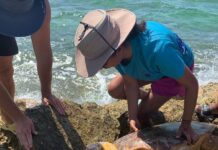
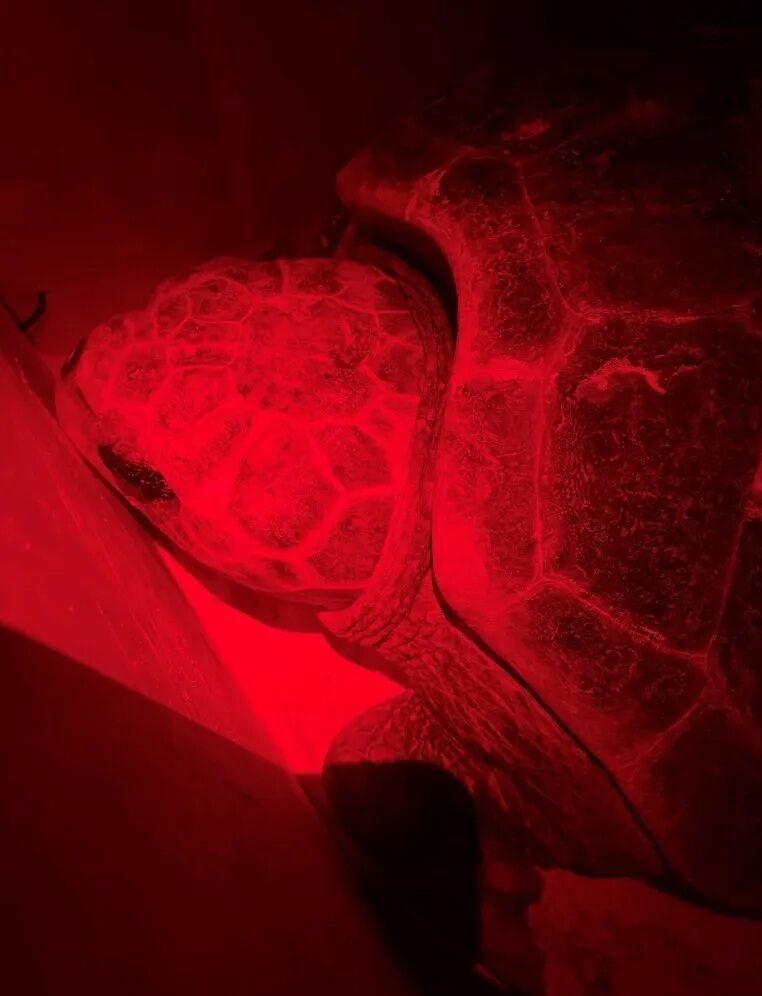
They had built a three-door wooden box in which they enclosed the turtle, covered her head with a towel to keep her calm, and then, after cleaning a patch of the turtle’s shell, affix the satellite tracker, which is about the size of small cereal box, with epoxy paste.
“Then we have to sit and relax with her because it all needs to dry before she gets in the water. While we’re doing this … we’re putting the acoustic tags on her side, where it won’t rub,” Roche said.
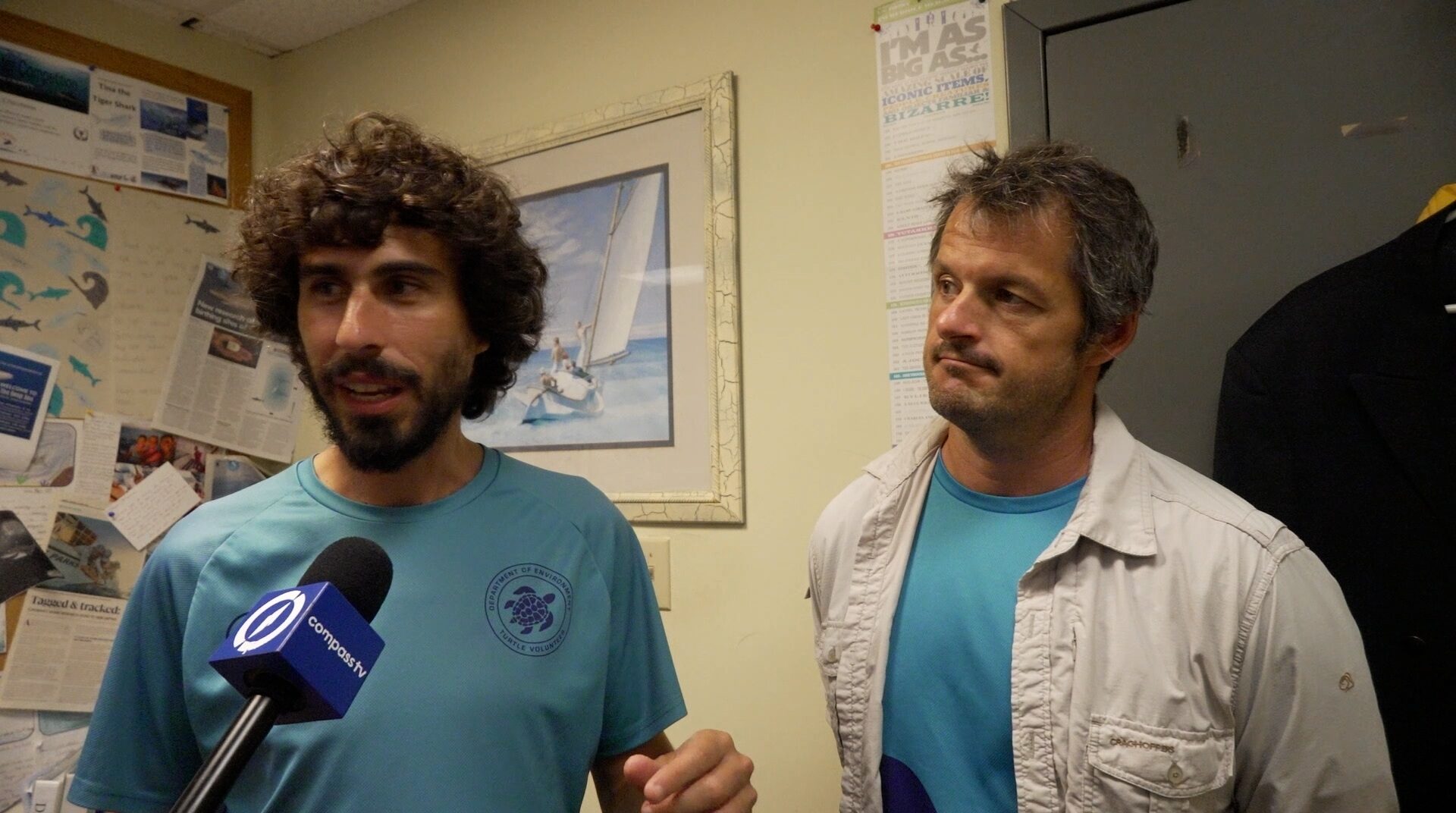
They then measured the turtle and released her.
“It sounds very simple, but this is at 2 o’clock in the morning, while getting dive bombed by mosquitoes,” Roche added.
As well as determining migratory patterns of turtles, the project also aims to find turtle feeding grounds around the islands, so that, if necessary, steps can be taken to protect those areas.
“If you don’t protect the feeding grounds, that turtle won’t have the energy to produce eggs, then won’t come back,” Prat said.
There are also plans to tag male turtles with the acoustic monitors. Unlike the females, they do not come ashore, as they mate in the water and spend their lives in the sea, so are not studied as much as the nesting turtles. Tagging the males – something that has not been done locally before – will help to identify breeding areas around Cayman, Prat added.
To track the turtles’ progress, click here.
Related Videos