The US National Oceanic and Atmospheric Administration has declared the arrival of El Niño, as forecasters downgrade their outlook for the 2026 Atlantic hurricane season in anticipation of the climate pattern’s development.
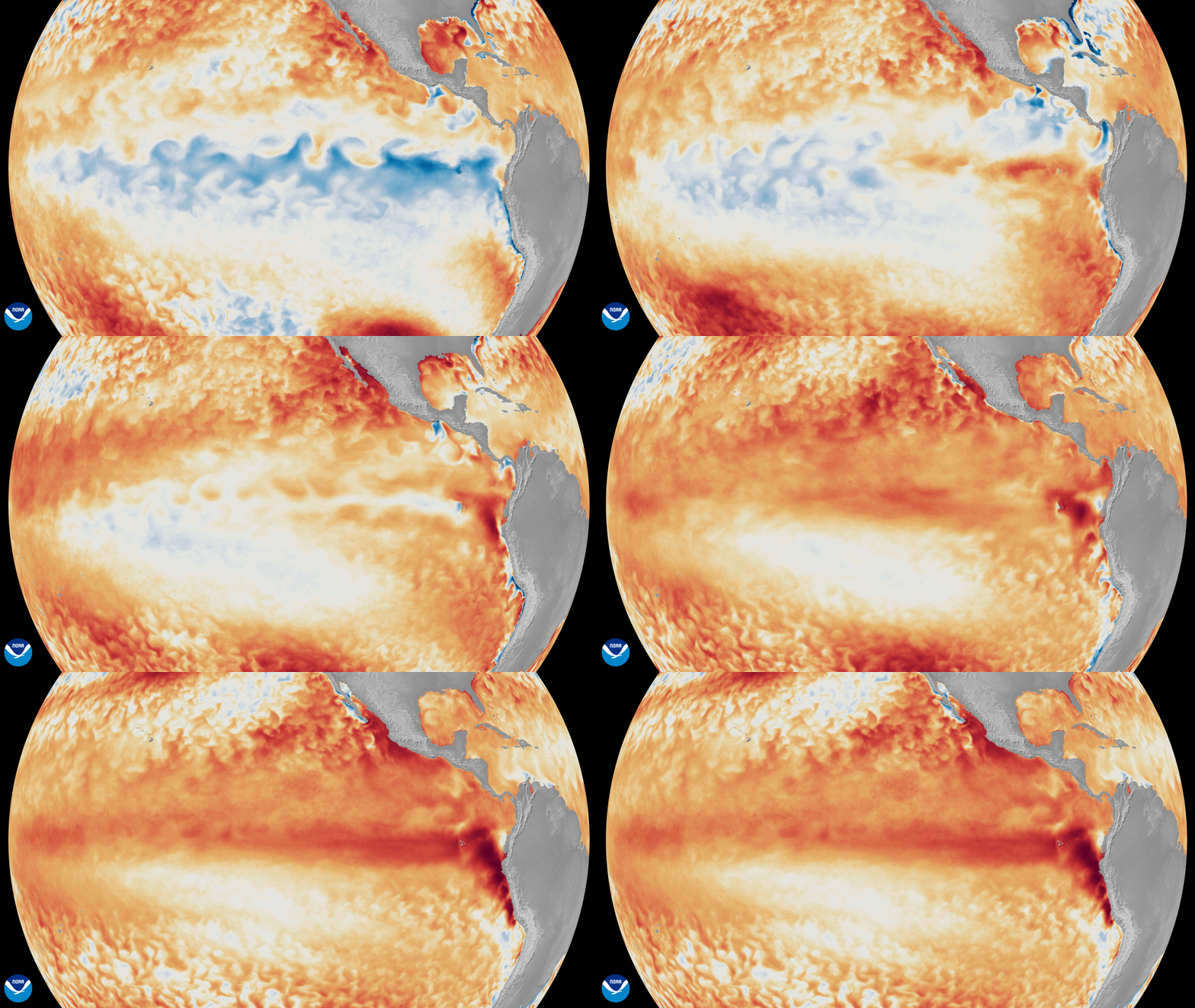
“El Niño conditions are present and expected to strengthen into the Northern Hemisphere winter 2026-27,” NOAA’s Climate Prediction Center said in its diagnostic discussion on 11 June, noting that the coupled ocean-atmosphere system now reflects the onset of El Niño conditions.
The agency said above-average sea surface temperatures have developed across the central and eastern equatorial Pacific and forecast models indicate the event is likely to intensify in the coming months.
It estimates there is a 63% chance of a very strong El Niño developing during November through January, potentially placing it among the strongest events on records dating back to 1950.
The declaration came hours after the Compass reported that El Niño’s arrival was imminent.
For the Cayman Islands, the official declaration reinforces expectations of hotter conditions and reduced rainfall through much of the wet season.
The Cayman Islands National Weather Service has already warned of a greater than 70% probability of above-average temperatures and a greater than 70% probability of below-average rainfall this rainy season, with May already recording both higher-than-average temperatures and reduced rainfall.
The weather service warned of an increased likelihood of heatwaves, recalling 2023 when Cayman experienced 10 heatwaves and recorded its highest temperature on record.
NOAA warned that while confidence is high that El Niño will continue to strengthen, its impacts will vary by region and even strong events do not necessarily produce the same outcomes everywhere.
Hurricane season forecast downgraded
The El Niño declaration has implications for the Atlantic hurricane season. El Niño typically increases upper-level wind shear across the Atlantic basin, making it more difficult for tropical systems to organise and intensify.
That influence has been reflected in updated hurricane forecasts.
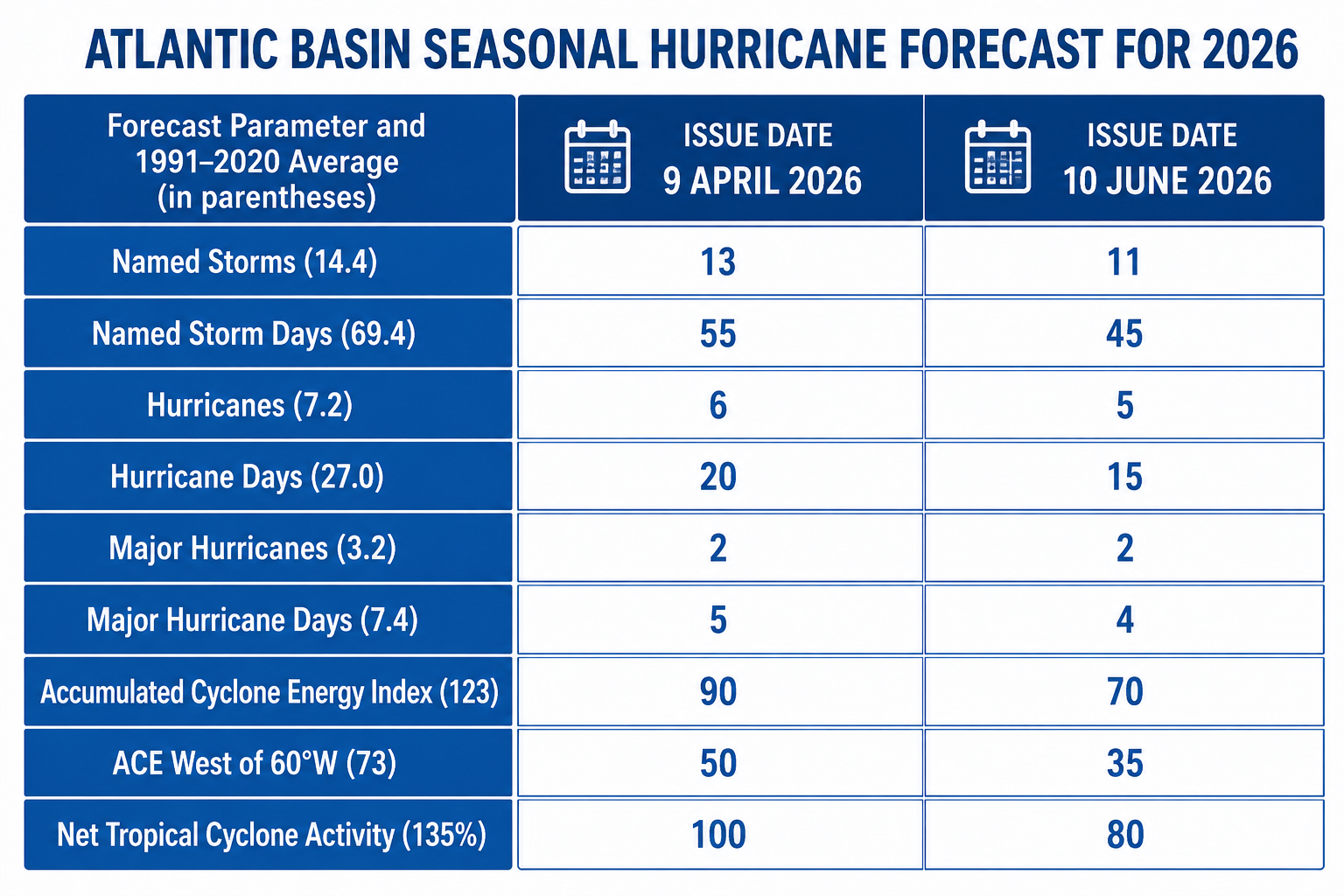
On 10 June, the day before the El Niño declaration was made, Colorado State University lowered its seasonal outlook to 11 named storms, five hurricanes and two major hurricanes, down from its 9 April forecast of 13 named storms and six hurricanes, while leaving its prediction of two major hurricanes unchanged.
The updated forecast calls for the quietest Atlantic hurricane season since 2015.
Meteorologist Michael Lowry said the rapid emergence of El Niño is the primary reason forecasters now expect much lower-than-average tropical activity this year.
He noted that temperatures across the main El Niño monitoring region used by NOAA are already at record levels for this time of year and have warmed faster than during the major El Niño events of 2023, 2015, 1997 and 1982.
Lowry also highlighted that Colorado State University’s revised outlook sits well below the 30-year average, with projected Accumulated Cyclone Energy, a measure of the season’s overall storm activity, reduced by about 40%.
However, he cautioned that a quiet season does not necessarily mean a harmless one, pointing to 1992, when Hurricane Andrew caused catastrophic destruction despite only seven named storms forming that year.
Related Videos