Fishing licence law queried
Ocean warming and hurricanes are threats to the marine environment people can do little about, but people pose threats as well through activities such as dredging and over-harvesting.
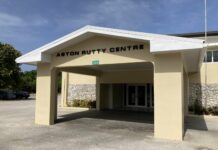
That was one of the messages emphasised by staff of the Department of Environment at a recent meeting in East End, called to get local views on updating marine parks regulations.
Possible changes include re-designation of marine park areas in which no taking of marine life is allowed, species protection and restriction of fishing techniques, such as cast nets.
In a series of meetings throughout Grand Cayman and Cayman Brac, its was revealed that 62 sites were surveyed to see if marine parks were really working. One measure was the amount of live coral cover on the sea floor. The health of the coral affects the numbers and kinds of fish in the area.
There are more fish in protected areas than outside, but the study showed that fish “spill over” or move out of the protected area as far as five kilometres away. Quantities were measured at kilometre intervals. Gina Ebanks-Petrie, Director of the Department of Environment, said local fishermen know where they will find fish in relation to the marine parks.
“I’m no conservationist, but I understand extinction is forever,” East End MLA Arden McLean said.
He said when the late Sir Vassel Johnson came to the district in the 1980s to talk about the proposed marine parks, the reception he got was not warm – it was hot. Fishermen thought he was taking away their livelihood, Mr. McLean said.
Now, he believed, people have embraced marine parks. One problem was that, when offences were noticed, by the time enforcement officers got to East End from George Town, the offenders were gone. He said he had tried to get an office for the DoE in the district police station, but the police commissioner at the time didn’t approve.
He said he saw people fishing from shore, but did not see any enforcement of the law requiring ”certain people” to have a fishing licence.
Ms Ebanks-Petrie referred to a case that had been taken to court charging four people for fishing without a licence. As a result of what had happened, no further prosecutions have been brought for that offence. However, she emphasised, there are also size limits on particular kinds of fish and this limit is being enforced, she said.
The concern was whether the requirement for non-Caymanians to have a fishing licence was discriminatory, Ms Ebanks-Petrie said.
Mr. McLean said this was a serious situation because people come here and don’t understand the local culture. “I am allowed to discriminate in my country for my people,” he asserted.
[The case referred to came to court in August 2010, when Chief Magistrate Margaret Ramsay-Hale expressed concern as to whether a law that is applicable to one section of the population is discriminatory and in potential breach of Cayman’s new Constitution. She asked the Crown Counsel to take her concern back to the Legal Department, saying she had no settled view on the matter. The charges were subsequently withdrawn by the Crown (Caymanian Compass, 5 August, 14 September 2010).]
Mr. McLean referred to a copy of the 2009 Constitution. He read aloud section 23, which sets out procedure to be followed when existing legislation is found to be incompatible with the Bill of Rights, which will come into effect in November, 2012.
McNee McLaughlin referred to other cultural differences such as eating crab with spawn, which no Caymanian would do. He suggested more public education.
Billy Adam suggested a size limit on whelk.
He and Kenross Connolly encouraged the department to make their studies more accessible on their website. One example shown was the pattern of grouper spawning off Little Cayman, which could be followed because the fish had been tagged, senior researcher Croy McCoy said.
A nine-minute video about the Darwin Initiative research project, which is studying reef life, can be found at “DoE TV” under the information on the department’s website.
Another round of meetings will be held in April, 2012, to report on study conclusions and public feedback.
Related Videos