

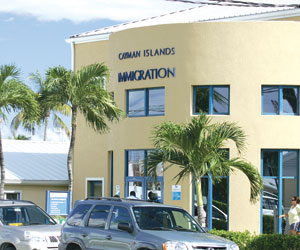

Annual revenues collected by the Cayman Islands Immigration Department have more than doubled within the past five years, according to a report issued this week by the government.
In the 2005/06 government financial year, the Immigration Department recorded a total of $33.4 million in revenues collected between 1 July, 2005, and 30 June, 2006. By the end of the 2010/11 budget year on 30 June, 2011, revenues have increased to $70.2 million.
That’s an increase of about 110 per cent in yearly earnings for the department.
The rise in immigration-related revenues comes at a time when the number of work permits issued to foreign nationals has actually declined and an audit of the department revealed that it was potentially leaving millions of dollars in revenues uncollected.
Immigration revenues for the current 2011/12 fiscal year appeared to be set for an increase again, the report showed.
“For the 2011/12 fiscal year revenue collected through the end of December 2011 totalled $36,240,642,” according to the Immigration Department’s findings. December marks the halfway point for the government budget year and if collections continue along the current trend, the department will earn more than $72 million this year.
That $72 million figure would represent about 13 per cent of central government’s projected revenue – $548 million – for the current budget year.
Work permits
The vast majority of the Immigration Department’s revenues come from the issuance of various permits to non-Caymanians seeking the right to work and reside here.
Statistical reports have consistently shown that government earnings from work permits and permanent residence fees rose more than 30 per cent in 2010, even though work permit numbers declined at that time.
Large permit fee increases took effect in the beginning of 2010, with fees nearly tripling for some job categories. On average, permit costs increased by $3,000 per employee in most professional categories.
Work permits are required for any foreign employee in the Cayman Islands who does not have Caymanian status or who is not married to a Caymanian. Permanent residents who are not Caymanian also must pay a yearly fee to maintain their right to work here.
In calendar year 2010, government earned $56.7 million in work permit and residency fees, according to the statistics office. That’s compared with $43.1 million earned on those fees in 2009 and $48 million earned in 2008.
The revenue increase from permit fees is surprising when considering that the number of work permits, which include government contracts for foreign employees, held in Cayman has dropped by more than 20 per cent in less than three years. Work permit fees are not charged for foreign workers in government.
According to the statistics office, there were 26,516 work permits held in Cayman at the end of 2008. In 2009, that number dropped to 23,531 and last December it fell to 20,452.
Lost revenues
It’s possible that the Immigration Department didn’t collect as much money as it might have during those years, according to a review by government’s Internal Audit Unit.
The review, conducted for the calendar year 2009 but which was just recently been made public, revealed “assessment discrepancies” had resulted in the Immigration Department undercharging companies for work permit fees, and also undercharging permanent residence-holders who are issued right to work certificates.
“Based on our review it is estimated that these assessment discrepancies have resulted in the department undercharging employers $288,450 in work permit fees,” the audit report read, adding its number was gleaned from a review of only 200 work permit applications where 66 – just under a third – had not been properly assessed government fees.
The Immigration Department disagreed with that figure from the audit unit and put its own estimate of under-collection at just more than $112,000.
“It is reasonable to infer that the total amount could be significantly higher across the entire population of work permit grants and renewals,” auditors stated.

Related Videos













Two ways to bring in revenue: 1. stimulate the market by lowering fees and the cost of living; and 2. taxing the hell out of businesses and people by increasing fees.
Whereas, these figures may look like a bonus for the economy, it is just reflecting an IMBALANCE that will eventually cause small local businesses and companies to suffer and the big ones like Dart to survive over them.
I see it comin!
Rmind me again WHY is the government so far in debt then????
I agree with Caymer on this one. This is typical what things like real audits, proper supervision, and other like things would do if interested, honest, and capable people were in charge of Departments of the Government. How much money has slipped through the various systems in the past few years? All should be audited every year as is done in most money making business.