

Sixty survey-takers will visit more than 2,000 homes in the Cayman Islands this month as part of study to determine the risks that lead people in the territory to develop diseases like high blood pressure, diabetes and heart conditions.
This will be the first time a health risk factor survey has been carried out in Cayman. Dubbed Healthy Nation 2012, the survey will begin on Monday, 14 May, and will continue for eight weeks.
The survey-takers, or enumerators, were trained last week by the Economics and Statistics Office, whose office carries out the census.
Minister of Health Mark Scotland, speaking at a news conference Monday to announce the survey, said the study would help to identify the risk factors leading to chronic non-communicable diseases locally. That information would influence future health policies and strategies.
He pointed out that the 2010 census showed that high blood pressure, diabetes and asthma were the three most prevalent diseases in Cayman. Other information about non-communicable diseases had been gathered by the Health Services Authority and the Public Health Department, but Mr. Scotland added: “Knowing we have a problem is not enough. We need to know what is causing it, what factors are behind chronic diseases, so we can address it specifically, effectively and swiftly.”
Mr. Scotland said the only “vaccine” against chronic non-communicable diseases like hypertension and diabetes was education and prevention.
One person will be chosen randomly from each of the 2,100 households visited by the survey-takers.
The survey will target people ages 25 to 64 and involve three distinct steps. In the first step, enumerators will gather demographic information, such as age and sex, as well as dietary habits, tobacco use, alcohol consumption and physical activity. The second step involves the enumerator taking weight, height and waist circumference measurements and blood pressure. The third step involves half of the participants undertaking blood sugar and cholesterol checks at the Cayman Islands Hospital. Pregnant women, bedridden individuals and people outside the targeted age range will not be invited to take part in the study.
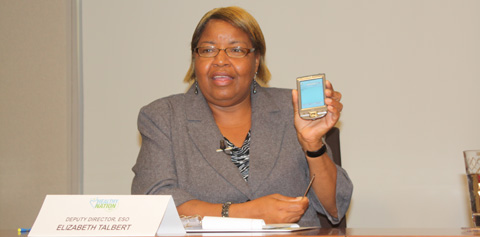
Survey-takers will use handheld personal digital assistants, or PDAs to collect the information. Elizabeth Talbert, deputy director of the Economics and Statistics Office, said by using this technology, the data is entered directly into a database.
The survey costs about $140,000, half of which will be paid for by government and the rest by private sector sponsors, mostly insurance companies.
The results of the survey, which uses World Health Organisation methodology, will be compared with other countries worldwide and regionally.
Chief Officer of the Ministry of Health Jennifer Ahearn encouraged everyone in Cayman to take a wellness check and find out their “numbers” by undergoing blood pressure, blood sugar and cholesterol examinations.
In 2009/2010, the Cayman Islands government spent $93.4 million on health care costs, which accounts for 17.5 per cent of the national budget, Ms Ahearn said. One of the outcomes of this survey will be to help the government determine if the money being spent on health care is being spent in the right places.
Ms Aherne cited an example of a Caribbean country that carried out a similar survey which showed a previously unknown high incidence of binge drinking among women ages 40 to 60. This enabled the country to target public health awareness education to help combat the issue. Minister Scotland assured those taking part in the survey that all information gathered would be held in the strictest confidence, with no information about individual cases being released. The data instead would be collated into a database that would be studied to determine the major risk factors for non-communicable diseases in the three Cayman Islands.
According to the Pan American Health Organisation, two out of every three deaths of people younger than 70 occur due to chronic diseases. CARICOM predicts that by 2020, non-communicable diseases will account for 60 per cent of the global disease burden.
Health officials in Cayman already have information relating to obesity among Cayman’s schoolchildren. This shows that 22 per cent, or more than one in five, of children ages 11 to 14 are overweight and another 15 per cent are at risk of becoming overweight.
Survey-takers can be recognised by white T-shirts with the distinctive Healthy Nation 2012 logo. The preliminary results of the survey are expected to be available by November.


Related Videos













Don’t need an expensive study to figure this one out. Beyond the obvious diet and nutrition issues most don’t realize the long term impact of failed self-serving U.S. government policy. In the early 70’s then U.S. President Richard Nixon, in order win the political support of the Iowa corn farmer, introduced high fructose corn syrup into the American diet. Fast forward 40 years and you have a population that is an over weight, hypertensive, cardiovascular disaster. Those same processed food products are found on the grocery shelves throughout Cayman and the Caribbean.