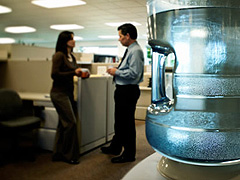
Bottle water coolers placed in offices and homes should be maintained if they are to keep drinking water clean and fresh.
These water coolers are usually purchased and forgotten; once they are working we assume everything is fine. But that is not the case, for failing to clean, improperly storing water, and replacing bottles using dirty hands can all contaminate your drinking water.
The Department of Environmental Health offers the following guideline for all users of bottle water coolers.
When purchasing bottled water:
Do not buy bottles with broken seals. Examine the outside and contents before purchasing. Do not buy bottles with foreign materials inside. Report any tampering or floating materials to the store manager and health officials;
Do not be fooled by labels. Information to be included on the bottle or label: date of manufacturing or manufacturing code; use-by date; chemical analysis or declaration of minerals; treatment (for example, ozonised, ozonated, etc.); company contact number; location and type of source water;
Do not refill old bottles. Either discard or return them to the distributor. Buy fresh bottles of water.
After purchasing delivered water:
Store in a cool, clean environment away from heat and sunlight. While manufacturers give bottled water a use-by date or shelf life of two years, DEH officials suggest replacement after one year;
Ensure that delivered water is left in a cool, shady area. Do not leave in the sun;
Clean water coolers and dispensers regularly;
Use water dispensers with coolers that keep the water refrigerated;
Clean the outside of the bottle cap and neck before replacing the bottle. Use a paper towel dipped in household bleach solution (1 tablespoon or 15 millilitres of bleach added to 1 gallon or 4.5 litres of water).
Clean your water cooler with the following steps:
Unplug the cooler from the electrical outlet.
Remove the empty bottle.
Drain water from the reservoir through the faucet.
Prepare a disinfecting solution by adding one tablespoon (15 millilitres) household bleach to 1 gallon (4.5 litres) of water solution. Other disinfecting solutions may also be suitable; check with your water cooler supplier.
Wash reservoir thoroughly with bleach solution and let stand for no more than 2 to 5 minutes. This will ensure effective treatment that does not corrode your cooler.
Drain the bleach solution from reservoir through faucet. Wipe off outside of faucet with clean cloth or paper towel dipped in the bleach solution.
Rinse reservoir thoroughly with clean tap water, draining water through faucets to remove traces of the bleach solution. If tap water is suspect (that is, from a well or cistern), boil for 10 minutes and let cool before using to rinse the water cooler.
Clean your bottled-water cooler with every bottle change.
Clean the drip tray (located under faucets) with the following steps:
Remove the drip tray.
Remove the screen. Wash both tray and screen in mild detergent.
Rinse well in clean tap water and replace on cooler.
Replace water bottles with the following steps:
Wash hands with soap and warm water before handling;
Wipe the top and neck of the new bottle with a paper towel dipped in the chlorine solution specified above. Rubbing alcohol may also be used, but must be completely evaporated before placing the bottle in the cooler;
Remove bottle cap;
Place new bottle on cooler.
For more information contact the DEH at 949-6696.

Related Videos