Cayman’s public health authorities have reported the first local cases this year of imported dengue fever.
Two victims contracted dengue after being bitten by mosquitos while travelling overseas, but both have already recovered, said Dr. Kiran Kumar, medical officer of health in the Cayman Islands Department of Public Health.
Dr. Kumar would not disclose Tuesday where the victims had been travelling and where it was believed the virus had been contracted.
Although Cayman has mosquitos capable of transmitting dengue, there have been no locally transmitted dengue cases reported in the Cayman Islands so far this year. Last year, there were two confirmed cases – one local and one imported.
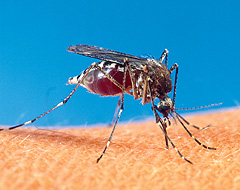
“While dengue fever is not endemic to the Cayman Islands, as there is no sustained transmission of the disease, it is always wise to avoid mosquito bites by covering up during the late afternoon when the dengue carrier, the Aedes aegyptii mosquito, is at its peak,” Dr. Kumar said.
“While we need to be alert, and take preventive measures, we need not be alarmed of one case. For Aedes mosquitoes to transmit dengue, they must bite infected persons, otherwise they can’t become infectious and transmit the disease. Hence, persons who develop dengue symptoms within two to three weeks of having returned from countries with dengue cases are advised to consult their physician and inform of their travel history,” Dr. Kumar added.
Immediately after the Department of Public Health is alerted to a case of dengue fever, the department contacts the Mosquito Research and Control Unit, which arranges for the home and work place of the person suspected of having dengue to be sprayed and to remove any containers that can hold standing bodies of water in which the mosquitos breed.
The Caribbean Epidemiology Centre Surveillance Report shows that, as of August 2012, Belize, Guyana, Suriname, Jamaica and Curacao account for about 87 per cent of 1,500 cases reported in the Caribbean region this year and that 17 of 23 countries in the region had confirmed cases of dengue fever, which is also known as break bone fever. These include: Anguilla, Antigua and Barbuda, the Bahamas, Barbados, Belize, Bonaire, Brazil, British Virgin Islands, Cuba, Curacao, Dominica, Dominican Republic, Ecuador, Grenada, Guyana, Haiti, Jamaica, Puerto Rico, St. Kits and Nevis, St. Lucia, St. Maarten, St. Vincent and the Grenadines, Suriname, and Trinidad and Tobago.
Dengue fever is an acute illness caused by a virus transmitted by mosquitoes. Its symptoms include fever, headache, muscle aches, joint pains, pain behind the eyes and rash. Some cases can be mild, while others can show disorders in blood clotting, which can result internal bleeding – this is known as haemorrhagic dengue fever. The haemorrhagic form of dengue fever is associated with loss of appetite, vomiting, high fever, headache and abdominal pain.
It is estimated that more than 100 million cases occur worldwide each year.
Dengue fever is spread when an Aedes aegyptii mosquito bites a dengue patient during the first week of illness and becomes infected. The mosquito can pass on the illness if it bites another human within eight to 12 days. The virus cannot be spread directly from human to human.
Once bitten by an infected mosquito, dengue fever usually develops within five to six days, although it can take as few as three days or as many as 15. An infected person can be a source of dengue virus for mosquitoes for about five to six days after the onset of fever.
The presence of dengue is confirmed by a blood test and it takes five to 10 days to receive the results from overseas laboratories. Sometimes a repeat test is needed two weeks after the first test. Dr. Kumar said in many cases, a patient with mild symptoms will have recovered by the time the test has confirmed the diagnosis, as the person’s doctor will already have been treating the illness.
There is no vaccine and also no specific treatment for dengue fever. Most people recover without complications using pain relievers and bed rest. Aspirin should be avoided.
Aedes aegyptii bites in the daytime, with peak activity during the late afternoon.
The Cayman Islands Public Health Department advises that the only way dengue can be prevented is to avoid being bitten by mosquitos by using mosquito repellents on skin and clothing; wearing long-sleeved shirts and long pants tucked into socks while outdoors when mosquitoes are biting; when indoors, stay in air-conditioned or screened areas; and ensure that the area around your residence is free from mosquito breeding sites, such as buckets or any other containers.
For more advice on mosquito control, contact MRCU at 949-2557 in Grand Cayman, or 948-2223 in Cayman Brac; and the Department of Environmental Health at 949-6696 in Grand Cayman, or 948-2321 in Cayman Brac.

Related Videos