

The thrum of the spinning rotor-blades of the police helicopter as it hovers overhead.
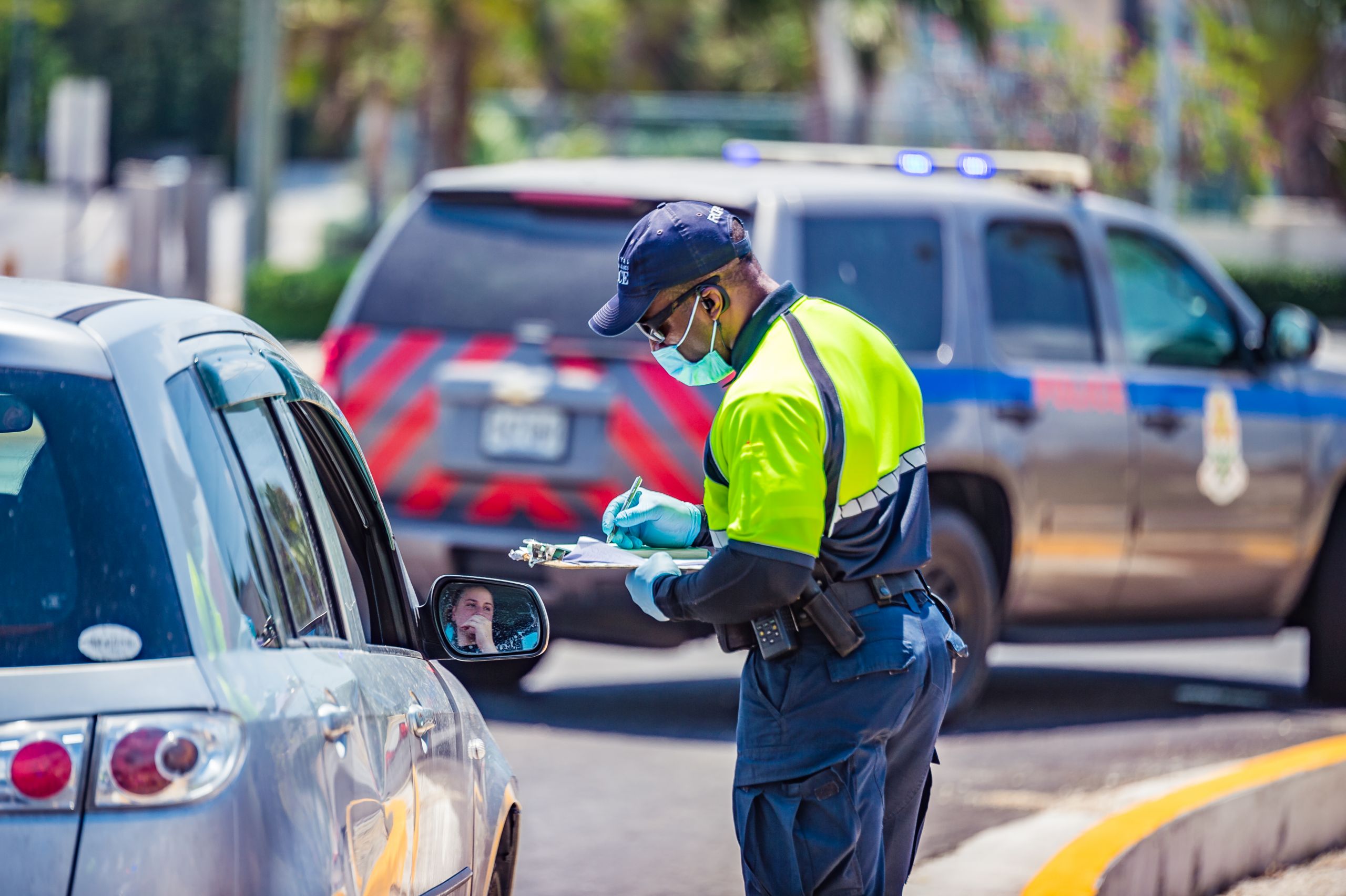
The sight of masked officers checking identification documents outside supermarkets.
The constant nervous clock-watching of joggers hustling to get home after their 90 minutes of allotted exercise.
None of these now-familiar scenes are signs of a free society.
Policies that were previously unthinkable, outside of the most-restrictive authoritarian states, are now the norm for much of the civilised world.
In daily televised briefings in the Cayman Islands, new rules are announced and enacted by the islands’ leaders. Some come into force within hours.
Amid the threat posed by the coronavirus, these rules and restrictions have been broadly accepted by the public.
Most seem prepared to accept the temporary loss of liberty for the cause of preserving life.
There are some who question the validity of that equation, suggesting the threat posed by COVID-19 has been overestimated and the suppression measures are therefore disproportionate.
A smaller minority argues that personal freedom and civil liberties are too important to be interfered with, even in the face of a global pandemic that threatens human lives.
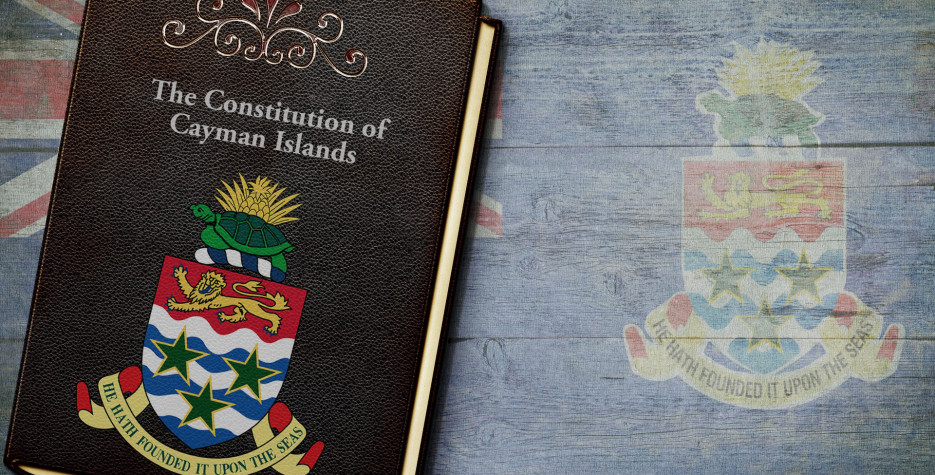
The unique conditions of the immediate post-COVID-19 world have set up inevitable friction between fundamental human rights enshrined in our Constitution and the public health imperative to ‘first do no harm’.
In a special feature today, we examine the law behind the curfews and business closures and try to answer some of the key questions surrounding this issue.
Does government have the right to restrict civil liberties guaranteed in the Bill of Rights?
Two lawyers, who analysed the issue for the Cayman Compass, say there is no question that government has the right to override many of the freedoms guaranteed by the Bill of Rights – even to the point of confining people to their homes – in the face of a national emergency.
In fact, if they had not taken such measures, Cayman’s leaders may have breached a more fundamental right, guaranteed by the same document.
“While the current provisions intrude upon numerous civil liberties, the Constitution also enshrines our absolute right to have our lives protected by law,” wrote Kate McClymont, an attorney with Broadhurst LLC, in a detailed analysis prepared for the Cayman Compass.

“Had the government failed to take swift action to prevent circumstances arising that indications showed could put lives at risk, it might have been said that it had failed in its duty to protect the most fundamental of all civil liberties, namely, the right to life.”
Richard Barton, a barrister and member of the Cayman Islands Legal Practitioners Association, in an email response to questions from the Compass, pointed out that the right to freedom of movement, for example, is not absolute.
Preventing the “spread of an infectious or contagious disease” is specifically listed in the Bill of Rights among a number of situations where restrictions on personal liberty are permitted.
Barton adds that the Constitution also includes a blanket provision for the legislature or the Queen to “make laws for the peace, order and good government of the Cayman Islands”.
Where does government’s power to order people to ‘stay home’ come from?
A mix of different provisions has been used to quickly enact the lockdowns and curfews that now dictate daily life.
The shelter-in-place order, which restricts public gatherings, prevents businesses from opening, and controls which days residents can shop for groceries, was passed by Cabinet as regulations accompanying the Public Health Law.
Section 34 of that law lists specific measures, including the closure of schools and cinemas, restrictions on the movement of aircraft and boats, and the administration of quarantine, that can be imposed to prevent the spread of infectious disease.
Crucially, says Barton, it also includes scope for these restrictions, and almost any other policy, to be passed via regulations in the interests of public health.

That means new measures can be introduced swiftly by government leadership, without recourse to the Legislative Assembly.
It was this section of the law that enabled Premier Alden McLaughlin’s administration to pass the Public Health Prevention, Control and Suppression of COVID-19 Regulations at the start of the crisis.
It also enabled them to amend these ‘soft curfew’ measures as circumstances changed.
Where does the authority for the hard curfew come from?
Close readers of the legislation will realise that the COVID-19 suppression regulations make no reference to any ban on public beaches or on swimming, boating or use of the water; or the hard curfew that confines all but the most essential workers to their homes overnight and all day Sunday.
In fact, these provisions are not currently available to the public in written form.
They are not published by government or police and were not made available to the Compass on request to both entities.
The hard curfew – initially involving a total island-wide shut down for 72 hours – was imposed by the police commissioner on 23 March, using his powers under the Police Law.
Section 49 of the law permits the imposition of a curfew in the interests of public safety or public order, to address the threat of a “tropical storm, hurricane, or other serious hazard”.
The legislation states that this can only be done with the written permission of the governor after consultation with Cabinet and with the National Hazard Management Executive.
Why not just use the Public Health Law for all COVID-19 restrictions?
The hard curfew could most likely have been introduced via regulations for the Public Health Law, McClymont believes.
But in an emergency situation, the Police Law provided a quicker route.
Equally, she says, the schools were closed by order of the education minister through a provision in the Education Law – again, most likely because it provided the swiftest option in an emergency.
Interestingly, the ban on marine activity and the later closure of public beaches were also announced as conditions of the hard curfew, under the Police Law, rather than being passed through published amendments to the Public Health Law regulations.
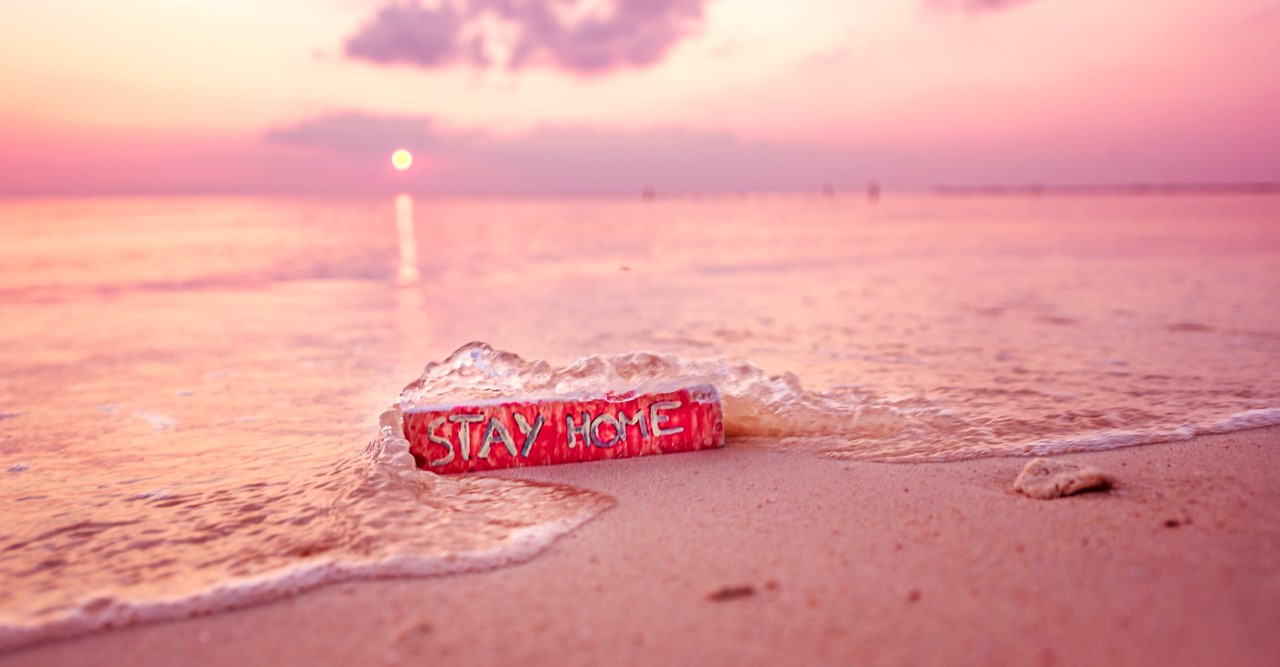
This might also be a simple case of expediency. The premier announced the intention to close the beaches during a press conference on Easter Saturday. By Monday, the entire coastline was a no-go zone, with anyone venturing beyond the high-water mark deemed to be in breach of the hard curfew.
How does banning swimming or marine activity prevent the spread of the virus?
Another reason to use the Police Law, as opposed to the Public Health Law, may be that the connection between ocean swimming, for example, and the suppression of COVID-19 is tenuous.
Equally, going out alone on a kayak or paddle board could not reasonably be deemed a public health threat, but might be justified to maintain public order where police resources are already stretched thin.
The COVID-19-suppression regulations already limited public gatherings to no more than two people.
The closure of the beaches, the ban on marine activity and the island-wide shutdown on Sundays are perhaps as much about preservation of police resources as they are about suppressing the spread of the coronavirus.
Police Commissioner Derek Byrne said the situation at the beaches had become unmanageable. In other words, it was difficult for officers to determine who was legitimately exercising and who was gathering illegally.
The Police Law includes a carve-out for the commissioner to create a “cordon” around certain localities in the interests of public order.
It is not precisely clear if this was the provision used to close off the beaches, as the notices issued under section 49 of the Police Law that establish the hard curfew have not been made publicly available, but this seems to be the most logical legal process for that aspect of the restrictions.
Has democracy been suspended for the COVID-19 crisis?
In some respects, we are seeing the suspension of democratic norms with the delegation of significant power to Cabinet.
Though the Constitution envisages precisely this type of situation and creates limitations to rights such as personal liberty and freedom of movement, Cayman’s government and leaders across the world walk a fine line.
Act too fast and too severely and risk being accused of authoritarianism. Act too slowly or without sufficient care and risk putting lives at stake.
Though she describes the regulations in place as “the most severe restrictions on the civil liberties of individuals that our country has ever seen”, McClymont believes the measures government has taken are legally justifiable and morally defensible in the circumstances.
There also appears, at least for the time being, to be public support, something that politicians, particularly those facing re-election next spring must always be wary of.
For now, the threat posed by the virus and the projections from health officials that it could conceivably hospitalise thousands of Cayman Islands residents and cause hundreds of deaths, has persuaded many that even the most restrictive measures are justified.
Does government have absolute power then, to proceed as it sees fit?
As time passes, the dynamic could change. Support for curfews – particularly if there is a second wave of lockdowns later in the year – could dwindle.
Equally, as economic hardship increases and new information comes out about the virus, there may be calls for a different strategy.
Some of that is happening already.
McClymont believes that government’s power is not absolute, and the exceptional situation requires scrutiny from the legislature, the press and, if necessary, from the public via the courts, to ensure the restrictions continue to be reasonable and proportionate to the ever-changing level of the threat.
She said Cayman’s legal framework allowed government “flexibility and agility” to respond to fast-changing circumstances effectively, something that is necessary in the current environment.
But she warns, “Unfortunately, this can also clear the way for abuse of power if that power is not properly scrutinised, particularly if allowed to continue for long periods of time.”
No one is suggesting this is currently the case. And government’s plan for a phased easing of restrictions offers some light at the end of the tunnel for those shuttered behind closed doors across the Cayman Islands.
However, with the crisis likely to continue for some months, McClymont believes bespoke COVID-19 legislation could be an option to allow input from the full Legislative Assembly.
That way, parliamentarians could consider the extent to which powers should be delegated to Cabinet for the day-to-day management of the pandemic response.
What checks and balances exist?
Barton concurs that government is currently operating within the scope of its powers.
But he points out that the Constitution also allows for legal challenge through the Grand Court for any breach of the Bill of Rights.
He believes it is conceivable that government could face a challenge of this kind if the coronavirus crisis and associated suppression measures drag on.
If that happens, he said, the government may be required to demonstrate the link between the measures in place and the health threat.
“The longer the shelter in place remains, and the more amendments that are made over a prolonged period to further curtail people’s liberties, the more likely a challenge will arise,” said Barton.
Constitutional challenges can be thrown out immediately without the chance to appeal if they are considered “vexatious or frivolous” by the court.
Barton said any successful challenge would have to prove that government had “gone too far” in its efforts to suppress the virus and in doing so had passed regulations incompatible with the Constitution.
McClymont believes most of the government’s decisions so far have been proportionate to the current level of the threat and, therefore, that successful legal challenge is unlikely. However, she notes that government action that trespasses on civil liberties should be transparent and accessible and therefore that the notices issued by the police commissioner establishing the hard curfew should be made publicly available.
Is there a danger of inconsistent or disproportionate enforcement of new laws?
An expansion of government and police powers raises fears of over-zealous or inconsistent enforcement.
Here, another more arcane human right comes into play – the right for acts of public officials to be lawful, rational, proportionate and procedurally fair.
In other words, the laws must be enforced equally without preference to any one citizen over another.
Who is holding the government and police to account?
Cayman’s institutions – including the ombudsman, the press and parliament – have a role to play in investigating and monitoring the ongoing situation.
When rogue motorcyclists led police on a dangerous chase across Grand Cayman, there were those who questioned the way one of the bikers was wrestled from his vehicle.
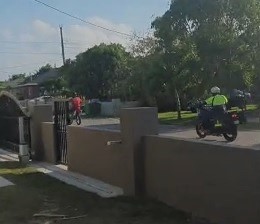
The moment was captured on video, broadcast by the media and is now being investigated by the ombudsman.
Though there was wide support for the police in that situation, it is one example of Cayman’s watchdogs monitoring the new powers and those who wield them.
In exceptional times, like these, McClymont believes the media has an essential role to play and should not be cowed from monitoring and questioning government and police decisions where necessary.
“While perhaps inconvenient or uncomfortable for government at times, this important role of the press must be respected,” she said.
“There can be little doubt that exceptional situations require exceptional measures; however, civil liberties are critical to a functioning democracy and should be monitored and protected with heightened vigour during periods when those exceptional measures are used,” she wrote.
“Let us support those institutions now, journalists included, and continue to hold government accountable for its actions so that democratic principles are not left damaged, or civil liberties reduced, in the long term.”
Related Videos










I truly hope Compass would interview next those who have the opposite opinion on “life vs.liberty” issue, especially when there’re roughly 60,000 healthy people and less than 100 who were tested positive, half of which never developed any symptoms.
Otherwise this article is biased.