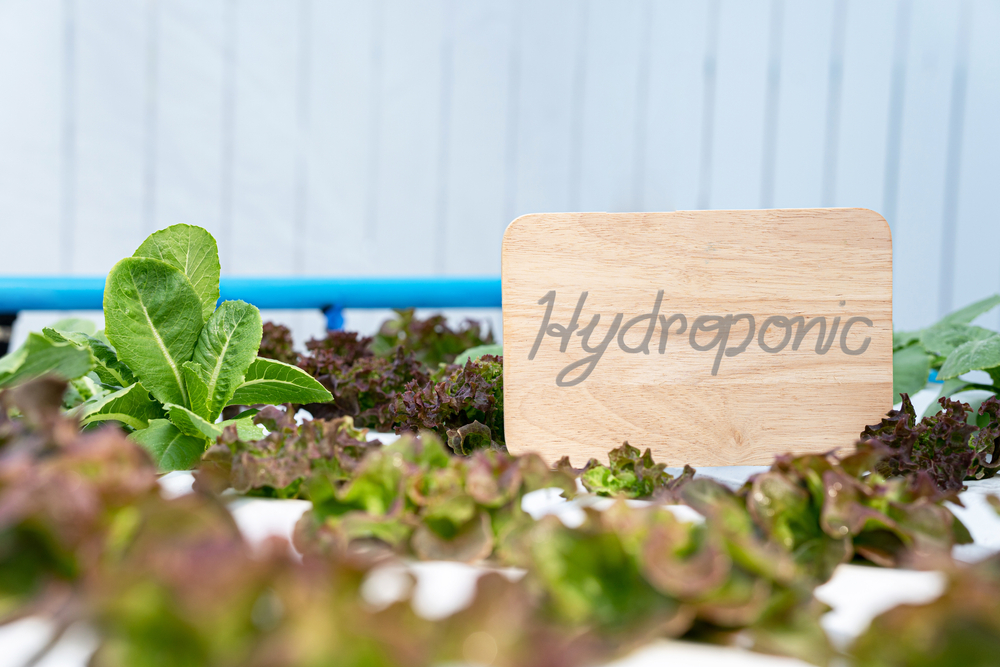
Update: The Central Planning Authority has granted planning permission for Botanic Farms’ hydroponic farm on Frank Sound Road.
Original story: A company called Botanic Farms is seeking planning permission to open a hydroponic farm, which will include a shop, storage and packaging areas, greenhouse buildings and water tanks.
Botanic Farms, owned by Josephine Imparato, had originally included a sargassum-composting facility in its plan for the site, which is located next door to the Queen Elizabeth II Botanic Park. However, following a discussion with the Department of Environment, the applicant abandoned the composting part of the project and submitted revised plans to the Central Planning Authority on 30 Sept.
The company stated in documents submitted to the CPA that it had removed the sargassum-processing facility from the original plans because “it has become apparent that the requirements from the DOE in relation to this will become cost prohibitive and as such the developer has opted to remove this for the time being”.
Architect Derek Serpell, of Kariba Architecture, who appeared before the planning board on Wednesday, confirmed that the sargassum element had been dropped because of concerns of costs and the possibility of run-off of contaminated water.
The DoE, in its response to the planning application, also raised concerns over the location of the farm and its proximity to the Botanic Park. The DoE suggested moving the facility two lots to the west, as additional lots in the immediate area were owned by the same developer.
“This would both avoid the high value primary habitat and increase the distance from the Queen Elizabeth II Botanic Park,” the DoE said. “The primary habitat at the site is dry forest and shrubland, and supports Cayman parrot nesting. The primary habitat in the area to the west has been invaded by logwood and is therefore of a lower ecological value. We suggested that, at a minimum, a 20 foot natural vegetation buffer should be left between the farm and the Botanic Park. The revised plans do show a 20 foot buffer along the northern and eastern boundaries of the site.”
The developer, in the revised plans, agreed to move the farm one lot to the west, placing the facility some 200 feet further away from the Botanic Park entrance.
Serpell, in response to objections from the National Trust, which co-owns the Botanic Park with the Cayman Islands government, and suggestions from the Tourism Attraction Board, said that the developer had also undertaken not to clear the lot of land closest to the park, until such time as an arrangement could be made for the purchase of that land by the National Trust.
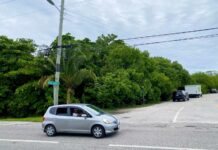
The application site consists of three parcels, with access to the site from Botanic Road.
Peter Davey, vice chairman of the National Trust, who appeared at the CPA meeting as an objector, asked why an application for a farm was even being considered on a site zoned as low-density residential.
CPA chairman A.L. Thompson responded that low-density residential sites were not solely for residential use and there had been precedents of stores and gas stations being built within such zones.
Serpell told the CPA that the impetus for the hydroponic farm was reports that only 3% of produce consumed in Cayman was grown locally, while 97% was imported. “From a commercial perspective, it is an opportunity,” he said, “and from the Department of Agriculture perspective, it’s something they have been pushing for for a while.”
He said the plan initially would be for local restaurants and grocery stores to buy wholesale from the farm, and later for that to expand to sales to the general public. He said if the venture is successful, Botanic Farms could expand further into the parcels of land to the west of the facility.
Catherine Childs, education programmes manager at the National Trust, told the CPA members that the three parcels of land adjacent to the Botanic Park were home to an ecologically important ancient forest “that has been here as long the Cayman Islands have been here – it’s never been disturbed”.
“The same landowner owns seven parcels of land in a row, and the others, to the west of these three, have been disturbed before and are covered in invasive species. There would be no ecological damage if they moved it three parcels over,” she said, adding, “This forest is extremely valuable to the Cayman Islands … there are endemic species that live there. You can never recreate this kind of biodiversity ever again; once they’re gone, they’re gone.”
The developer, in the planning submission, argued that the proposed farm would provide a “natural synergy with the Botanic Park as a tourism product (with its garden centre shop) and falls in line with sustainability and promotion of local self-sufficiency. We believe that it is likely that a large percentage of local or overseas visitors to either the Park or the Farm will likely stop to visit both facilities on the same trip.”
In response to concerns raised by Carla Reid of the Tourism Attraction Board, which manages the Botanic Park, over the siting of the entrance to the farm, Serpell said the revised plan included a 20-foot buffer of undisturbed natural vegetation along the entire road front to the site, and that the farm and any clearing work would be a minimum of 20 feet away from the road. The buildings would be a minimum of 70 feet away from the road.
A decision on the application is expected this week.
See the full CPA agenda and applications here.
Related Videos